Save 15% on your 1st Autoship learn more

 Email us
 Live Chat
 FAQs
FAQs





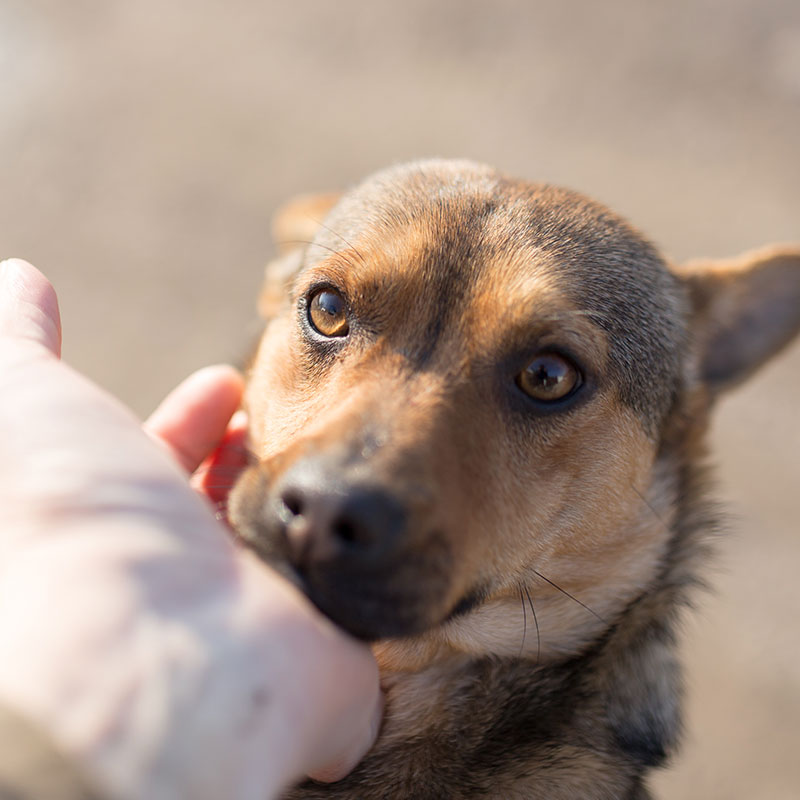
Adopting a new best friend can be a big responsibility. New owners are often surprised at the amount of thought and preparation that goes into training a dog to be at ease with family, friends and new environments. While this process can be overwhelming, there is no need to panic. Making things easier for you and your buddy just requires a little knowledge, a lot of patience and the right attitude.
1. Dealing With Fear Periods
Puppies, like human children, are especially vulnerable to traumatic experiences that can have lasting effects on behavior. Puppies are thought to experience two periods, from 8 to 11 weeks, and 6 to 14 months, during which fear behaviors become internalized. At these times, it is essential that owners avoid introducing overwhelming, intimidating or threatening stimuli into a puppy's environment. Once these windows have closed, it can be difficult, even for an expert trainer, to reverse embedded fears. Fortunately, all canines are capable of adapting and improving at any age.
2. Identifying Problem Behaviors
If you have recently adopted from a home or shelter, you may have discovered that your dog now exhibits one or more anxious behaviors that make life difficult for you and your family. Fear aggression, food aggression, separation anxiety and frequent crying are all disconcerting, but can be handled with the right training protocols. In the early stages of dog ownership you will simply want to take note of any issues that come up. It is not unusual for certain behaviors to emerge only after your pooch has had some time in your home.
3. Engaging in Shared Experiences
Your dog is a pack animal. As a key member in his new pack, you should engage in some bonding activities with him as often as possible. With an extremely mistrustful animal, this can be as simple as lying down near him. Once this proceeds without growling, air-snapping or fleeing, you can progress to activities that require more trust, like petting. The ultimate shared experience will be walking on leash , so this should be attempted only with an animal that is comfortable in your presence.
4. Finding the Right Treats
Food is the quickest way into a nervous puppy's heart. Unfortunately, the same physiological mechanisms that make your dog nervous may also make him unreceptive to food rewards. This is why it is important to provide treats that are actually exciting . A scared pup may accept high quality treats where he would decline regular treats. If you can consistently treat an animal for exhibiting calm, friendly behavior, you will be well on your way to earning trust.
5. Avoiding Reinforcing Anxiety Behaviors
Although giving treats a dog is a great way to quickly increase his opinion of you, you should always be careful how you are dishing out rewards. Giving treats while your pet is cowering behind you or another object, for example, will reinforce this behavior, and can cause him to cower more often in similar situations. While it is not possible to reinforce fear itself, you should understand what behavior you are reinforcing by providing food rewards.
6. Reinforcing Good Behavior
As long as you do not overfeed your dog and are providing healthy treats , there is no such thing as too much positive reinforcement for good behavior. If you do not have food on hand, enthusiastic praise is a reasonable short-term substitute. Whenever your buddy is being friendly, sociable or trusting, praise or treat him as if he has just done something incredible. He has.
7. Ignoring What you Can't Change
Certain animals may be uncomfortable with certain people. Perhaps something about you reminds your pet of a past trauma. Many dogs are naturally more comfortable around women than men. These issues should not be seen as insurmountable. By adopting or rescuing, you have made a commitment to give the best life possible to your new friend. As your dog learns to discriminate between you and whatever made him uncomfortable in the past, he will begin to trust that you have his best interests at heart.
8. Avoiding Damaging Training Methods
Few things can be as harmful to your relationship with an animal than outdated or aggressive training methods. Intentionally scaring or hitting your dog can quickly erase much of the trust you have built with your companion. While some dogs will tolerate these behaviors, they are never helpful. Dogs react to punishment by becoming more excited. This is the opposite of what you are trying to accomplish. A calm pup will be less likely to bite, panic, cry, bark or chew on your valuables. Instead of punishing your pet, give him something to do. A chew toy filled with peanut butter or liver can occupy him during a bout of anxiety. Because chewing on a toy is mutually exclusive with more disruptive or destructive activities, you can relax your attention while he has one.
It is important to remember that every dog is different. Just because your last pet was gregarious and playful right away doesn't mean that this will be the case with your new rescue. At the time of adoption, you should honestly assess how a candidate canine behaves toward you. By identifying areas that need work, you give yourself the flexibility you need to determine whether you are truly the right fit. Once you have adopted an animal, patience is key. Building trust takes time, but you will be rewarded in the end with a faithful companion.