
 Save 15% on your 1st Autoship learn more

 Email us
 Live Chat
 FAQs
FAQs





Introduction
You lean in for a morning snuggle and your dog greets you with an enthusiastic, wide-mouthed yawn. Instead of the sweet scent of your best friend, you are hit with a cloud of odor that makes you recoil. This moment is a common reality for many pet owners. While we know that daily cleaning is the gold standard for oral health, many dogs simply will not tolerate a toothbrush. At BaxterBoo, we understand that not every dog is a willing participant in a dental routine. This post covers practical ways to improve your dog's oral hygiene using treats, toys, and simple water additions. You can manage stinky breath effectively by focusing on mechanical cleaning and bacteria control.
Quick Answer: You can freshen a dog's breath without brushing by using dental chews, water additives, and crunchy vegetables like carrots. These methods work by mechanically scraping away plaque or using safe ingredients to neutralize odor-causing bacteria in the mouth.
The Science of Stinky Dog Breath
To fix the smell, we have to understand where it comes from. Most bad breath is caused by the buildup of plaque and tartar. Plaque is a sticky film of bacteria that forms on the teeth after eating. If it is not removed, it hardens into tartar within about 48 hours. Tartar provides a rough surface where even more bacteria can grow. These bacteria release foul-smelling sulfur compounds.
Sometimes the smell comes from the gut rather than the teeth. If your dog has a sensitive stomach or is eating low-quality fillers, their digestive process might contribute to the odor. In other cases, the smell can point to a medical issue. A sweet or fruity smell might suggest diabetes. A scent that reminds you of ammonia could indicate kidney concerns.
Vet Tip: If your dog's breath smells significantly like urine, fruit, or rotting garbage, schedule a visit with your veterinarian. These odors often signal internal health issues that require a professional diagnosis rather than a simple home remedy.
1. Use Mechanical Cleaning with Dental Chews
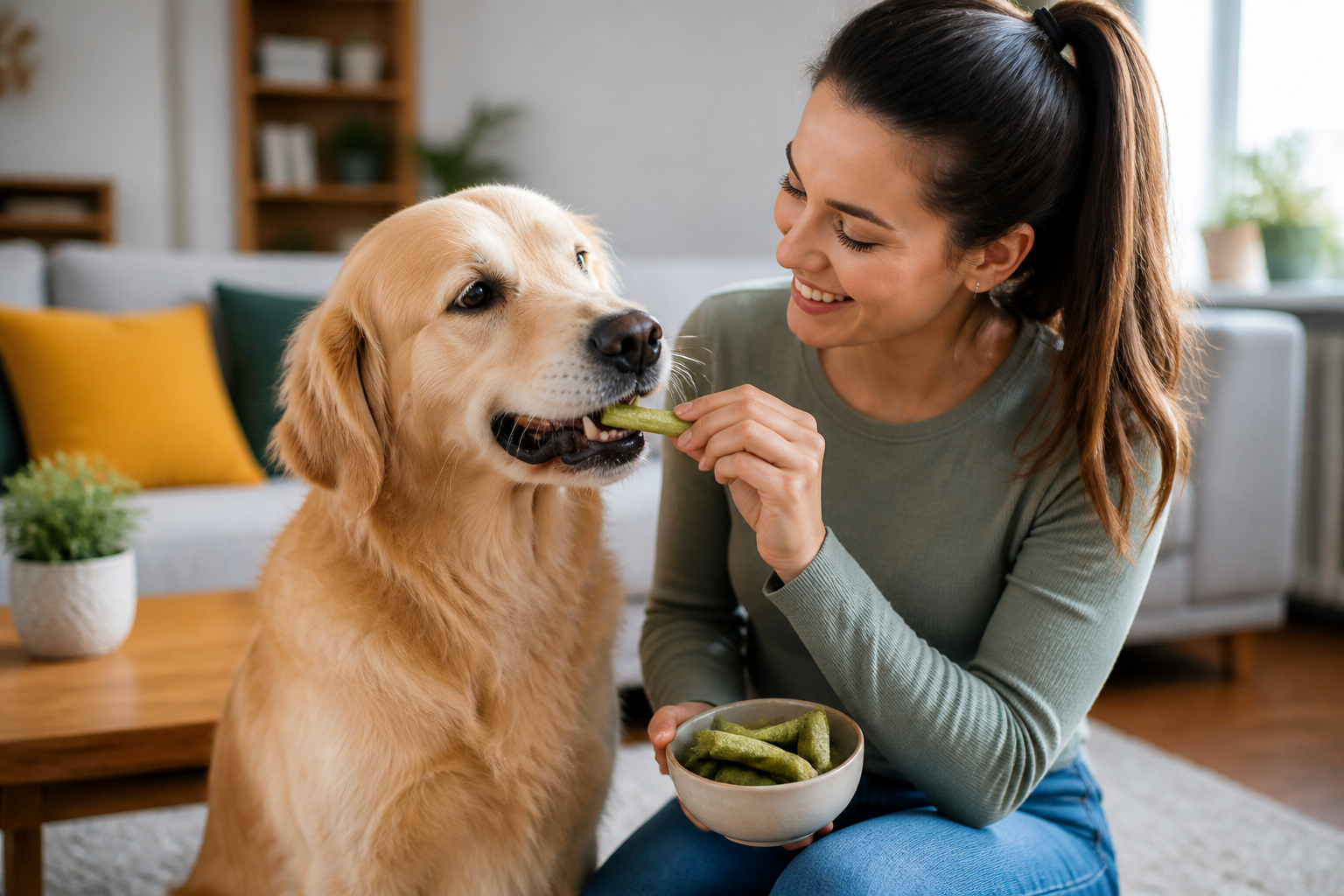
If you cannot get a toothbrush into your dog's mouth, let them do the work themselves. High-quality dental chews are designed with specific textures that act like a squeegee against the tooth surface. As your dog gnaws on the chew, the edges scrape away plaque before it can harden into tartar. Explore our dental treats for dogs for brushless options.
When choosing a chew, look for the Veterinary Oral Health Council (VOHC) seal of approval. This seal means the product has been tested and proven to reduce plaque or tartar. Brands like Greenies are popular for a reason: they are flexible enough to wrap around the teeth but firm enough to provide resistance.
Step 1: Choose the right size. / A chew that is too small can be a choking hazard, while one that is too large might be too hard for your dog to manage. Step 2: Monitor the calories. / Most dental treats have a significant calorie count, so you should reduce your dog's meal portion slightly to compensate. Step 3: Feed daily for best results. / Consistency is key because plaque forms every single day.
2. Introduce Water Additives and Oral Rinses
Water additives are essentially mouthwash for dogs. You simply add a capful of the liquid to their water bowl. Products such as OxyFresh Pet Dental Water Additive are designed for dogs that need a brushless option. These products usually contain ingredients like chlorhexidine or stabilized chlorine dioxide. These components help kill the bacteria that cause bad breath without changing the taste of the water.
This is an excellent option for pets that are sensitive to touch around their mouths. Most additives are odorless and tasteless. We see many owners find success with this method because it requires almost zero effort from the pet. It works every time your dog takes a drink throughout the day.
Key Takeaway: Water additives provide a passive way to manage oral bacteria. They are most effective when used in a clean stainless steel or ceramic bowl that is washed daily to prevent slime buildup.
3. Utilize Durable Rubber and Rope Toys
Not all "dental" items have to be edible. Toys made from durable rubber or twisted cotton rope can provide excellent mechanical cleaning. Look for toys with nubs, ridges, or bristles. When a dog chews on these surfaces, the rubber massaged the gums and helps dislodge food particles trapped between the teeth. Browse our dental dog toys for textured play options.
Knotty rope toys act like dental floss. As the fibers slide between the teeth, they can help clean areas that a standard chew might miss. Just be sure to supervise your dog with rope toys. If they start to shred the cotton, they might swallow the strings, which can cause digestive blockages.
4. Feed Crunchy Vegetables as Natural Toothbrushes
Nature has its own versions of dental tools. Crunchy, water-dense vegetables like carrots and celery are fantastic for freshening breath. The act of crunching through a firm carrot helps scrape the surface of the molars.
Slices of seedless apples are also a great choice. Apples contain malic acid, which can help break down stains and refresh the mouth. Always remove the seeds and the core, as apple seeds contain small amounts of cyanide and the core can be a choking hazard.
- Carrot sticks (frozen for extra soothing)
- Slices of fresh cucumber
- Green beans (fresh or frozen)
- Celery sticks (remove the long strings for small dogs)
5. Add Natural Breath Fresheners to Food
You can mix certain herbs and oils directly into your dog's kibble to help with odor. Fresh parsley is a classic remedy. It is rich in chlorophyll, which is a natural deodorizer. A small amount of curly parsley chopped up and sprinkled over their dinner can make a noticeable difference in a few days.
Coconut oil is another favorite. It has natural antimicrobial properties that can help reduce the population of harmful bacteria in the mouth. Start with a small amount, like a quarter teaspoon for small dogs or a tablespoon for large dogs, to avoid upsetting their stomach. Most dogs love the taste and will lick it right off a spoon.
Key Takeaway: Natural additives like parsley and coconut oil work from the inside out to neutralize odors. Always introduce new ingredients slowly to ensure your dog does not have an allergic reaction or digestive upset.
6. Support Gut Health with Probiotics
If your dog's breath smells like it is coming from their stomach, the balance of bacteria in their gut might be off. Probiotics are beneficial bacteria that help crowd out the "bad" bacteria in the digestive tract. When the gut is healthy, gas and odors are less likely to travel back up the esophagus.
We carry several probiotic supplements that are formulated specifically for canine needs. Brands like Zesty Paws or Honest Paws offer chewable options that dogs view as treats. By improving digestion, you are addressing one of the most common non-dental causes of halitosis.
7. Clean Their Gear Regularly
Sometimes the smell we associate with our dog's breath is actually coming from their environment. If your dog plays with a plush toy all day, that toy becomes saturated with saliva and bacteria. When they go back to play with it later, they are essentially putting those bacteria back into their mouth.
Check their water and food bowls too. A slimy film, often called biofilm, can develop on the surface of the bowl. This is a colony of bacteria that can contribute to bad breath and even infections. Wash bowls in hot, soapy water every day. Wash fabric toys in the laundry once a week and replace any that have become excessively smelly or worn out.
When Home Remedies Are Not Enough
While the tips above are great for maintenance, they cannot fix deep-seated dental disease. If your dog has thick, brown tartar buildup or red, bleeding gums, home remedies will only mask the problem. In these cases, your dog likely needs a professional cleaning from a veterinarian. Our dog dental health selection can support an at-home routine.
Our pharmacy provides access to FDA-approved medications and prescription diets through our partnership with Pet's Choice. If your vet determines that your dog has a specific health condition like periodontal disease or a systemic issue, they may prescribe a specialized dental diet. These diets use a specific kibble shape and fiber matrix that doesn't crumble immediately. It stays in contact with the tooth longer to provide a deeper clean.
Vet Tip: Periodontal disease can lead to bacteria entering the bloodstream, which may affect the heart, liver, and kidneys. Do not ignore persistent bad breath, as it is often the first sign of an infection that needs medical intervention.
The Role of Diet in Oral Health
The type of food you feed plays a massive role in how their breath smells. Some owners find that wet food contributes more to bad breath because it sticks to the teeth and gums. Dry kibble is often touted as better for teeth, but most dogs swallow kibble whole or only break it once. Browse our dog food selection when considering your dog's overall diet.
Consider switching to a high-quality food with limited fillers. Cheap grains and sugars can feed the bacteria in the mouth, leading to faster plaque formation. If your dog has chronic dental issues, ask your vet about a prescription dental food. We can help you fulfill those prescriptions easily through our pharmacy services, ensuring your pet gets the exact nutrition they need for their condition.
Creating a Consistent Routine
The secret to success is consistency. Choosing just one method might not be enough. Instead, try a combination of a few strategies to tackle the problem from multiple angles. For example, you might use a water additive daily, give a dental chew every evening, and sprinkle a little parsley on their food. For more ideas, read our pet dental care tips.
You do not need to spend hours a day on this. Most of these methods take less than a minute to implement. By making these small changes, you can avoid the struggle of a toothbrush while still protecting your dog's health and making those morning cuddles much more pleasant.
Bottom line: A multi-faceted approach combining mechanical chews, water additives, and a healthy diet is the most effective way to freshen breath without a toothbrush.
Conclusion
Managing your dog's breath does not have to be a battle of wills involving a toothbrush and paste. By utilizing dental chews, water additives, and crunchy healthy snacks, you can significantly reduce the bacteria and plaque that cause odors. Remember to keep their bowls and toys clean to prevent bacteria from recirculating. If you notice your dog's breath smells like ammonia or fruit, or if their gums look inflamed, please consult your veterinarian. We are here to support your journey through our curated selection at BaxterBoo, and our pet pharmacy is ready to help with any prescription needs through our partnership with Pet's Choice. Start with a simple water additive or a new chew toy today to see a difference in your dog's breath.
- Rotate different textures of toys to keep them interested.
- Monitor your dog's weight when adding dental treats.
- Clean water bowls daily to prevent biofilm.
- Check in with your vet once a year for a professional dental exam.
Key Takeaway: Consistency is the most important factor in oral health. Choose two or three non-brushing methods that fit your lifestyle and stick to them daily for the best results.
FAQ
Can I use human mouthwash in my dog's water?
No, you should never use human mouthwash for a dog. Human products often contain xylitol, which is highly toxic to dogs even in small amounts, or alcohol and fluoride which are also harmful. Always use a dedicated pet water additive that is specifically formulated for canine safety.
Do dental chews actually work if my dog eats them fast?
Dental chews are most effective when a dog spends time gnawing on them, but even quick chewers benefit from the mechanical action. If your dog gulps treats down, try providing a larger size or a firmer chew toy that they cannot swallow quickly. Always supervise your dog to ensure they do not swallow large chunks.
How often should I add parsley to my dog's food?
You can add a small amount of chopped curly parsley to your dog's food daily. For most dogs, a teaspoon for small breeds or a tablespoon for large breeds is sufficient. Ensure you are using curly parsley, as other varieties like spring parsley can be toxic in large quantities.
Is bad breath always a sign of a dental problem?
While plaque and tartar are the most common causes, bad breath can also stem from digestive issues, kidney disease, or diabetes. If you have improved your dog's oral hygiene and the smell remains, it is time for a veterinary check-up. Our pharmacy partnership with Pet's Choice can help you manage many of these underlying conditions with the right prescription medications.






