
 Save 15% on your 1st Autoship learn more

 Email us
 Live Chat
 FAQs
FAQs





Introduction
You lean down for a happy morning nuzzle, but instead of sweetness, you get a face full of "dog breath." It is a familiar moment for almost every pet owner. While we know that daily brushing is the gold standard for canine dental health, some dogs simply will not tolerate a toothbrush. Other times, your schedule makes it hard to keep up with a rigid cleaning routine. Here at BaxterBoo, we know that keeping your dog healthy involves practical solutions that actually fit your life. This guide covers how to freshen dogs breath without brushing by using natural snacks, dental toys, and smart dietary changes. We will also help you identify when stinky breath is a sign that you need to visit the vet or explore our pharmacy options.
Quick Answer: You can freshen a dog's breath without brushing by using mechanical tools like dental chews and rubber toys. Natural additives like parsley, mint, and coconut oil also neutralize odors. For a deeper fix, focus on high-quality nutrition and probiotics to support digestive health.
Why Some Dogs Have Stinky Breath
Before you can fix the smell, you need to understand where it comes from. Most bad breath, known medically as halitosis, starts with bacteria. When your dog eats, food particles mix with saliva to form plaque. If that plaque is not removed, it hardens into tartar. This rocky buildup traps even more bacteria against the gums.
Bacteria produce foul-smelling sulfur compounds. This is why a dog with heavy tartar buildup often has a very distinct, pungent odor. However, the mouth is not the only source of the problem. Sometimes the smell comes from further down in the digestive tract. If your dog has a sensitive stomach or poor digestion, gas and odors can travel back up.
In some cases, breath odor is a red flag for internal health. A sweet or fruity smell can sometimes point toward diabetes. A smell like ammonia or urine may suggest kidney issues. If the breath smells like a musty basement or extreme decay, it could be a sign of liver problems. Always pay attention to the specific "flavor" of the odor.
Vet Tip: If your dog’s breath suddenly changes or becomes overwhelming, schedule a veterinary exam. While most bad breath is dental, it can also signal kidney, liver, or metabolic issues. A vet can rule out these conditions before you start a home freshening routine.
The Power of Mechanical Cleaning
If you are not using a toothbrush, you need something else to do the heavy lifting. Mechanical cleaning refers to the physical action of rubbing or scraping the teeth. This helps knock loose the soft plaque before it can harden into tartar.
Dental Chews and Treats
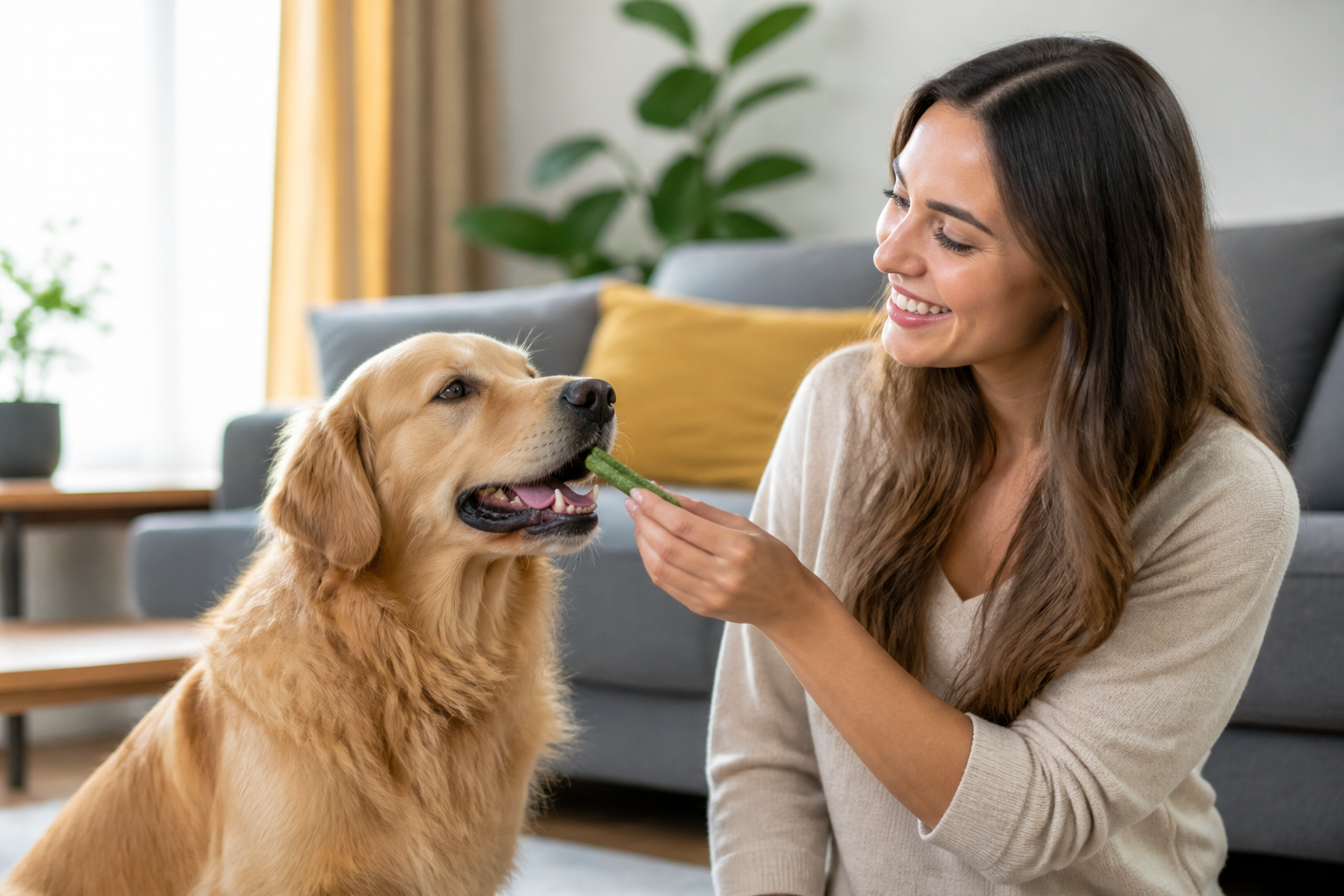
Many treats are specifically designed to scrub teeth as the dog chews. Brands like Greenies or dental-specific kibbles often have a texture that allows the tooth to sink in. This creates friction along the entire surface of the tooth. When choosing a chew, look for the Veterinary Oral Health Council (VOHC) seal. This seal confirms the product has been tested and proven to reduce plaque and tartar.
For additional options, browse our dog dental treats, including dental chews and treats designed for everyday oral care.
Rubber and Rope Toys
Toys can be your best friend when it comes to oral hygiene. Hard rubber toys with ridges or "nubs" act like a massager for the gums. As your dog gnaws on a Kong or a textured bone, the rubber scrapes against the enamel. Rope toys can also act like a form of "floss." As the cotton strands slide between the teeth, they can help pull away debris.
You can also explore our dog dental health collection for textured toys and dental chews.
Natural Abrasives from the Fridge
You do not always need a store-bought toy to clean teeth. Some common vegetables provide excellent mechanical cleaning because of their fibrous texture.
- Carrots: Whole, raw carrots are crunchy and require significant chewing. This helps scrape the back molars.
- Celery: The strings in celery act as a natural floss. It also has high water content which helps rinse the mouth.
- Apples: Slices of apple (without seeds) are firm enough to provide some scrubbing action.
| Method | Benefit | Best For |
|---|---|---|
| Dental Chews | Enzymatic and mechanical cleaning | Daily maintenance |
| Rubber Toys | High durability and friction | Aggressive chewers |
| Rope Toys | Flossing action between teeth | Interactive play |
| Raw Veggies | Low-calorie and abrasive | Weight-conscious dogs |
Bottom line: Mechanical cleaning uses friction to remove plaque, which is the primary cause of bad breath.
Using Natural Herbs and Additives
Nature provides several powerful deodorizers that are safe for dogs. These can be added directly to their food or water to neutralize smells from the inside out.
Parsley and Mint
Parsley is a classic breath freshener for humans, and it works just as well for dogs. It contains chlorophyll, which is a natural deodorizer. You can finely chop fresh curly-leaf parsley and sprinkle it over your dog’s meals. Aim for about one teaspoon per ten pounds of body weight.
Fresh mint is another excellent option. It provides a sharp, clean scent that masks odors immediately. Make sure you use actual peppermint or spearmint, not essential oils. A few chopped leaves mixed into their kibble can make a big difference.
Coconut Oil
Coconut oil is often called a "superfood" for pets. It has antiviral, antifungal, and antibacterial properties. These properties help kill the "bad" bacteria in the mouth that cause smells. Most dogs love the taste, so you can let them lick a spoonful or mix it into their food. Start with a small amount, like a quarter teaspoon, to make sure it does not upset their stomach.
Apple Cider Vinegar
Adding a tiny bit of raw, organic apple cider vinegar to your dog's water bowl can help balance the pH of their mouth. A more acidic environment makes it harder for stinky bacteria to thrive. Use no more than a teaspoon for a large water bowl. If your dog is picky about their water, start with just a few drops and gradually increase the amount.
The Role of Water and Hydration
A dry mouth is a smelly mouth. Saliva is the body's natural way of rinsing the mouth and neutralizing acids. If your dog is dehydrated, their saliva becomes thick and sticky. This allows bacteria to grow much faster.
Make sure your dog always has access to fresh, clean water. Scrub their water bowl daily with soap and water. Slimy film on the inside of the bowl is called biofilm. This is a collection of bacteria that your dog slurps up every time they take a drink. If the bowl is dirty, their breath will be too.
You can also find water additives specifically made for pet dental health. These are tasteless liquids that you pour into the water bowl. They often contain enzymes or ingredients like chlorhexidine that help break down plaque without any effort from the dog.
Water Bowl Hygiene Checklist
- Wash the bowl every single day with hot, soapy water.
- Refill with fresh, cool water at least twice daily.
- Check for "slime" or biofilm every morning.
- Switch to stainless steel or ceramic bowls, as plastic can trap bacteria in tiny scratches.
Key Takeaway: Proper hydration and clean bowls prevent bacteria from stagnating in the mouth, which reduces the overall odor.
Improving Digestion to Fix Breath
Sometimes bad breath is not a mouth problem. It is a gut problem. If your dog has an imbalance of bacteria in their digestive system, it can cause gas and foul smells that rise up.
Probiotics for Dogs
Probiotics are "good" bacteria that help keep the digestive system in balance. By adding a probiotic supplement to your dog's diet, you can crowd out the odor-causing bacteria. This often results in better-smelling breath and less gas. We carry several high-quality probiotic supplements at BaxterBoo, including brands like Zesty Paws and Honest Paws.
You can browse our selection of Zesty Paws products when looking for digestive supplements and other wellness products.
High-Quality Proteins
Cheap dog foods often contain fillers and "by-products" that are hard for dogs to digest. When food sits in the digestive tract longer than it should, it begins to ferment. This leads to bad breath. Switching to a high-quality, limited-ingredient diet can improve digestion. Look for foods that list a specific meat (like chicken or beef) as the first ingredient and avoid artificial colors or sweeteners.
Step-by-Step: Introducing a Fresh Breath Routine
If you want to see results, you need a consistent plan. You do not have to do everything at once. Start slowly and see what your dog enjoys.
Step 1: Audit the water bowl. / Scrub the bowl and ensure your dog is drinking plenty of fresh water throughout the day.
Step 2: Add a natural booster. / Try mixing a teaspoon of chopped parsley or a small amount of coconut oil into their dinner tonight.
Step 3: Provide a dental toy. / Give your dog a textured rubber toy or a dental chew after their largest meal to help scrape away new plaque.
Step 4: Monitor the results. / Check your dog's breath after one week. If it has not improved, it may be time to look at their food or consult a vet.
For more guidance about warning signs, read how to recognize signs of bad teeth in dogs.
When to Use the BaxterBoo Pharmacy
If home remedies like carrots and parsley are not enough, your dog might have underlying periodontal disease. This is a medical condition where bacteria have moved under the gumline. At this stage, simple freshening will not solve the problem.
Our pharmacy at BaxterBoo offers FDA-approved medications and prescription diets through our partnership with Pet's Choice. If your veterinarian determines that your dog needs a professional intervention, they might prescribe:
- Prescription Dental Diets: Brands like Royal Canin or Farmina Vet Life offer specialized kibble shaped to scrub teeth more effectively than standard food.
- Antibiotics: If there is an infection in the gums, your vet may prescribe a course of antibiotics.
- Antimicrobial Rinses: Medical-grade mouthwashes can be more effective for severe cases.
You can easily manage these prescriptions through us, making it convenient to get exactly what your pet needs delivered to your door. Remember that you will need a valid prescription from your vet to order these items from the pharmacy section.
Visit our pet pharmacy for prescription products when recommended by your veterinarian.
Conclusion
Freshening your dog’s breath without brushing is entirely possible with a multi-layered approach. By combining mechanical cleaning from toys and raw veggies with natural additives like parsley and coconut oil, you can significantly reduce mouth odors. Always keep an eye on your dog’s overall health and remember that stinky breath can sometimes be a sign of internal issues. If home remedies are not enough, our pharmacy is here to help with professional-grade solutions. Visit our dog dental and breath care collection to find the right supplements and dental aids for your dog today.
Bottom line: A combination of crunchy snacks, clean water, and gut health support can keep your dog's kisses sweet without the stress of a toothbrush.
FAQ
Why does my dog's breath smell like fish?
Fishy breath is often caused by a buildup of bacteria or dental disease, but it can also be linked to the anal glands. If a dog licks their anal glands, the scent can transfer to their mouth. Additionally, some fish-based diets naturally cause a lingering odor on the breath.
Is coconut oil really safe for a dog's breath?
Yes, coconut oil is safe and beneficial for most dogs when given in moderation. It contains lauric acid, which has antimicrobial properties that help kill odor-causing bacteria in the mouth. Start with a small amount to avoid digestive upset, as the high fat content can be rich for some pets.
Can carrots actually replace teeth brushing?
While carrots provide excellent mechanical scraping that helps remove plaque, they are not a complete replacement for veterinary dental care. They are a great supplemental tool for daily maintenance and weight-friendly snacking. They work best when combined with other methods like dental toys and water additives.
When should I worry about my dog's bad breath?
You should consult a vet if the breath smells like ammonia, urine, or sweet fruit, as these can signal organ failure or diabetes. Other warning signs include bleeding gums, excessive drooling, or a sudden loss of interest in hard food. Persistent foul breath that does not improve with home care usually indicates a need for a professional cleaning.






