
 Save 15% on your 1st Autoship learn more

 Email us
 Live Chat
 FAQs
FAQs





Introduction
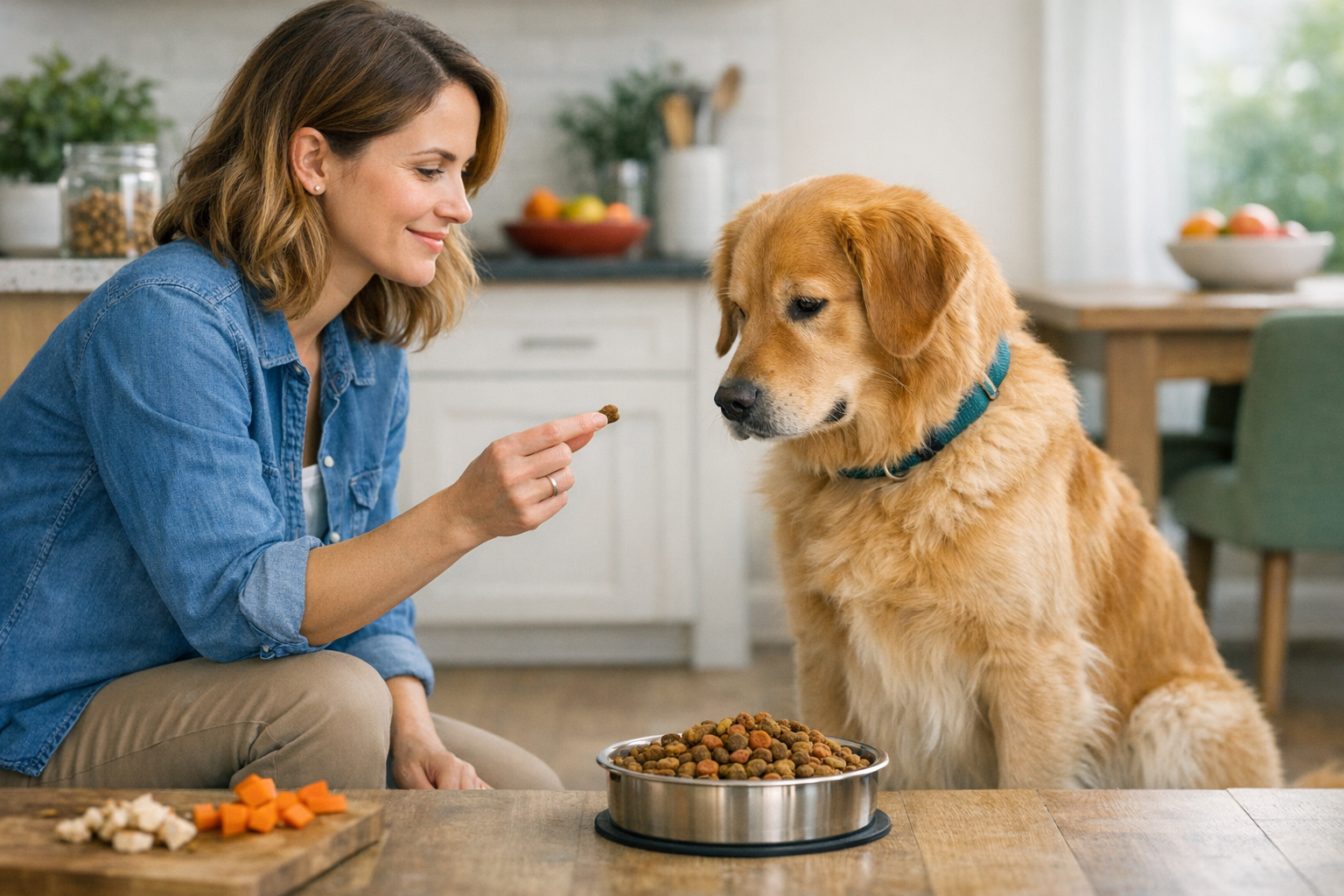
You set the bowl down and hear the familiar clink of kibble hitting the ceramic. Your dog walks over, takes a single sniff, and then looks at you with a heavy sigh before walking away. This moment is incredibly frustrating for any pet parent. You want your dog to be healthy, but they seem to be holding out for something better. At BaxterBoo, we talk to owners every day who are struggling with this exact scenario. We know that a dog refusing their dinner can cause real worry. This guide explores why your dog might be turning their nose up at their bowl and provides practical steps to fix it. We will cover everything from simple kitchen tricks to behavioral adjustments that encourage a healthy appetite.
Quick Answer: To get a dog to eat dry food, try adding warm water or low-sodium broth to enhance the aroma. You can also mix in a small amount of wet food or a high-quality topper to increase palatability.
Rule Out Medical Concerns First
Before you assume your dog is just being stubborn, you must ensure they are not in pain. A sudden refusal to eat dry food is often a physical signal rather than a personality trait. Dry kibble is hard and requires significant crunching power. If a dog has a cracked tooth, swollen gums, or an abscess, that crunching becomes a source of sharp pain. They might still want to eat, which is why they might beg for soft table scraps but avoid their own bowl.
Digestive issues are another common culprit. If your dog feels nauseated, the smell of their regular food might be unappealing. This is similar to how humans feel when they have the flu. Other internal issues like kidney disease or liver changes can also suppress appetite. If the refusal to eat is accompanied by lethargy, vomiting, or a change in drinking habits, it is time for professional help.
Vet Tip: If your dog has not eaten for more than 24 hours, or if they are showing signs of dental pain like pawing at the mouth, schedule a veterinary exam. A professional can check for underlying health issues or dental disease that might make eating dry food uncomfortable.
The Power of Aroma and Temperature
Dogs experience the world through their noses first. Their sense of smell is thousands of times more powerful than ours. If dry food has been sitting in a large bag for months, the fats can begin to go slightly rancid or the aroma can simply fade. To a dog, this makes the food smell like cardboard. One of the easiest ways to get your dog to eat dry dog food is to "re-activate" the scent.
Warmth is the key to releasing food molecules into the air. When you heat up a meal, the molecules move faster and create a stronger scent profile. You can do this by adding a small amount of warm water to the kibble. Let it sit for a few minutes until it creates a light gravy. The moisture softens the texture while the warmth makes the food smell much more enticing.
Benefits of Softening Kibble
- Makes the food easier to chew for senior dogs.
- Increases hydration for dogs who do not drink enough water.
- Creates a natural gravy that coats every piece of kibble.
- Helps release the natural fats and flavors in the recipe.
Using Toppers and Mix-Ins Effectively
Sometimes a plain bowl of kibble needs a little help to compete with the exciting smells of human dinner. Toppers are a great way to add variety without completely changing your dog's base diet. Brands like our selection of Stella & Chewy's products or our selection of The Honest Kitchen products offer meal mixers and pour-overs specifically designed for this purpose. These products are formulated to be nutritionally complete so they do not unbalance the diet.
You do not always need a commercial topper. Simple items from your pantry can work wonders. A spoonful of plain canned pumpkin (not pie filling) adds fiber and a sweet flavor many dogs love. A splash of low-sodium chicken or beef broth can also do the trick. Just ensure any broth you use is free of onions and garlic, as these are toxic to dogs.
Safe Household Add-Ons
- Plain, unsweetened Greek yogurt (in small amounts).
- Low-sodium, onion-free chicken or beef broth.
- Canned sardines in water (no salt added).
- Fresh or frozen blueberries or green beans.
- A small amount of plain, boiled chicken breast.
Key Takeaway: Toppers should be used as a bridge to encourage eating, but they should not exceed 10% of your dog's total daily calories. This prevents them from becoming "balanced" on treats alone.
Breaking the "Treat Trap"
It is very easy to accidentally train your dog to be a picky eater. If your dog refuses their kibble and you immediately offer a piece of cheese or a handful of high-value treats, your dog learns a lesson. They learn that holding out results in a better reward. This is known as the "treat trap." Dogs are highly intelligent and will wait for the best possible option if they know it is coming.
To break this cycle, you must be consistent. Offer the food at a set time and leave it down for only 20 to 30 minutes. If your dog does not eat, pick the bowl up and do not offer any treats until the next scheduled mealtime. Most healthy dogs will not starve themselves. Once they realize the "bonus" snacks are not coming, the kibble in the bowl becomes much more interesting.
The Importance of a Consistent Routine
Dogs thrive on predictability. If feeding times are random, your dog might not feel the biological urge to eat when you finally set the bowl down. Feeding your dog at the same time every morning and evening helps regulate their digestive system. Their body will begin to expect food at those times, which naturally increases their appetite.
Exercise also plays a major role in hunger. A dog that has been lounging on the couch all day might not have burned enough energy to feel hungry. Try scheduling a vigorous walk or a game of fetch about 30 minutes before mealtime. The physical activity will stimulate their metabolism and make them much more likely to dive into their dry food.
Building a Successful Meal Routine
Step 1: Set a specific time for breakfast and dinner. / Stick to these times within a 30-minute window every day. Step 2: Provide a quiet environment. / Move the bowl away from high-traffic areas or noisy appliances that might distract your dog. Step 3: Use the 20-minute rule. / Put the bowl down and walk away. If the food is not gone in 20 minutes, remove it until the next meal. Step 4: Monitor treat intake. / Ensure no one else in the family is sneaking snacks to the dog between meals.
Checking the Quality and Freshness of the Food
Sometimes the problem is not the dog, but the food itself. Even high-quality brands like our selection of Purina Pro Plan products or our selection of Open Farm products can lose their appeal if stored incorrectly. Once a bag of dry food is opened, it begins to oxidize. If you buy a massive bag for a small dog, that food might be stale by the time you reach the bottom.
Always check the expiration date on the bag. If you suspect the food is stale, try buying a small, fresh bag of the same recipe to see if your dog’s interest returns. Store kibble in its original bag inside an airtight container. The bags are designed to keep moisture and air out, while the plastic container provides an extra layer of protection against pests and oxidation.
Bottom line: Freshness matters as much to dogs as it does to humans, so store food in airtight containers and buy sizes appropriate for your dog's eating pace.
Transitioning to a New Flavor or Texture
If you have ruled out health issues and tried the routine changes without success, your dog might simply dislike that specific recipe. Just like people, some dogs prefer fish over chicken or lamb over beef. They might also have a preference for kibble shape and size. Small breeds often prefer tiny, easy-to-crunch bites, while larger dogs might enjoy a more substantial "shredded" texture.
When switching to a new dry food, never do it all at once. An abrupt change can cause an upset stomach, which will only make your dog more wary of their bowl. We recommend a gradual transition over 7 to 10 days. This allows their digestive enzymes to adjust to the new protein and fiber sources.
The 10-Day Transition Guide
- Days 1-3: 25% new food mixed with 75% old food.
- Days 4-6: 50% new food mixed with 50% old food.
- Days 7-9: 75% new food mixed with 25% old food.
- Day 10: 100% new food.
Evaluating the Feeding Environment
The "where" and "how" of feeding can be just as important as the "what." Some dogs are "social eaters" who only want to eat when their family is nearby. Others are easily distracted or intimidated by loud noises. If your dog’s bowl is near a clattering dishwasher or a busy hallway, they may feel too anxious to focus on their meal.
The bowl itself can even be the issue. Some dogs dislike the sound of their metal collar tags hitting a stainless steel bowl. The clinking sound can startle them. In these cases, switching to a ceramic or plastic bowl can make a huge difference. You might also try a shallow plate if your dog seems hesitant to put their head deep into a bowl.
When to Consider Different Types of Dry Food
Not all kibble is created equal. Some brands focus on high protein, while others use more grain-inclusive recipes. If your dog is consistently refusing a very hard, dense kibble, they might prefer a brand that offers a "tender" or "shredded" blend. These recipes mix standard crunchy kibble with softer, meatier pieces.
At BaxterBoo, we carry over 500 brands, including options like Acana, Orijen, and our selection of Open Farm products. These brands often use high-quality animal fats that provide a stronger, more natural aroma. If your dog is a senior, look for life-stage-specific formulas. These are often designed to be more palatable for aging dogs who may have a diminished sense of taste or smell.
Conclusion
Getting a dog to enjoy their dry food often requires a mix of patience and a few simple tricks. Start by ensuring there are no dental or health issues causing the refusal. Then, look at the routine. By using warm water to enhance aroma, limiting treats, and maintaining a strict feeding schedule, you can help your dog rediscover their appetite. Remember that consistency is your best tool. If you keep the environment calm and the food fresh, most dogs will eventually settle into a healthy eating habit. For more support, our team at BaxterBoo is always ready to help you find the right toppers or a new flavor that your dog will love. Consider signing up for our Autoship programme to ensure your dog's favorite fresh food is always on hand exactly when you need it.
FAQ
How long can a healthy dog go without eating?
Most healthy adult dogs can go for 2 or 3 days without eating as long as they are still drinking water. However, you should not wait this long before acting. If your dog refuses food for more than 24 hours, it is best to contact your veterinarian to rule out any underlying medical issues.
Can I mix wet food with dry food forever?
Yes, mixing wet and dry food is a perfectly healthy way to feed your dog long-term. Just make sure you are adjusting the portions of both to ensure the total calorie count is correct for your dog's weight. This combination provides the dental benefits of kibble with the hydration and flavor of wet food.
Why does my dog eat treats but not their dry food?
Treats are usually much higher in fat, salt, and sugar than regular kibble, making them taste much better. Your dog might be holding out because they know that if they don't eat the "boring" food, you might give them the "exciting" treats. Cutting back on treats is often the first step in solving picky eating.
Is it okay to leave dry food out all day for my dog?
"Free feeding" or leaving food out all day is generally not recommended for picky eaters. It removes the motivation to eat during mealtime and can lead to obesity. Establishing set mealtimes helps regulate your dog's appetite and allows you to monitor exactly how much they are eating.






