
 Save 15% on your 1st Autoship learn more

 Email us
 Live Chat
 FAQs
FAQs





Introduction
You are sitting on the rug playing with your dog when they lean in for a friendly lick. Instead of a happy moment, you are met with a scent that is a little too strong. This is usually the exact second a pet owner realizes those pearly whites are not quite so white anymore. At BaxterBoo, we talk to owners every day who want to avoid the stress of a daily toothbrushing struggle. While brushing is a standard recommendation, it is not the only way to manage oral hygiene. This article covers how to use natural chews, dietary changes, and specific supplements to keep your dog's mouth fresh. You will learn how to create a routine that works for your lifestyle and your dog’s personality.
Quick Answer: You can naturally clean a dog's teeth by using mechanical tools like dental chews and raw vegetables to scrape away plaque. Adding seaweed-based supplements to their food and using coconut oil as a natural antibacterial rub also helps maintain oral health without traditional brushing.
Understanding the Difference Between Plaque and Tartar
Before you start a natural cleaning routine, you need to know what you are fighting. Plaque is a soft, sticky film of bacteria that forms on the teeth within hours of eating. It is easy to remove with mechanical action or certain enzymes. If plaque stays on the teeth for more than a couple of days, it reacts with the minerals in your dog’s saliva. This is when it hardens into tartar, which is also called calculus.
Tartar is the hard, yellow or brown substance you see at the gumline. Once plaque has turned into tartar, it is nearly impossible to remove with a toothbrush or a carrot. It requires professional equipment to chip it away safely. This is why a natural routine is most effective as a preventative measure. You are trying to stop the plaque from ever getting the chance to harden.
A natural approach focuses on two things. First, it uses mechanical friction to rub the teeth clean. Second, it uses biological or chemical properties in food and supplements to disrupt the bacteria. This two-pronged approach is often enough to keep a dog's mouth healthy for years.
The Power of Seaweed Supplements
One of the most effective ways to clean teeth naturally is something your dog just swallows. Specific types of seaweed, particularly one called Ascophyllum nodosum, have been studied for their oral health benefits. This seaweed contains natural compounds that enter the dog's bloodstream and then come back out through the saliva.
Once the compounds are in the saliva, they work to soften existing tartar and prevent new plaque from sticking. This is a great option for dogs that do not like their mouths touched. You simply sprinkle the powder on their food once a day. It is a passive way to improve dental health that does not involve any wrestling.
Many owners notice a difference in their dog’s breath within a few weeks of starting a seaweed supplement. It is important to look for products that carry a seal of approval from the Veterinary Oral Health Council. This ensures the product has been tested and actually does what the label says.
Key Takeaway: Seaweed-based supplements work systemically through the saliva to soften plaque and make it easier to remove through normal chewing.
Using Dental Chews as a Natural Scraper
Most dogs love to chew, and you can use this natural instinct to your advantage. A good dental chew is designed to be abrasive. As your dog gnaws on it, the texture of the chew rubs against the surface of the tooth. This action acts like a natural toothbrush. For more options, browse our dental food and treat collection.
When you choose a chew, look for one with a firm but slightly flexible texture. If a chew is too hard, like a rock or a thick piece of plastic, it can actually fracture a dog's teeth. A good rule of thumb is the fingernail test. If you can leave a small dent in the chew with your fingernail, it is likely safe for their teeth.
We carry a wide variety of these options at BaxterBoo, ranging from grain-free treats to those with added enzymes. These enzymes help break down the protein chains that allow plaque to stick to the enamel. Providing a chew a few times a week can significantly reduce the amount of buildup on the back molars. You can also compare ideas in our guide to the best dental chews for dogs.
Choosing the Right Size Chew
- Small breeds: Need tiny chews they can actually get their jaws around to ensure they are actually chewing and not just swallowing.
- Power chewers: Require denser materials that take longer to break down to provide more rubbing time.
- Seniors: May need softer dental bites if they have sensitive gums or missing teeth.
Fresh Vegetables for Mechanical Cleaning
If you are looking for a low-calorie way to clean teeth, look no further than your refrigerator. Raw vegetables are excellent natural tools for oral hygiene. Carrots and apples are two of the most popular choices for a few reasons.
Raw carrots are very dense and fibrous. When a dog crunches on a large piece of carrot, the fibers act like a scrubbing brush. Carrots also contain Vitamin A, which is good for overall health. Apples work in a similar way, but you must always remove the seeds and the core first. The skin and the flesh of the apple provide a light abrasive quality that helps clear away food debris after a meal.
Vet Tip: While vegetables are great for cleaning, they do contain natural sugars. Always give these in moderation and consult your veterinarian if your dog is overweight or has blood sugar issues.
The Role of Raw Bones in Dental Care
Feeding raw bones is a traditional method for keeping a dog's mouth clean. In the wild, canines clean their teeth by crunching through the bones and hides of their prey. For domestic dogs, the mechanical action of "knuckle bones" or "marrow bones" can be very effective at removing tartar.
However, safety is the most important factor when using bones. You must never feed cooked bones. Cooking makes bones brittle and prone to splintering, which can cause internal injuries. Raw bones are softer and more flexible, which makes them safer for the digestive tract.
You should always supervise your dog when they have a bone. Some dogs are enthusiastic chewers and may try to swallow large chunks. Others might chew so hard that they wear down their enamel over time. If you see your dog's gums bleeding or if the bone is getting small enough to swallow, it is time to take it away.
Natural Antimicrobial Rubs
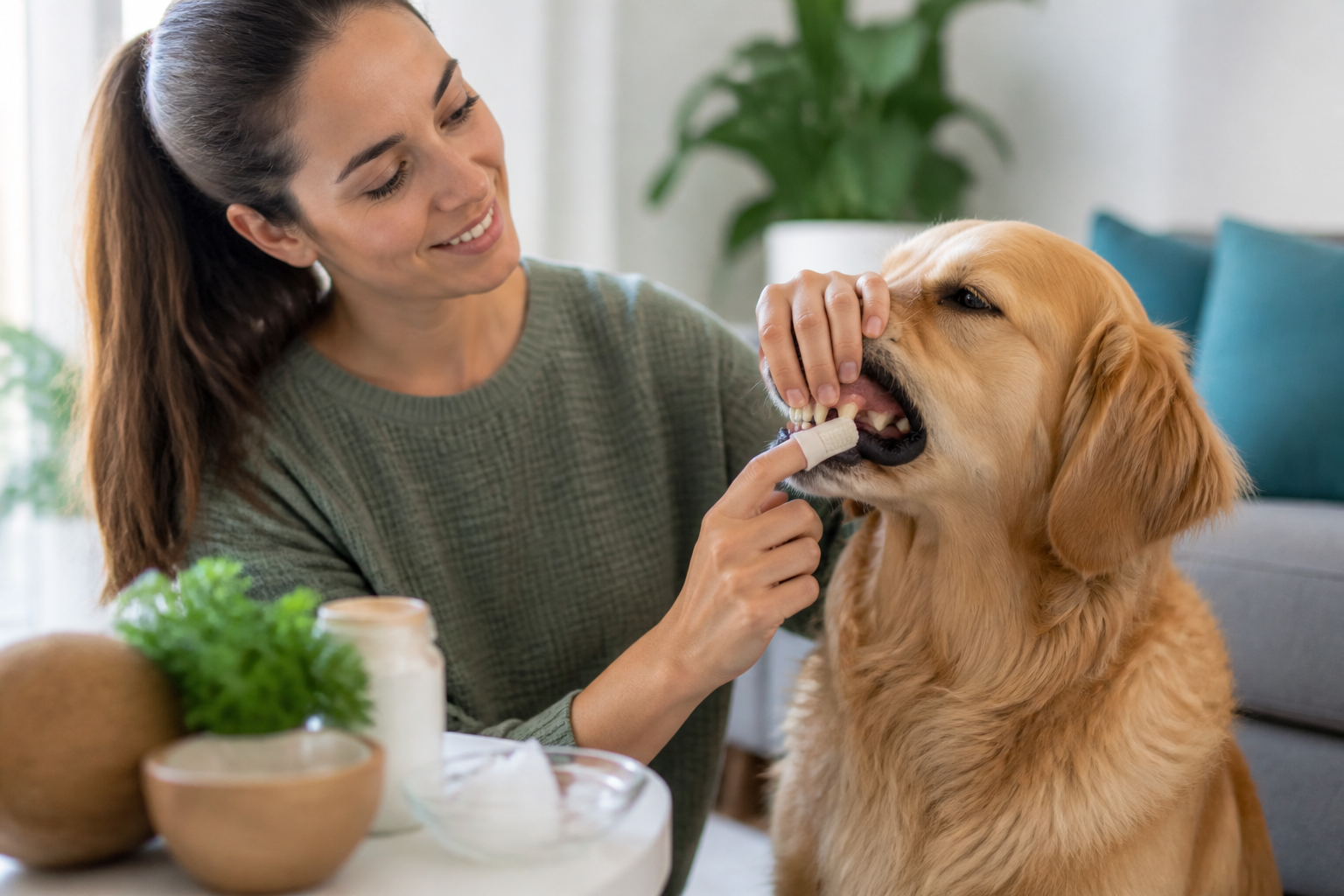
If your dog will allow you to touch their mouth, you can use natural oils to help fight bacteria. Coconut oil is a favorite for many pet owners. It contains lauric acid, which has natural antimicrobial and antifungal properties. These properties help kill the bacteria that cause bad breath and plaque.
You can apply coconut oil in a few ways:
- Apply a small amount to a finger brush and rub the teeth and gums.
- Let the dog lick it off a spoon, which provides some minor coating of the teeth.
- Freeze small dollops of coconut oil for the dog to crunch on.
Because it tastes good, most dogs are very willing to participate. It is a much more pleasant experience for them than the minty flavors often found in human-style products. For additional routine ideas, read the top pet dental care tips.
Bottom line: Natural oils like coconut oil provide a safe, tasty way to reduce oral bacteria without using harsh chemicals.
Step-by-Step: Transitioning to a Natural Routine
If you want to start a new routine, it is best to go slowly. Introducing too many new treats or supplements at once can upset a dog’s stomach.
Step 1: Choose your primary method. / Decide if you want to use a daily supplement powder or a weekly dental chew as your main tool.
Step 2: Introduce the new item gradually. / Give a small portion of the chew or half the dose of the supplement for the first three days to check for allergies or digestion issues.
Step 3: Monitor the results. / Check your dog’s breath and the color of their gums once a week to see if you notice an improvement.
Step 4: Rotate your tools. / Use a carrot one day and a dental toy the next to keep the dog engaged and address different parts of the mouth.
When Natural Methods Are Not Enough
While natural cleaning is a powerful tool, it has limits. If a dog already has severe dental disease, no amount of carrots or seaweed will fix the problem. You need to be able to recognize when it is time to call the professional team. For more warning signs, see what to know about bad teeth in dogs.
Signs that your dog needs a veterinary exam include:
- Red, swollen, or bleeding gums.
- One-sided chewing or dropping food.
- A sudden change in the smell of their breath that is sharp or rotten.
- Loose teeth or visible pus around the gumline.
If your dog is diagnosed with a condition that requires medication or a prescription diet, we can help. Our pharmacy offers FDA-approved medications and prescription pet foods through our partnership with Pet's Choice. This includes diets specifically formulated to support dental health through unique kibble shapes and added minerals.
Vet Tip: Regular checkups are the best way to catch dental issues before they become painful. A quick look by a professional once a year can save your dog from losing teeth later in life.
Engaging Toys for Dental Enrichment
Not every cleaning tool has to be edible. Many rubber toys are designed specifically to clean teeth while a dog plays. These toys often have "nubs" or "grooves" that are spaced to fit between a dog's teeth. Explore our dog dental care collection for toys and other oral-care options.
When a dog bites down on the toy, the rubber massaged the gums and scrapes the teeth. You can even smear a little bit of dog-safe toothpaste or coconut oil into the grooves of the toy to make it more effective. This turns cleaning time into playtime, which reduces the stress for both you and your pet. Brands like Kong are famous for making durable toys that can withstand heavy chewing while supporting oral health. You can browse our selection of KONG products for enrichment options.
The Importance of Consistency
The most important part of any natural cleaning routine is consistency. Plaque never stops forming. If you give a dental chew once a month, it will not have a lasting impact. You need to make oral care a part of your daily or weekly schedule.
A simple routine might look like a daily seaweed supplement in their breakfast and a raw carrot as an evening treat. On the weekends, you might offer a more durable dental chew or spend a few minutes rubbing their teeth with coconut oil. When you make it a habit, it becomes a normal part of your dog's life rather than a stressful event.
Why Quality Matters in Natural Products
When you are shopping for natural dental solutions, quality is everything. Many products on the market use "natural" as a buzzword but contain fillers or low-grade ingredients. At BaxterBoo, we handpick our brands to ensure they meet high standards for safety and efficacy.
Whether you are looking for grain-free chews or organic supplements, we focus on products that have real benefits. Using high-quality ingredients reduces the risk of digestive upset and ensures your dog is getting the nutrients they need to support healthy gums and strong enamel.
Summary of Natural Cleaning Methods
| Method | Best For | Benefit |
|---|---|---|
| Seaweed Supplements | Dogs who hate mouth handling | Systemically softens plaque via saliva |
| Raw Vegetables | Calorie-conscious owners | Mechanical scrubbing with fiber |
| Coconut Oil | Antibacterial support | Kills bad breath bacteria naturally |
| Dental Toys | High-energy chewers | Scrapes teeth during normal play |
| Raw Bones | Experienced chewers | Heavy-duty tartar removal |
Conclusion
Keeping your dog's teeth clean does not have to be a chore that you both dread. By incorporating natural tools like seaweed supplements, raw vegetables, and durable dental toys, you can maintain a healthy mouth with very little stress. Remember that consistency is the key to preventing plaque from turning into stubborn tartar. We invite you to explore our selection of dental care products and our Autoship programme to find the best fit for your dog. If your pet ever needs specialized support, our pharmacy is ready to provide the prescription diets and medications your vet recommends. Start with one small change today and watch your dog's smile stay bright for years to come.
FAQ
Can I use human toothpaste to clean my dog's teeth naturally?
No, you should never use human toothpaste for dogs. It often contains Xylitol, which is a sugar substitute that is highly toxic to dogs, and foaming agents that can upset their stomachs. Natural dog-safe alternatives like coconut oil or specialized pet toothpastes are much safer options.
Do natural dental chews actually work as well as brushing?
While brushing is the gold standard for removing plaque, high-quality dental chews are an effective alternative for dogs that will not tolerate a brush. They provide mechanical friction and often contain enzymes that help break down plaque. For the best results, use them as part of a varied routine that includes other natural methods.
How often should I give my dog raw carrots for their teeth?
You can give your dog a few slices of raw carrot every day as a low-calorie treat. If you are using large whole carrots for mechanical cleaning, two or three times a week is usually sufficient. Always monitor your dog to make sure they are chewing the carrot thoroughly and not swallowing large pieces.
Can old dogs start a natural dental routine?
Yes, dogs of any age can benefit from a natural dental routine. However, for senior dogs, you should be more careful with very hard chews or bones that could damage aging teeth. Supplements like seaweed powder and soft dental wipes or coconut oil rubs are excellent, gentle choices for older pets.






