
 Save 15% on your 1st Autoship learn more

 Email us
 Live Chat
 FAQs
FAQs





Introduction
You might only notice your dog's mouth when they lean in for a sloppy greeting. If that greeting comes with a scent that makes you recoil, you are not alone. Many owners wonder if the "dog breath" stereotype is just a part of life or a sign of a problem. At BaxterBoo, we see thousands of pet parents navigating this exact question every year. Some think dogs naturally clean their teeth by chewing on sticks or bones. Others worry that brushing is an unnecessary chore. This article explains why oral hygiene is actually one of the most critical parts of your dog's wellness routine. We will cover the risks of neglect, how to start an at home routine, and when to call in the professionals. Taking care of your dog's teeth is a baseline requirement for a long and comfortable life.
Quick Answer: Yes, cleaning your dog's teeth is essential for their overall health. Regular cleaning prevents plaque buildup that leads to painful gum disease, tooth loss, and serious systemic infections.
The Myth of the Self Cleaning Mouth
There is a long standing belief that dogs do not need dental help. People often point to wolves or wild dogs as proof. They assume that chewing on raw meat or bones provides all the cleaning a canine needs. This is a dangerous misunderstanding of modern dog health. Wild canines do not live nearly as long as our pampered house pets. They often suffer from fractured teeth and oral infections that go untreated.
Your dog likely eats a diet of processed kibble or soft canned food. These foods do not provide the abrasive action needed to scrub teeth clean. Even if you feed raw bones, they cannot reach the delicate area under the gum line. This is where the most dangerous bacteria live. Bacteria in the mouth form a sticky film called plaque. If you do not remove this film, it hardens into tartar within a few days. Once tartar forms, you cannot brush it away with a standard toothbrush. Explore our dog dental care category for tools and products that support an at-home routine.
Why Dental Care Matters for the Whole Body
Dental health is about much more than just fresh breath. When plaque and tartar accumulate, they irritate the gums. This leads to gingivitis, which you can recognize by a red or swollen gum line. If left alone, this progresses to periodontal disease. This condition destroys the bone and tissues that hold the teeth in place.
The mouth is a gateway to the rest of the body. The gums are full of tiny blood vessels. When those gums are inflamed and infected, bacteria can enter the bloodstream. This allows oral bacteria to travel to the heart, kidneys, and liver. Medical experts have linked chronic oral infections to heart valve inflammation and kidney failure in older dogs. By cleaning your dog's teeth, you are protecting their vital organs.
Key Takeaway: Oral bacteria do not stay in the mouth. They can enter the bloodstream through diseased gums and cause permanent damage to the heart and kidneys.
Signs Your Dog Needs Urgent Dental Attention
Many dogs are experts at hiding pain. Since they still have a strong drive to eat, they might continue chewing even with a broken tooth or an abscess. You have to be a detective to catch dental issues early. Read more about warning signs of bad teeth in dogs to help recognize potential problems.
Look for these common warning signs:
- Breath that smells unusually foul or "rotten"
- Yellow or brown crust near the gum line
- Red, bleeding, or swollen gums
- Dropping food while eating or "shying away" from the bowl
- Excessive drooling
- Pawings at the face or mouth
- Loose or missing teeth
If you notice these signs, a simple brushing routine is no longer enough. Your dog likely has an active infection or deep seated pain. This is the point where you must involve a veterinarian.
Vet Tip: If your dog has foul breath and red gums, do not try to "scrub" the pain away. Consult your vet first. They may need to prescribe antibiotics from our pet pharmacy to calm the infection before a cleaning can begin.
Creating a Successful At Home Brushing Routine
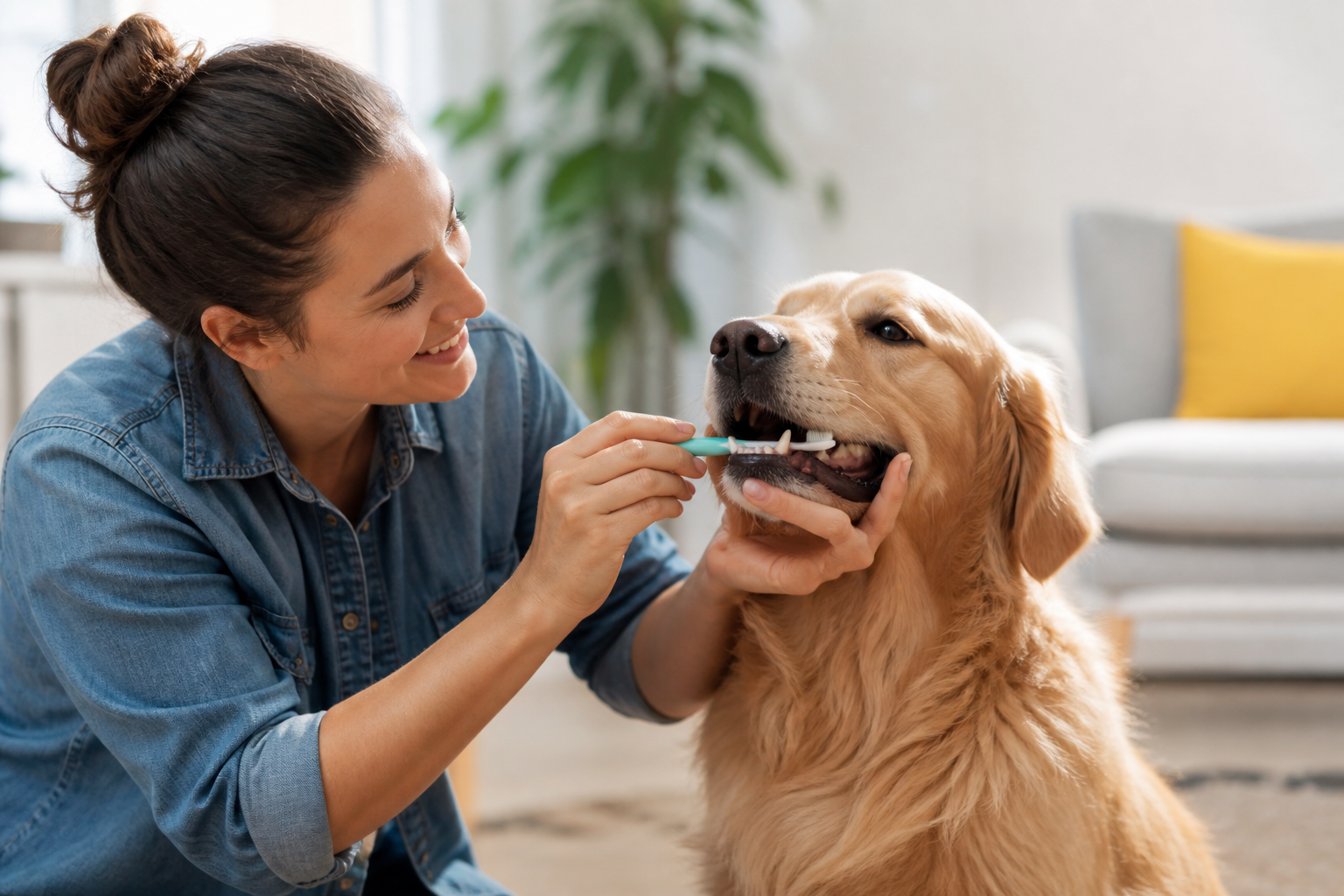
Brushing is the gold standard for home care. It is the only way to physically break up the plaque film before it turns into stone like tartar. Most dogs can learn to enjoy the process if you introduce it slowly.
Step 1: Choose the Right Tools
Never use human toothpaste for your dog. Our toothpaste contains foaming agents and fluoride that are toxic to dogs when swallowed. Many also contain xylitol, which is a deadly sweetener for canines. Use a paste specifically formulated for pets. These come in flavors like poultry, beef, or peanut butter. You can use a soft bristled dog toothbrush or a silicone finger brush. The Nylabone Dura Chew Ring Dental Dog Toy is another dental-focused option for dogs that enjoy chewing.
Step 2: The Introduction Phase
Let your dog lick the toothpaste off your finger. Do this for a few days without even touching their teeth. You want them to associate the flavor with a positive experience. Once they are excited for the taste, start rubbing your finger along their gums.
Step 3: Gentle Brushing
Introduce the brush once your dog is comfortable with your finger in their mouth. Focus on the outside surfaces of the teeth. This is where most plaque accumulates. You do not need to worry as much about the inside surfaces near the tongue. The tongue's natural movement helps keep those areas slightly cleaner. For additional guidance, review these pet dental care tips.
Step 4: Consistency is Key
Ideally, you should brush your dog's teeth every day. Plaque can harden into tartar in as little as 36 to 48 hours. If daily brushing is not possible, aim for at least three times a week. Any amount of brushing is better than none at all.
The Role of Diet and Dental Chews
What your dog eats can impact their oral health. While food is not a replacement for brushing, it can be a helpful tool. Some dogs benefit from specific dental diets. These kibbles are usually larger and have a fibrous texture that scrubs the tooth as the dog bites down.
Dental chews are another popular option. These treats are designed to encourage prolonged chewing. This mechanical action helps scrape away soft plaque. Look for products that have the Veterinary Oral Health Council (VOHC) seal. This seal means the product has been tested and proven to reduce plaque or tartar. Browse our dental treats for dogs for options that complement regular brushing.
Be careful with very hard items like cow hooves, antlers, or natural bones. While they might clean the teeth, they are also a leading cause of tooth fractures. A fractured tooth is incredibly painful and often requires an expensive extraction.
Bottom line: Dental chews and specialized diets are great supplements, but they cannot reach under the gum line like a brush or professional cleaning.
Why Professional Cleanings Are Necessary
Even with perfect brushing, most dogs will eventually need a professional cleaning. This is similar to why humans go to the dental hygienist twice a year. A veterinarian can reach areas that you simply cannot see at home. This guide to dental chews for dogs also explains why chews should supplement, rather than replace, brushing and checkups.
A professional dental procedure at the clinic involves several steps:
- A full physical exam to ensure the dog is healthy enough for the procedure.
- General anesthesia to allow for a thorough, pain free cleaning.
- Full mouth X-rays to check for bone loss or abscesses under the gum line.
- Ultrasonic scaling to remove tartar from the teeth.
- Subgingival scaling to clean the "pockets" under the gums.
- Polishing the teeth to smooth out micro-scratches where bacteria like to hide.
Some people worry about the "anesthesia-free" cleanings offered at grooming shops. Most veterinarians advise against these. Without anesthesia, the provider cannot clean under the gum line. They also cannot take X-rays or polish the teeth properly. These "cosmetic" cleanings make the teeth look white but leave the dangerous bacteria behind.
Small Breeds vs. Large Breeds
Not all dogs have the same dental risks. At BaxterBoo, we notice that owners of small and toy breeds often struggle more with dental disease. Breeds like Yorkies, Chihuahuas, and Pugs have very small mouths but the same number of teeth as a large dog. This leads to severe overcrowding.
When teeth are crowded together, food and bacteria get trapped in tiny crevices. Small dogs also tend to have shallow tooth roots. This means that even a little bit of bone loss can cause a tooth to fall out. Small breeds may need professional cleanings as early as two years of age. Large dogs often have more space between their teeth, but they are more prone to breaking teeth on hard toys.
Managing Health Conditions Through Our Pharmacy
Sometimes, basic cleaning is not enough for a dog with chronic health issues. Dogs with severe allergies or autoimmune conditions may suffer from more aggressive gum disease. In these cases, your veterinarian might prescribe specific medications or therapeutic diets.
Our pharmacy provides access to FDA-approved medications through our partnership with Pet's Choice. We carry prescription dental diets that are formulated to reduce the accumulation of plaque and tartar. If your dog needs antibiotics for a mouth infection or pain relief after a dental surgery, we can help fulfill those prescriptions. Managing these conditions is a team effort between you, your vet, and a trusted provider.
How to Save on Dental Care
Dental health is an investment, but it does not have to break the bank. Starting a routine early is the best way to avoid the high cost of emergency extractions. You can also take advantage of programs designed to reward proactive owners.
- MVP Rewards: Earn points on every toothbrush, toothpaste, and dental chew you buy. These points turn into credit for future purchases. See how the MVP Rewards programme works.
- Autoship: Set your dental treats and toothpaste on a recurring schedule. This ensures you never run out and helps you save on every order. Learn more about our Autoship programme.
- Frequent Buyer Program: Many of the high quality food brands we carry participate in programs where you can earn free products after a certain number of purchases.
- Pet Insurance: Our partnership with FIGO Pet Insurance can help cover the costs of unexpected dental injuries or illnesses.
Making Dental Care a Habit
It is never too late to start caring for your dog's teeth. If you have an older dog who has never had a cleaning, start with a veterinary checkup. Once the vet gives you the all clear, begin the slow introduction to brushing.
Think of dental care as a bonding time. When you handle your dog's mouth regularly, you become very familiar with what is normal for them. You will notice a small bump or a chipped tooth long before it becomes a major medical crisis. This proactive approach is the hallmark of a great pet parent.
Conclusion
Cleaning your dog's teeth is a fundamental part of responsible ownership. It prevents the pain of broken teeth, the discomfort of inflamed gums, and the danger of systemic organ failure. While it takes a little extra effort, the reward is a happier dog with a longer lifespan.
To keep your dog's smile healthy:
- Start a brushing routine using dog-safe toothpaste.
- Schedule annual wellness exams to check for oral disease.
- Use VOHC-approved dental chews for daily maintenance.
- Consult your vet about professional cleanings under anesthesia.
Key Takeaway: Proper dental care can add years to your dog's life. It is easier and cheaper to prevent disease than it is to treat it.
Our pharmacy and medical supplies section is ready to support your dog's dental journey. From specialized toothbrushes to prescription diets via Pet's Choice, we have the tools you need to succeed.
FAQ
Is it okay if I only use dental chews and don't brush?
While dental chews are helpful, they are not a complete replacement for brushing. Chews mostly clean the chewing surfaces of the teeth, but they often miss the gum line where periodontal disease starts. Brushing remains the most effective way to remove plaque and protect your dog's long term health.
Why does my dog's breath smell so bad even though he's young?
Bad breath in young dogs is often a sign of early plaque buildup or retained "baby" teeth that are trapping food. In some cases, it can also be related to diet or underlying digestive issues. You should have your vet examine his mouth to rule out gingivitis or a hidden infection.
Can I use baking soda to clean my dog's teeth?
It is best to avoid using plain baking soda for your dog. Baking soda has a high alkaline content that can upset a dog's stomach if swallowed in large amounts. Pet-specific toothpastes are much safer, taste better to dogs, and contain enzymes that help break down plaque more effectively.
How often should my dog get a professional cleaning?
Most dogs benefit from a professional cleaning once a year, though individual needs vary. Small breeds or dogs with a history of dental issues may need cleanings every six to nine months. Your veterinarian will evaluate your dog's mouth during their annual exam to determine the best schedule for your pet.






