
 Save 15% on your 1st Autoship learn more

 Email us
 Live Chat
 FAQs
FAQs





Introduction
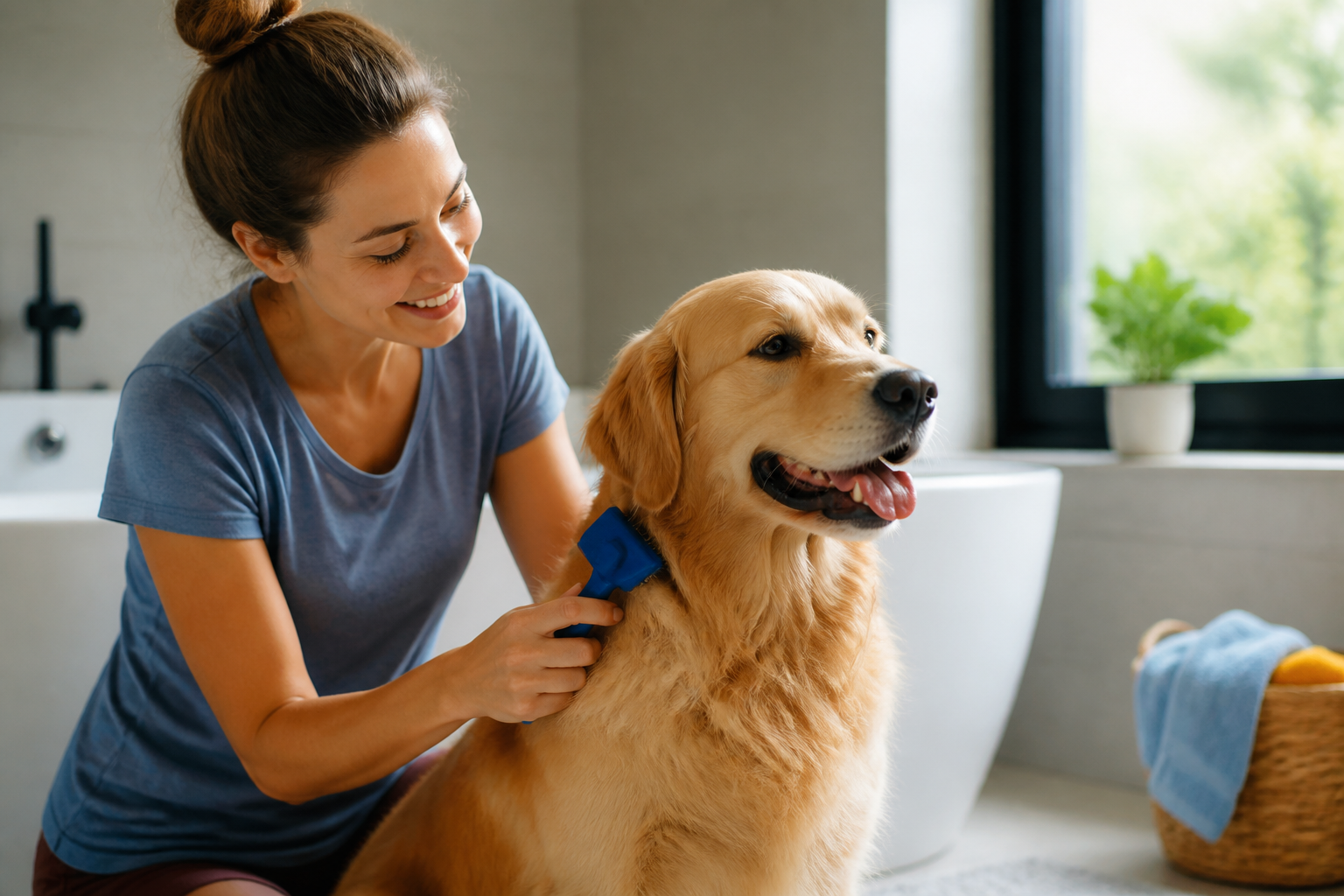
You are standing in the bathroom with a towel in one hand and a dog who likely knows exactly what is about to happen. Before the water starts running, you probably have a brush nearby and a big question. Should you start brushing now, or should you wait until the coat is clean and wet? This is a common point of confusion for many pet parents. At BaxterBoo, we have been helping dog owners navigate grooming routines since 2006. We know that the order of your grooming steps can make the difference between a happy pup and a tangled, painful mess. This article covers the benefits of pre-bath brushing, the role of post-bath styling, and the tools you need for a professional result at home. The short answer is that a successful grooming session actually requires both.
Quick Answer: You should always brush your dog before a bath to remove tangles and mats. Water acts like a glue for existing knots, making them tighten and become much harder to remove once wet. Brushing after the bath is also necessary to fluff the coat and catch any loose fur the water helped release.
Why Brushing Before the Bath Is Non-Negotiable
The primary rule of dog grooming is to never get a mat wet. If your dog has any tangles or clumps of hair, adding water and shampoo will usually make the situation worse. Hair fibers expand when they get wet and then contract as they dry. If those fibers are already tangled, the contraction process pulls the knot even tighter against the skin. This can lead to painful skin irritation or even hematomas if the matting becomes severe.
Brushing before the bath also helps the shampoo do its job. A thick layer of loose, dead undercoat acts like a barrier. If you do not brush that out first, the shampoo and water might never reach the skin. You end up washing the top layer of fur while the dirt and oils remain trapped underneath. By removing that dead hair first, you ensure a much deeper and more effective clean.
The Problem with Clogged Drains
If you have ever bathed a long-haired dog without brushing them first, you know the struggle of a clogged tub. Dogs can shed a surprising amount of fur during a bath. This loose hair mixes with soap scum and creates a thick sludge that can wreak havoc on your plumbing. A thorough pre-bath brush catches the majority of this "shed" hair before it ever hits the water. This keeps your bathroom cleaner and saves you from a call to the plumber.
Pre-Bath Brushing Step-by-Step
Step 1: Check for mats. / Use your fingers or a wide-tooth comb to feel for any hard clumps of fur, especially behind the ears and under the legs.
Step 2: Detangle gently. / Use a slicker brush or a detangling spray to work through small knots starting from the ends of the hair and moving toward the skin.
Step 3: Remove the undercoat. / For double-coated breeds, use an undercoat rake to pull out the loose, fuzzy hair that is ready to shed.
Step 4: Final pass. / Run a fine-tooth comb through the coat to ensure there are no hidden tangles remaining before the dog gets wet.
Key Takeaway: Brushing before the bath is about preparation and protection. It prevents mats from tightening and ensures that your cleaning products can actually reach the skin for a thorough wash.
The Role of the Bath in the Grooming Process
Once the coat is clear of tangles, the bath serves as the deep-cleaning phase. It is not just about making your dog smell better. A bath removes environmental allergens, excess oils, and dead skin cells that can cause itching. Using the right products during this phase is vital for coat health.
We carry a wide variety of shampoos from trusted brands like Greenies and Royal Canin, but the choice of soap depends heavily on your dog's specific skin needs. For dogs with healthy skin, a mild oatmeal or aloe-based shampoo is often the best choice. These ingredients help maintain the natural moisture barrier of the skin. Browse our dog grooming supplies to find shampoos, conditioners, brushes, and bath accessories.
Addressing Skin Concerns
If your dog is constantly scratching or has visible redness, a standard bath might not be enough. Our pet pharmacy offers a selection of FDA-approved medicated shampoos and treatments through our partnership with Pet's Choice. These products are specifically designed for dogs managing chronic skin conditions, fungal infections, or severe allergies.
Vet Tip: If you notice your dog has persistent skin irritation, hair loss, or a strange odor that remains after a bath, consult your veterinarian. These can be signs of underlying health issues that require a professional diagnosis or prescription medication rather than just a different shampoo.
Brushing After the Bath for the Perfect Finish
While the pre-bath brush is the most important for safety, the post-bath brush is what gives your dog that "just left the groomer" look. Even if you brushed thoroughly beforehand, the mechanical action of scrubbing and rinsing will loosen more hair. This is especially true for shedding breeds like Labradors or Huskies.
Brushing while the coat is damp, but not soaking wet, can help you style the fur. This is the best time to use a leave-in conditioner or a shine spray. These products help seal the hair cuticle, which makes the coat more resistant to dirt and future tangles.
Drying and Brushing Simultaneously
Many professional groomers use a technique called "fluff drying." This involves brushing the dog while using a blow dryer on a low, cool setting. This prevents the hair from drying in clumps and gives it a much fuller, softer appearance. If you have a curly-coated breed like a Poodle or a Goldendoodle, this step is essential to prevent the "velcro" texture that leads to quick matting.
Bottom line: Post-bath brushing handles the hair that the water loosened and ensures the coat dries in an organized, tangle-free way.
For additional bathing guidance, read these dos and don'ts for bathing your dog.
Selecting the Right Tools for Your Dog
Not all brushes are created equal. Using the wrong tool can be ineffective or even painful for your dog. Your choice should be based entirely on your dog's coat type and length.
| Coat Type | Recommended Tool | Why It Works |
|---|---|---|
| Short/Smooth (Boxer, Beagle) | Rubber Curry Brush | Stimulates the skin and pulls away short, loose hairs. |
| Long/Silky (Yorkie, Maltese) | Pin Brush | Reaches through long strands without breaking the hair. |
| Thick/Double (Husky, Shepherd) | Undercoat Rake | Targets the dense "wool" layer beneath the topcoat. |
| Curly/Wavy (Poodle, Doodle) | Slicker Brush | Separates curls and removes deep tangles. |
| All Coat Types | Metal Finishing Comb | The "gold standard" for checking if any mats remain. |
Using high-quality gear makes the process faster and more comfortable. Brands like Kong and RC Pets offer ergonomic designs that are easier on your hands during long grooming sessions. When you shop for these essentials, remember that the MVP Rewards programme allows you to earn points on every purchase, which can be used for future savings on grooming supplies or treats.
Managing Shedding and Health During Grooming
Grooming is one of the best times to perform a quick health check on your dog. As you move the brush through their fur, you are closer to their skin than at almost any other time. This is your chance to look for things that might otherwise go unnoticed.
- Check for fleas or ticks, especially in "hidden" spots like the armpits and between the toes.
- Look for new lumps, bumps, or skin discolorations.
- Feel for any areas where the dog flinches, which could indicate joint pain or a hidden injury.
- Inspect the ears for redness or a dark, waxy discharge.
If you find pests like fleas or ticks during your grooming session, it is important to act quickly. We carry a range of preventives like Frontline and NexGard. Our pharmacy can also fulfill prescriptions for flea and tick medications if your vet recommends a specific strength or brand.
Key Takeaway: Grooming is more than just aesthetics. It is a vital part of your dog's preventative health routine that allows you to catch potential problems early.
For more coat-care ideas, explore tips for managing shedding in dogs.
Special Considerations for Difficult Coats
Some dogs present unique challenges that require a modified approach. For example, if your dog is extremely sensitive to the sound of a blow dryer, you may need to rely more heavily on towel drying and frequent brushing as they air dry.
Severely Matted Fur
If you discover that your dog is "pelted," which means the mats have formed a solid layer against the skin, do not attempt to bathe them. In this situation, the mats are already too tight for a brush to handle safely. Adding water will only cause the pelt to shrink further, potentially cutting off circulation or trapping moisture against the skin, which leads to infections.
In cases of severe matting, the safest option is often a "reset" shave by a professional groomer. While it can be disappointing to lose the long hair, it is the most humane way to handle a coat that has become painful for the animal. Once the coat grows back, you can start a fresh routine of daily brushing to prevent it from happening again.
Puppies and Senior Dogs
Puppies need to be "trained" to enjoy grooming. Keep your first few sessions very short. Brush for two minutes, give a treat, and stop. You want them to associate the brush with positive rewards rather than fear.
Senior dogs may have thinning skin or arthritis that makes standing in a tub or being brushed difficult. For these older pets, consider using a non-slip mat in the tub and keeping the grooming sessions as brief as possible. You might also look into joint supplements like Cosequin or Zesty Paws to help them stay comfortable during the physical process of grooming.
Setting Up a Consistent Routine
The best way to answer the question of whether to brush before or after a bath is to make brushing a daily habit regardless of bath time. If you brush your dog for five minutes every day, the pre-bath brush becomes a quick two-minute formality rather than a two-hour ordeal.
- Daily: Quick brush of high-friction areas (ears, tail, legs).
- Weekly: Full-body brush and ear check.
- Monthly: Bath and deep-cleaning session.
- Quarterly: Professional grooming for haircuts or nail trims if needed.
To make sure you never run out of the shampoos or conditioners your dog loves, consider using our Autoship program. This ensures your grooming supplies arrive on a regular schedule, and you save money on your orders while maintaining a Gold MVP membership status.
Common Mistakes to Avoid
Even with the best intentions, it is easy to make mistakes that can sour the grooming experience for your dog. One of the most common errors is using human shampoo. The pH level of human skin is significantly different from a dog's skin. Using your own soap can strip their coat of essential oils and leave them with dry, itchy skin. Always stick to products formulated specifically for canines.
Another mistake is rushing the drying process. If you leave a dog with a thick undercoat damp, they can develop "hot spots." These are painful, wet skin infections caused by moisture being trapped against the body. If you cannot get your dog completely dry with a dryer, ensure they are in a warm, dry environment and continue brushing them until the moisture is gone.
Step 1: Prep the area. / Gather your towels, brushes, and shampoo before you start so you never have to leave your dog unattended in the tub.
Step 2: The pre-bath brush. / Thoroughly remove all tangles and as much loose hair as possible.
Step 3: The lukewarm bath. / Use water that is comfortable to the touch and rinse twice to ensure no soap remains.
Step 4: The towel dry. / Squeeze the hair rather than rubbing it to avoid creating new tangles.
Step 5: The post-bath finish. / Brush while drying to fluff the coat and remove the final bits of loose fur.
Conclusion
The secret to a great-looking dog is not a magic shampoo or an expensive tool. It is the combination of a thorough pre-bath brush and a careful post-bath finish. By brushing first, you protect your dog from painful mats and ensure their skin gets truly clean. By brushing afterward, you manage the shedding and leave the coat looking its best. At BaxterBoo, we are committed to providing you with the expert-curated tools and pharmacy access you need to keep your pet healthy and comfortable. Whether you are looking for a new slicker brush or a medicated shampoo through our partnership with Pet's Choice, we are here to help. Start your routine today by checking out our full collection of grooming supplies.
Bottom line: Brush before the bath to prevent mats and brush after to style and remove loose fur for a healthy, happy dog.
FAQ
Can I brush my dog while they are still in the bathtub?
Yes, using a rubber curry brush or a silicone brush while the conditioner is sitting on the coat can be very effective. This helps distribute the product and can loosen extra fur, but you should still perform a dry brush before the dog ever gets wet.
What should I do if I find a mat that won't come out before the bath?
If a mat is too tight to brush out, do not get it wet. You can try using a specialized de-matting tool or a small amount of cornstarch to help the hair slide apart. If the mat is right against the skin and will not budge, it is safest to have a professional groomer or vet clip it out to avoid cutting the dog.
How do I know if I have brushed enough before the bath?
A good test is the "comb-through" method. After you think you are finished brushing, take a metal finishing comb and run it through the coat from the skin to the tips. If the comb snagging anywhere, there is still a tangle that needs attention before the water starts.
Is it okay to let my dog air dry without brushing?
While air drying is fine for many short-haired dogs, it can cause problems for dogs with long or double coats. Air drying without brushing often leads to the hair "clumping" together, which can start the formation of new mats. For the best results, try to brush at least once or twice as the coat dries naturally.






