Save 15% on your 1st Autoship learn more

 Email us
 Live Chat
 FAQs
FAQs





Introduction
You reach for your dog’s favorite snuffle mat to start a rainy day enrichment session, only to realize the fleece feels slightly tacky and smells like a mixture of old kibble and stale saliva. It is a common moment for pet parents who rely on these tools for mental exercise. These mats are fantastic for burning off energy, but their deep folds also excel at trapping crumbs, hair, and bacteria. At BaxterBoo, we believe that maintaining your pet's gear is just as vital as the food you put in it. This guide covers everything from machine settings to the safest detergents for sensitive noses. We will walk you through how to preserve the life of your mat while keeping it a hygienic space for your pet to forage. Proper cleaning ensures your pet stays healthy and your home stays fresh.
Why Regular Cleaning Is Essential for Your Pet
A snuffle mat is more than just a toy. It is a dining surface that sits on your floor. Every time your dog or cat uses their nose to find a treat, they leave behind moisture from their breath and saliva. Over time, this moisture combines with tiny food particles to create a breeding ground for bacteria. If the mat is left unwashed for weeks, it can even develop mold deep within the fabric strips.
Bacteria and mold are not just hygiene issues for your home. They can also affect your pet. Dogs with sensitive skin or allergies may experience redness around their muzzles or paws if they spend time buried in a dirty mat. Cats are also susceptible to feline acne if they rub their chins against oily or bacteria-laden fabrics. Keeping the mat clean is a simple way to prevent these minor health hurdles.
Vet Tip: A dirty snuffle mat can harbor bacteria or mold that may cause skin irritation or stomach upset. If your dog has a history of allergies, we recommend using a hypoallergenic, pet-safe detergent. If you notice persistent itching or redness after playtime, consult your vet about potential environmental triggers. Our pharmacy carries a variety of allergy support options if your pet needs extra care.
Preparing the Mat for the Wash
You should never toss a snuffle mat directly into the washing machine without a bit of prep work. If you do, you risk clogging your machine with pet hair or finding a soggy, half-dissolved treat stuck to your favorite sweater in the next load.
First, take the mat outside. Give it a vigorous shake to loosen any trapped kibble or dried treats. If the mat has a rubber backing with holes, hair often gets tangled around the base of the fleece strips. You can use a lint roller or a rubber grooming brush to pull up excess fur. This step protects your plumbing and ensures the soapy water can actually reach the fabric.
Check the mat for any signs of damage before it goes into the water. Look for loose strips that a dog might have chewed or a backing that is starting to crack. If a strip is hanging by a thread, it could come off in the wash and become a choking hazard later. It is better to trim or repair these spots now.
Pre-Wash Checklist
- Shake the mat outdoors to remove loose debris.
- Use a lint roller to pick up surface hair.
- Inspect for loose fleece strips or cracked backing.
- Empty any hidden pockets or deep folds by hand.
- Pre-treat any noticeable "wet" spots with a pet-safe enzyme cleaner.
Step-by-Step Machine Washing Instructions
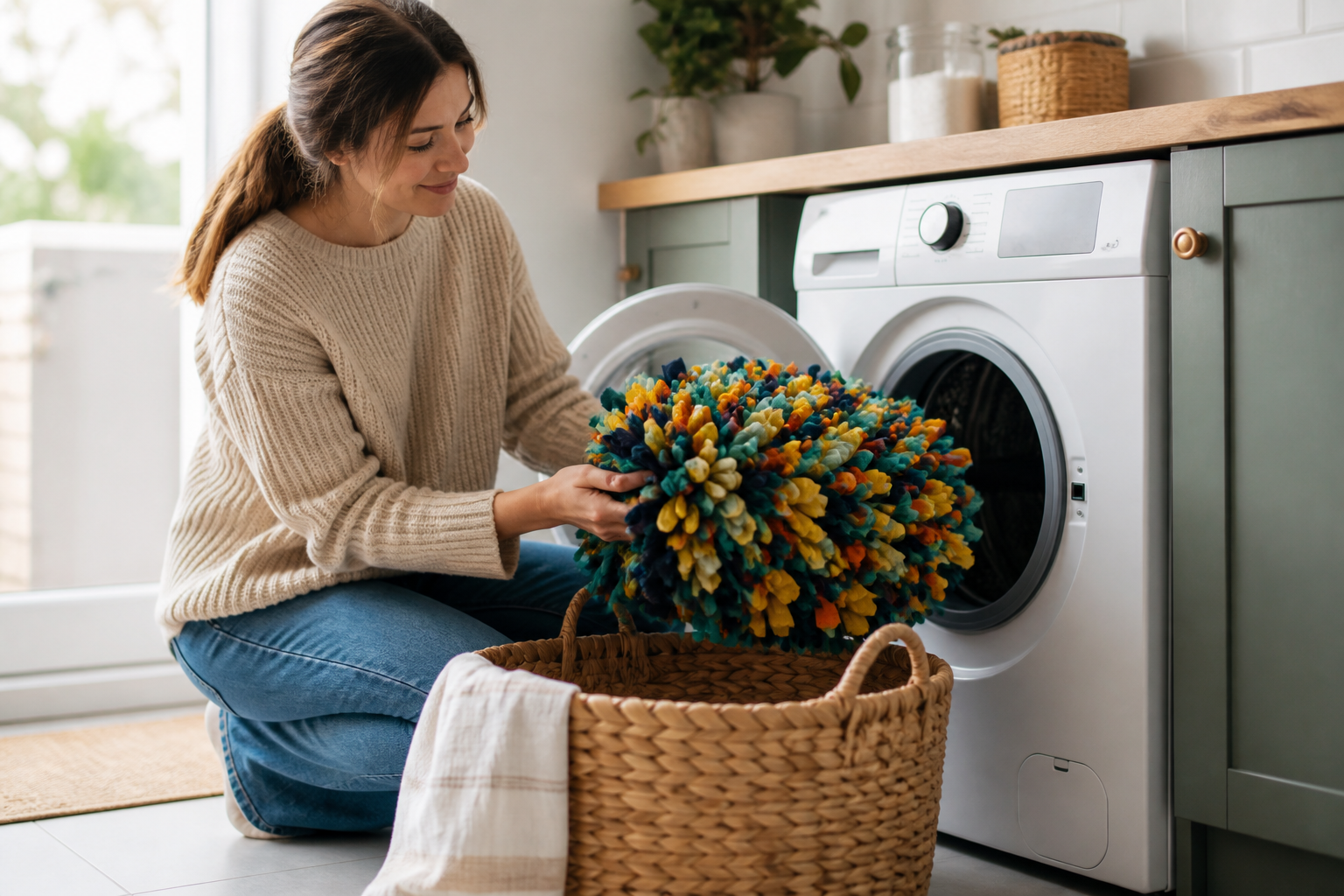
Most high-quality snuffle mats are designed to handle a washing machine. However, the goal is to clean the fabric without melting the glue or warping the rubber base. Heat is the primary enemy of many pet products. Always stick to cool or lukewarm water settings.
Step 1: Place the mat in a mesh laundry bag. / This prevents the fleece strips from getting tangled in the agitator or caught in the door seal. If you do not have a mesh bag, a large pillowcase tied shut with a hair tie works well.
Step 2: Choose a gentle or delicate cycle. / High-speed spinning can stretch out the fabric and pull the strips away from the base. A slower cycle provides enough agitation to lift dirt without causing structural damage.
Step 3: Add a mild, fragrance-free detergent. / Avoid fabric softeners and bleach. Softeners leave a film on the fleece that can interfere with your pet’s ability to smell the treats. Bleach is too harsh for the fibers and can irritate your pet’s nose.
Step 4: Add an extra rinse cycle. / This ensures every trace of detergent is gone. Pets have a sense of smell thousands of times stronger than ours, and even a faint scent of "fresh linen" detergent can be overwhelming for them.
Key Takeaway: Using a mesh laundry bag and a cold, gentle cycle protects the structural integrity of the snuffle mat while ensuring a deep clean.
Hand Washing for Delicate Mats
If you have a DIY snuffle mat or one with a rigid plastic base, hand washing is the safer route. Some materials do not react well to the tumbling of a machine. Hand washing allows you to focus on high-traffic areas where your pet drools the most.
Fill a clean bathtub or a large sink with cool water. Add a small amount of pet-safe dish soap or a very mild laundry detergent. Submerge the mat and gently knead the fleece with your hands. You want to work the soapy water into the base where the food oils tend to settle. If there are stubborn stains, use a soft-bristled brush to scrub the specific area.
Rinsing is the most important part of hand washing. You must continue to rinse the mat under running water until the water runs completely clear. Squeeze the fabric sections gently to push out any trapped soap bubbles. Do not wring the mat like a towel, as this can snap the plastic backing or tear the fleece. Instead, press it between two dry towels to remove the bulk of the water.
The Golden Rule of Drying: Why Air Is Best
The quickest way to ruin a snuffle mat is to put it in the dryer on high heat. Most snuffle mats use a rubber or plastic base to keep the toy from sliding on your floors. High heat can cause this material to melt, warp, or become brittle. Additionally, synthetic fleece can "pill" or even melt if it gets too hot, changing the texture of the toy.
Air drying is the only way to ensure the mat stays in top shape. Lay the mat flat on a drying rack in a well-ventilated area. If you lay it on a solid surface like a countertop, moisture can get trapped underneath and lead to a sour smell. A laundry rack allows air to circulate through the bottom and the top.
Depending on the thickness of the fleece, a mat can take 24 to 48 hours to dry completely. Do not be tempted to use it while it is still damp. Putting dry treats into a damp mat is a recipe for mold growth. If you are in a hurry, you can place a floor fan near the drying rack to speed up the process.
Quick Answer: Most snuffle mats are machine washable on a gentle, cold cycle with mild, fragrance-free detergent. To prevent mold and fabric damage, always air dry the mat completely before hiding treats in it again.
How Often Should You Wash a Snuffle Mat?
The frequency of washing depends on how your pet uses the mat. If you use it for dry kibble once a day and your dog is not a heavy drooller, washing it every two weeks is usually sufficient. However, if you use "high-value" treats like dehydrated liver or slightly moist treats, you should wash it once a week.
| Usage Type | Recommended Washing Frequency |
|---|---|
| Dry Kibble Only | Every 2 weeks |
| Oily or Dehydrated Treats | Every 1 week |
| Multiple Pets Using One Mat | Every 1 week |
| Highly Active Droollers | Every 4 to 5 days |
Between deep washes, you should still perform daily maintenance. After every session, turn the mat upside down and give it a good shake. This prevents crumbs from settling into the bottom where they are harder to reach. If you notice a specific spot is wet with saliva, you can spot-clean it with a damp cloth and let it air dry before the next use.
For additional ideas, explore indoor enrichment activities for dogs and cats that can complement a clean snuffle mat.
Managing Odors and Stubborn Stains
Sometimes a standard wash is not enough to get rid of that "doggy" smell. If your mat still smells like old food after a wash, you can use white vinegar as a natural deodorizer. Add half a cup of white vinegar to the rinse cycle of your washing machine. The vinegar smell will disappear as the mat dries, taking the organic odors with it.
For stubborn stains from oily treats, baking soda is an excellent tool. Sprinkle a generous amount of baking soda over the dry mat and let it sit for thirty minutes before shaking it off and starting the wash. Baking soda helps lift the oils from the fleece fibers.
If you find that your pet's mat is constantly smelly, it might be time to look at the treats you are using. Highly processed treats with artificial dyes can stain the fleece permanently. Switching to a high-quality, single-ingredient treat like those from Stella & Chewy's or Vital Essentials can reduce residue and keep the mat cleaner for longer.
When to Replace Your Snuffle Mat
No matter how well you follow these snuffle mat washing instructions, no toy lasts forever. You should inspect the mat weekly for signs of wear. If the fleece strips are beginning to fray significantly, your pet might swallow the small threads. This can lead to digestive issues or blockages.
Another sign it is time for a replacement is a change in the backing. If the rubber is crumbling or the plastic is cracked, the mat is no longer safe. Small pieces of the base can be chewed off and ingested. Finally, if the mat has a persistent smell of mildew even after a vinegar rinse, it likely has mold growing inside the base material. At that point, the safest option is to recycle it and start fresh.
We carry a wide variety of dog toys for enrichment and play at our warehouse in Vernon Hills. If you need a backup mat to use while one is in the wash, we have plenty of options that are built for durability. Rotating between two mats is a great way to ensure you always have a clean one ready for your pet’s next meal.
For more toy-care guidance, read our guide to keeping dog toys clean and safe.
Bottom line: Regular inspection and gentle cleaning can extend the life of your snuffle mat, but always prioritize safety over longevity if the mat begins to fall apart.
Summary of Best Practices
Caring for your pet’s enrichment tools is a simple way to protect their health and keep your home tidy. By following a consistent cleaning routine, you ensure that every sniffing session is as safe as it is fun. Remember that your pet’s nose is their primary way of experiencing the world, so a clean environment makes a huge difference in their quality of life.
- Always shake out the mat before washing to protect your machine.
- Use cold water and gentle cycles to preserve the fabric and backing.
- Avoid all fragrance-heavy detergents and fabric softeners.
- Never put a snuffle mat in the dryer.
- Rotate mats to allow for a full 48-hour air-dry period.
If you find your pet has skin sensitivities that make them react to even the cleanest mats, we are here to help. Our pharmacy provides professional-grade solutions for pets with chronic allergies or skin conditions. You can also sign up for our Autoship programme to ensure you always have fresh, low-residue treats arriving at your door, helping you keep your enrichment gear in top condition.
For more ways to keep dogs mentally engaged, see our guide to dog boredom busters.
FAQ
Can I put a snuffle mat in the dryer on the "air fluff" setting?
It is generally safer to avoid the dryer entirely. Even the "air fluff" or "no heat" setting involves significant tumbling that can pull the fleece strips loose from the base. Laying the mat flat on a rack allows the fibers to dry in their natural shape without the risk of mechanical damage.
What is the best detergent to use for pet bedding and toys?
Look for detergents labeled as "free and clear" or specifically formulated for pets. These products lack the dyes and perfumes that can irritate a pet’s respiratory system or skin. If you are in a pinch, a tiny amount of unscented dish soap is a safe alternative for hand washing.
My dog tries to chew the mat instead of sniffing. Will washing it help?
Sometimes dogs chew because they can smell deep-seated food oils they cannot reach. A thorough wash with an enzyme cleaner might reduce this behavior. However, chewing is often a sign of frustration or a lack of understanding. Try using easier-to-find treats on top of the mat for a few sessions to build their confidence.
Can I wash a snuffle mat with my own clothes?
It is best to wash pet items separately from human laundry. Snuffle mats can carry a significant amount of pet hair, dander, and saliva. Washing them alone or with other pet-specific items like towels or blankets prevents cross-contamination and keeps your own clothing free of excess fur.