Save 15% on your 1st Autoship learn more

 Email us
 Live Chat
 FAQs
FAQs





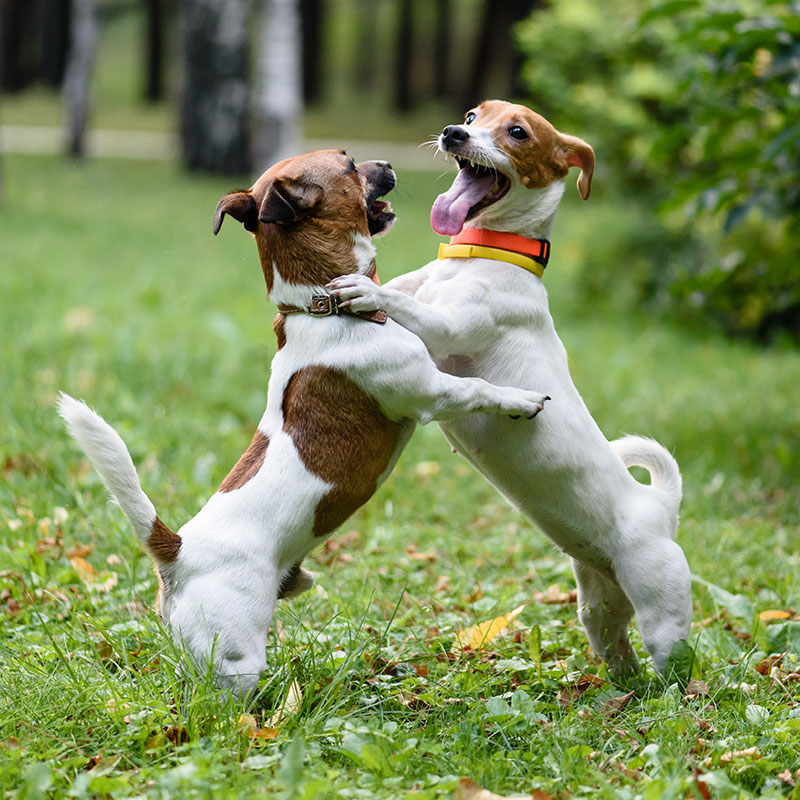
Dogs, like humans, are social animals. While you may be their favorite person, they can also benefit from one on one time with other dogs. Socializing man’s best friend can be tricky sometimes. Every dog has a distinct personality and temperament. How your pup acts on a playdate might be different from how another dog does. If this is your pet’s first playdate (or one of many), preparation is the key to a successful get-together.
Here are a few tips and tricks to a successful doggie playdate.
Pick Your Playmate
A successful playdate depends on the right partner for your pooch. It’s never a good idea to pick a random dog and hope that yours will get along great with it. Even socialized dogs may not always get along with others. Temperament plays a huge role in how animals interact. So, how can you make an educated choice? What will up your chances that your fur-baby will have a good time?
While socialized dogs may not guarantee a good playdate, it is a step in the right direction. Choose a dog who you know is predictable and safe around other dogs. The friendlier the reputation, the better. Size and age are also important considerations. The pair has to be able to keep up with one another. One dog with a higher energy level could scare a calmer playmate. Since dogs can get rowdy with one another, it’s safe to have a pair that won’t accidentally hurt one another due to size.
There are exceptions to these rules, of course. Some big dogs have little dogs as their best friends. If this is the first meeting, however, it’s better to play it safe.
Find a Neutral Location
It might seem easy to invite a friend and his or her pooch over to your home for a playdate, but this could be a potential disaster. The same goes for bringing your dog to another dog’s yard. The only time that you should allow another dog in your home for a playdate is if you already know how the two will act on your property.
Some dogs become territorial. When meeting for the first time, it should be in a neutral location free from either pups’ scent. The location should give your pets plenty of room to play, but also be small enough that you can remain in control. For doggy playdate options, you could try an off-season tennis court or a dogless friend’s yard.
Do not host your first playdate at a dog park. While these are neutral locations, the other dogs could potentially interfere with playtime. Also, the number of other animals around could overwhelm your pet. If you do not have any neutral locations where your dog can be off-leash, you can take it on a leashed walk.
Be Careful With Toys
It might be tempting to bring a ball or toy to play fetch. While your dog may love to fetch at home, it might not be the best way for your pets to bond. Some dogs will treat toys like high-value objects. Once this happens, it may not want to share and may even lead to protective behavior.
Now, this doesn’t mean that toys are completely off-limits. For some dogs, toys are an extra dimension to the fun. You may witness dogs playing fetch with one another or engaged in tug-of-war with a rope. If you want to add toys to the mix, each dog has to know the drop-it command. You have to be able to control the situation if one of the dogs starts exhibiting guarding behavior.
Mind Your Dog’s Body Language
Dogs cannot verbalize when they are uncomfortable or unhappy. It is up to you to be able to read its body language. With any doggie playdate, it is always a good rule of thumb to keep your attention on your pooch. If you aren’t paying attention, it may feel like the mood took a turn for the worse out of nowhere. Stiff bodies or bared teeth are a dangerous sign. If either dog shows signs of aggression, it is time to end playtime.
Be careful not to read playful behavior as a warning sign. Sometimes, owners with good intentions can interrupt play if they think the dogs are being too rough. Dogs do like to be rowdy! So, keep an eye out for loose, bouncy body language. Dogs may growl and bark louder than normal when engaged in play. They are dramatic and goofy, but you can tell they are playing by the loose body language and how they keep coming back for more. Signs of play include play bowing and falling on the ground to expose their bellies.
Keep Your Expectations Realistic
Some doggie playdates don’t work out. You can go out of your way to choose another dog with a friendly, social temperament and find the best neutral place and the dogs still might not click. This doesn’t mean your pooch won’t make friends with other dogs. Dogs may have mismatched play styles or personalities. If your dog isn’t playing appropriately with another, you can stop the date early. Preparation does help, but it isn’t necessarily going to guarantee the perfect playdate. All dogs have their personalities and tastes.
As a pet parent, you want what is best for your furry friend. Playdates can be a great way for your dog to socialize with others. If you follow the above tips, you are more likely to have a successful playdate and to provide your pup with a long-time friend.