
 Save 15% on your 1st Autoship learn more

 Email us
 Live Chat
 FAQs
FAQs





Introduction
You lean in for a snuggle and get a face full of "dog breath." It is a common moment for many of us. You might have a jar of coconut oil in the pantry and wonder if it can help those pearly whites. At BaxterBoo, we know that dental health is one of the most overlooked parts of pet care. Using coconut oil for your dog's teeth is a practical, natural way to support oral hygiene at home. This post covers the benefits of coconut oil, how to apply it safely, and how it fits into a larger wellness routine. Coconut oil can be a helpful tool in your dental toolkit when used correctly. While it is not a complete replacement for brushing, it offers unique properties that make oral care easier.
Quick Answer: Yes, you can clean your dog's teeth with coconut oil. It contains lauric acid, which helps fight the bacteria that cause plaque and bad breath. For best results, use it as a supplement to regular brushing rather than a total replacement.
How Coconut Oil Works for Canine Dental Health
Coconut oil is not just a trend in the human wellness world. It has specific properties that make it useful for canine oral hygiene. The primary reason it works is its high concentration of medium chain triglycerides. Specifically, it is rich in lauric acid. This fatty acid makes up about half of the fat content in coconut oil.
Lauric acid is known for its antimicrobial properties. When you apply it to your dog’s teeth and gums, it goes to work on the bacteria living in the mouth. These bacteria are the primary cause of plaque. If plaque is not managed, it hardens into tartar. Tartar is much harder to remove and often requires a professional cleaning.
The oil also acts as a natural lubricant. This can make the physical act of brushing or rubbing the teeth much smoother. It also creates a temporary barrier on the surface of the teeth. This barrier may help prevent food particles and bacteria from sticking as easily. While it is not a permanent shield, every bit of protection helps in the fight against decay.
Managing Oral Bacteria
The mouth of a dog is home to billions of microbes. Most are harmless, but some produce acids that damage enamel. Others cause the inflammation that leads to gingivitis. Lauric acid targets these harmful strains specifically. By reducing the overall bacterial load, coconut oil helps keep the mouth environment balanced.
This reduction in bacteria has a direct impact on your dog's breath. "Dog breath" is usually the byproduct of bacterial activity. When the bacteria are kept in check, the odor often improves. It is a simple way to make those evening couch cuddles a lot more pleasant for everyone involved.
Soothing Gum Tissue
Many dogs suffer from mild gum sensitivity. This can make them resist traditional toothbrushes. Coconut oil has soothing properties that can help calm minor redness or irritation. Because it is a fat, it provides a protective moisture layer to the delicate tissues of the mouth.
Benefits of Using Coconut Oil on Dog Teeth
Using coconut oil offers several practical advantages for the average pet owner. It is an accessible ingredient that most people already have in their kitchen. It is also generally very palatable to dogs. Most dogs love the taste of coconut, which turns a chore into a treat.
Regular use can lead to several noticeable improvements:
- Reduces the rate of plaque accumulation when used consistently.
- Freshens breath naturally without artificial scents or chemicals.
- Makes the transition to traditional brushing easier for hesitant dogs.
- Supports overall gum health by reducing localized inflammation.
- Provides a safe, non-toxic alternative to some commercial pastes.
Key Takeaway: Coconut oil is a safe and effective way to reduce oral bacteria and freshen breath. Its high lauric acid content provides natural antimicrobial benefits that support long term dental health.
Step By Step: Applying Coconut Oil Topically
The most effective way to use coconut oil for dental health is through direct application. This ensures the lauric acid makes contact with the teeth and gumline. You do not need expensive equipment to get started.
Step 1: Select the right oil. / Use unrefined or virgin coconut oil for the highest nutrient content. Ensure it is in a solid or semi-solid state for easier handling.
Step 2: Introduce the taste. / Let your dog lick a tiny amount off your finger. This helps them associate the oil with a positive experience before you start touching their mouth.
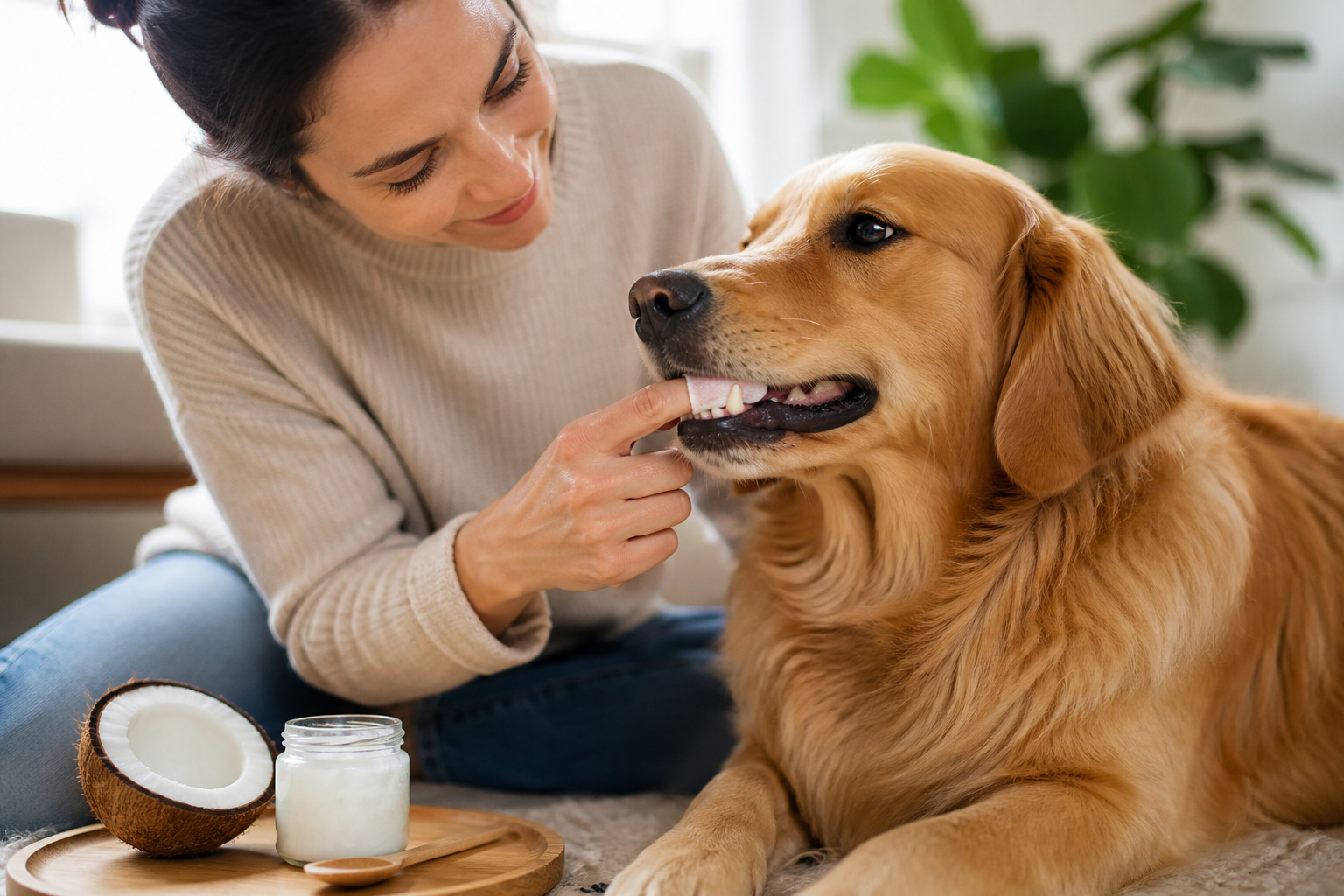
Step 3: Apply to the gumline. / Scoop a pea-sized amount onto your finger or a soft finger brush. Gently rub it along the outer surfaces of the teeth and the gums.
Step 4: Focus on the back molars. / These are the areas where plaque builds up the fastest. Spend a little extra time on the upper back teeth if your dog allows it.
Step 5: Reward and praise. / Even though the oil tastes good, the handling can be stressful. Give your dog plenty of verbal praise to keep the session positive.
Alternative Methods: Coconut Oil in the Bowl
Not every dog is a fan of having their mouth handled. If your dog is particularly wiggly or reactive, you can still get some benefits by adding coconut oil to their food. While this is less effective than topical application, the oil still interacts with the oral environment as they eat.
When you add coconut oil to the bowl, it mixes with the saliva. This allows the antimicrobial properties to circulate through the mouth. It also provides systemic benefits. Coconut oil can support skin and coat health when ingested in appropriate amounts.
However, you must be careful with the quantity. Coconut oil is calorie-dense. Adding too much to the food can lead to weight gain. It can also cause digestive upset if introduced too quickly. Always start with a very small amount, such as a quarter teaspoon for a small dog. Monitor their stool consistency for a few days before increasing the dose.
Selecting the Right Coconut Oil
Not all coconut oil is created equal. If you are using it as a health supplement, quality matters. You want an oil that retains as much of its natural chemistry as possible.
Look for "Virgin" or "Unrefined" on the label. This means the oil was extracted without high heat or harsh chemicals. Refined coconut oil is often bleached and deodorized. This process can strip away the very compounds, like lauric acid, that make it beneficial for your dog's teeth.
Organic options are also a great choice. They ensure that no pesticides were used during the growing process. Since your dog will be ingesting some of the oil, keeping it as clean as possible is a smart move. Avoid any products that contain added flavors, sweeteners, or preservatives. Specifically, ensure there is no xylitol, which is a common sweetener in human products and is highly toxic to dogs.
Vet Tip: Always consult your veterinarian before adding significant amounts of fat to your dog's diet. This is especially important for breeds prone to pancreatitis or dogs that are currently overweight.
Understanding the Risks and Limitations
While coconut oil is a great supplement, it is not a miracle cure. It is important to have realistic expectations. If your dog already has heavy tartar or loose teeth, coconut oil will not fix the problem. In those cases, the bacteria have already moved below the gumline where topical oil cannot reach.
High Caloric Content
Coconut oil is pure fat. For a small dog, even a teaspoon can represent a significant portion of their daily calorie needs. If you use it daily, you may need to adjust their meal portions to prevent weight gain. Obesity leads to a host of other health issues, including joint stress and heart disease.
Digestive Sensitivity and Pancreatitis
Some dogs are very sensitive to dietary fats. Introducing coconut oil too fast can cause diarrhea or greasy stools. More seriously, high-fat intake is a known trigger for pancreatitis. This is a painful and dangerous inflammation of the pancreas. If your dog has a history of digestive issues, proceed with extreme caution and professional guidance.
It Does Not Replace Brushing
The physical scrubbing action of a toothbrush is what removes plaque. Coconut oil helps by killing bacteria, but it does not provide the same mechanical cleaning. Think of coconut oil as the "soap" and the toothbrush as the "sponge." You really need both for a truly clean mouth.
Integrating Coconut Oil into a Total Dental Strategy
Effective dental care requires a multi-layered approach. No single product can do it all. We recommend using coconut oil as one part of a larger plan to keep your dog's mouth healthy for life.
The Importance of Traditional Brushing
If your dog allows it, use a dog-specific toothbrush and enzymatic toothpaste alongside coconut oil. You can even use the coconut oil as the "paste" on the brush. The bristles help break up the biofilm of plaque, while the oil tackles the bacteria. Aim for at least three sessions a week, though daily is the gold standard. For a dog-specific option, consider Nutri-Vet Dog Toothpaste.
Dental Chews and Toys
Chewing is a natural behavior that helps clean teeth. Hard rubber toys from brands like Kong can help scrape away surface debris. Specific dental chews are designed to be abrasive and often contain ingredients that further reduce tartar. These are excellent for the days when you do not have time for a full brushing session. You can also explore our dog dental and breath care collection.
For more ideas between brushing sessions, read our guide to the best dental chews for dogs.
Professional Veterinary Care
Even with the best home care, most dogs will eventually need a professional cleaning. Your vet can perform an oral exam to look for cracked teeth, oral tumors, or deep infections. They can also clean under the gumline where home tools cannot reach. Routine exams are the best way to catch problems before they become painful and expensive. These warning signs of bad teeth in dogs can help you know when to pay closer attention.
Prescription Diets and the BaxterBoo Pharmacy
Sometimes, home care is not enough to manage a dog's dental needs. Some dogs are genetically predisposed to poor oral health. In these cases, your veterinarian might recommend a prescription dental diet. These kibbles are specifically engineered to not crumble when bitten. Instead, they act like a toothbrush, scrubbing the tooth as the dog chews.
Through our partnership with Pet's Choice, we offer a full-service pharmacy for our customers. This includes FDA-approved medications and prescription diets from trusted brands like Royal Canin and Farmina Vet Life. If your vet prescribes a specific dental or weight management food to help with the caloric impact of supplements, we can fulfill those needs directly. Our dog pharmacy is a reliable way to get the specialized care your dog requires for chronic health management.
Bottom line: Use coconut oil as a supplemental tool alongside mechanical brushing and professional veterinary checkups for the best results.
Conclusion
Cleaning your dog's teeth with coconut oil is a practical and natural way to support their health. It offers antimicrobial benefits, improves breath, and is generally enjoyed by most pets. Remember to start slowly and choose high-quality, unrefined oil. While it is a fantastic addition to your routine, it works best when combined with traditional brushing and regular veterinary visits.
Keeping your dog's mouth clean is one of the best things you can do for their longevity. If you are looking for more ways to support your pet's wellness, our dog dental and breath care collection has a variety of tools to help. You can also explore our Autoship programme for convenient repeat purchases of dental care essentials. We are here to help you navigate every stage of your dog's care with quality products and expert advice.
FAQ
Can I use the coconut oil from my kitchen on my dog? Yes, as long as it is pure coconut oil without any additives. For the best health benefits, ensure it is unrefined or virgin oil rather than the refined version. Always check the ingredient label to make sure there are no sweeteners like xylitol, which is toxic to pets.
How often should I put coconut oil on my dog's teeth? For most dogs, applying it two to three times per week is a great starting point. If your dog enjoys the process and does not have digestive issues, you can move to daily application. Consistency is the most important factor in seeing a reduction in plaque and better breath.
Will coconut oil make my dog gain weight? It can if you use too much, as coconut oil is very high in calories. If you are applying it topically, most of it stays in the mouth, but some will be swallowed. If you add it to their food, be sure to reduce their regular kibble slightly to compensate for the extra fat.
What if my dog has diarrhea after eating coconut oil? This is a sign that you have introduced too much fat too quickly. Stop using the oil for a few days until their digestion returns to normal. When you try again, use a much smaller amount and increase it very slowly over several weeks.






