Save 15% on your 1st Autoship learn more

 Email us
 Live Chat
 FAQs
FAQs





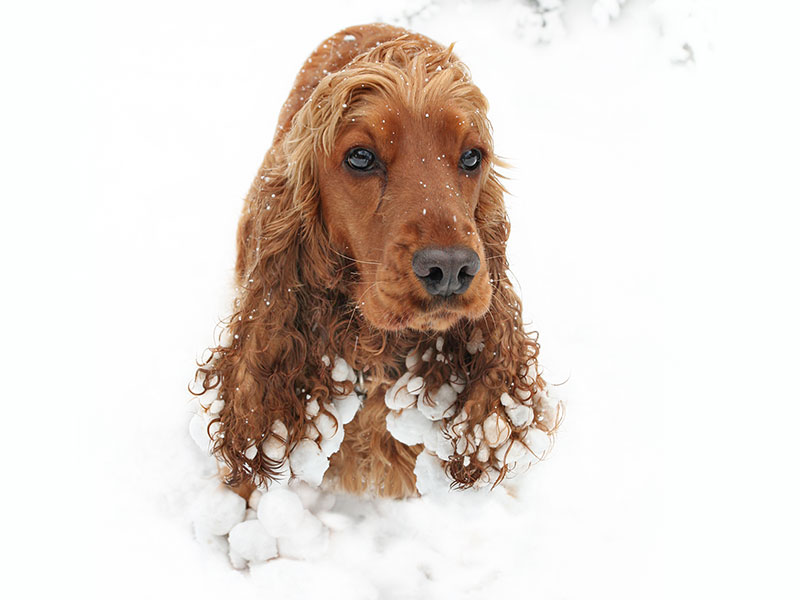
With winter right around the corner, you have to start thinking about your dog. If he’s an outdoor dog, what have you done to ensure his comfort when the colder temperatures really kick in? If he’s an indoor dog, do you need anything to help him safely relieve himself or go on walks? For dog owners who live in areas where it snows, you’ll also need to consider what to do about snow getting in your dog’s fur.
Why Does Snow Stick to Paws and Fur?
As your dog’s fur drags in the snow, it picks up little balls, which melt from the dog’s body heat, then form into ice balls that collect more snow and grow larger. Sometimes you’ll see these snowballs hanging from your dog’s fur. Other times, the balls will collect between your dog’s toes. This is not only cold, but can cause serious health issues for your dog’s feet. If your dog has spent some time out in the snow and is currently in pain, chances are he has balls of snow irritating his skin, pushing his toes apart or pulling on his fur.
What’s the Danger?
When a dog gets irritated, he’ll do what he can to alleviate the irritation. This often includes licking the area that is hurting or uncomfortable. The problem is when a dog is licking and biting at an area to get snow and ice out of his fur or paws, it adds moisture to and often breaks the skin. This leads to bacterial and yeast infections. A dog with snow or ice balls between his toes also runs the risk of infection due to cracking and bleeding.
How Can Snow Be Eliminated?
The best way to combat this problem is prevention. Of course, that doesn’t always work perfectly, but you should do as much as you can to avoid your dog having to deal with the issue. Some preventative measures include:
-
Investing in Dog Boots – There are a lot of different types of dog boots you can purchase for your dog. They come in a variety of styles and sizes, so you never have to compromise comfort or fashion to keep your dog safe. It’s best to get your dog started young so when he’s older he won’t gnaw on them, but anytime is a great time to protect your dog from the snow. You can teach an old dog new tricks!
-
Using a Snow Suit – Doggy snow suits are made to keep most of your dog covered, while allowing an open area so the dog can relieve himself. Keep this in mind as you care for your dog. That underneath area may still be exposed to the snow and will still need to be cared for, though the rest of the dog, including legs, back and chest, will be covered well.
-
Utilizing a Snood – Dog snoods come in all varieties, colors and sizes. Whether you have a large dog or a tiny puppy, there’s a snood that will keep his head and neck protected from the snow. A snood to a dog is like a scarf to a human, so you can imagine how it will protect your pup when he’s digging in the snow or sniffing out a place to relieve himself. The snood does not cover your dog’s face, so you’ll still need to watch closely to ensure his face isn’t uncomfortable due to the cold or the snow.
-
Adding a Sweater – If your dog is only taking a quick trip outdoors to go potty, you may be able to get away with just adding a dog sweater to his wardrobe. The sweater will keep him comfortable and safe from the snow while he runs outside for a moment.
-
Applying Paw Balm – You can apply any form of paw balm to your dog’s paws before he heads outside. Balms protect against the snow and ice, but also against any snowmelt and salt. It’s easy to apply and will prevent snow from sticking to your dog’s paws.
-
Trimming the Dog’s Nails – If you keep your dog’s nails trimmed , as well as trimming the fur around his feet, there’s not as much for the snow to attach to. You have to be careful with this technique, as you don’t want to remove all the fur that keeps your dog warm.
What If Preventing the Problem Doesn’t Work Completely?
Even after all you’ve done to prevent the issue of snowballing up on your dog, sometimes it’s not enough. If your dog is suffering from the snow, or perhaps before he starts suffering, there is something you can do to get rid of the snow.
Dipping your dog’s paws in water after he gets back inside is a great way to melt away the snow. If you’ve ever stuck your hands in water after they’ve gotten extremely cold outside, you know the pain of having the wrong temperature water. Your dog could feel that as well, so make sure the water isn’t too hot or too cold. Put lukewarm water in a bowl and place it right inside your door. When the dog comes in and has snowballs on his feet, dip his feet in the lukewarm water so the snow and ice will melt off. Use a dog towel to gently dry his paws. If the balls have formed on other areas of your dog’s body, a lukewarm bath with a calming dog shampoo might help.
As you can see, you have a lot of options to prevent your dog from having to suffer from snow in his fur and paws. Most of the snowsuits, boots and other products are also fashionable, making it fun to dress your dog for winter.