Save 15% on your 1st Autoship learn more

 Email us
 Live Chat
 FAQs
FAQs





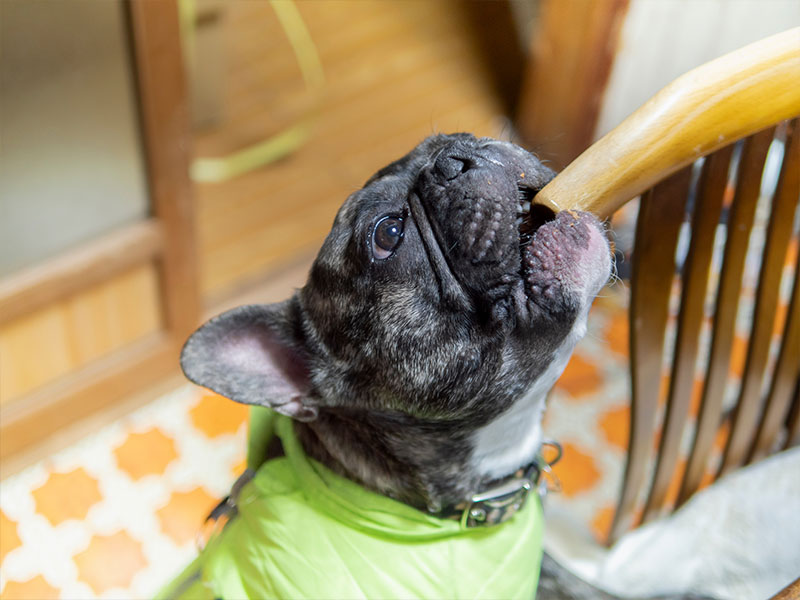
If you’re a first-time dog owner, you might be getting frustrated at the amount of chewing your dog does. Perhaps you’ve noticed your slippers have been gnawed to extinction and your door frames are beginning to look shabby. Maybe the arm of your favorite chair is ripped up or your newspaper gets torn in half before you have a chance to read it. While this behavior is irritating, it might be a sign of something else, and there are some things you can do about it.
Why Do Dogs Chew?
It’s important you understand your dog so you can properly help him. If you don’t understand why he chews on everything in sight, you won’t be able to acquire the tools necessary to help him kick the habit.
If you have a young puppy, he’s very much like a small baby. He explores the world with his mouth. He’ll chew on something to get a sense for the taste, the texture and other features that might interest him. When dogs are teething , they’ll chew on things to relieve the pain to some degree.
If you have an older dog, the reasons for chewing are more destructive and often harder to deal with. Some reasons might include:
-
The dog never learned what he could and could not chew on when he was exploring as a puppy.
-
The dog is bored and doesn’t have anything that he’s specifically allowed to chew on.
-
The dog has separation anxiety and is chewing on random items, the same way people bite their fingernails when they’re anxious.
-
The dog has a fear of something and doesn’t know how to deal with it.
-
The dog doesn’t get enough attention.
How Can You Encourage Better Behavior?
After you understand why your dog is chewing things he shouldn’t be, you can begin to work on changing the behavior. Some of your solutions will be things you can do or change at home, but if your dog is dealing with separation anxiety or a fear of something, you might want to consult your veterinarian, as there could be some additional measures you’ll need to take. To encourage your dog not to chew on your personal items:
-
Get him plenty of chew toys. If your puppy is teething, a cooling chew toy will be a welcome item, but there are plenty of other chew toys for both young and old dogs. The Humunga Tongue Dog Toy is a funny one that your dog will love, and you’ll be entertained by it as well. The Zanies Monkeys Fist Knot Rope Dog Toy is another fun chew toy that you and your dog can play tug-of-war with together. The options are endless, and giving the dog a specific item that he’s allowed to chew on will help. Playing with the chew toys and your dog will also give the dog more attention, if that’s what he’s seeking.
-
Clean up after yourself. It sounds like a simple idea, but life can get busy. While you’re teaching your dog what he can and cannot chew on, you might have to get extremely diligent about cleaning up after yourself. Put the shoes in a closet with a door. Keep the kids’ toys in a toy box that has a latch on the lid. The more you keep out of reach of the dog, the more items you’ll save.
-
Give the dog plenty of exercise. If your dog has a lot of pent-up energy, it’s going to come out at one point or another, and you don’t want him to go crazy and chew everything in sight. Take your dog on plenty of walks. Let him run around the backyard or play fetch with the dog at a dog park. When you get back home, he won’t have the energy to rip your things apart.
-
Use a bitter training spray. While you’re training your dog not to chew on your items, especially when he is a young puppy, spray things with a bitter spray. The Grannicks Bitter Apple Atomizer Dog Training Spray is alcohol-free, pet-safe, fragrance-free, dye-free and non-flammable, which means you can use it on pretty much anything. The Fooey Ultra Bitter Dog Training Spray has all the same benefits, and when used with other techniques, these are going to save your furniture and shoes.
-
Teach the dog to “give.” When your dog has something he shouldn’t have, hold a treat in one hand and hold out your other hand, asking the dog to “give” you the item. When he gives it to you, give him the treat. This is only a technique used to train, so you wouldn’t continue doing it throughout the dog’s life.
-
Don’t make it turn into a game. If you start chasing your dog to get the item back, he’s going to think you’re playing a game. This will only encourage the behavior. Ask him to give it to you, offer a treat, spray it with a bitter spray, offer him a toy in exchange, and if all of those fail, you just need to be patient until he finally learns what to do.
Does your dog chew on things he shouldn’t? It may be a sign of something more serious, or it may just be that you need to pay him a little more attention. By trying to understand why your dog chews on things, you can properly help him learn to chew on appropriate items that won’t damage your home.