
 Save 15% on your 1st Autoship learn more

 Email us
 Live Chat
 FAQs
FAQs






Why New Year Is the Perfect Time to Address Your Pet's Weight
Weight Management & "New Year" Pet Health starts with understanding that more than half of our pets are now overweight or obese. If your furry friend gained a few extra pounds over the holidays, you're not alone—and January is the ideal moment to take action.
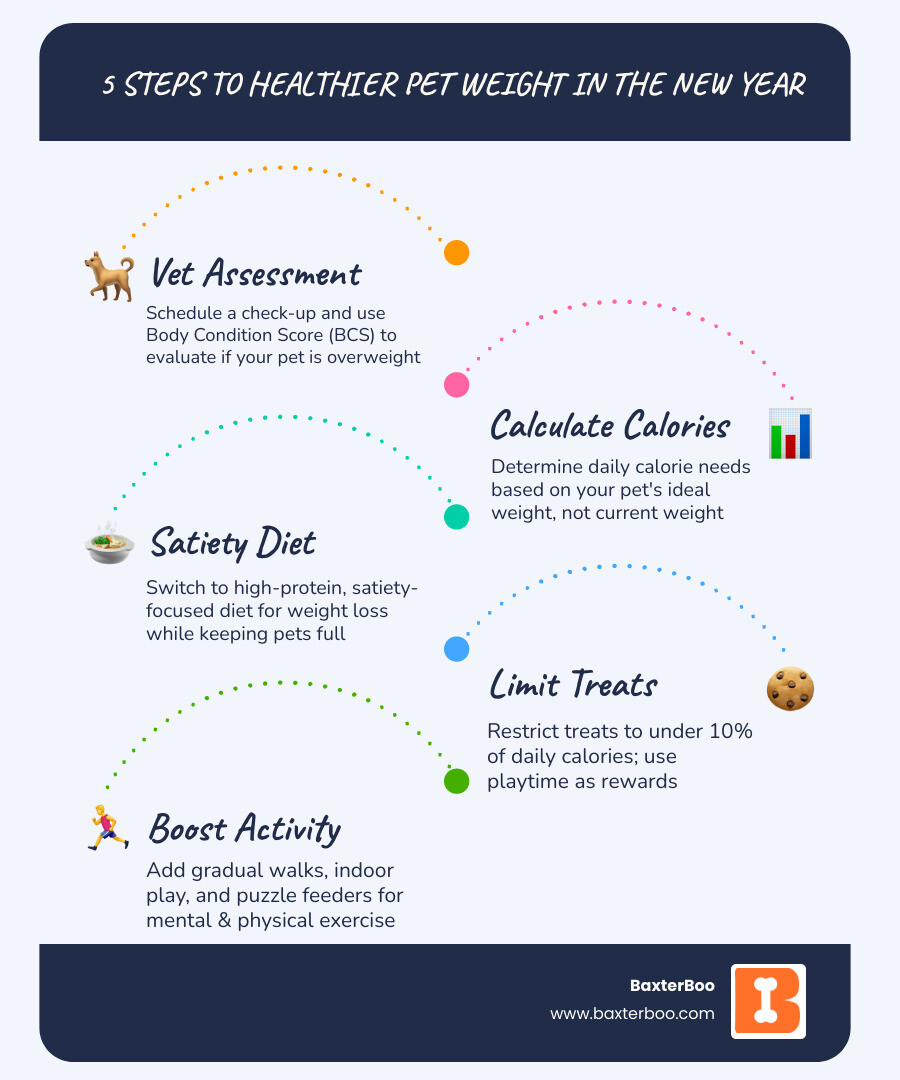
Quick Answer: 5 Steps to Healthier Pet Weight in the New Year
- Assess your pet's body condition using the Body Condition Score (BCS) system with your veterinarian
- Calculate safe calorie needs based on your pet's ideal weight (not current weight)
- Switch to a satiety-focused diet designed for weight loss while keeping pets feeling full
- Limit treats to less than 10% of daily calories and use non-food rewards
- Increase activity gradually with walks, play sessions, and puzzle feeders tailored to your pet's abilities
The statistics are startling. Studies show that approximately 63% of cats and 59% of dogs are considered overweight or obese. Yet only about 30% of pet owners recognize their pet has a weight problem.
The holiday season makes things worse. Cold weather means fewer outdoor walks. We spend more time at home, making it easier to slip our pets extra treats. Those "puppy dog eyes" are hard to resist when we're enjoying festive meals ourselves.
But here's the good news: research from the landmark Purina Life Span Study found that dogs maintained at a lean body condition lived significantly longer and developed chronic diseases much later in life compared to their heavier littermates. Even modest weight loss can dramatically reduce the risk of diabetes, arthritis, and heart disease.
This guide will walk you through everything you need to know—from accurately assessing your pet's current condition to creating a sustainable weight loss plan that actually works.
The Impact of Weight Management & “New Year” Pet Health on Longevity
When we talk about pet obesity, we aren't just talking about a few extra rolls of fluff. We are talking about a major health threat that mirrors the human obesity epidemic. According to recent studies, more than half of the world’s pets are now considered overweight or obese. Specifically, it is estimated that 63% of cats and 59% of dogs fall into this category.
The consequences of carrying excess weight are severe. In dogs, obesity is directly linked to osteoarthritis, renal (kidney) disease, skin disorders, insulin resistance, and even certain types of cancer. For our feline friends, the risks include dermatological issues, diabetes mellitus, and urolithiasis (bladder stones).
Perhaps the most compelling evidence for Weight Management & “New Year” Pet Health comes from the Purina Life Span Study. This long-term research followed Labrador Retrievers from the same litters. One group was fed for a lean body condition, while the other was slightly overfed. The results were life-changing: the lean dogs lived nearly two years longer on average and required treatment for chronic diseases significantly later in life.
Excess fat is not just "stored energy." It is biologically active tissue that secretes inflammatory hormones. This chronic inflammation puts constant stress on the body, leading to a diminished quality of life. For older pets, the combination of weight and age can be particularly devastating for their mobility. Supporting your pet's muscle care becomes much harder when their joints are struggling under the weight of even a few extra pounds.
By prioritizing weight management this New Year, we are giving our pets the gift of more time—more years of walks, more years of play, and a much higher quality of life.
Assessing Your Pet’s Current Health Status
The first step in any successful weight loss journey is an honest assessment. As we mentioned, only about 30% of owners recognize that their pet is overweight. This "fat gap" often occurs because we see our pets every day, making gradual weight gain hard to notice.
The holiday season is a prime culprit for seasonal weight gain. In places like Vernon Hills, IL, the drop in temperature often means shorter walks and more time spent snuggling indoors. When we are home more, we tend to "spoil" our pets with treats. Whether it’s a bit of turkey from the table or pet-specific festive indulgences, those calories add up quickly.
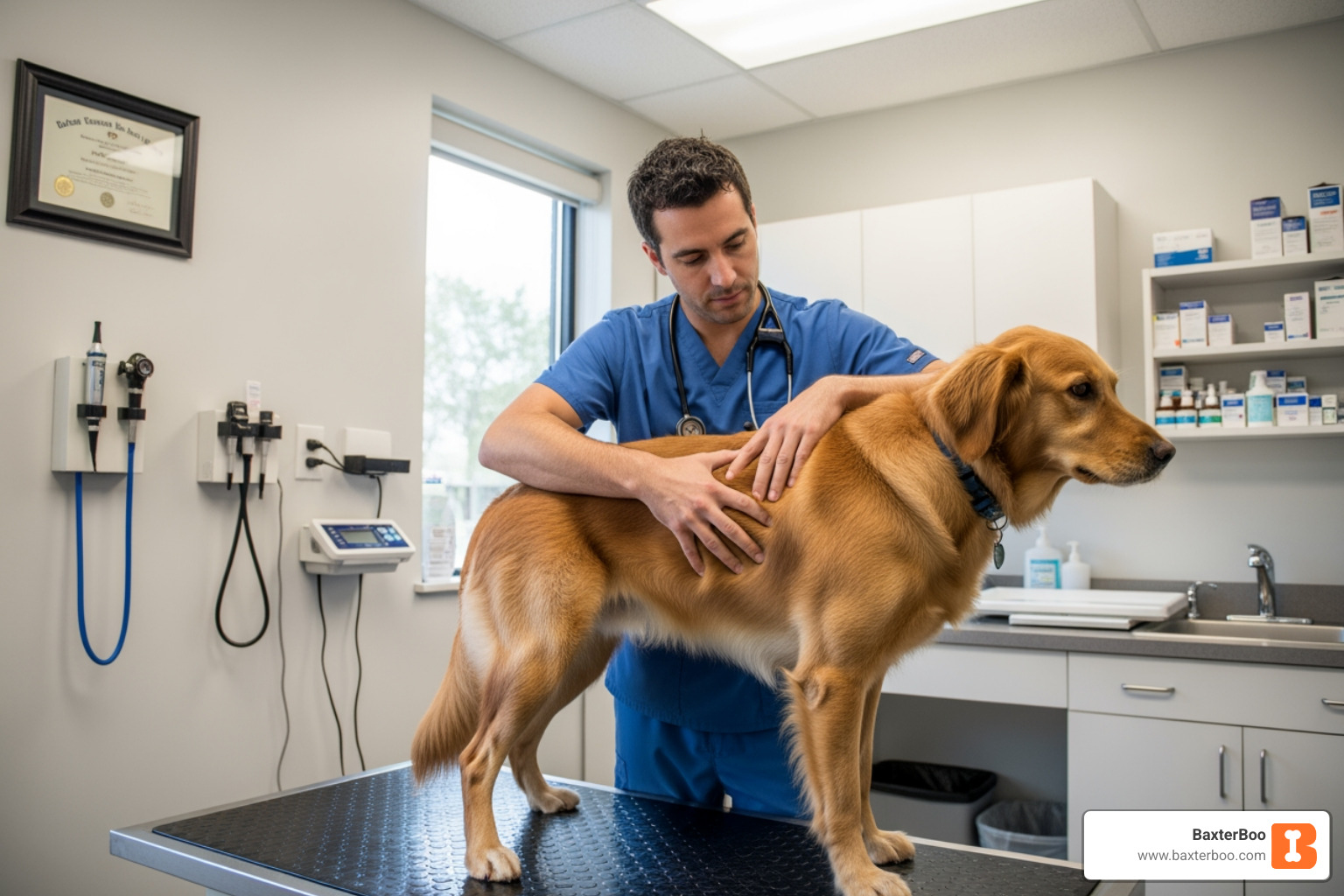
Before starting a diet, it is crucial to rule out underlying medical conditions. Sometimes, weight gain isn't just about overeating. Conditions like hypothyroidism in dogs or Cushing’s Disease can make weight loss nearly impossible without medical intervention. If you notice your pet is gaining weight despite a controlled diet, or if they seem excessively lethargic, a visit to the vet is essential. You might also want to explore thyroid health support if your veterinarian identifies a hormonal imbalance.
A professional veterinary assessment typically includes:
- An accurate body weight measurement.
- Determining a Body Condition Score (BCS).
- Taking measurements of the chest, waist, and neck circumference (these help track progress when the scale doesn't move immediately).
- Blood work to check organ function and rule out metabolic issues.
Weight Management & “New Year” Pet Health: Assessing Body Condition Score (BCS)
While the number on the scale is helpful, the Body Condition Score (BCS) is a much better indicator of your pet's health. Think of it as the pet version of BMI, but more practical. Most veterinarians use a 1-to-9 scale, where 4 or 5 is considered ideal.
You can perform a basic BCS check at home using these three steps:
- The Rib Check: Run your hands over your pet’s ribcage. You should be able to feel the ribs easily with a light touch, similar to the back of your hand. If you have to press hard to find them, your pet is likely overweight.
- The Profile Check: Look at your pet from the side. You should see a clear "abdominal tuck"—the tummy should slope upward from the end of the ribcage to the back legs.
- The Overhead Check: Look down at your pet from above. You should see a distinct waistline behind the ribs, giving them an "hourglass" shape.
If your pet looks more like a rectangular loaf of bread from above, it’s time to look into weight management supplies and a structured plan.
Nutritional Strategies for Sustainable Weight Loss
One of the biggest mistakes we see pet parents make is simply "cutting back" on regular food. While this reduces calories, it can also lead to nutrient deficiencies. Regular pet foods are balanced for specific serving sizes; when you reduce that size significantly, your pet may not get enough essential vitamins and minerals.
This is where satiety-focused or weight-management diets come in. These specialized formulas are designed to be lower in energy density but higher in protein and fiber. This combination helps your pet feel full (satiety) while they are actually eating fewer calories.
| Feature | Regular Kibble | Satiety/Weight-Management Diet |
|---|---|---|
| Calorie Density | High | Low |
| Fiber Content | Moderate | High (keeps them full) |
| Protein Content | Standard | High (protects lean muscle) |
| Fat Content | Moderate to High | Low |
| Portion Volume | Small (when restricted) | Large (satisfies the "hunger" drive) |
A great example of a targeted formula is the Blue Natural Veterinary Diet W+M, which supports both weight loss and joint mobility—a common concern for overweight dogs.
To ensure success, we must be precise. Using a "handful" or a "scoop" is often inaccurate. A standard red solo cup, for instance, can hold about two cups of food, making it easy to overfeed. We recommend using a digital kitchen scale to weigh food in grams. For busy families, automatic pet feeders can be a lifesaver, ensuring that portions are exact and meals are never missed or doubled.
Weight Management & “New Year” Pet Health: Calculating Calorie Deficits
To lose weight, your pet must consume fewer calories than they burn. However, this deficit must be safe. For dogs, a safe rate of weight loss is 1% to 2% of their body weight per week. For cats, it’s a bit slower, around 0.5% to 1% per week.
When following a weight loss plan, your veterinarian will calculate the "Resting Energy Requirement" (RER) based on your pet's ideal weight, not their current weight.
The 10% Rule for Treats Treats are often the "silent killers" of a diet. We recommend that treats make up no more than 10% of your pet's total daily calorie intake. If you give a treat, you must subtract those calories from their main meal.
Consider these non-food rewards to keep the bond strong without adding inches to the waist:
- Extra grooming or brushing sessions.
- A new toy or a game of fetch.
- Intentional "connection time"—just 15 minutes of focused attention can make a huge difference in your pet's mental health.
- Low-calorie treat alternatives like green beans or small pieces of plain, cooked zucchini.
Incorporating Exercise and Mental Enrichment
Exercise is the second half of the weight management equation. In the New Year, especially in the Illinois winter, we have to get creative. While a 12-week walking plan is fantastic for dogs, you should always start slowly. If your pet is significantly overweight, their joints are already under stress.
For dogs, a sturdy harness like the EzyDog Convert Harness provides better control and comfort during walks than a standard collar. If the weather is too harsh for long outdoor treks, consider "indoor adventures":
- Scent Games: Hide kibble around the house for them to "hunt."
- Stair Exercises: If your dog is healthy enough, a few trips up and down the stairs can burn significant energy.
- Hydrotherapy: If available, swimming is the ultimate low-impact exercise for arthritic or very obese dogs.
Cats are natural hunters, but indoor life can make them sedentary. We recommend three 5-minute sessions of intense play daily. Use feather wands, laser pointers (followed by a physical toy they can "catch"), or even leash training for the more adventurous feline.
Mental stimulation is just as important as physical movement. Using KONG Rewards treat dispensers or puzzle feeders forces your pet to work for their food. This slows down "scarfers," provides brain exercise, and mimics natural foraging behaviors.
Frequently Asked Questions about Pet Weight Loss
How fast should my pet lose weight safely?
Safety is paramount. Rapid weight loss can lead to serious health issues, especially in cats, who can develop hepatic lipidosis (fatty liver disease) if they stop eating or lose weight too quickly. Aim for 1-2% of body weight per week for dogs and 0.5-1% for cats. Consistency is more important than speed.
Can I just feed less of my pet's regular food?
While you can, it’s often not the best approach. Simply reducing the portion of a calorie-dense food often leaves the pet feeling hungry and begging, which leads to owner "guilt-feeding." Furthermore, you risk under-nourishing them. Switching to a veterinary-recommended weight management diet allows your pet to eat a satisfying volume of food while consuming fewer calories.
What are the best low-calorie treat alternatives for dogs and cats?
For dogs, many enjoy crunchy vegetables like green beans, cucumber slices, or carrots (in moderation). For cats, small flakes of plain, water-packed tuna or tiny pieces of cooked chicken are better than store-bought "biscuits" which are often high in carbohydrates. Always remember to factor these into the 10% treat allowance!
Conclusion
At BaxterBoo, we believe that every pet deserves a long, vibrant life. Based in Vernon Hills, IL, we see how much our community loves their animals. Weight Management & “New Year” Pet Health isn't about deprivation; it's about providing the right balance of nutrition and activity so your pet can thrive.
Success in weight management comes down to sustainable habits and regular monitoring. We recommend taking "before" photos today—you'll be amazed at the difference in a few months! Set realistic goals, celebrate small milestones (like a half-pound loss or a more energetic play session), and keep those regular weigh-ins.
If you’re ready to start, explore our curated selection of Dog Treats & Veterinary Diet Treats to find healthy, low-calorie options that keep those tails wagging. Let’s make this the year your pet reaches their healthiest weight yet!






