
 Save 15% on your 1st Autoship learn more

 Email us
 Live Chat
 FAQs
FAQs





Introduction
You notice the tumbleweeds of fur gathering in the corners of your living room long before you see the hair on your favorite sweater. Shedding is a natural process for most breeds, but it can feel overwhelming when your home is covered in a constant layer of undercoat. We have helped thousands of owners at BaxterBoo navigate the world of pet grooming since 2006. This guide covers how to choose a de shedding dog brush and how to use it effectively to keep your home cleaner. Understanding your dog's coat is the first step toward a more manageable grooming routine.
Quick Answer: A de shedding dog brush is designed to reach through the topcoat and remove loose hair from the undercoat before it falls out. These tools use stainless steel edges or specialized teeth to grab dead fur without cutting the healthy topcoat.
Understanding the Canine Undercoat
To choose the right tool, you must understand what you are trying to remove. Most dogs that shed heavily have a double coat. This consists of a harsh outer layer called the topcoat and a soft, dense layer underneath called the undercoat. The topcoat protects the skin from moisture and debris. The undercoat acts as insulation to regulate the dog’s body temperature in both hot and cold weather.
Shedding occurs when the undercoat hairs reach the end of their growth cycle. In many breeds, this happens seasonally. This is often called blowing the coat. If these dead hairs are not removed, they can become trapped against the skin. This leads to itching, odors, and eventually painful mats. A de shedding dog brush is specifically engineered to target this hidden layer of fur.
Key Takeaway: Regular brushing removes dead undercoat hair before it can tangle or fall onto your furniture. This process helps your dog regulate their temperature more effectively.
Common Types of De Shedding Tools
Not all grooming tools are the same. A standard slicker brush or comb is great for daily maintenance, but they often lack the reach needed for heavy shedders. Different designs cater to different hair lengths and thicknesses. Explore our dog grooming collection for brushes, combs, shampoos, and other coat-care supplies.
Stainless Steel Edge Tools
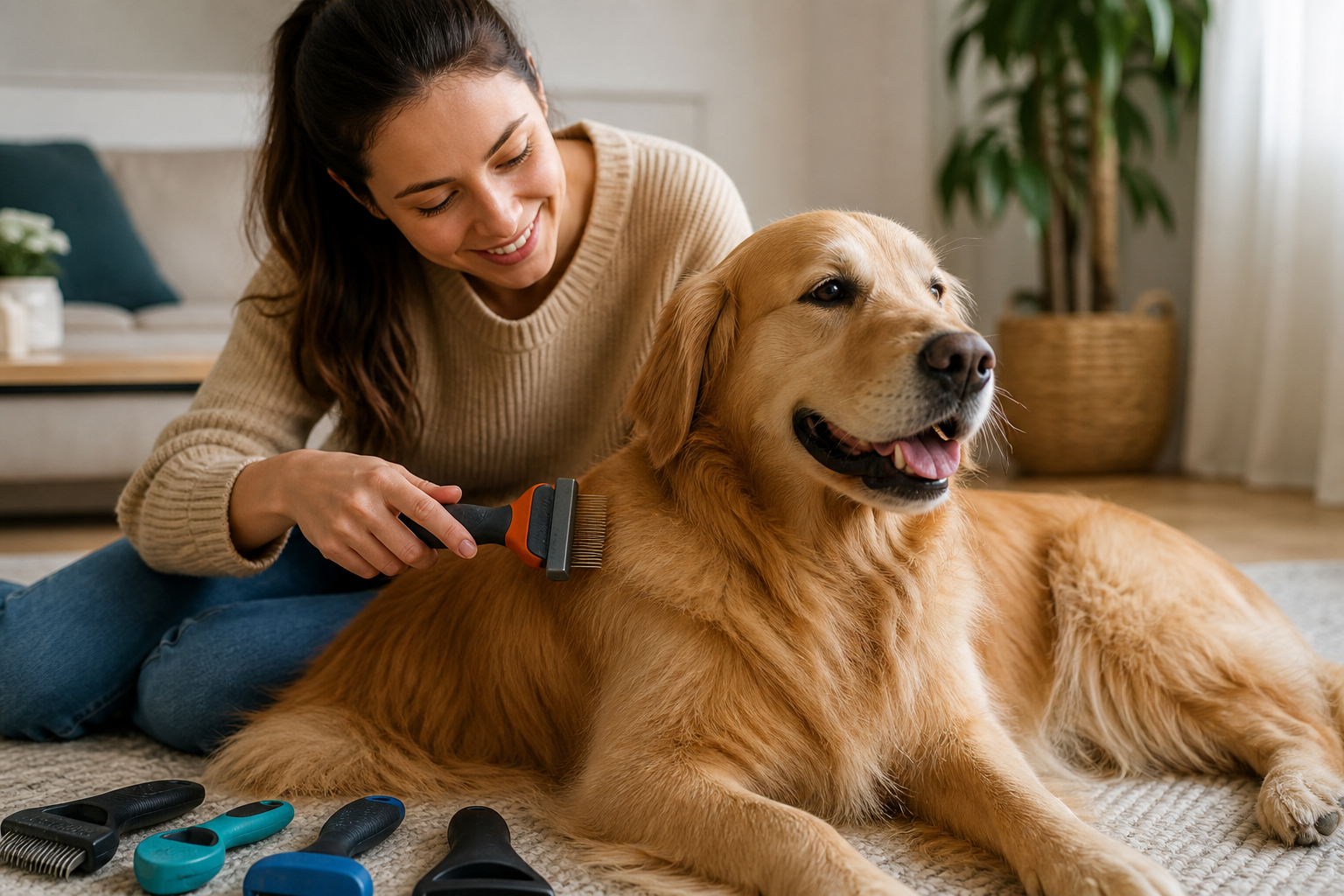
These are the most common type of de shedding dog brush. They feature a fine, comb-like edge made of stainless steel. The teeth are designed to pass through the topcoat and snag the loose, fuzzy undercoat. Brands like FURminator often include a release button to push the collected hair off the blade. This makes the process much faster for high-volume shedders.
Blade and Wave Pattern Tools
Some tools, such as the SleekEZ, do not look like traditional brushes. They often feature a wooden handle with a metal strip embedded in the bottom. This strip has tiny, wave-patterned teeth. These tools are excellent for short-haired breeds because they grab the tips of the hair and pull them away from the skin without any tugging. They are also useful for removing fur from upholstery and car interiors.
Grooming Rakes
Rakes have long, sturdy pins that reach deep into thick fur. These are best for dogs with very long or heavy coats, such as Malamutes or Newfoundlands. The pins are often rounded to prevent scratching the skin. Some rakes have rotating pins that help glide through minor tangles without pulling.
Comparison of De Shedding Tool Features
| Tool Type | Best For | Key Feature |
|---|---|---|
| Stainless Steel Edge | Heavy undercoats | Reach and hair ejection |
| Wave Pattern Blade | Short to medium coats | No-tug design |
| Long-Pin Rake | Double-coated giants | Deep penetration |
| Rubber Curry Brush | Short, smooth coats | Skin massage and shine |
Selecting the Right Brush for Your Breed
Choosing a de shedding dog brush requires looking at your dog's hair length and density. If you use a tool designed for long hair on a short-haired dog, you risk irritating the skin. Conversely, a tool meant for short hair will not reach the undercoat of a thick-coated breed. Compare options in our dog brushes and combs category.
For short-haired dogs like Labradors or Pugs, look for a blade with shallow teeth. These dogs shed a lot of small, stiff hairs that can be hard to pick up. A wave-patterned tool or a rubber curry brush works best here. The rubber brushes also help distribute natural skin oils, which gives the coat a healthy shine.
For long-haired breeds like Golden Retrievers or Huskies, a tool with a longer stainless steel edge is necessary. You need a brush that can get through two or three inches of topcoat to reach the shedding layer. At BaxterBoo, we recommend checking the product specifications for hair length ratings. Most high-quality tools are labeled for short hair (under 2 inches) or long hair (over 2 inches).
Vet Tip: If your dog is shedding excessively and showing signs of bald patches or red skin, consult your veterinarian. Unusual hair loss can indicate allergies, hormonal imbalances, or skin infections that a brush cannot fix.
How to Use a De Shedding Dog Brush Safely
Using a de shedding tool is different from using a standard brush. Because these tools have metal edges, you must use a light touch. Applying too much pressure can cause brush burn, which is a painful skin irritation.
Step 1: Check for mats and tangles. / Never use a de shedding tool on a matted coat. Use a detangling comb or a slicker brush to clear any knots first.
Step 2: Start with a clean, dry coat. / De shedding tools work best on dry hair. If the hair is wet, the tool may pull or tear the fur instead of removing it cleanly.
Step 3: Move in the direction of hair growth. / Use long, gentle strokes. Start at the neck and work your way toward the tail. Avoid staying in one area for too long.
Step 4: Monitor the skin. / Periodically lift the hair to check the skin for redness. If the skin looks pink or irritated, stop grooming that area immediately.
Step 5: Clean the tool frequently. / A clogged brush will not work. Use the ejection button or your fingers to remove the fur every few strokes.
Bottom line: Gentle, consistent strokes are more effective and safer than applying heavy pressure with a de shedding tool.
Frequency of Grooming Sessions
The frequency of your grooming sessions depends on the time of year and your dog's lifestyle. During the spring and fall, most double-coated dogs will need more frequent attention. This is when the coat shifts to accommodate changing temperatures. For more seasonal coat-care guidance, read how Australian Shepherds shed.
For most dogs, a deep de shedding session once a week is sufficient. During peak shedding seasons, you may need to increase this to two or three times a week. Do not use these tools every single day. Because they are designed to remove hair aggressively, overusing them can eventually thin the topcoat or irritate the skin.
Between de shedding sessions, use a soft bristle brush or a slicker brush. This keeps the topcoat clean and helps move oils across the skin. This balance ensures the coat stays healthy without being over-processed by heavy tools.
The Role of Nutrition in Shedding Control
While a de shedding dog brush handles the hair that has already died, nutrition influences how much hair your dog loses in the first place. A healthy coat starts from the inside. If the skin is dry and flaky, the hair follicles will be weak.
Look for foods rich in Omega-3 and Omega-6 fatty acids. Brands like Farmina and The Honest Kitchen offer recipes specifically formulated for skin and coat health. If your dog has chronic skin issues or severe allergies, our dog pharmacy carries prescription diets and FDA-approved medications through our partnership with Pet's Choice.
A high-quality diet can significantly reduce the volume of non-seasonal shedding. When the skin is hydrated, the hair stays in the growth phase longer. This means less fur on your floors and less work for your grooming tools.
- Ensure the food contains high-quality animal proteins.
- Look for added Zinc and Biotin.
- Consider a fish oil supplement if the current food is low in Omega fatty acids.
- Provide plenty of fresh water to keep the skin hydrated.
Cleaning and Maintaining Your Tools
A de shedding dog brush is an investment in your dog's care. To keep it working well, you must maintain the metal edges. Stainless steel is resistant to rust, but it can still accumulate oils, dander, and bacteria from your dog's skin.
After every grooming session, wipe the blade with a clean, dry cloth. If the tool is particularly dirty, you can wash it with warm water and a mild soap. Ensure you dry it completely before storing it. Moisture trapped between the teeth can lead to corrosion over time.
Inspect the teeth of the brush regularly. If the teeth become bent or chipped, the tool should be replaced. Damaged teeth can scratch your dog's skin or snag healthy hair. Most high-quality tools come with a protective cover for the blade. Always use this cover when the tool is not in use to prevent the teeth from being blunted.
Key Takeaway: Keeping your grooming tools clean and covered prevents skin infections and ensures the blades stay sharp enough to grab loose fur effectively.
Creating a Positive Grooming Experience
Some dogs are nervous about the sensation of a de shedding tool. The metal teeth feel different than a soft brush. It is important to build a positive association so your dog remains calm during the process.
Start by letting your dog sniff the tool while it is turned off or stationary. Give them a high-value treat, like a freeze-dried liver bite from Stella and Chewy's, whenever they interact with the brush. When you begin brushing, start with a very light touch on a less sensitive area, like the shoulders.
Keep sessions short at first. Five minutes of successful grooming is better than twenty minutes of a dog trying to escape. Gradually increase the time as your dog becomes more comfortable. If your dog shows signs of stress, such as panting, lip licking, or pulling away, take a break.
We find that using the right environment helps as well. Groom your dog on a non-slip surface where they feel secure. Many owners find that grooming after a long walk is best because the dog is naturally more relaxed. Consistent rewards and a calm demeanor will make the de shedding process a bonding moment for both of you.
Why Quality Tools Matter
It can be tempting to buy the cheapest brush available, but lower-quality tools often have sharp or uneven edges. These can cause micro-scratches on the skin that lead to irritation or infection. A well-engineered de shedding dog brush has precisely ground teeth that are uniform in length and smoothness.
Higher-end tools also focus on ergonomic handles. If you have a large dog, you might be brushing for thirty minutes at a time. A handle with a comfortable grip reduces hand fatigue and gives you better control over the pressure you apply. This control is vital for preventing accidental injuries.
At BaxterBoo, we handpick tools from trusted brands that prioritize pet safety and comfort. We look for features like shatterproof handles and rust-resistant metals. These products are designed to last for years, making them a better value than a cheap alternative that needs frequent replacement. One option for longer coats is the Warren London Long Hair De-Shedding Pet Brush.
Bottom line: Investing in a professional-grade de shedding tool protects your dog's skin and makes the grooming process more efficient for you.
Managing Seasonal Blowouts
Twice a year, double-coated dogs undergo a major transition. In the spring, they shed their heavy winter undercoat to prepare for the heat. In the fall, they shed their lighter summer coat to make room for thick winter insulation. This is often when owners feel the most defeated by the amount of fur in their homes.
During a blowout, the undercoat comes out in large clumps. This is the most important time to use your de shedding dog brush. If you do not remove this hair, it can trap heat and moisture against the skin during the summer, leading to "hot spots" or fungal infections. In the winter, trapped dead hair prevents the new coat from insulating the dog properly.
Increase the frequency of your brushing during these weeks. You may also want to use a de shedding shampoo and conditioner. These products help "prime" the coat by loosening the dead hair in the bath, making it easier for the brush to pull it away once the dog is dry. Our Autoship programme is a great way to ensure you have these supplies on hand before the shedding season starts.
Professional Grooming vs At-Home Care
While a de shedding dog brush is an essential tool for every owner, it does not entirely replace the need for professional grooming. Professional groomers have access to high-velocity dryers. These dryers use a focused stream of air to blow the loose undercoat right out of the hair follicles.
Combining at-home brushing with occasional professional visits is the most effective strategy. Use your de shedding tool weekly to keep the fur under control. Then, schedule a professional "blowout" service during the peak of the shedding season. This two-pronged approach keeps your dog's coat in peak condition and significantly reduces the amount of hair in your house.
If you choose to do all the grooming at home, be patient. It may take several sessions to fully remove a seasonal undercoat. Work in sections, focusing on the hindquarters and the neck, as these areas typically hold the most undercoat.
Summary of Best Practices
Maintaining a dog's coat requires the right tools and a consistent routine. By selecting a brush that matches your dog's specific hair type, you ensure their comfort and your home's cleanliness.
- Match the tool to the hair length (short vs long).
- Always brush a dry, mat-free coat.
- Use light pressure to avoid skin irritation.
- Maintain a healthy diet to support the skin from the inside.
- Clean and store your tools properly to ensure longevity.
At BaxterBoo, we are committed to providing the gear and the guidance you need for a happy, healthy pet. Whether you are dealing with a seasonal blowout or daily shedding, the right de shedding dog brush is your best defense against the fur.
FAQ
Can I use a de shedding brush on a dog with a single coat?
You should be very careful when using these tools on single-coated breeds like Poodles or Bichons. Since these dogs do not have a dense undercoat, the metal teeth can easily reach and scrape the skin. It is usually better to use a slicker brush or a pin brush for these breeds to avoid irritation.
Does de shedding a dog make them cold in the winter?
No, because the tool only removes hair that has already died and is ready to fall out. Removing this dead fur actually helps the new, healthy undercoat grow in more efficiently. A clean coat provides better insulation than one clogged with dead, matted hair.
How do I know if I am pressing too hard with the brush?
Watch your dog's skin closely during the session. If the skin turns a bright pink or red, or if your dog winces and pulls away, you are likely applying too much pressure. The tool should glide through the hair using the weight of the brush rather than the force of your hand.
Will a de shedding tool stop my dog from shedding entirely?
No tool can stop a natural biological process like shedding. However, a high-quality de shedding brush can reduce the amount of loose hair in your home by up to 90 percent. It captures the hair on the tool so you can dispose of it properly instead of finding it on your carpets.






