
 Save 15% on your 1st Autoship learn more

 Email us
 Live Chat
 FAQs





Introduction
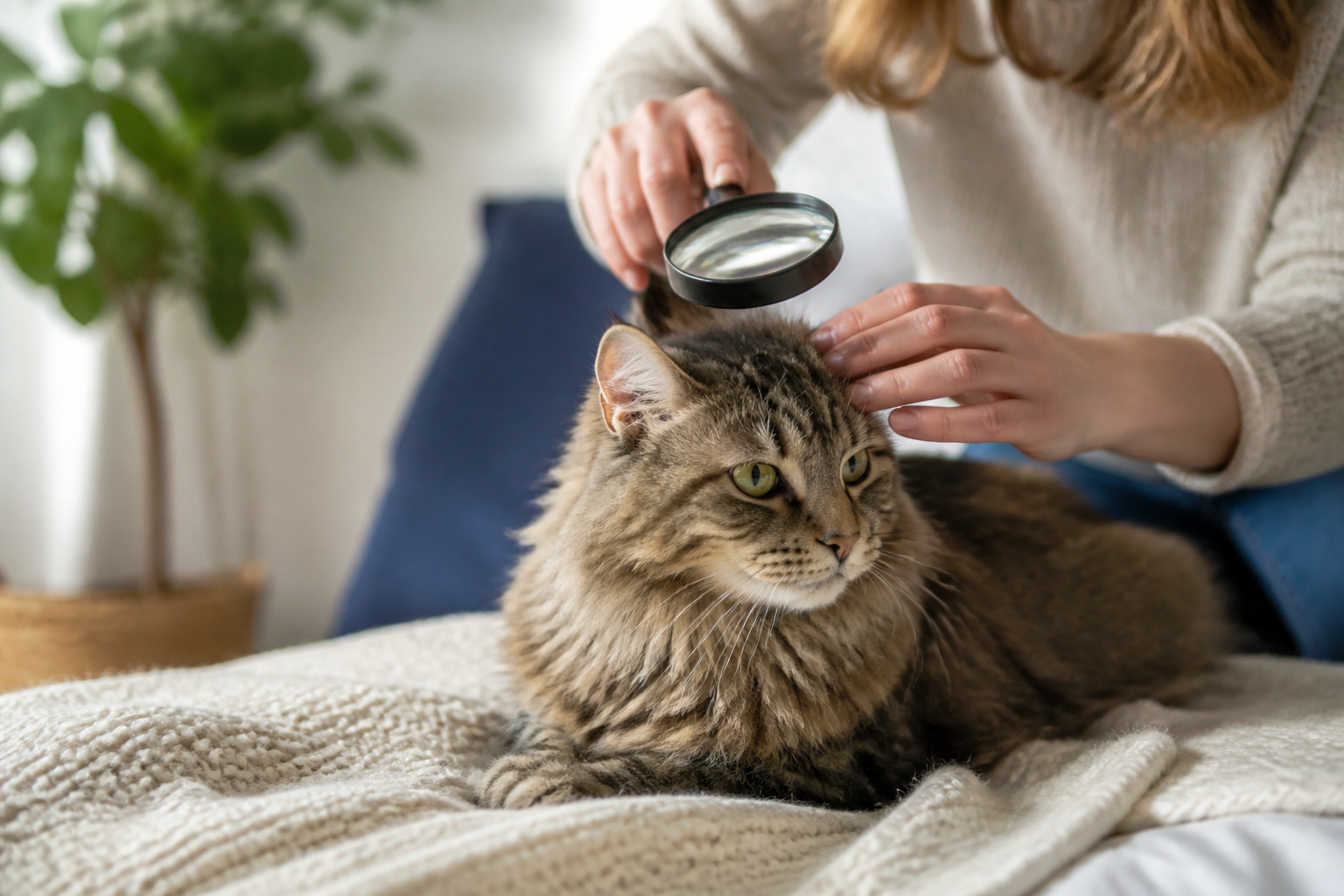
Petting your cat is a peaceful way to bond. You might be running your hand down their back when you notice a scattering of white flakes. It looks just like the dandruff people get. You likely wonder if this is normal or if your cat is dealing with a hidden health issue. At BaxterBoo, we know that a shiny coat is a sign of a happy cat. Seeing those flakes can be a bit worrying for any pet owner. This article covers why these flakes appear and how you can help your feline friend. Feline dandruff is often treatable with the right approach to grooming, hydration, and nutrition. Most cats will deal with a few flakes at some point in their lives.
Quick Answer: Yes, cats can get dandruff. It appears as visible white or gray flakes on their skin and fur. While a few flakes are normal, excessive dandruff often signals issues with grooming, diet, or underlying health conditions.
Defining Feline Dandruff
Feline dandruff is the visible shedding of dead skin cells. These cells clump together and form the flakes you see on your cat's coat. It is most noticeable on cats with dark fur. You might see these flakes along the spine or near the base of the tail. While it looks like the dandruff humans experience, the causes in cats are often different.
It is important to understand that skin is an organ. In fact, it is the largest organ your cat has. It needs constant care to stay healthy. When the skin becomes too dry or too oily, the natural cycle of cell renewal speeds up. This results in the flakes we call dandruff. For additional skin and coat support, explore our cat skin and coat care collection.
Dandruff Versus Dander
Many people confuse dandruff with dander. They sound similar but they are not the same thing. Dander consists of microscopic skin cells that every healthy cat sheds. You cannot see dander with the naked eye. It is a normal part of how a cat's body works. Dander is also what carries the proteins that cause allergies in humans.
Dandruff is different because you can see it. It is a sign that the skin is not shedding cells properly. If you can see white flecks on your cat's fur, you are looking at dandruff. Dander is healthy and expected. Dandruff is usually a sign that something is slightly off with your cat's skin health.
Key Takeaway: Every cat has dander, but not every cat should have visible dandruff. Visible flakes are a signal to look closer at your cat's environment and health.
Cat Skin & Coat Care













Environmental Causes of Flaky Skin
The environment inside your home plays a big role in your cat's skin health. Just like humans, cats can react to the air around them. This is especially true during specific times of the year.
Low Humidity and Dry Air
Dry air is one of the most common reasons for cat dandruff. This usually happens in the winter. When you turn on the heater, the humidity in your home drops. This sucks the moisture out of your cat's skin. The skin becomes brittle and starts to flake off.
You might notice more dandruff if your cat loves to sleep near a radiator or a heating vent. The direct heat can dry out their coat very quickly. Using a humidifier can help put moisture back into the air. This benefits both you and your cat.
Seasonal Changes
The transition between seasons can also trigger skin changes. Cats often shed their undercoats when the weather gets warmer. If those dead hairs stay trapped against the skin, they can cause irritation. This irritation often leads to flaking. Regular brushing during these transitions is very important. It helps clear away the old hair and lets the skin breathe.
Physical Limitations and Grooming Habits
Cats are famous for being clean animals. They spend a large portion of their day grooming themselves. Their tongues have tiny barbs that act like a comb. This process removes dirt and dead skin cells. If a cat stops grooming, dandruff will appear almost immediately.
Obesity and Mobility Issues
If a cat is overweight, they may not be able to reach every part of their body. You will often see dandruff on the lower back and the base of the tail of heavier cats. They simply cannot twist far enough to clean those areas.
Arthritis is another common factor. This is very frequent in senior cats. If it hurts to move, they will groom less often. The lack of grooming allows dead skin cells to build up. This results in the visible white flakes you see. If you notice your cat is moving slowly or seems stiff, their dandruff might be a side effect of joint pain.
Undercoat Buildup
Cats with thick undercoats need extra help. If the undercoat becomes matted or packed with dead hair, it traps skin cells. This creates a layer of debris against the skin. This can lead to itching and more dandruff. We see this often in long-haired breeds like Persians or Maine Coons. BaxterBoo carries a variety of grooming tools designed to reach deep into the undercoat. Using the right brush once or twice a week can make a massive difference. Browse our cat grooming supplies for brushes, combs, shampoos, and wipes.
Vet Tip: If your cat is struggling to groom due to weight or age, you must step in. Daily brushing helps distribute natural oils and removes the dead skin that causes dandruff.
When Dandruff Signals a Medical Issue
Sometimes dandruff is more than just dry skin. It can be a symptom of a health condition that needs professional attention. Your veterinarian is the best person to help you figure out if this is the case.
Parasites and Walking Dandruff
Parasites are a major cause of skin irritation. Fleas are the most common culprit. Even if you do not see fleas, your cat might be allergic to flea saliva. This causes intense itching and flaking.
There is also a specific mite called Cheyletiella. This condition is nicknamed "walking dandruff." If you look closely at the flakes, they might actually be moving. These are tiny mites living on the surface of the skin. This condition is very contagious between pets. It can even affect humans.
Skin Infections and Allergies
Bacterial and fungal infections can also cause flaking. Ringworm is a common fungal infection in cats. It usually causes circular patches of hair loss and very flaky skin.
Allergies are another factor. Cats can be allergic to things in their environment like dust or pollen. They can also have food allergies. These often manifest as skin problems. You might see redness, small bumps, or excessive licking along with the dandruff.
Internal Health Conditions
In some cases, the skin reflects what is happening inside the body. Chronic conditions can affect the quality of a cat's coat. These include:
- Diabetes
- Kidney disease
- Hyperthyroidism
- Immune system disorders
When a cat is sick, their body focuses energy on vital organs. The skin and coat are often the first things to suffer. If your cat has dandruff along with changes in appetite or thirst, see a vet right away. Our cat pharmacy offers medications for many chronic conditions.
Bottom line: Persistent or severe dandruff should always be evaluated by a veterinarian to rule out parasites or internal illness.
The Role of Nutrition and Hydration
What your cat eats shows up on their skin. The skin needs specific nutrients to remain elastic and hydrated. If the diet is lacking, the skin will become dry and flaky.
Essential Fatty Acids
Omega-3 and Omega-6 fatty acids are vital for skin health. They act as a natural moisturizer from the inside out. Many high-quality cat foods already include these. However, some cats may need a supplement. Brands like Zesty Paws or Honest Paws offer skin and coat support. These supplements help maintain the skin's natural barrier. You can browse skin and coat supplements for cats when evaluating options.
The Importance of Moisture
Cats are not always good at drinking enough water. They have a low thirst drive. Chronic dehydration leads to dry skin. This is one reason why many experts recommend adding wet food to a cat's diet.
Wet food provides much-needed hydration. If your cat only eats dry kibble, their skin may be more prone to flaking. You can also try a pet fountain. Many cats prefer running water over a still bowl. Better hydration leads to more supple skin and fewer flakes.
How to Manage Cat Dandruff at Home
If your vet has ruled out serious medical issues, you can manage dandruff with a few simple steps. Consistency is the key to seeing results.
Step 1: Establish a Brushing Routine
Brushing is the most effective way to handle simple dandruff. It moves the natural oils from the base of the hair down to the tips. This moisturizes the skin naturally.
- For short-haired cats, brush once a week.
- For long-haired cats, brush daily.
- Use a soft-bristled brush or a grooming mitt.
- Be gentle around sensitive areas like the belly.
Step 2: Evaluate the Diet
Look at the ingredients in your cat's food. Ensure it is a complete and balanced diet. Consider switching to a food designed for skin and coat health. Brands like Royal Canin or Farmina offer specialized formulas. These often have higher levels of biotin and zinc. Our cat food collection includes dry and wet food options for different dietary needs.
Step 3: Increase Humidity
If your home feels dry, get a humidifier. Place it in the room where your cat spends the most time. You should notice a difference in their coat within a few weeks. It also helps prevent the static electricity that can make brushing uncomfortable.
Step 4: Use Feline-Safe Topical Products
Never use human dandruff shampoo on a cat. Our skin has a different pH level than theirs. Human products can be toxic or very irritating to feline skin. If a bath is necessary, use a moisturizing shampoo made specifically for cats. There are also waterless foams and wipes that can help remove flakes without a full bath.
Key Takeaway: Most cases of cat dandruff improve with better hydration, high-quality food, and regular brushing.
Utilizing the BaxterBoo Pharmacy
For many cats, dandruff is a symptom of an ongoing health struggle. This might be a flea infestation that will not go away or a chronic condition like hyperthyroidism. When a veterinarian prescribes a specific treatment, we are here to help.
Our pharmacy for cats provides a reliable way to get the medications your cat needs. We offer flea and tick preventives that can stop the cycle of itching and flaking. We also carry prescription diets. These diets are formulated to manage conditions like kidney disease or severe food allergies.
If your vet suggests a prescription-strength solution, you can find it in our pharmacy section. This ensures your cat gets the exact care they need to feel their best. Managing a chronic condition is easier when you have a trusted source for medications and supplies.
- Medications for allergies and parasites
- Prescription diets for skin and internal health
- Easy ordering and delivery
- Professional support for your cat's ongoing health needs
Signs You Should Call the Vet
While a few flakes are usually harmless, some symptoms require a professional diagnosis. Do not try to treat severe skin issues at home without advice.
Contact your veterinarian if you notice any of the following:
- Red or inflamed skin underneath the flakes.
- Large patches of hair loss or thinning fur.
- Your cat is scratching or biting at their skin constantly.
- The flakes look like they are moving (walking dandruff).
- Your cat seems lethargic or has lost their appetite.
- The skin has a foul odor or looks greasy despite grooming.
A vet can perform a skin scraping or blood work. This finds the root cause so you can treat it correctly. Early intervention often prevents a minor skin issue from becoming a painful infection.
Conclusion
Can a cat get dandruff? They certainly can, and it is a common concern for many owners. Whether it is caused by the dry winter air, a few extra pounds, or a need for better nutrition, most cases are manageable. By keeping your cat hydrated and brushed, you can keep their coat looking its best. At BaxterBoo, we want to help you provide the best care for your pets. From grooming tools to our dedicated pharmacy, we have the resources you need for every stage of your cat's life.
- Check for environmental triggers like low humidity.
- Help your cat groom if they have mobility issues.
- Prioritize fatty acids and moisture in their diet.
- Consult your vet for persistent or itchy flakes.
Bottom line: A little extra attention to grooming and nutrition usually solves most feline dandruff problems.
If you are ready to upgrade your cat's care routine, visit our pharmacy or learn about our Autoship programme. This ensures you never run out of the food and supplements that keep your cat's coat shiny and flake-free.
FAQ
Is cat dandruff the same as human dandruff?
The appearance of white flakes is similar, but the causes are often different. Human dandruff is often linked to a yeast-like fungus, while cat dandruff is usually caused by environmental factors, grooming issues, or nutrition. You should never use human dandruff shampoos on your cat as they can be toxic.
Can I get rid of cat dandruff by bathing my cat?
Bathing can help remove existing flakes, but it often dries out the skin further if done too often. It is usually better to focus on regular brushing and improving your cat's diet. If you do bathe them, always use a moisturizing shampoo specifically formulated for felines.
Does walking dandruff affect humans?
Yes, the mites that cause walking dandruff can temporarily move to humans and cause itchy red spots. While the mites cannot complete their life cycle on a person, they are very contagious among pets. If you suspect walking dandruff, you should treat all animals in the home and clean their bedding thoroughly.
Why does my senior cat have more dandruff now?
Senior cats often develop more dandruff because they have a harder time grooming themselves. Arthritis or general stiffness can make it difficult for them to reach their back and tail. Helping them with a daily brushing routine can significantly reduce the amount of visible flakes on their coat.






- Site & Contents BaxterBoo.com. BaxterBoo is located in the United States.
- Privacy & Security
- Terms of Use
- Accessibility Statement
