
 Save 15% on your 1st Autoship learn more

 Email us
 Live Chat
 FAQs
FAQs





Introduction
You are picking up your dog from a grooming appointment and notice the familiar scent of shampoo. While the coat looks great, that lingering "dog breath" remains a problem. Many grooming salons offer a teeth brushing service as an add-on to their standard packages. You might wonder if this replaces the need for a professional cleaning at the clinic. At BaxterBoo, we have been helping pet owners navigate these wellness questions since 2006. Understanding the difference between a cosmetic brush and a medical cleaning is vital for your dog's long-term health. This article explores what a groomer can safely do, the risks of certain dental services outside a clinic, and how to maintain oral hygiene at home. While groomers can help with preventative maintenance, a deep dental cleaning is a medical procedure that requires a veterinarian.
Quick Answer: Dog groomers can provide surface level teeth brushing as a preventative measure. However, they cannot perform a deep dental cleaning, which involves scaling below the gumline and requires veterinary supervision and usually anesthesia.
The Role of the Dog Groomer in Dental Care
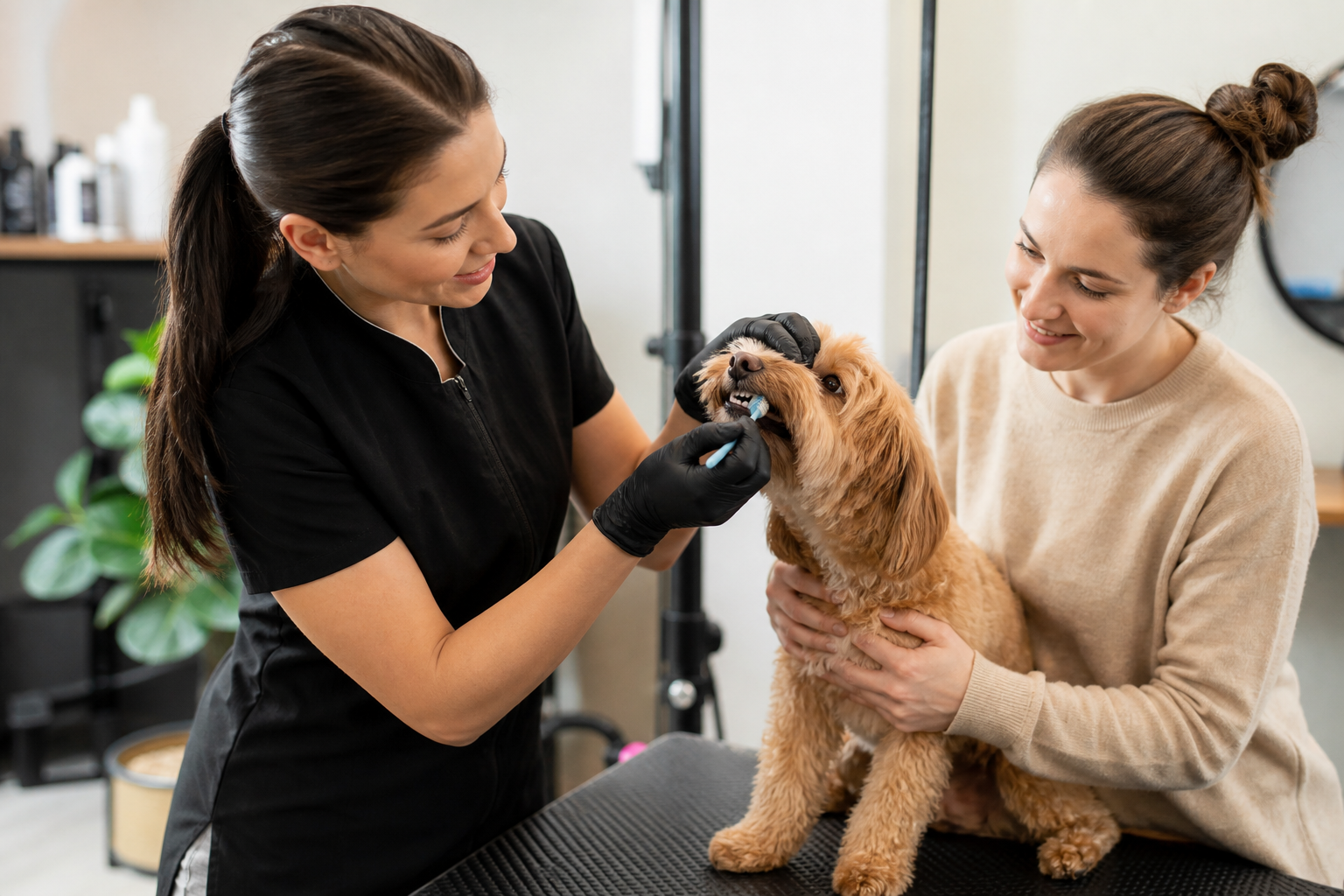
Most professional groomers offer teeth brushing as a supplementary service. This usually involves a manual toothbrush or a finger brush and pet-safe toothpaste. The goal is to freshen the breath and remove some of the loose food particles or soft plaque from the surface of the teeth. This is a great habit for maintaining hygiene between deep cleanings. It is especially helpful for pet owners who find it difficult to brush their dog's teeth at home.
However, it is important to distinguish this from a medical cleaning. A groomer is not trained to diagnose dental disease. They cannot treat infections, extract loose teeth, or clean the areas that matter most. Most of the bacteria that cause gum disease live under the gumline where a toothbrush cannot reach. If your dog already has hard tartar buildup, a simple brushing at the grooming salon will not remove it. For additional guidance, read our guide to professional and at-home pet dental care.
The Dangers of Anesthesia Free Scaling
Some grooming facilities or independent providers offer "anesthesia-free dental cleaning" or manual scaling. This involves using metal tools to scrape tartar off the teeth while the dog is awake. This practice is controversial and often discouraged by veterinary professionals. There are several significant risks associated with this procedure when performed by someone other than a medical professional.
Pain and Stress for the Pet
Scaling teeth involves scraping near the sensitive gum tissue. If a dog has any level of gingivitis or gum recession, this process is painful. An awake dog will naturally pull away or become distressed. To perform the task, the provider may have to restrain the dog firmly. This can lead to a negative association with being handled. It also creates a safety risk for the person performing the service if the dog reacts out of pain.
Enamel Damage
Dental scaling tools are sharp. When used on a conscious animal, the risk of slipping and cutting the gums is high. Furthermore, scaling creates microscopic grooves and scratches in the tooth enamel. In a veterinary setting, these scratches are smoothed out during a final polishing stage. Groomers rarely have the specialized polishing equipment used in clinics. Without polishing, those new grooves in the enamel actually allow plaque to stick more easily. This can cause tartar to build up even faster than it did before.
Incomplete Cleaning
A groomer can only reach the visible parts of the teeth. Statistics suggest that the majority of dental disease occurs below the gumline. Scraping off the visible tartar makes the teeth look white and clean. This gives pet owners a false sense of security. The underlying infection and bone loss may continue to progress unseen. This delay in proper medical treatment can lead to tooth loss or systemic health issues later.
Vet Tip: If you notice your dog has red gums, bleeding, or hard brown buildup, skip the groomer's dental add-on and head to the vet. These are signs of active periodontal disease that require a medical diagnosis and professional intervention.
Why Professional Veterinary Cleaning Is Different
A professional dental cleaning at a veterinary clinic is a comprehensive medical procedure. It is far more involved than simply making the teeth look white. The process is designed to treat the mouth as a whole system.
Step 1: The Pre-Dental Exam. / Your vet will check your dog's heart and general health. They may run blood work to ensure it is safe to use anesthesia.
Step 2: General Anesthesia. / Dogs must be sedated to allow the vet to clean under the gumline. This prevents the dog from feeling pain and ensures they stay still.
Step 3: Comprehensive Scaling. / The vet or a licensed technician uses ultrasonic tools to remove tartar. They clean both the visible surfaces and the pockets under the gums.
Step 4: Dental X-Rays. / Many clinics take X-rays to see the roots of the teeth. This is the only way to find abscesses or bone loss that are not visible to the naked eye.
Step 5: Polishing and Rinsing. / The enamel is polished to a smooth finish to prevent future plaque buildup. The mouth is then rinsed to remove bacteria and debris.
The Link Between Dental Health and Systemic Wellness
Dental hygiene is not just about breath or white teeth. The mouth is a gateway to the rest of the body. When a dog has periodontal disease, the gums become inflamed and porous. This allows bacteria to enter the bloodstream every time the dog chews.
Over time, this constant influx of bacteria can damage vital organs. The heart, kidneys, and liver are particularly vulnerable. Endocarditis, an inflammation of the heart valves, is frequently linked to poor oral health in dogs. By the time a dog shows signs of tooth pain, the infection may have already been affecting their internal health for years. This is why a medical approach to dental care is so much more effective than a cosmetic one. Learn more about recognizing warning signs of dental disease in dogs.
Key Takeaway: Cosmetic teeth cleaning focuses on appearance, while veterinary cleaning focuses on health. Only a veterinarian can address the bacteria under the gums that threaten your dog's heart and kidney function.
How to Maintain Your Dog's Teeth at Home
The best way to reduce the frequency of professional cleanings is a solid home care routine. While you should still see a vet for regular checkups, daily habits make a huge difference.
- Daily Brushing: This is the gold standard. Use a soft-bristled brush and toothpaste formulated specifically for dogs. Never use human toothpaste, as it often contains xylitol or fluoride which are toxic to pets.
- Dental Chews: High-quality dental chews can help scrape away soft plaque. Look for products with the VOHC (Veterinary Oral Health Council) seal of approval.
- Water Additives: Some solutions can be added to your dog's water bowl to help break down biofilm and freshen breath.
- Dental Toys: Toys like those from Kong or other durable rubber brands often have ridges that massage the gums and clean teeth as the dog plays.
At BaxterBoo, we carry a wide variety of dog dental care products. Using them consistently can significantly slow down the formation of tartar.
Signs Your Dog Needs a Professional Cleaning
It can be hard to tell when a dog is in pain. They are experts at hiding discomfort to keep up with their daily routine. You should watch for these specific red flags that indicate a vet visit is necessary:
- Extremely foul breath that does not improve with brushing
- Loose or missing teeth
- Excessive drooling
- Difficulty picking up food or dropping food while eating
- Red, swollen, or bleeding gums
- A yellow or brown crust on the teeth near the gumline
- Bumps or growths inside the mouth
If you see these symptoms, a groomer's brushing service will not be enough. Your dog likely has an infection or decay that needs medical attention.
Prescription Diets and the BaxterBoo Pharmacy
In some cases, your veterinarian might recommend a specific dental diet. These kibbles are usually larger and have a specific texture designed to scrub the tooth as the dog bites down. They also contain minerals that help prevent plaque from hardening into tartar.
Because these diets are formulated for specific health needs, they often require a prescription. Through our partnership with Pet's Choice, the BaxterBoo Pharmacy offers access to these prescription pet foods. We carry brands like Royal Canin and Farmina Vet Life that specialize in these clinical formulations. If your vet prescribes a dental diet or a medication for a mouth infection, you can easily manage those needs through our pet pharmacy.
Bottom line: Prescription dental diets are a powerful tool for managing oral health, but they should be used under a veterinarian's guidance.
Establishing a Long Term Dental Plan
Creating a dental plan for your dog involves a partnership between you, your groomer, and your vet. Use your groomer for the routine, "spa day" brushing to keep things fresh. Use your vet for the annual or bi-annual checkups to ensure everything is healthy beneath the surface.
- Schedule a vet exam every 6 to 12 months.
- Ask your groomer to brush your dog's teeth every 4 to 6 weeks.
- Brush your dog's teeth at home at least three times a week.
- Provide dental treats or toys daily.
Following this structure helps you catch problems before they become expensive or painful. It also ensures your dog remains comfortable throughout their life. Senior dogs are especially prone to dental issues, so staying proactive as they age is essential. For recurring dental supplies, our Autoship programme can help organize repeat deliveries.
Summary of Dental Care Options
| Service | Performed By | Goal | Limitations |
|---|---|---|---|
| Surface Brushing | Owner or Groomer | Freshen breath, remove soft food | Does not remove tartar or clean under gums |
| Scaling (Awake) | Non-vet provider | Remove visible tartar | Painful, risky, and hides underlying disease |
| Professional Cleaning | Veterinarian | Treat and prevent dental disease | Requires anesthesia and recovery time |
| Dental Diet | Owner (via Pharmacy) | Mechanical cleaning while eating | Must be prescribed by a vet for best results |
The Value of Preventative Care
Investing in oral health early can save you thousands of dollars in the long run. Dental extractions and treatments for systemic infections are far more expensive than a bottle of pet toothpaste or a bag of dental treats. By taking advantage of programs like the MVP Rewards programme, you can earn back on the preventative supplies you buy every month.
We believe that every pet deserves a healthy, pain-free mouth. Whether you are buying a new toothbrush or filling a prescription for a specialized dental diet, we are here to support you. Proper dental care is one of the kindest things you can do for your dog's overall quality of life.
Conclusion
Can dog groomers clean teeth? They can certainly help with the maintenance of clean teeth through regular brushing. However, they are not a replacement for a veterinarian when it comes to deep cleaning or treating dental disease. Trust your groomer to make your dog look and smell great, but trust your vet to handle the medical side of oral hygiene. Keeping your dog's mouth healthy is a team effort. By combining home brushing, professional grooming, and veterinary care, you can ensure your dog stays happy and healthy for years to come. For all your dental care supplies, from enzymatic toothpaste to specialized prescription diets, you can rely on the selection and expertise at BaxterBoo.
FAQ
Is it worth paying a groomer to brush my dog's teeth?
Yes, if you struggle to brush your dog's teeth at home, having a professional do it during a groom is a helpful preventative step. It can help reduce the rate of plaque buildup and keep their breath smelling fresher between veterinary visits. However, this is a maintenance task and does not replace a medical cleaning.
Can a groomer remove tartar from my dog's teeth?
No, a groomer should not attempt to remove hard tartar with metal scaling tools. This process is painful for an awake dog and can damage the protective enamel on the teeth. If your dog has visible tartar buildup, it is time to schedule a professional cleaning with your veterinarian.
How often should my dog get a professional dental cleaning?
Most veterinarians recommend a professional dental checkup once a year, though some dogs may need a cleaning every six months. Small breeds and certain dogs with crowded teeth often require more frequent attention. Your vet will assess the level of buildup and gum health during your annual wellness exam.
What happens if I don't clean my dog's teeth?
If dental hygiene is ignored, plaque will harden into tartar, leading to gingivitis and periodontal disease. This can cause pain, tooth loss, and difficulty eating. More importantly, the bacteria from the infected gums can travel through the bloodstream and cause serious damage to the heart, kidneys, and liver.






