
 Save 15% on your 1st Autoship learn more

 Email us
 Live Chat
 FAQs
FAQs





Introduction
You are relaxing on the couch when your dog leans in for a friendly lick or a yawn. Suddenly, you are hit with a wave of breath that smells less like kibble and more like a swamp. It is a common moment for many pet owners. You start to wonder if those yellow spots on their canines are permanent or if you can actually do something about them. At BaxterBoo, we talk to owners every day who are nervous about poking around in their dog's mouth.
This guide explains exactly how you can clean your dog's teeth at home. We will cover the tools you need, the signs of dental disease to watch for, and when it is time to call in the professionals. Taking care of your dog's mouth is one of the best ways to ensure they live a long and comfortable life.
The Basics of At-Home Dental Care
Quick Answer: You can and should clean your dog's teeth at home using dog-specific brushes and toothpaste. While daily brushing is the gold standard, combining it with dental chews and water additives helps manage plaque between professional vet cleanings.
The short answer is yes. You can absolutely clean your dog's teeth. In fact, most veterinarians recommend that you do. Just like humans, dogs accumulate plaque on their teeth every time they eat. If that plaque is not brushed away, it hardens into tartar within about 36 to 48 hours. Once plaque turns into tartar, you cannot remove it with a toothbrush. At that point, only a professional scaling at a clinic will do the trick.
Starting a routine at home can feel a bit daunting. You are essentially asking your dog to let you put a foreign object in their mouth and scrub. Most dogs are not natural fans of this. However, with the right supplies and a bit of patience, it becomes a simple part of your weekly grooming. Explore our dental and breath care collection for tools and products that can support your routine.
Choosing the Right Supplies
The most important rule of dog dental care is to never use human toothpaste. Our toothpaste often contains xylitol, which is a sweetener that is highly toxic to dogs. Human paste also contains foaming agents meant to be spit out. Dogs will swallow whatever you put on their teeth. This can lead to significant upset stomachs or worse.
Dog-specific toothpaste comes in flavors that animals actually enjoy. You will find options like poultry, beef, malt, and peanut butter. These pastes often contain enzymes that help break down food particles even if you do not get a perfect scrub every time. Our dog healthcare collection includes dental care options alongside other wellness supplies.
As for the brush, you have a few choices:
- Standard dog toothbrushes: These look like human brushes but have angled heads to reach the back molars.
- Finger brushes: These are silicone or rubber caps that slide over your pointer finger. They give you more control and are often less scary for puppies.
- Dual-headed brushes: These allow you to clean the front and back of the tooth at the same time.
How to Brush Your Dog’s Teeth
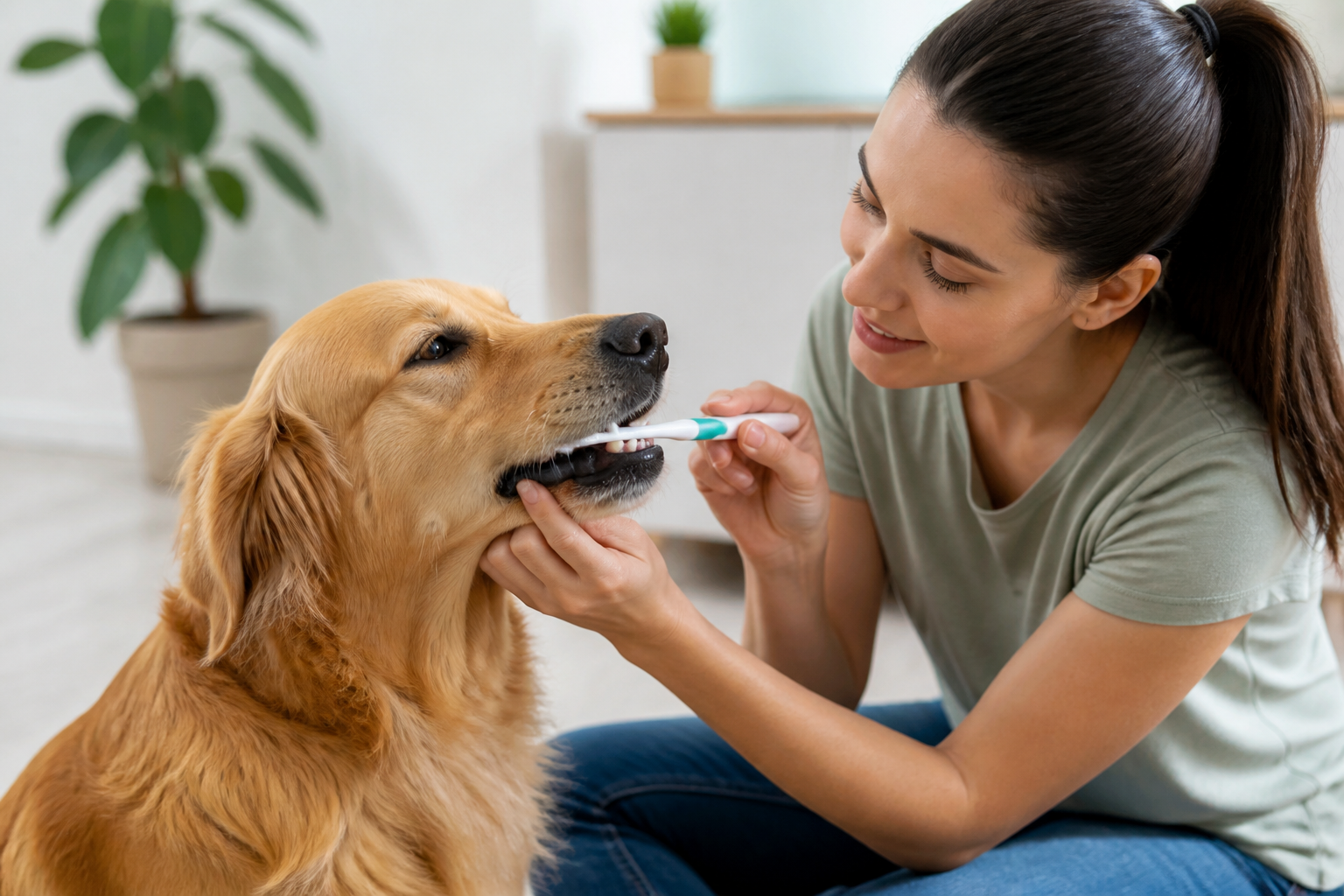
Brushing a dog's teeth is not quite the same as brushing your own. You do not need to worry about the inside surfaces of the teeth as much. A dog's tongue does a decent job of keeping the inside clean. Your main focus should be the outside surfaces where the cheek touches the gumline. This is where most tartar builds up.
Step 1: Let them taste the paste. / Put a small amount of dog toothpaste on your finger and let them lick it off. This builds a positive association with the flavor.
Step 2: Get them used to mouth handling. / Gently lift your dog's lip and rub your finger along their gums. Do this for a few days until they are calm.
Step 3: Introduce the brush. / Apply a small amount of paste to the brush. Let your dog lick it again to show them the brush is not a threat.
Step 4: Use circular motions. / Aim the bristles at a 45-degree angle toward the gumline. Move in small circles, focusing on the large canine teeth and the back molars.
Step 5: Keep it short. / You do not need to spend five minutes brushing. Even 30 to 60 seconds of focused effort makes a huge difference. For more guidance, read our tips for building a pet dental care routine.
Signs of Dental Pain or Disease
While you are brushing, keep an eye out for trouble. If your dog pulls away suddenly or whines, they might be in pain. Dental disease is extremely common. It is actually the second most diagnosed health issue in dogs after ear infections.
Watch for these red flags:
- Gums that look bright red, swollen, or bleed when touched.
- Persistent bad breath that does not go away after brushing.
- Yellow or brown crusty buildup on the teeth.
- Loose or missing teeth.
- Difficulty picking up food or dropping kibble while eating.
- Pawing at the mouth or face.
Vet Tip: If you notice bleeding gums or your dog refuses to eat, schedule an appointment with your veterinarian immediately. These are often signs of an underlying infection or a fractured tooth that requires professional treatment rather than just home cleaning.
If you want a closer look at warning signs, read about signs of bad teeth in dogs.
Why Professional Cleanings Matter
Even with perfect daily brushing, most dogs will still need a professional cleaning at some point. Think of it like your own visits to the dentist. You brush and floss at home, but the hygienist still finds a bit of tartar to scrape away every six months.
A professional veterinary cleaning is much more involved than what we do at home. These procedures are performed under general anesthesia. This is necessary because it allows the vet to clean deep under the gumline where the real damage happens. It also lets them take X-rays to see the roots of the teeth.
What Happens During a Vet Cleaning?
During a professional visit, your vet will perform several steps. First, they usually do blood work to ensure your dog is healthy enough for anesthesia. Once the dog is under, the vet uses an ultrasonic scaler to vibrate away hard tartar. This tool is similar to what a human dentist uses.
After scaling, the vet will polish the teeth. This is a vital step. Scaling leaves microscopic scratches on the enamel. If those scratches are not polished smooth, plaque will stick to them even faster than before. The vet will also check for "pockets" in the gums where bacteria can hide and cause bone loss.
Managing the Cost
Professional cleanings can be expensive. Prices usually range from $350 for a basic cleaning to over $1,500 if extractions or oral surgery are needed. Factors that change the price include the size of your dog, their age, and the severity of the dental disease. Small breeds like Pugs, Yorkies, and Chihuahuas often need more frequent cleanings because their teeth are crowded into tiny mouths.
At BaxterBoo, we know that pet care costs add up quickly. That is why we recommend checking if your pet insurance, like our partner FIGO Pet Insurance, covers dental procedures. Some plans include wellness riders that help pay for annual cleanings.
Beyond the Brush: Other Dental Tools
If your dog absolutely refuses to let you brush, do not give up. There are other ways to keep their mouth healthy. While these methods are not quite as effective as a manual scrub, they are much better than doing nothing.
Dental Chews and Treats
High-quality dental treats like Greenies are designed to scrape away plaque as the dog chews. Look for treats that carry the VOHC (Veterinary Oral Health Council) seal of approval. This means the product has been tested and proven to reduce plaque or tartar by a certain percentage. You can browse our selection of Greenies products for dental chews and other treats.
Be sure to choose the right size for your dog. A treat that is too small might be swallowed whole, which creates a choking hazard and provides no dental benefit. A treat that is too large might add too many calories to their daily diet.
For additional ideas, explore these dental chews for dogs.
Water Additives and Gels
Dental water additives are essentially mouthwash for dogs. You add a small amount to their water bowl each day. These liquids contain enzymes or ingredients that help kill the bacteria that cause plaque. This is a great hands-off option for owners with busy schedules or very picky dogs.
Dental gels work similarly but are applied directly to the gums. You do not necessarily have to brush them. The dog's saliva will spread the gel around the mouth to help break down buildup.
The Role of Diet
What your dog eats also impacts their oral health. Some people believe that dry kibble cleans teeth better than wet food because of the crunch. While kibble does provide some abrasion, many dogs swallow it whole or the pieces shatter too quickly to do much cleaning.
There are specific prescription dental diets formulated to stay together longer. These kibbles act like a little scrub brush on each tooth. Our pharmacy at BaxterBoo carries a variety of these specialized foods through our partnership with Pet's Choice. If your vet recommends a prescription diet for dental health, you can easily fulfill that need through our dog pharmacy.
| Method | Effectiveness | Ease of Use |
|---|---|---|
| Daily Brushing | Very High | Moderate (requires training) |
| Dental Chews | Moderate | High (dogs love them) |
| Water Additives | Low to Moderate | Very High |
| Professional Cleaning | Highest | Low (requires vet visit) |
Key Takeaway: A multi-pronged approach is usually best. Use a water additive daily, give a dental chew a few times a week, and aim to brush at least three times per week for the best results.
Understanding the Risks of Neglect
Ignoring your dog's dental health can lead to much more than just smelly breath. The mouth is a gateway to the rest of the body. When a dog has a dental infection, bacteria from the gums can enter the bloodstream. This bacteria can travel to the heart, kidneys, and liver.
Chronic oral inflammation puts a constant strain on the immune system. We often see senior dogs "act young again" after a much-needed dental cleaning and extraction of painful teeth. They were not just slowing down because of age. They were living with a constant, throbbing toothache that they could not tell you about.
Small Breeds and Brachycephalic Dogs
If you own a small breed or a flat-faced dog like a French Bulldog, you need to be extra vigilant. These dogs have 42 adult teeth just like a Great Dane, but those teeth are squeezed into a much smaller space. This crowding creates perfect little nooks and crannies for food to get stuck. Small dogs also tend to have shallower tooth roots, meaning a little bit of gum disease can lead to tooth loss much faster than in large dogs.
Bottom line: Dental care is not a luxury. It is a fundamental part of responsible pet ownership that prevents systemic health issues.
Supporting Your Dog's Health Through the Pharmacy
Sometimes, home care and standard cleanings are not enough. If your vet discovers a deep infection in the gums or jawbone, your dog may need a course of antibiotics. This is a common part of dental surgery recovery.
Our pharmacy provides access to FDA-approved medications through our Pet's Choice partnership. This includes antibiotics like Clavamox or pain relief like Carprofen to help your dog heal after a procedure. We also stock prescription-only dental diets like Farmina Vet Life, which are specifically designed to manage oral health in dogs prone to heavy tartar buildup.
Having a pharmacy integrated into our service means you do not have to make extra trips to the clinic for refills. You can manage your dog's daily treats, their favorite toys, and their medical needs all in one place.
How to Save on Dental Care
Because professional cleanings involve anesthesia and specialized equipment, they are an investment. However, there are ways to manage the cost without skipping the care.
- Start early: It is much cheaper to clean a young dog's healthy mouth than to perform multiple extractions on a senior dog with advanced periodontal disease.
- Be consistent at home: Every minute you spend brushing is money you are potentially saving on future dental surgeries.
- Use loyalty programs: At BaxterBoo, our MVP Rewards program helps you earn points on every purchase. This includes your toothpaste, brushes, and dental treats. Those points can be used to save on future orders.
- Ask for estimates: Do not be afraid to ask your vet for a detailed breakdown of costs before a procedure. This helps you plan for expenses like X-rays or extractions.
Building a Lifetime Routine
Cleaning your dog's teeth should be as routine as going for a walk or filling the water bowl. If you have a puppy, start today. If you have an older dog who has never had a brush in their mouth, it is not too late to start.
Be patient with your pet. If they only let you brush one side of their mouth today, that is a win. Do the other side tomorrow. Use plenty of praise and perhaps a small, healthy treat afterward to reward their cooperation. Over time, many dogs actually look forward to the taste of their poultry-flavored paste and the extra attention.
Conclusion
Taking care of your dog's teeth is a partnership between you, your dog, and your veterinarian. While you can certainly clean your dog's teeth at home to keep plaque at bay, professional intervention is still a necessary part of the puzzle. By combining regular brushing with high-quality dental treats and annual vet checkups, you can keep that "swamp breath" at away and keep your dog's tail wagging.
We are here to help you every step of the way with a curated selection of dental tools and snacks. Whether you are looking for a gentle finger brush for a new puppy or need to fulfill a prescription for a specialized dental diet, our team at BaxterBoo has you covered.
Key Takeaway: Consistency is more important than perfection. Brushing even three times a week significantly reduces the risk of painful dental disease and expensive vet bills.
For your next steps, consider joining our Autoship program. It is a great way to ensure you never run out of dental chews or toothpaste, and it comes with a free MVP Gold membership to help you save even more on your pet's wellness needs.
FAQ
Can I use baking soda to clean my dog's teeth? It is best to avoid using baking soda for your dog's oral care. Baking soda is highly alkaline and can upset the acid balance in your dog's stomach if they swallow too much of it. It also has a bitter taste that might make your dog hate the brushing process. It is much safer and more effective to use an enzymatic dog toothpaste.
How often should I professionally clean my dog's teeth? Most veterinarians recommend a professional cleaning once a year starting around age two or three. However, small breeds or dogs with existing dental issues may need a visit every six months. Your vet will check your dog's mouth during their annual physical to determine the best schedule for your specific pet.
Is anesthesia-free dental cleaning a good alternative? Anesthesia-free cleaning can remove visible tartar from the surface of the teeth, which makes them look better. However, it does not allow the vet to clean under the gumline or take X-rays, which is where 60 percent of dental disease is hidden. It can also be very stressful for the dog to be restrained while sharp tools are used in their mouth. Most experts agree that it is not a substitute for a full professional cleaning.
My dog's breath is terrible but their teeth look white. What is wrong? Sometimes bad breath comes from things other than the teeth. It could be a sign of a gum infection hidden under the surface, or it could be related to digestive or kidney issues. If your dog has white teeth but foul breath, you should have your veterinarian perform a full physical exam. They can help determine if the smell is coming from the mouth or another part of the body.






