
 Save 15% on your 1st Autoship learn more

 Email us
 Live Chat
 FAQs
FAQs





Introduction
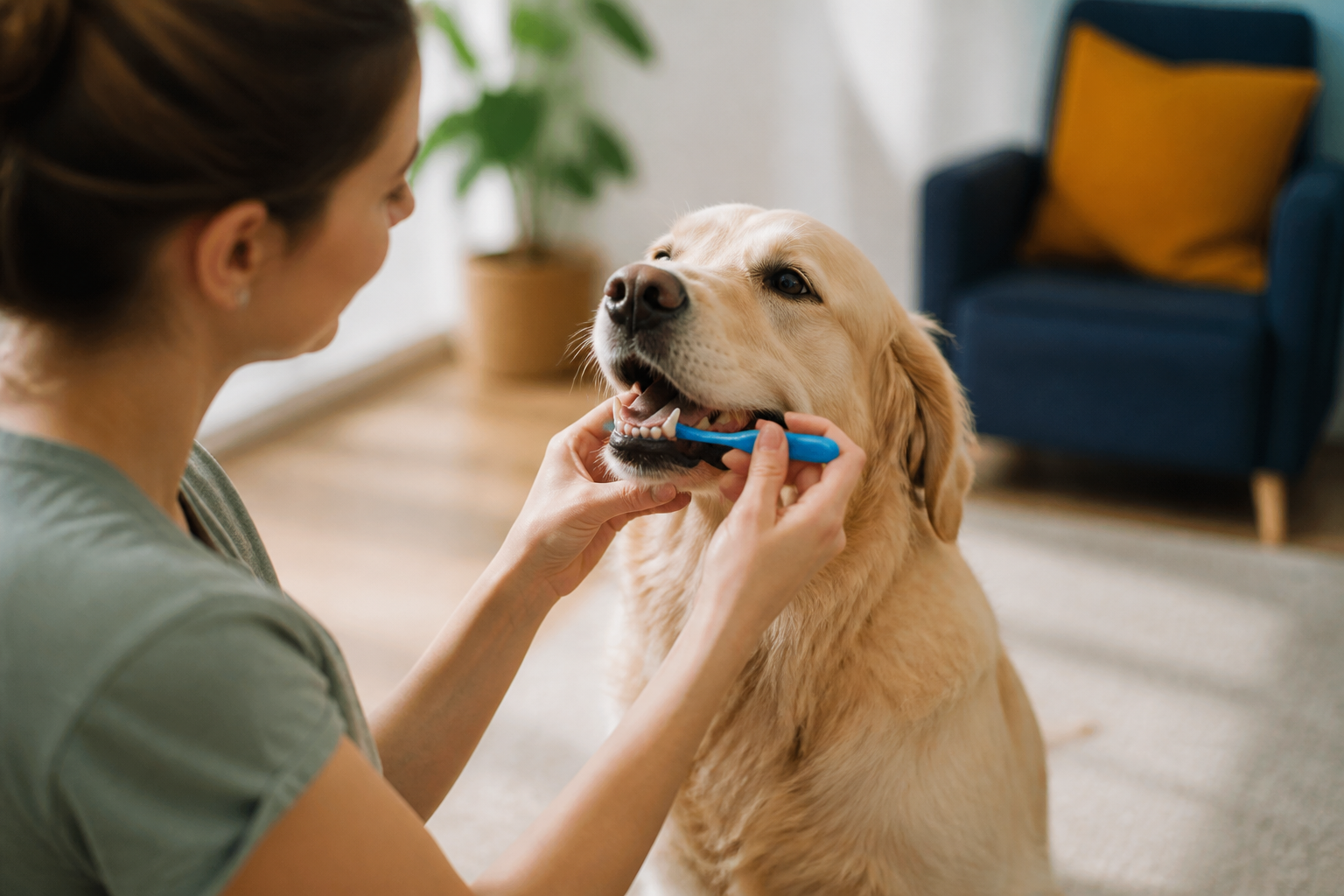
You are sitting on the couch when your dog leans in for a friendly lick. Instead of a sweet moment, you are hit with a wave of surprisingly bad breath. You take a closer look and notice a yellow film along the gumline. This is the exact moment many pet owners ask if they can handle dental hygiene themselves. At BaxterBoo, we know that keeping those pearly whites clean is about more than just fresh breath. It is a vital part of your dog's long-term wellness. While professional veterinary cleanings are necessary, you can and should maintain your dog's teeth at home. This guide covers the tools you need, the best techniques for brushing, and how to use supplements to support oral health. Consistent home care can prevent pain and save you from expensive dental surgeries down the road.
Why Dog Dental Health Is Not Optional
Many people assume that "dog breath" is just a natural part of owning a pet. In reality, a foul odor is often the first sign of oral bacteria buildup. When your dog eats, food particles and saliva combine to form plaque. If this plaque is not brushed away, it hardens into tartar within 48 hours. Tartar is much harder to remove and acts as a reservoir for bacteria.
This bacteria does not stay in the mouth. It can enter the bloodstream through inflamed gums. From there, it can travel to major organs like the heart, liver, and kidneys. This can lead to serious systemic infections or chronic organ disease. Maintaining a clean mouth is one of the easiest ways to extend your dog's life.
Dental disease is also incredibly painful. Dogs are masters at hiding discomfort because of their survival instincts. A dog might continue to eat even if they have a loose tooth or a gum infection. By the time they stop eating, the condition is usually quite advanced. Regular home checks allow you to catch these problems before they cause significant suffering.
Quick Answer: Yes, you can clean your dog's teeth at home using pet-safe toothbrushes, enzymatic toothpaste, and dental wipes. Regular home care prevents plaque from hardening into tartar and supports overall systemic health.
Essential Tools for Home Dental Care
You cannot use human products to clean a dog's teeth. Human toothpaste often contains xylitol, which is a sweetener that is highly toxic to dogs. It also contains foaming agents meant to be spit out. Since dogs swallow whatever you put in their mouths, these ingredients can cause upset stomachs.
Pet-Safe Toothpaste
Look for Virbac C.E.T. Enzymatic Pet Toothpaste for Dogs and Cats - Poultry specifically formulated for pets. These pastes contain enzymes that help break down plaque even if you cannot reach every corner of the mouth. They come in flavors like poultry, beef, or peanut butter to make the experience more enjoyable for your dog.
The Right Brush
You have a few options when it comes to the actual tool. A standard pet toothbrush has a long handle and a small, angled head. This helps you reach the back molars. If your dog is nervous, a finger brush might be better. These are soft silicone caps that fit over your fingertip. They allow you to feel exactly where you are brushing, which gives you more control.
Dental Wipes and Pads
For dogs that absolutely refuse a brush, dental wipes are a great middle ground. These are pre-moistened pads that you wrap around your finger. You simply rub them over the surface of the teeth to remove daily plaque. While they do not get between teeth as well as a brush, they are much better than doing nothing at all.
Key Takeaway: Always use enzymatic toothpaste made for dogs. Never use human toothpaste or baking soda, as these can be toxic or cause digestive distress.
How to Clean Your Dog's Teeth: A Step-by-Step Guide
The goal is to make dental care a positive part of your dog's routine. If you rush the process, your dog may become fearful. This makes it harder to clean their teeth in the future. Take your time and use plenty of praise.
Step 1: Choose the right time. / Pick a moment when your dog is calm and relaxed. After a long walk or a play session is usually best.
Step 2: Introduce the flavor. / Put a small amount of pet toothpaste on your finger. Let your dog lick it off so they get used to the taste and texture.
Step 3: Test the touch. / Gently lift your dog's lip. Rub your finger along their gums and teeth. This gets them used to having their mouth handled.
Step 4: Introduce the brush. / Put toothpaste on the brush or finger brush. Let your dog lick the paste off the bristles so the tool is not a scary object.
Step 5: Start brushing the front. / Lift the lip and brush the large canine teeth in the front. Use gentle, circular motions. You only need to focus on the outside of the teeth near the cheek.
Step 6: Reach the back molars. / Slowly move toward the back of the mouth. The back molars are where the most tartar builds up. Spend extra time here if your dog allows it.
Step 7: Reward your dog. / Give your dog a high-value treat or extra belly rubs immediately after. You want them to associate the toothbrush with good things.
Vet Tip: If your dog becomes stressed or tries to bite, stop immediately. It is better to brush just two teeth successfully than to have a fight. Build up the duration of your sessions over several weeks.
For additional guidance, read these pet dental care tips.
Managing Dental Care for Small Breeds
Small dog breeds like Chihuahuas, Pugs, and Yorkies are much more prone to dental issues. This is often because they have the same number of teeth as large dogs but much smaller jaws. This leads to overcrowding. Food and bacteria get trapped easily in these tight spaces.
If you own a small breed, you should aim to brush their teeth every single day. Their mouths can deteriorate much faster than a large dog's mouth. Small dogs also tend to live longer, meaning their teeth have to last for 15 years or more. Starting a routine early is the best way to ensure they keep their natural teeth into their senior years.
We often see small dogs in our BaxterBoo warehouse that have already lost several teeth by age five. This is almost always preventable with consistent home care. If you notice your small dog has persistent bad breath, it is time for a veterinary checkup.
Alternatives to Brushing
We know that some dogs simply will not tolerate a toothbrush. If you have tried the gradual approach and your dog still resists, you have other options. These methods are not as effective as manual brushing, but they provide a helpful layer of protection.
Dental Chews and Treats
Specialized dental treats are designed to be hard or "scrubby." As your dog chews, the mechanical action scrapes away plaque. Some treats also contain ingredients that help prevent tartar from bonding to the enamel. Always look for the Veterinary Oral Health Council seal of approval. This ensures the product has been tested for safety and efficacy.
You can find more options in our dog dental care category.
Water Additives
Dental water additives are like mouthwash for dogs. You add a small amount to their daily water bowl. These additives contain enzymes or ingredients like chlorine dioxide that kill oral bacteria. This helps freshen breath and slow down the formation of plaque. It is an effortless way to support oral health, especially for picky cats or stubborn dogs.
For a specific option, consider Synergy Labs Dental Fresh Water Additive Dog Original Formula.
Dental Toys
Certain rubber toys are designed with nubs and ridges. When your dog chews on them, the nubs massage the gums and wipe the teeth. You can even smear a little pet toothpaste into the grooves of the toy to increase the cleaning power. This turns a fun play session into a hygiene routine.
Explore our dental dog toy selection for playtime options that support your dog's dental routine.
Rawhides and Bones
Be careful with traditional bones or hard rawhides. While they can scrape teeth, they are often too hard. They can cause painful tooth fractures or become choking hazards. We recommend sticking to flexible dental chews or rubber toys that have some "give" to them.
Key Takeaway: If brushing is impossible, combine dental chews, water additives, and specialized toys. Using multiple methods together provides the best defense against plaque.
For more ideas about recognizing oral health problems, read Is Your Dog Hiding Bad Teeth?.
Signs Your Dog Needs Professional Dental Help
Home cleaning is for prevention, not for treating existing disease. If your dog's mouth is already in bad shape, brushing might actually be painful for them. You need to know when to put down the toothbrush and call your veterinarian.
Look for these warning signs:
- Red, swollen, or bleeding gums
- Visible brown or yellow crust (tartar) that does not brush away
- Loose or missing teeth
- Excessive drooling or dropping food while eating
- Pawing at the face or mouth
- A sudden change in temperament or reluctance to play with toys
If you see these symptoms, your dog likely has periodontal disease. This requires a professional cleaning under anesthesia. During this procedure, the vet can clean under the gumline, which is where the most dangerous bacteria live. They may also take X-rays to check for abscesses or bone loss.
The Role of Prescription Diets and the Pharmacy
In some cases, your veterinarian might recommend a prescription dental diet. These kibbles are larger and have a specific texture that does not crumble immediately. Instead, the tooth sinks into the kibble, which wipes the surface as the dog bites down. These diets are highly effective for dogs with a history of rapid tartar buildup.
The our pet pharmacy carries prescription pet foods and FDA-approved medications for a variety of health needs. If your vet prescribes a specific dental diet or a medication for a mouth infection, you can fulfill those needs through us. This includes specialized rinses or oral antibiotics that might be necessary after a professional dental procedure.
Managing a chronic condition or recovery is easier when you have a reliable source for your pharmacy needs. Our pharmacy team works directly with your vet to ensure your dog gets exactly what they need to stay healthy.
Making Dental Care a Habit with Autoship
Consistency is the biggest challenge for most pet owners. It is easy to forget to buy more toothpaste or dental chews before you run out. Our Autoship programme is a great way to ensure you always have your dental supplies on hand. You can set your favorite dental treats and toothpaste to arrive on a schedule that works for you.
When you sign up for Autoship, you save on your first order and receive a free MVP Gold membership. This gives you extra rewards and benefits on every purchase. Learn more about the MVP Rewards programme and its available benefits.
Having the tools delivered to your door serves as a great reminder to keep up with your dog's daily routine.
Bottom line: Regular home dental care combined with professional veterinary exams is the best formula for a long, healthy life.
FAQ
Can I use baking soda to clean my dog's teeth?
No, you should avoid using baking soda on your dog's teeth. While it was once a common recommendation, it has a high alkaline content that can upset a dog's stomach if swallowed. It also has a very salty taste that most dogs dislike, which can make them resist future brushing attempts.
How often do I really need to brush my dog's teeth?
Ideally, you should brush your dog's teeth every day to prevent plaque from hardening into tartar. If daily brushing is not realistic for your schedule, aim for at least three times a week. Any amount of brushing is better than none, but consistency is what prevents long-term dental disease.
Does dry dog food really clean teeth better than wet food?
Dry food can provide a very small amount of mechanical cleaning as the dog crunches, but it is not a substitute for brushing. Most kibble pieces are small and shatter easily, providing little contact with the teeth. Some specialized dental diets are designed to clean teeth, but standard dry food is not a complete dental solution.
My dog's gums bleed a little when I brush. Should I stop?
Minor bleeding can be a sign of early gingivitis, meaning the gums are inflamed. If the bleeding is very slight, you can continue to brush very gently to help the gums heal over time. However, if the bleeding is heavy or the gums look very red and swollen, stop brushing and consult your veterinarian for a professional evaluation.






