
 Save 15% on your 1st Autoship learn more

 Email us
 Live Chat
 FAQs
FAQs





Introduction
You lean in for a happy morning lick from your dog, only to be met with a scent that reminds you of old gym socks. This is a common moment for many pet owners. You notice a bit of yellowing near the gums and wonder if you can handle the cleanup yourself. At BaxterBoo, we know that dental health is a major concern for many families who want to avoid the stress of professional procedures. The short answer is yes. You can and should clean your dog's teeth at home to prevent plaque from turning into painful tartar.
This article covers the tools you need, the best techniques for wiggly pups, and how to tell when a DIY approach is no longer enough. We will help you build a routine that keeps your dog's mouth healthy and their breath fresh. Taking charge of your dog's oral hygiene is one of the best ways to support their long term wellness.
The Importance of Home Dental Care
Dental disease is one of the most common health issues in adult dogs. By the age of three, most dogs show some signs of periodontal disease. This happens when food particles and bacteria form plaque on the teeth. If it is not removed, plaque hardens into tartar within 48 hours. Tartar is much harder to remove and often requires professional tools.
Cleaning your dog's teeth yourself is about more than just fresh breath. Bacteria in the mouth can enter the bloodstream through inflamed gums. This can lead to issues with the heart, liver, and kidneys. Consistent home care reduces the frequency of professional cleanings. It also makes those professional visits much safer and faster for your pet. For more ideas, explore our dog dental and breath care collection.
Quick Answer: Yes, you can clean your dog's teeth at home using pet-safe brushes and enzymatic toothpaste. While you cannot perform a deep cleaning below the gum line, daily brushing prevents the buildup of harmful tartar.
Choosing the Right Supplies
You cannot use human products on your dog. This is the most important rule of DIY dental care. Human toothpaste often contains xylitol, which is a sweetener that is highly toxic to dogs. It also contains fluoride and foaming agents that can upset a dog's stomach since they do not know how to spit.
Enzymatic Toothpaste
Dog-specific toothpaste is usually enzymatic. This means it contains enzymes that help break down plaque chemically even if you do not scrub every single surface perfectly. These pastes come in flavors like poultry, beef, and peanut butter to make the experience more enjoyable for your dog. You can compare pet-safe options in our dog dental care selection.
Brushes and Tools
There are several options for the physical cleaning tool.
- Finger brushes: These are small silicone caps with bristles that fit over your pointer finger. They offer great control and are less intimidating for beginners.
- Long-handled brushes: These look like human toothbrushes but often have angled heads. They are better for reaching the large molars in the back of the mouth.
- 360-degree brushes: These have bristles all the way around the head. They can clean the top and sides of the teeth at the same time.
Dental Wipes
If your dog absolutely refuses a brush, dental wipes are a good middle ground. They are pre-moistened pads that you wrap around your finger. They help wipe away the daily film of plaque before it hardens. These pet dental care tips also cover gradual introductions to dental wipes and other supplies.
Key Takeaway: Always use enzymatic toothpaste formulated specifically for pets to avoid toxicity and improve cleaning efficiency.
Step-By-Step Guide to Brushing
Brushing a dog's teeth is a skill that requires patience. Do not expect to do a full cleaning on the first day. Your goal is to build a positive association so the dog stays calm.
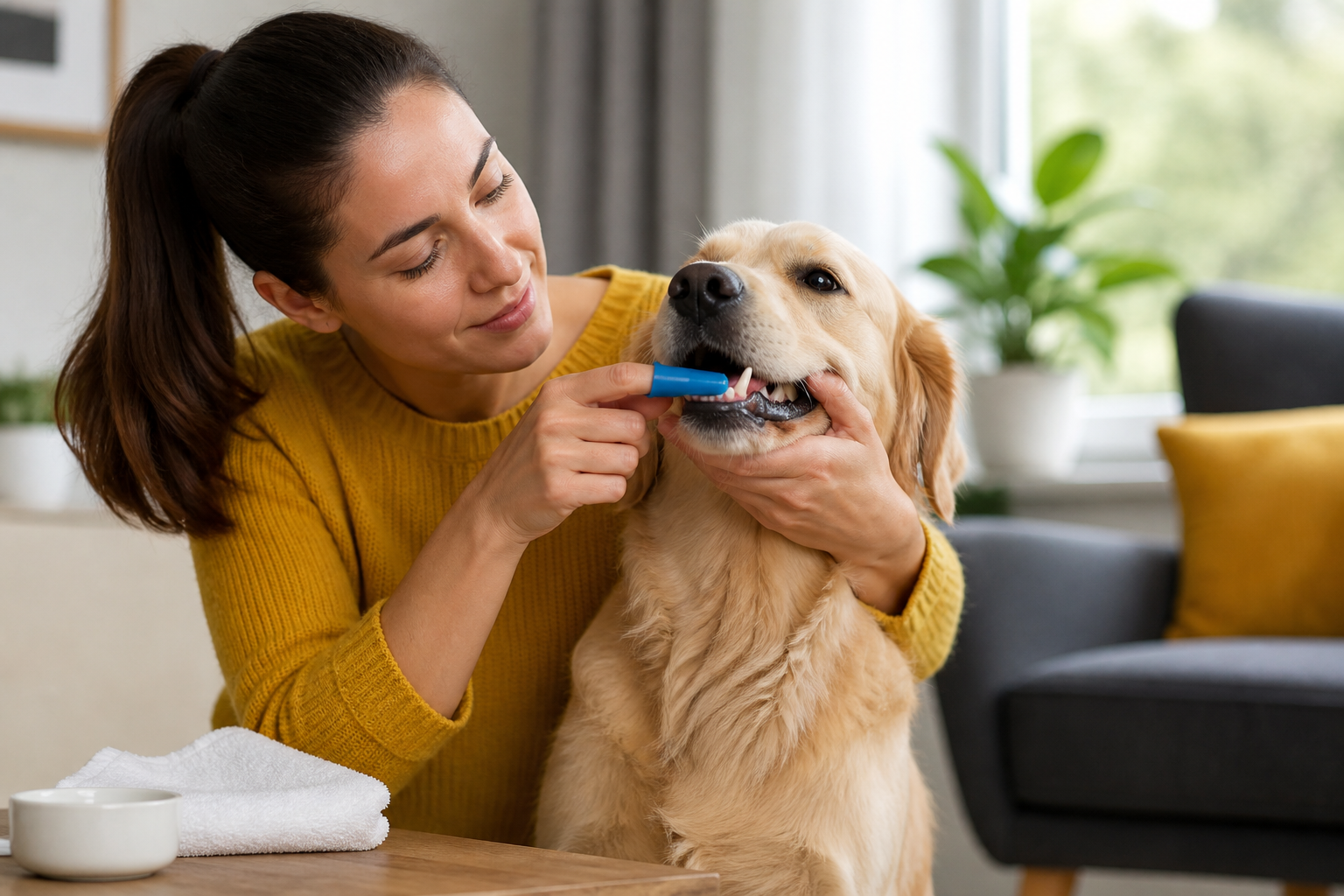
Step 1: Introduce the taste. / Put a small dab of pet toothpaste on your finger. Let your dog lick it off. Do this for a few days until they get excited when they see the tube.
Step 2: Touch the mouth. / Gently lift your dog's lip and rub your bare finger along their gums. Give them a treat afterward. This gets them used to the sensation of someone touching their teeth.
Step 3: Introduce the brush. / Put toothpaste on the brush and let the dog lick it. Slowly transition to a few gentle circular strokes on the front canine teeth.
Step 4: Focus on the outside. / Most tartar builds up on the outside of the teeth near the cheeks. Focus your efforts there. You do not usually need to worry about the inside surfaces because the dog's tongue does a decent job of cleaning those areas.
Step 5: Increase the time. / Gradually work your way toward the back molars. Aim for about 30 seconds of brushing on each side of the mouth. For additional guidance, read more tips for building a successful dental routine.
Vet Tip: If you notice bleeding gums or if your dog pulls away in pain, stop the session. Persistent bleeding or sensitivity can be a sign of advanced gum disease that needs a professional evaluation.
Alternatives to Traditional Brushing
Some dogs will never accept a toothbrush. This is frustrating, but you still have options to keep their mouth clean. A multi-pronged approach is often the most successful way to manage oral health.
Dental Chews
Many dogs love dental treats. These are designed with specific textures that scrape the teeth as the dog chews. Look for products that have the Veterinary Oral Health Council (VOHC) seal of approval. These have been tested for their ability to reduce plaque and tartar. We carry a wide variety of these treats to suit different chewing styles. Browse our dental treats for dogs for chewable options.
Water Additives
This is the easiest way to support dental health. You simply add a capful of the solution to your dog's fresh water bowl every day. These additives contain enzymes and minerals that help kill bacteria and prevent plaque from sticking to the teeth. It is essentially a mouthwash for dogs. Water additives and other oral-care products are available in our dog dental and breath care collection.
Dental Toys
Rubber toys with nubs or ridges can help clean teeth during playtime. As your dog gnaws on the toy, the rubber massages the gums and wipes the surface of the teeth. This is a great passive way to maintain hygiene for heavy chewers.
Therapeutic Diets
In some cases, a specific diet can help. Some kibbles are designed to be larger and more fibrous. Instead of crumbling instantly, the kibble stays intact longer to scrub the tooth. Our pharmacy offers prescription pet foods for dental health through our partnership with Pet's Choice. These diets are specifically formulated for dogs prone to rapid tartar buildup.
Bottom line: Using a combination of chews, water additives, and toys can significantly reduce plaque even if you cannot brush every day.
Signs You Need a Veterinarian
At-home cleaning is a preventative measure. It is not a cure for existing dental problems. There are several signs that indicate your dog's dental issues have progressed beyond what you can handle yourself.
If you see these symptoms, it is time to schedule a vet visit:
- Red, swollen, or bleeding gums.
- Loose or missing teeth.
- Difficulty eating or dropping food while chewing.
- Yellow or brown crust (tartar) that does not come off with brushing.
- Lumps or bumps on the gums.
- Persistent, foul-smelling breath that does not improve after cleaning.
Professional cleanings are different from what you do at home. A veterinarian will typically put the dog under anesthesia to perform a deep scale and polish. This allows them to clean under the gum line where most infections start. They may also take X-rays to check for abscesses or bone loss that are invisible to the naked eye. See warning signs of hidden dental problems in dogs when deciding whether home care is enough.
Managing Senior Dog Dental Health
Senior dogs often face more significant dental challenges. As dogs age, their immune systems change and their teeth have had more years to accumulate wear. Many seniors suffer from "silent" dental pain. They may not cry out, but they might become more irritable or less active.
For older dogs, consistency is vital. If they have existing health conditions, it is even more important to keep the mouth clean to prevent secondary infections. However, be gentle. Older dogs may have receding gums that are more sensitive to firm brushing.
If your senior dog has lost teeth, you can still clean the remaining ones. Use a soft finger brush or a piece of gauze. Keeping the gums healthy is just as important as keeping the teeth clean. We offer various mobility aids and health supplements that can help your senior pet feel comfortable during their grooming and care routines.
Building a Sustainable Routine
The best way to succeed with DIY dental cleaning is to make it a habit. Pick a time of day when your dog is relaxed, such as after a long walk or before bed. Consistency is more important than perfection. Brushing for 30 seconds three times a week is much better than a ten-minute session once a month.
Keep your supplies in a visible place so you do not forget. Many owners find it helpful to pair teeth cleaning with another daily habit, like their own tooth brushing or the dog's evening meal.
At BaxterBoo, we recommend starting young if possible. Puppies who learn to accept mouth handling become adults who are easy to care for. If you have an adult dog, do not feel like it is too late to start. It may take a few weeks of gradual training, but most dogs eventually accept the routine, especially if there is a tasty treat or extra praise at the end. Our dental treats for dogs can help support positive reinforcement.
The Role of Our Pharmacy
Sometimes, simple over the counter solutions are not enough for a dog with chronic dental issues. Some breeds, like Pugs or Chihuahuas, are naturally more prone to dental disease due to their jaw structure. These pets may require specialized care.
Our pharmacy provides access to FDA-approved medications and prescription diets through our partnership with Pet's Choice. If your veterinarian recommends a specific therapeutic diet or a medicated oral rinse, we can help fulfill those needs. These products often contain higher concentrations of active ingredients to manage ongoing health concerns. Using these along with your home brushing routine provides the highest level of protection for your dog's smile.
Key Takeaway: Home care is the foundation of oral health, but prescription diets and professional checkups provide the deep support many dogs eventually need.
Summary of DIY Dental Success
Cleaning your dog's teeth yourself is a practical way to show your pet you care about their long term health. It saves money and prevents pain. Remember these key points for success:
- Never use human toothpaste due to toxic ingredients.
- Start slowly and use lots of positive reinforcement.
- Focus on the outside of the teeth where most plaque lives.
- Use supplemental tools like chews and water additives.
- Watch for signs of infection that require a professional.
By taking these steps, you are protecting more than just your dog's teeth. You are protecting their heart and their overall quality of life. We are here to support you with the tools and expert advice you need for every stage of your pet's journey.
FAQ
Is it safe to scrape tartar off my dog's teeth at home?
No, you should not use metal dental scrapers at home. These tools are sharp and can easily slip, causing injury to your dog's gums or tongue. Additionally, scraping the teeth at home creates microscopic scratches on the enamel. These scratches actually give bacteria more surface area to cling to, which can make plaque buildup happen even faster in the future.
How often should I brush my dog's teeth?
Ideally, you should brush your dog's teeth every day. Plaque begins to harden into tartar within 24 to 48 hours, so daily cleaning is the best way to prevent permanent buildup. If your schedule is busy, aim for at least three times a week. Any amount of brushing is better than none and will help improve your dog's oral health over time.
Can I use baking soda to clean my dog's teeth?
It is best to avoid using baking soda. While it is not strictly toxic in tiny amounts, it has a high alkaline content that can upset your dog's stomach if swallowed. It also has a taste that most dogs find unpleasant, which can make them resist future brushing attempts. Stick to flavored enzymatic toothpastes that are specifically designed for dogs.
Why does my dog's breath still smell after I brush their teeth?
If your dog's breath remains foul after a cleaning, there may be an underlying issue. Small food particles can get trapped deep between the teeth, or there may be an infection or abscess below the gum line where your brush cannot reach. Persistent bad breath is a signal that you should visit your veterinarian for a professional exam and possible X-rays.






