
 Save 15% on your 1st Autoship learn more

 Email us
 Live Chat
 FAQs
FAQs





Introduction
You are sitting on the couch when your dog leans in for a friendly lick, and the smell of their breath stops you in your tracks. It is a common moment for many pet owners that leads to a quick search for home remedies to fix the "dog breath" problem. You might have a bottle of hydrogen peroxide in your medicine cabinet and wonder if it could work as a cheap, effective cleaner for those yellowing canine teeth. At BaxterBoo, we know how much you want to keep your pet healthy without making a dangerous mistake in the name of DIY care. This article will explain the risks of using household chemicals in your dog's mouth and offer safer, more effective ways to manage their oral hygiene. While some household items are useful for cleaning, your dog's dental health requires products specifically designed for their unique biology.
The Dangers of Hydrogen Peroxide for Dogs
When you ask, "can I clean my dog's teeth with hydrogen peroxide," the short answer is no. While it might seem like a good way to kill bacteria, the risks far outweigh any potential benefits. Hydrogen peroxide is a powerful oxidizing agent. In a laboratory or clinical setting, it can be useful, but in a pet's mouth, it is often too harsh for sensitive gum tissue.
If you have ever used peroxide on a cut, you have seen it foam. This reaction happens when the liquid touches an enzyme called catalase. In a dog's mouth, this foaming can be quite intense. If your dog swallows even a small amount of this foam, it can lead to significant stomach upset. In some cases, veterinarians use concentrated hydrogen peroxide to induce vomiting in dogs who have swallowed poison. You do not want to accidentally trigger this reaction while trying to brush their teeth.
Quick Answer: You should not use household hydrogen peroxide to clean your dog's teeth. It can cause severe oral irritation, damage the gums, and lead to vomiting or digestive distress if swallowed.
Furthermore, the taste of hydrogen peroxide is incredibly unpleasant for dogs. Using a substance that tastes bad and causes a fizzing sensation in their mouth will likely make your dog "mouth-shy." This means they will become fearful of any future attempts to clean their teeth, making it much harder for you to use safe, vet-approved methods later on.
Other DIY Dental Hacks to Avoid
Hydrogen peroxide is not the only household item that pet owners often consider for dental care. Baking soda is another common suggestion found in online forums. While it is not as aggressive as peroxide, it still carries risks. Baking soda has a very high sodium content. If a dog swallows too much, it can disrupt their electrolyte balance and pH levels. This is especially dangerous for senior dogs or those with heart or kidney conditions.
Human toothpaste is perhaps the most dangerous "hack" of all. Many human toothpastes contain xylitol, an artificial sweetener that is highly toxic to dogs. Even a small amount of xylitol can cause a life-threatening drop in blood sugar or liver failure. Human toothpastes also contain foaming agents like sodium lauryl sulfate. Dogs cannot spit or rinse like we do, so they end up swallowing these chemicals, which leads to chronic stomach irritation.
Vet Tip: Always check the labels of any product you use near your dog's mouth. If you suspect your dog has ingested human toothpaste containing xylitol, contact your veterinarian or an animal poison control center immediately.
Why Pet-Specific Toothpaste is Essential
If you cannot use hydrogen peroxide or baking soda, what should you use? The answer lies in enzymatic toothpastes formulated specifically for pets. These products are designed to be swallowed safely. They do not contain foaming agents or toxic sweeteners. Instead, they use enzymes like glucose oxidase and lactoperoxidase to help break down the protein film that leads to plaque.
One of the biggest advantages of pet toothpaste is the flavor. Manufacturers like Zesty Paws or other brands we carry often offer flavors like poultry, beef, or seafood. This turns a chore into a treat. When your dog enjoys the taste of the paste, they are much more likely to sit still and allow you to work on their gums and teeth.
Choosing the Right Tools
A standard human toothbrush is often too hard for a dog's gums. We recommend using a soft-bristled pet toothbrush or even a very soft pediatric toothbrush designed for human infants.
- Pet-specific toothbrushes often have angled heads to reach the back molars.
- Finger brushes are available for dogs who are intimidated by a long handle.
- Silicone brushes can be gentler for dogs with sensitive or slightly inflamed gums.
Key Takeaway: The goal of brushing is to remove plaque before it hardens into tartar. Using the right enzymatic paste and a soft brush makes this process safe and effective.
Understanding Plaque vs. Tartar
To understand why hydrogen peroxide is ineffective, you need to understand what you are actually trying to clean. Plaque is a soft, sticky film of bacteria and food particles that forms on the teeth within hours of eating. At this stage, it is easy to remove with a simple brushing routine.
If plaque is left on the teeth, it reacts with the minerals in your dog's saliva. Within 48 to 72 hours, plaque begins to harden into dental tartar, also known as calculus. Tartar is like concrete on the teeth. Once it has formed, no amount of brushing, hydrogen peroxide, or DIY scraping will remove it safely at home.
Tartar provides a rough surface that allows even more plaque to build up. This cycle eventually leads to periodontal disease. This is an infection of the tissues surrounding the teeth. It causes pain, bone loss, and can eventually allow bacteria to enter the bloodstream. Once bacteria are in the blood, they can travel to the heart, liver, and kidneys, causing long-term health issues.
For more guidance, read these tips for recognizing signs of dental problems in dogs.
How to Start a Brushing Routine
If your dog has never had their teeth brushed, you cannot expect them to tolerate a full cleaning on the first day. It takes patience and a gradual approach to make it a positive experience.
Step 1: Get them used to your touch. Spend a few days just lifting your dog's lips and touching their teeth and gums with your finger. Reward them with praise or a small treat.
Step 2: Introduce the flavor. Put a small amount of pet-safe toothpaste on your finger and let them lick it off. This helps them associate the toothpaste with a positive reward.
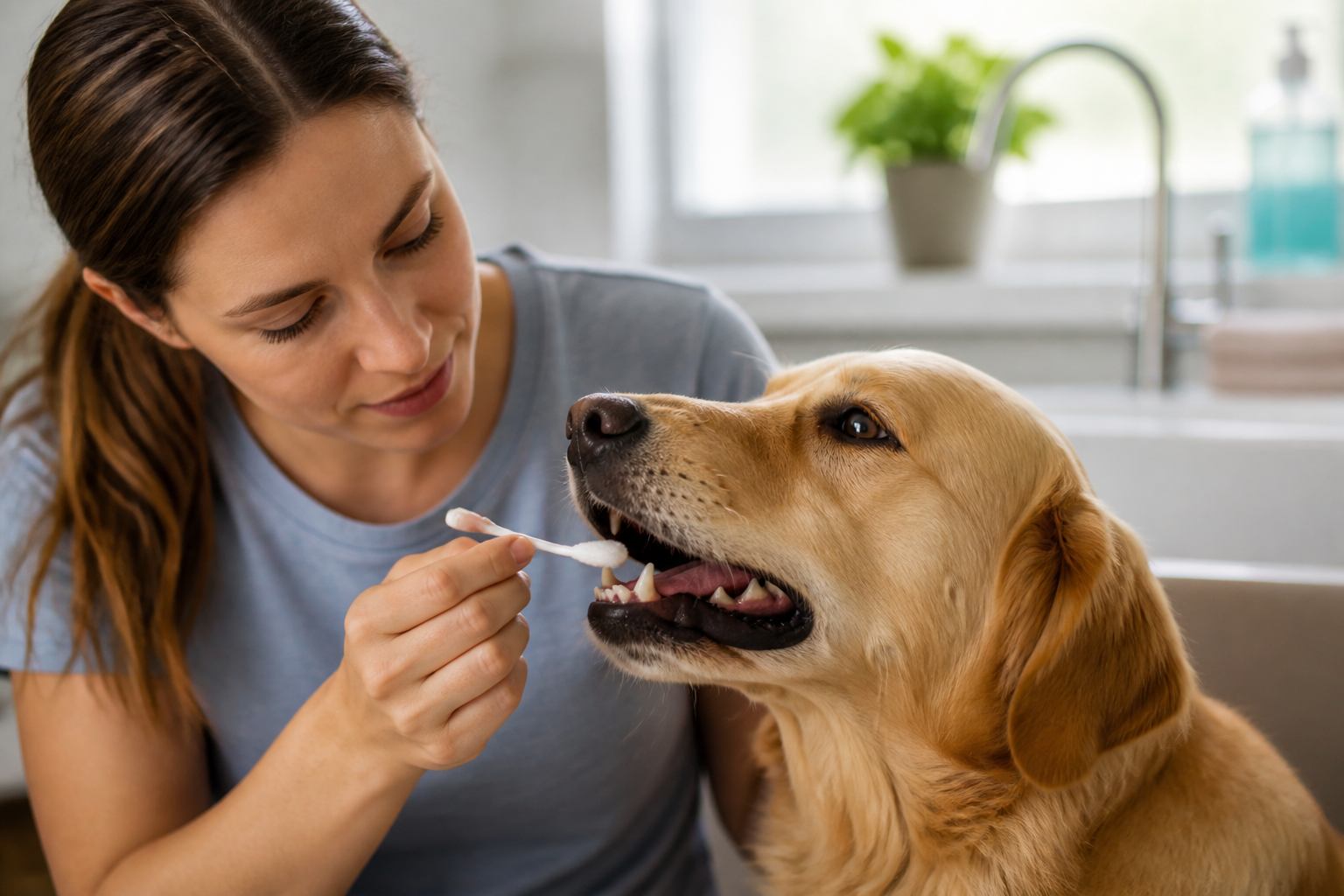
Step 3: Use a washcloth or gauze. Wrap a piece of soft gauze around your finger and "brush" the outside surfaces of the teeth using a little bit of the toothpaste.
Step 4: Transition to a brush. Once they are comfortable with your finger in their mouth, move to a soft pet toothbrush. Focus on the upper teeth and the outside surfaces, as this is where the most tartar builds up.
Bottom line: Consistency is more important than perfection; brushing three times a week is the minimum for results, but daily is ideal.
For additional step-by-step advice, see our guide to building a pet dental care routine.
The Role of Dental Chews and Toys
Brushing is the gold standard, but it is not the only way to help keep your dog's mouth clean. We carry a wide variety of dental chews and toys that can assist in the mechanical removal of plaque. Brands like Greenies or Kong produce items designed to scrape the teeth as the dog chews.
When a dog chews on a high-quality dental treat, the texture of the treat helps rub away soft plaque. Some treats also contain ingredients that help freshen breath. However, you should be careful with what you choose. Hard items like natural bones, cow hooves, or hard nylon toys can actually fracture your dog's teeth. A fractured tooth is incredibly painful and often requires an expensive extraction by a veterinarian.
Look for the Veterinary Oral Health Council (VOHC) seal on products. This seal means the product has been tested and proven to reduce plaque or tartar by a specific amount. We stock many VOHC-approved options at BaxterBoo to ensure you are getting products that actually work.
Read more about how dental chews can support your dog's oral care routine.
Nutritional Support for Oral Health
What your dog eats also impacts their dental health. Some dogs benefit from specific dental diets. These kibbles are usually larger and have a fibrous texture that does not shatter immediately when the dog bites down. Instead, the tooth sinks into the kibble, which provides a scrubbing action.
If your dog has advanced dental issues or other health concerns, your veterinarian might recommend a prescription diet. Our pharmacy carries these specialized foods, including the Farmina Vet Life range, through our partnership with Pet's Choice. Prescription dental diets are formulated to provide complete nutrition while actively fighting the buildup of bacteria in the mouth.
Vet Tip: If your dog has red, bleeding gums or loose teeth, stop all home cleaning efforts and see your vet. Brushing a mouth that is already in pain can cause further damage and distress.
When to See a Professional
Even with the best at-home care, most dogs will eventually need a professional dental cleaning. A veterinarian performs these cleanings while the dog is under general anesthesia. This is necessary because a large portion of dental disease happens below the gumline, where you cannot see or reach it.
During a professional cleaning, the vet will:
- Scale the teeth to remove hard tartar.
- Check for deep pockets in the gums.
- Take dental X-rays to look for abscesses or bone loss.
- Polish the teeth to smooth out any scratches where bacteria could hide.
Some groomers offer "teeth scraping" without anesthesia. You should be very cautious about this. Without anesthesia, it is impossible to clean under the gums or the inside surfaces of the teeth. It also leaves micro-scratches on the enamel that can actually speed up future tartar buildup. It is essentially a cosmetic fix that ignores the real health problems.
Managing Ongoing Oral Health Conditions
For dogs with chronic oral health issues like gingivitis or stomatitis, simple brushing might not be enough. These conditions often require medical intervention. Our pharmacy at BaxterBoo provides access to FDA-approved medications that your veterinarian may prescribe to manage infections or pain related to dental disease. By working with Pet's Choice, we ensure you have easy access to the treatments your dog needs to stay comfortable.
If you are managing a senior dog, you may notice their breath getting worse even with regular care. This can sometimes be a sign of underlying issues like kidney disease. Always mention changes in breath or eating habits to your vet during your annual checkup.
Summary of Safe Dental Practices
Maintaining your dog's teeth does not have to be complicated, but it does require the right supplies. Avoid the temptation to use hydrogen peroxide or other harsh household chemicals. They simply are not designed for the delicate environment of a dog's mouth.
Instead, build a routine based on:
- Daily or frequent brushing with enzymatic pet toothpaste.
- Using soft-bristled brushes or finger brushes.
- Providing VOHC-approved dental chews for mechanical cleaning.
- Regular veterinary checkups and professional cleanings when recommended.
Key Takeaway: Oral health is a major part of your dog's overall wellness. Investing a few minutes a day into a safe brushing routine can add years to their life by preventing systemic infections.
Conclusion
While it might seem like a quick fix, you should never clean your dog's teeth with hydrogen peroxide. The risk of chemical burns, stomach upset, and creating a fear of handling makes it a dangerous choice. Stick to products that are formulated with your dog's safety in mind. At BaxterBoo, we are committed to providing the tools you need for a healthy pet, from specialized toothbrushes to the latest in dental treats. For dogs with specific medical needs or those requiring prescription diets, our pharmacy is a reliable resource through our partnership with Pet's Choice. By focusing on safe, consistent care, you can keep your dog's smile bright and their breath fresh without the risks of DIY experiments.
Your next step should be finding a flavor of pet toothpaste your dog loves. Check out our full collection of Dental Care products to get started on a safer routine today.
FAQ
Is it okay if my dog swallows pet toothpaste?
Yes, pet toothpaste is specifically formulated to be safe for ingestion. It does not contain the foaming agents or high levels of fluoride found in human toothpaste that cause stomach distress. Most pet pastes use enzymes to clean the teeth, which are harmless when swallowed in small amounts during a normal brushing session.
Can I use a human toothbrush on my dog?
You can use a human toothbrush if it has very soft bristles, but a pediatric or infant toothbrush is usually a better fit. Many adult human brushes are too large and have bristles that are too stiff for a dog's sensitive gums. Pet-specific brushes are often angled better to reach the difficult spots in a canine mouth, such as the back molars.
My dog's gums bleed when I brush. Should I stop?
Minor bleeding can sometimes happen if you are just starting a routine and your dog has mild gingivitis. However, if the bleeding is persistent or heavy, you should stop and consult your veterinarian. Significant bleeding is often a sign of advanced periodontal disease that requires professional treatment rather than just at-home brushing.
How often do I really need to brush my dog's teeth?
Ideally, you should brush your dog's teeth every day to remove plaque before it hardens into tartar. If daily brushing is not possible, aim for at least three times per week. Brushing less than that is rarely enough to prevent the buildup of tartar, as plaque begins to mineralize within just a few days of forming.






