
 Save 15% on your 1st Autoship learn more

 Email us
 Live Chat
 FAQs
FAQs





Introduction
We have all been there. You are enjoying a quiet evening on the couch when your dog leans in for a friendly nuzzle, and you are suddenly hit with a wave of breath that smells like a swamp. It is a common moment for pet owners, and the first instinct is often to reach for whatever is in the bathroom cabinet. You might wonder if you can just use a dab of your own minty toothpaste to freshen things up. At BaxterBoo, we talk to pet parents every day who want to do the right thing for their dog's oral health but are unsure about the safety of household products. This guide covers the critical safety risks of human dental products and the best ways to maintain your dog's smile. Brushing your dog's teeth is the most effective way to prevent painful dental disease, but using the wrong supplies can lead to serious health complications.
Quick Answer: No, you should never use human toothpaste to clean your dog's teeth. Most human formulas contain ingredients like xylitol and fluoride that are highly toxic to dogs when swallowed. You must use a specially formulated pet toothpaste that is safe to ingest and designed for a dog's specific oral chemistry.
Why Human Toothpaste Is Dangerous for Dogs
The most important thing to understand is that dogs do not know how to "spit" like we do. Anything you put on their teeth will be swallowed and processed by their digestive system. Human toothpaste is designed for adults and children who can rinse their mouths and expel the product. Because it stays in the dog's body, even a small amount of human-grade toothpaste can cause significant harm.
The primary culprit is xylitol. This is an artificial sweetener found in many sugar-free products, including "natural" and "whitening" toothpastes. While it is perfectly safe for humans, xylitol causes a massive release of insulin in dogs. This leads to a life-threatening drop in blood sugar and can cause acute liver failure within hours. Even if a toothpaste does not contain xylitol, it almost certainly contains fluoride. In dogs, fluoride can lead to severe gastrointestinal distress, vomiting, and in high doses, permanent damage to the bones and kidneys.
Another common ingredient in our toothpaste is sodium lauryl sulfate (SLS). This is the chemical that creates the foam we associate with cleanliness. Dogs generally hate the sensation of foaming in their mouths, which can lead to panic or a total refusal to let you touch their teeth again. More importantly, SLS can cause stomach upset and diarrhea if swallowed.
Vet Tip: If you realize your dog has swallowed a significant amount of human toothpaste, especially a brand containing xylitol, contact your veterinarian or an emergency animal clinic immediately. Do not wait for symptoms like lethargy or vomiting to appear, as internal damage can happen very quickly.
The Reality of Canine Periodontal Disease
It is estimated that over 80 percent of dogs show signs of periodontal disease by the time they are three years old. This is not just a matter of smelly breath or stained teeth. Dental disease is an active infection in the mouth that can have systemic consequences. When the gums are inflamed and bleeding, bacteria from the mouth can enter the bloodstream. From there, it can travel to the heart, liver, and kidneys, leading to chronic health issues that shorten a dog's lifespan.
Plaque is a sticky film of bacteria that forms on the teeth within hours of eating. If it is not brushed away, it reacts with the minerals in your dog's saliva to become tartar, also known as calculus. Tartar is as hard as concrete and cannot be removed with a toothbrush. Once tartar forms under the gum line, it creates a pocket for infection to thrive. Regular brushing at home is the only way to disrupt this cycle before the tartar sets in. For more guidance, read our tips on pet dental care.
At BaxterBoo, we see the benefits of early intervention every day. By starting a dental routine now, you are saving your dog from future pain and saving yourself the high cost of advanced veterinary dental surgeries. Consistent home care is the foundation of a long and healthy life.
Choosing the Right Pet Toothpaste
Since human toothpaste is off the table, you need to look for a pet-specific enzymatic toothpaste. These are formulated to be swallowed and come in flavors that dogs actually enjoy, such as poultry, beef, or peanut butter. The enzymatic part is crucial. These formulas contain active enzymes that help break down food particles and bacteria even after you have finished brushing. One option is Petsmile Professional Toothpaste for Dogs and Cats.
When shopping for dental supplies, look for the VOHC Seal of Acceptance. The Veterinary Oral Health Council only grants this seal to products that have been scientifically proven to reduce plaque or tartar. While there are many good products without the seal, it is a gold standard for quality and efficacy.
Pet toothpaste also lacks the harsh abrasives found in human products. A dog's tooth enamel is actually thinner than human enamel, so using something too abrasive can cause wear and sensitivity over time. Pet-safe gels and pastes are gentle enough for daily use while still being tough on bacterial biofilm.
Step-by-Step: Introducing Your Dog to Brushing
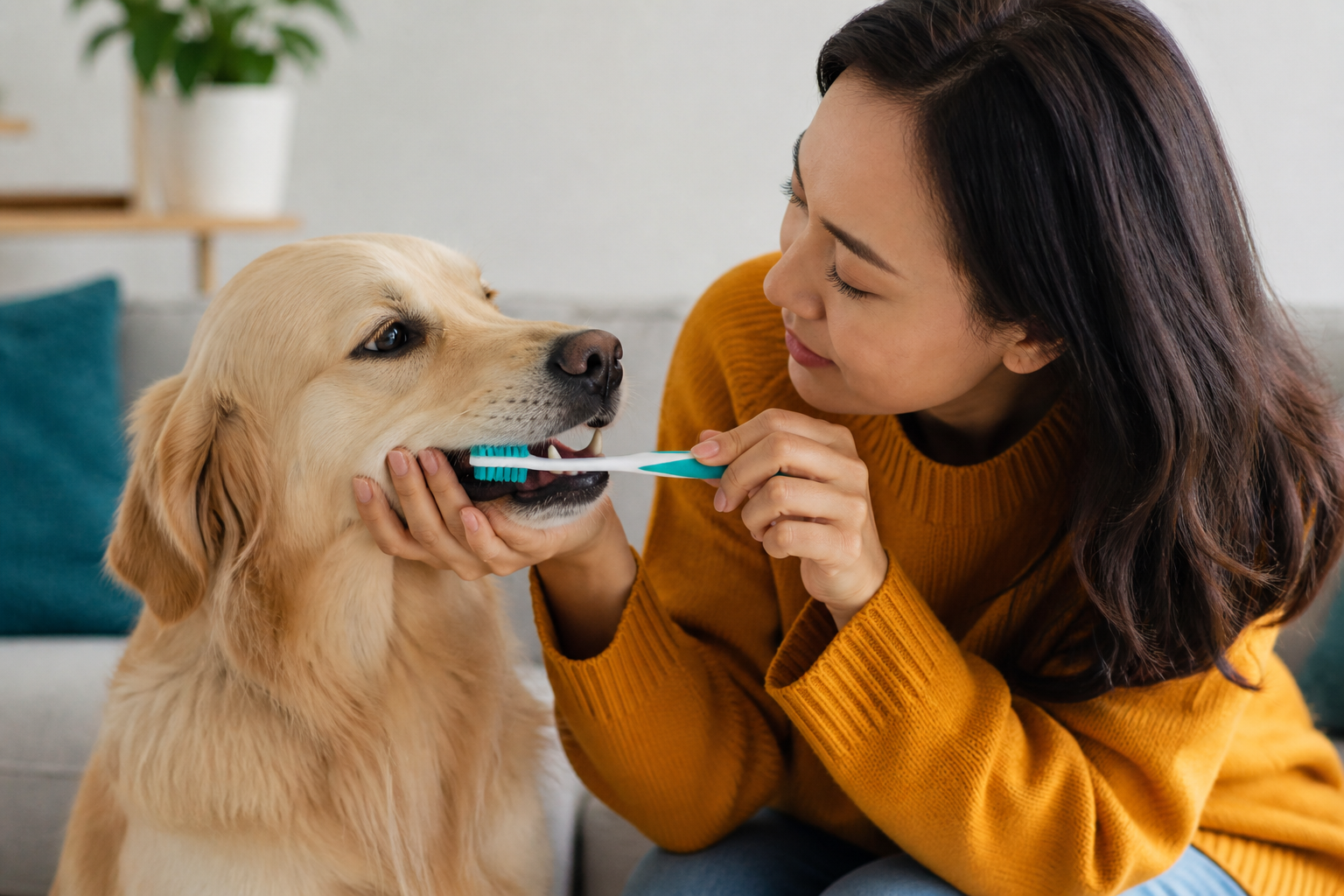
If you have never brushed your dog's teeth before, do not expect to finish the whole mouth on the first try. It is a process of building trust. For many dogs, the sensation of someone's fingers in their mouth is strange and potentially frightening. You should aim to make this a positive, rewarding part of their day.
Step 1: The Taste Test. / Apply a small dab of pet-specific toothpaste to your finger. Let your dog lick it off. Most dogs view the poultry or beef flavors as a treat, which creates a positive association with the tube.
Step 2: Handling the Mouth. / Gently lift your dog's lip and rub your finger along the outer surface of their teeth and gums. Do this for just a few seconds, then offer a high-value treat or lots of praise. Repeat this for several days until they are comfortable with you touching their mouth.
Step 3: Introducing the Tool. / Once they accept your finger, introduce a finger brush or a soft-bristled dog toothbrush. Let them sniff the brush and lick toothpaste off it. Slowly transition to a gentle circular motion on the front teeth.
Step 4: Focusing on the Outside. / You do not need to worry about brushing the inside of the teeth (the tongue side). A dog's tongue is naturally abrasive and does a decent job of keeping those surfaces clean. Focus 95 percent of your effort on the outside of the teeth, especially the large carnassial teeth in the back, where tartar buildup is heaviest.
Key Takeaway: Patience is more important than technique in the beginning. If your dog gets stressed, stop and try again tomorrow. The goal is a lifelong habit, not a one-time perfect cleaning.
Different Brushes for Different Dogs
Not all toothbrushes are created equal, and the right choice often depends on your dog's size and temperament. Our warehouse in Vernon Hills stays stocked with a variety of options because we know every dog is unique.
- Finger Brushes: These are small silicone caps with bristles that fit over your index finger. They are excellent for puppies or small dogs. They give you a better sense of how much pressure you are applying and are less intimidating than a long-handled tool.
- Double-Headed Brushes: These are designed for larger dogs. They have two sets of bristles at different angles, allowing you to clean the top and sides of the tooth simultaneously. This makes the process much faster.
- Angled Handles: Many dog toothbrushes have a distinct curve in the handle. This helps you reach the very back molars without having to stretch your dog's mouth open too wide.
- Soft Human Baby Brushes: If you have a tiny toy breed, even a standard dog brush might be too large. A human baby toothbrush with extra-soft bristles is often a perfect fit.
Regardless of the tool you choose, remember to replace it every three months. Just like human toothbrushes, they can harbor bacteria over time. If you have multiple dogs, each one should have their own dedicated brush to prevent the spread of oral bacteria between them. For a dual-ended option, consider the Virbac C.E.T. Dual-Ended Pet Toothbrush.
The Role of Dental Chews and Toys
While brushing is the gold standard, it is not the only tool in your kit. Dental chews and textured toys can be a great supplement to a brushing routine. These products work through mechanical action. As your dog chews, the texture of the toy or treat scrapes against the surface of the tooth, helping to rub away plaque.
However, be realistic about what a chew can do. A treat that is swallowed in ten seconds does not have enough "contact time" to clean anything. Look for long-lasting chews or specifically designed dental treats that require a bit of work. Some toys are designed with ridges or nubs that massage the gums and stimulate blood flow, which is vital for gum health.
We often recommend these for the "in-between" days or for dogs that are still in the training phase of brushing. When you combine a daily dental chew with brushing three times a week, you are providing a very high level of care. Through our MVP Rewards program, many of our regular customers find it easy to keep these supplies on hand while earning points back on every purchase. For an additional option, explore Virbac C.E.T. Enzymatic Oral Hygiene Chews.
Advanced Nutrition and Prescription Diets
Sometimes, a dog needs more than just a toothbrush. Certain breeds, especially small and toy breeds like Chihuahuas or Yorkies, are genetically predisposed to rapid tartar buildup. In these cases, a veterinarian might recommend a prescription dental diet. These kibbles are usually much larger than standard food and are designed not to crumble immediately when bitten. Instead, the tooth sinks into the kibble, which acts like a squeegee to clean the surface.
Our dog pharmacy provides access to these specialized prescription diets through our partnership with Pet's Choice. If your vet determines that your dog needs a therapeutic diet like Royal Canin Dental or Farmina Vet Life, you can easily manage those orders through us. These diets are specifically formulated to change the chemical environment of the mouth, making it harder for plaque to mineralize into tartar.
Vet Tip: If you notice your dog has extremely red gums, broken teeth, or is dropping food while eating, skip the toothbrush and head to the vet. These are signs of advanced disease or pain that require professional intervention, possibly including X-rays and a cleaning under anesthesia.
Managing the "Difficult" Dog
We often hear from owners who say, "I would love to brush my dog's teeth, but they just won't let me." It is a common frustration. If your dog is particularly resistant, there are still ways to help.
First, consider the environment. If you try to brush their teeth in the middle of a busy kitchen while dinner is being made, they will likely be too distracted or anxious. Choose a quiet time when the house is calm. Exercise your dog before you start. A tired dog is generally more compliant and less likely to struggle.
If a toothbrush is a total deal-breaker, consider dental wipes. These are textured pads pre-soaked with enzymatic cleaners. You simply wrap one around your finger and swipe it over the teeth. It is less invasive than a brush but still provides the mechanical action needed to disrupt plaque.
Another option is a water additive. These are tasteless liquids you add to your dog's water bowl. They contain enzymes that help kill bacteria in the mouth. While a water additive will never be as effective as physical brushing, it is a helpful "better than nothing" solution for extremely difficult pets. Read more about warning signs of dental problems in dogs.
Bottom line: Every little bit of dental care helps, even if you can only manage a quick wipe or a water additive.
The BaxterBoo Difference in Dental Care
Maintaining your dog's oral health does not have to be a confusing or expensive ordeal. Since 2006, we have focused on curating a selection of products that we would feel comfortable using on our own pets. From the high-quality enzymatic toothpastes we carry to the specialized gear in our warehouse, everything is handpicked for effectiveness and safety.
Our hybrid model means you get the best of both worlds. You can browse our extensive selection of over 500 brands online or visit us in person if you are near Vernon Hills. We pride ourselves on being more than just a store. We are a resource for pet owners who want to understand the "why" behind the products they buy. Whether you are looking for a basic finger brush or need to fill a prescription for a dental diet through our pharmacy, we are here to support your dog's health journey.
Starting Your Daily Routine
The best time to start cleaning your dog's teeth was when they were a puppy. The second best time is today. Even if your dog is already a senior, improving their oral hygiene can reduce inflammation and make them feel much more comfortable. Consistency is the most important factor. Brushing once a month does very little because plaque hardens so quickly.
If you can commit to even three minutes a day, you can fundamentally change your dog's health outlook. Start by grabbing a tube of poultry-flavored paste and just letting them enjoy the taste. Once that hurdle is cleared, the rest will follow. We have seen thousands of owners transform their dogs' breath and health just by making this one small change.
Key Takeaway: Dog dental care is about long-term wellness. Using pet-safe products like those found at BaxterBoo ensures you are cleaning their teeth without risking their safety.
Conclusion
Cleaning your dog's teeth is an essential part of being a responsible pet owner, but it must be done with the right tools. Never use human toothpaste, as the risks of xylitol and fluoride toxicity are simply too high. Instead, invest in a quality enzymatic pet toothpaste and a brush that fits your dog's size. By introducing the process slowly and using plenty of positive reinforcement, you can make dental care a stress-free part of your life together. Our pharmacy and our wide range of dental products are always available to help you keep that tail wagging and that breath fresh. For those looking to save on regular supplies, our Autoship program is a great way to ensure you never run out of toothpaste while earning a free MVP Gold membership.
FAQ
Can I use baking soda instead of dog toothpaste? While baking soda is not immediately toxic like human toothpaste, it is not recommended for regular use. It has a high alkaline content that can upset a dog's stomach balance if swallowed in large amounts, and its abrasive texture can wear down tooth enamel. Additionally, most dogs find the salty taste of baking soda unpleasant, which can make them resist the brushing process.
How often do I really need to brush my dog's teeth? Ideally, you should brush your dog's teeth every day to stay ahead of plaque formation. Plaque begins to harden into tartar within 24 to 48 hours, so daily sessions are the most effective. If your schedule is too busy for daily care, aim for at least three times per week to provide a meaningful benefit to their oral health.
Is it too late to start brushing my senior dog's teeth? It is never too late to start, but you should have a veterinarian check their mouth first. Senior dogs are more likely to have existing dental issues like loose teeth or painful infections that brushing could aggravate. Once a vet confirms their mouth is healthy or performs a professional cleaning, starting a home routine can help maintain those results and prevent further decay.
What should I do if my dog's gums bleed during brushing? Light bleeding is often a sign of gingivitis, which means the gums are inflamed due to plaque buildup. In many cases, gentle, consistent brushing will actually improve the health of the gums and stop the bleeding over time. However, if the bleeding is heavy, persistent, or accompanied by a foul odor, you should stop and consult your veterinarian to rule out more serious periodontal disease.






