
 Save 15% on your 1st Autoship learn more

 Email us
 Live Chat
 FAQs
FAQs





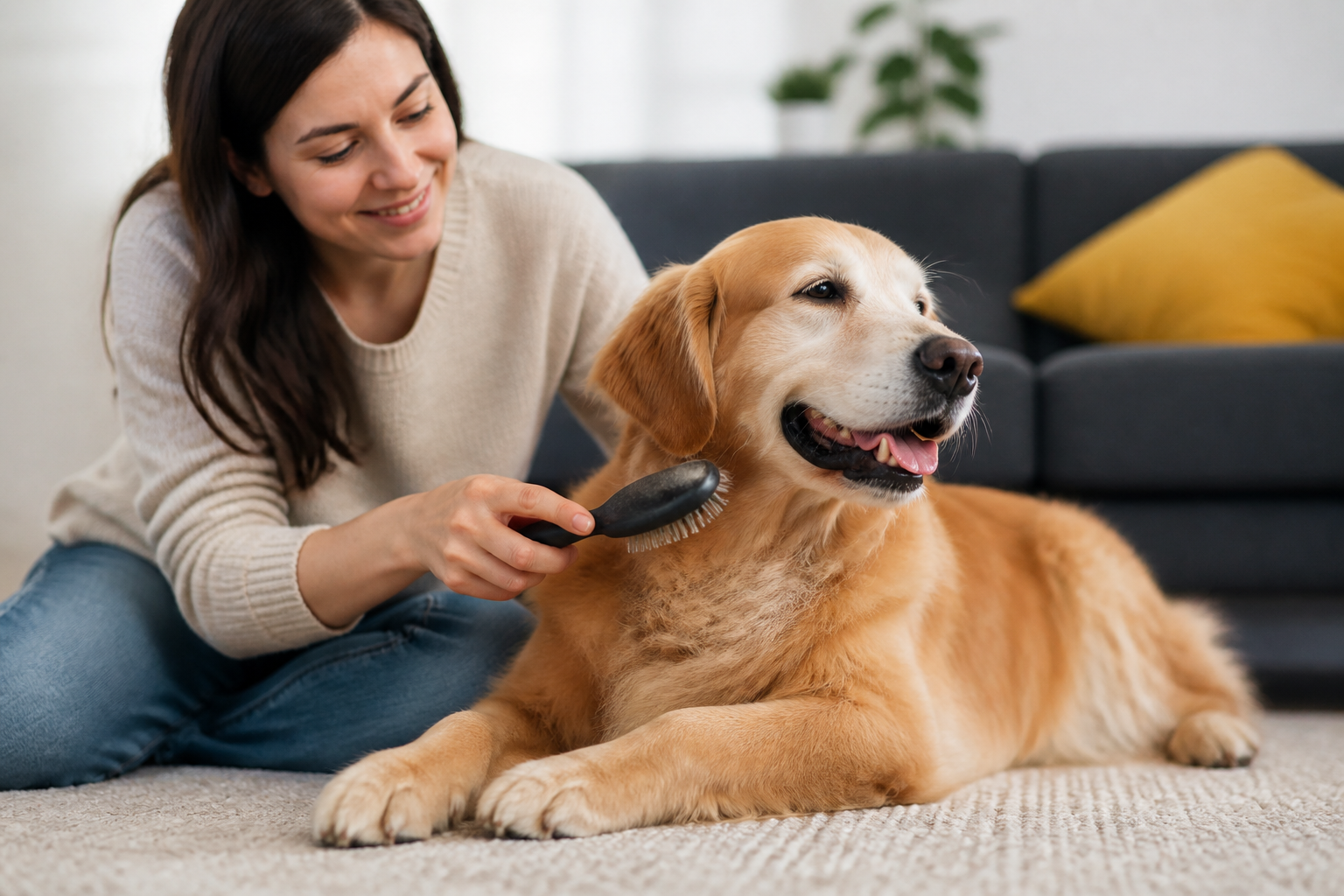
Introduction
You are standing in your bathroom with a hairbrush in one hand and your shedding dog in the other. It is a common moment for many pet owners. Maybe you just noticed a few stray clumps of fur on the rug or your pup is starting to look a little shaggy. It seems logical to reach for what you already have in the drawer. While you technically can use a regular human hair brush on your dog, it is rarely the best tool for the job.
At BaxterBoo, we have spent years helping pet parents find the right gear for their specific breeds. This article covers why human brushes often fall short, the risks of using the wrong tools, and how to select a brush that actually helps your dog stay healthy. Understanding the unique needs of your dog's coat will make grooming easier for both of you.
Quick Answer: You can use a human brush for a quick surface tidy, but it will not reach the undercoat or remove deep tangles. Most human brushes have bristles that are too soft or pins that are spaced incorrectly for dense pet fur.
Why Human Brushes Are Not Built for Dogs
Human hair and dog fur are structurally different. Humans generally have one hair per follicle. Most dogs have multiple hairs growing from a single follicle, often including a soft undercoat and a coarser topcoat. This creates a density that a standard human brush is not designed to penetrate. If you use a brush meant for your own head, you are likely only smoothing the very top layer of your dog's fur.
The skin beneath that fur is also a major factor. Dog skin is significantly thinner and more sensitive than human skin. Human brushes often have hard plastic balls on the ends of the pins or stiff bristles designed for a thicker human scalp. On a dog, these can cause micro-scratches or "brush burn" if you apply too much pressure.
Key Takeaway: Using the wrong tool often leads to "surface brushing," where the top looks good but the undercoat remains matted and tangled.
The Risks of Using a Regular Hair Brush
Using a regular brush might seem harmless, but it can lead to several long-term issues for your pet. If your dog has a double coat, a human brush will completely ignore the dead hair trapped near the skin. This trapped hair eventually forms mats. Mats are not just an aesthetic problem. They pull on the skin, cause pain, and can even trap moisture that leads to hot spots or fungal infections.
Another risk involves the physical comfort of your dog. If the bristles are too soft, you might find yourself pressing harder to get through the fur. This increased pressure can lead to skin irritation. Conversely, if the human brush has sharp metal or plastic pins, it can scratch the skin directly. This makes the grooming experience painful, which may cause your dog to develop a fear of being brushed in the future.
Ineffective Deshedding
Human brushes are designed to untangle long strands of hair, not to pull out dead undercoat. During shedding season, a regular brush will leave most of the loose fur behind. You will likely find that even after a long session with a human brush, your dog is still leaving hair all over your furniture. Specialized dog tools are shaped to grab that loose fur and pull it away from the body without breaking the healthy topcoat. For more shedding guidance, read our tips for managing a shedding dog’s coat.
Hair Breakage
Regular brushes can sometimes be too aggressive on the wrong coat types. If you have a dog with a silky or fine coat, the spacing of human bristles might snag and break the hair shafts. This leads to a frizzy, damaged appearance rather than a sleek, shiny coat.
Understanding Different Dog Coat Types
Before picking up any brush, you need to know exactly what kind of coat you are working with. At BaxterBoo, we carry supplies for every variety, but the tool that works for a Boxer will be useless for a Poodle. Browse our dog grooming supplies to compare brushes, combs, and other care tools.
Smooth Coats
Dogs like Boxers, Great Danes, and Doberman Pinschers have very short hair that lies flat against the skin. They do not have an undercoat. For these dogs, a human brush might actually work better than it would for other breeds, but it still is not ideal. A rubber curry brush or a soft bristle brush is much better for stimulating skin oils and removing fine dander.
Double Coats
Breeds like Labrador Retrievers, German Shepherds, and Huskies have two layers of fur. The soft undercoat provides insulation, while the outer coat protects against water and dirt. A human brush will never reach that dense undercoat. You need an undercoat rake or a high-quality slicker brush to manage this type of fur effectively.
Curly and Woolly Coats
Poodles and Bichon Frises have hair that grows continuously and curls tightly. This hair traps shed fur within the curls, making mats a constant threat. A regular hair brush will simply get stuck in these curls. These dogs require a slicker brush with long, fine pins that can separate the curls all the way down to the skin. For more guidance, see this guide to grooming curly-haired dogs.
Long and Silky Coats
Yorkshire Terriers and Maltese have hair that is more similar to human hair than most other breeds. While a human pin brush might seem okay here, a dedicated pet pin brush usually has more flexible pins and rounded tips specifically designed for thin dog skin.
Vet Tip: If you notice your dog has persistent skin redness, excessive itching, or bald patches after brushing, consult your veterinarian. These can be signs of allergies or skin infections that require professional diagnosis. Our dog healthcare selection includes products for skin and coat care.
Essential Grooming Tools for Every Dog Owner
If you want to move beyond the regular hair brush, you should build a basic grooming kit. You do not need dozens of tools, but having the right two or three will save you hours of work. Our dog brushes and combs include options for different coat types.
The Slicker Brush
This is the workhorse of the grooming world. It features a flat or slightly curved head with rows of thin wire pins. These pins are angled to grab loose hair and break up small tangles. It is the best tool for medium to long hair and curly coats. The BASS Brushes selection includes slicker and bathing brushes for different grooming tasks.
The Undercoat Rake
If you have a heavy shedder, this tool is mandatory. It looks like a small garden rake with long, blunt metal teeth. It reaches through the topcoat to pull out the dead "fluff" from the undercoat. It is far more effective than any human brush could ever be.
The Metal Comb
Often called a "Greyhound comb," this simple tool is used to check your work. After you think you have finished brushing, run the metal comb through the fur. If it snags, you have a hidden mat that needs more attention.
The Bristle Brush
This is best for short-haired dogs or as a finishing tool for longer coats. It smooths the hair and distributes natural skin oils, giving the coat a healthy shine.
How to Properly Brush Your Dog
Transitioning from a human brush to professional pet tools takes a little practice. You want to make sure the experience is positive so your dog stays still.
Step 1: Inspect the skin. Before you start, run your hands over your dog's body. Look for any lumps, bumps, ticks, or sore spots. If you find something unusual, be careful not to brush over it.
Step 2: Start from the bottom. Many owners start at the head, but starting at the legs or tail is often less intimidating for the dog. Work in small sections rather than trying to brush the whole dog at once.
Step 3: Use the "Line Brushing" technique. For dogs with thick or long fur, pull the hair up with one hand and brush the hair underneath it. This ensures you are reaching the skin and not just the surface.
Step 4: Be gentle with tangles. If you hit a knot, do not yank. Hold the base of the hair near the skin so you don't pull on the dog's hide. Use a detangling spray if necessary and slowly tease the knot apart.
Step 5: Finish with a reward. Always give your dog a treat or praise after a grooming session. This builds a positive association with the tools.
Bottom line: Investing in a dedicated dog brush prevents skin irritation and ensures you are actually removing shed hair rather than just moving it around.
When to See a Professional Groomer
There are times when a home brush, human or otherwise, is not enough. If your dog has severe matting that is tight against the skin, do not try to cut it out with scissors. It is incredibly easy to accidentally snip the skin. A professional groomer has clippers and specialized tools to safely remove mats.
If your dog is extremely anxious or aggressive during grooming, a professional can also help. They are trained to handle nervous animals and can get the job done quickly and safely. Regular home brushing helps keep the coat manageable between professional visits, reducing the cost and stress of those appointments.
Maintaining Your Tools
Once you have switched to proper dog brushes, you need to keep them clean. Unlike human brushes that can just be rinsed, metal dog brushes can rust if left wet.
- Remove hair after every use.
- Sanitize the brushes periodically with a pet-safe disinfectant.
- Check the pins regularly to ensure none are bent or sharp, which could hurt your dog.
- Store them in a dry place to prevent the metal components from degrading.
We see many owners who start with a regular hair brush but quickly realize that specialized tools make the process much faster. Proper grooming is a vital part of your dog's overall wellness. It helps you spot external parasites like fleas and ticks early. Our pharmacy offers a wide range of flea and tick preventatives, including prescription options. You can also explore our flea and tick collection for additional products.
Conclusion
While you can technically use a regular hair brush on your dog in a pinch, it is not a long-term solution. Human brushes lack the depth and pin configuration needed to manage the complexities of canine fur and sensitive skin. By choosing a brush specifically designed for your dog's coat type, you prevent painful mats, reduce shedding around your home, and keep their skin healthy.
- Identify your dog's coat type (smooth, double, curly, or silky).
- Select a tool like a slicker brush or undercoat rake that can reach the skin.
- Avoid using human brushes on double or curly coats to prevent matting.
- Pair regular brushing with health checks for fleas, ticks, and skin issues.
The best next step is to explore our collection of grooming supplies to find the perfect match for your pup's unique needs.
FAQ
Is it okay to use a human brush on a puppy?
Puppies have very soft, delicate skin and usually have a different coat texture than adult dogs. While a soft human baby brush might be okay for getting them used to the sensation of grooming, it will not be effective as they grow. It is better to start with a soft-bristled dog brush to establish a proper routine early on.
Can a regular brush cause my dog to shed more?
A regular brush does not actually cause more shedding, but it may make it seem that way. Because it only pulls hair from the surface, it can loosen dead fur without actually removing it. This causes the loose hair to fall out later as the dog moves, making it look like shedding has increased.
How often should I brush my dog with a proper pet brush?
The frequency depends on the coat type. Short-haired dogs might only need a quick session once a week. Double-coated breeds or those with long, silky hair often require daily brushing, especially during peak shedding seasons in the spring and fall.
What should I do if my dog hates being brushed?
Start with very short sessions, sometimes just a minute or two. Use plenty of high-value treats and praise to create a positive association. If the dog is still extremely resistant, check to ensure your brush is not scratching their skin or pulling too hard on tangles.






