
 Save 15% on your 1st Autoship learn more

 Email us
 Live Chat
 FAQs
FAQs





Introduction
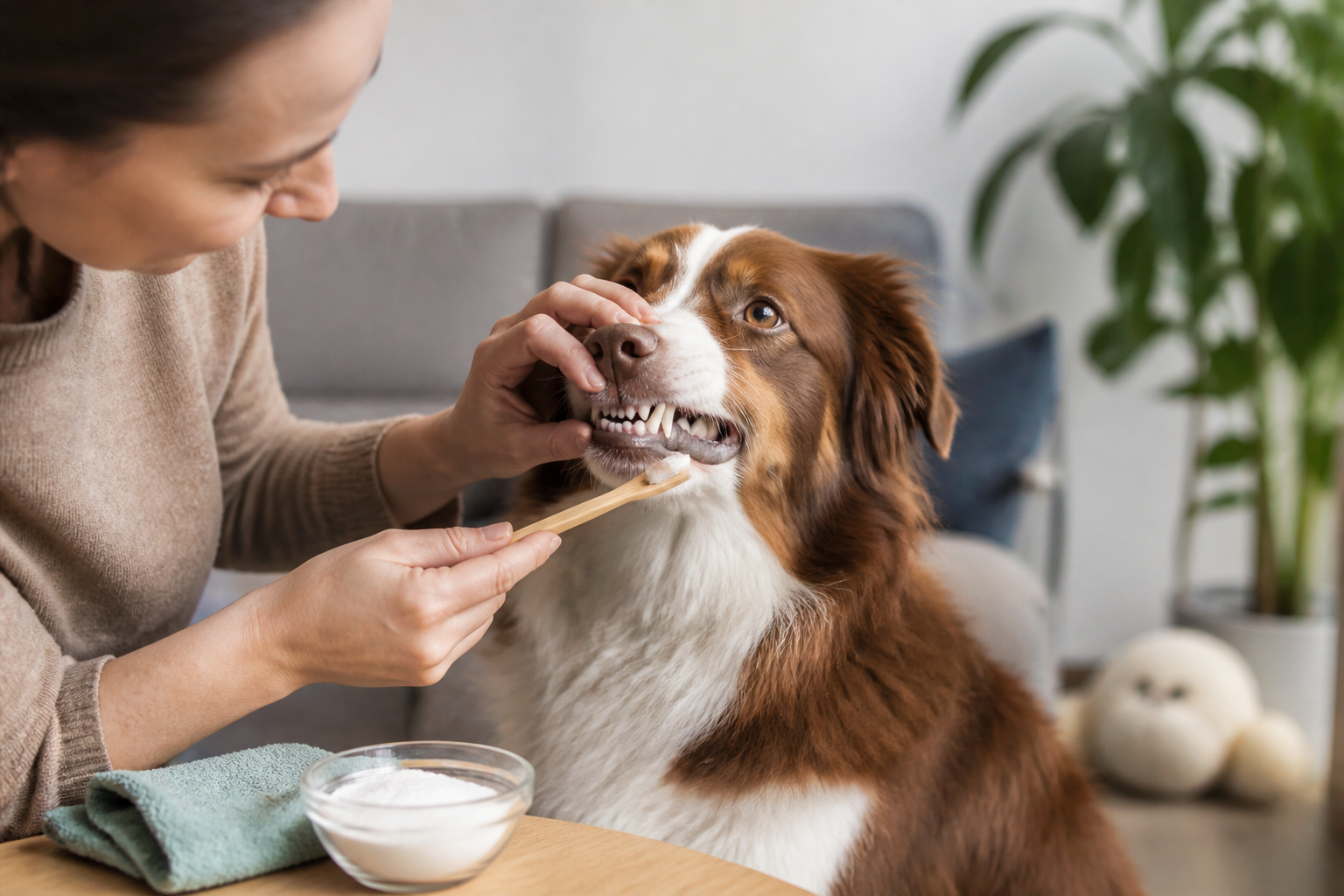
You are enjoying a quiet evening on the couch when your dog leans in for a lick, and the smell stops you in your tracks. That "dragon breath" is often the first sign that your dog needs a dental cleaning. Many owners reach for the baking soda in their pantry, wondering if this common household staple is a safe, natural way to scrub away plaque. At BaxterBoo, we understand the desire for simple, cost effective home remedies for pet care. This article explores the risks of using baking soda, the benefits of specialized pet dental products, and how to build a routine that keeps your dog's mouth healthy. Keeping those pearly whites clean is about much more than fresh breath. It is a vital part of protecting your dog's heart, liver, and kidneys from the effects of dental disease.
Quick Answer: You should generally avoid using baking soda to clean your dog's teeth. It is highly alkaline and can cause stomach upset or electrolyte imbalances if swallowed. Dedicated dog toothpaste is a much safer and more effective choice.
The Risks of Using Baking Soda on Dogs
Baking soda is a frequent ingredient in human DIY toothpaste because it is mildly abrasive and helps whiten teeth. However, dogs have different biological needs than humans. The most significant issue is that dogs cannot spit. When you brush a dog's teeth, they inevitably swallow the cleaning agent. Baking soda is sodium bicarbonate, which is highly alkaline. A dog's digestive system relies on a specific acidic balance to process food.
Introducing large amounts of an alkaline substance can cause significant stomach distress. In some cases, it can lead to more serious issues like electrolyte imbalances. This is especially risky for small breeds or dogs with underlying heart or kidney conditions. Most dogs also find the salty, metallic taste of baking soda unpleasant. If their first experience with a toothbrush involves a bad taste and a tummy ache, they will likely fight you every time you bring the brush out in the future.
Vet Tip: If your dog accidentally consumes a large amount of baking soda, watch for signs of lethargy, vomiting, or excessive thirst. Consult your veterinarian immediately if these symptoms appear, as they may indicate a sodium imbalance.
Why Specialized Dog Toothpaste Is Better
If you are looking for a way to clean your dog's teeth, enzymatic toothpaste is the gold standard. Unlike baking soda, which only provides mechanical scrubbing, enzymatic pastes contain proteins that break down plaque chemically. Brands like Virbac and C.E.T. use these enzymes to keep working even after the brushing session ends. You can compare options in our dog dental care category.
Dog toothpaste is also formulated to be swallowed safely. It comes in flavors that dogs actually enjoy, such as poultry, beef, or peanut butter. This turns a chore into a treat, making the dog much more cooperative. We have seen that when the process is tasty, dogs eventually start looking forward to their daily dental routine. This cooperation is key to a long term habit.
Understanding the Difference Between Plaque and Tartar
To understand why baking soda often falls short, you need to know what you are trying to remove. Plaque is a soft, sticky film of bacteria that forms on the teeth within hours of eating. At this stage, plaque is easy to remove with a brush or even a dental wipe. For additional guidance, read these pet dental care tips.
If plaque is not removed, it mixes with minerals in the dog's saliva and hardens into tartar, also known as calculus. This transition happens quickly, often within 48 to 72 hours. Once tartar has formed, a toothbrush or baking soda scrub will not be enough to remove it. Tartar requires professional scaling by a veterinarian. Regular brushing is designed to stop plaque from ever reaching the tartar stage.
Key Takeaway: Brushing is a preventative measure for plaque. Once that plaque hardens into brown or yellow tartar, only a professional veterinary cleaning can safely remove it.
Choosing the Right Tools for the Job
The tool you use is just as important as the paste. While you might be tempted to use a human toothbrush, the bristles are often too stiff for a dog's sensitive gums. Browse our dog dental supplements for additional oral-care options.
Finger Brushes
Finger brushes are small silicone or rubber caps that slip over your fingertip. They have soft nubs or bristles on one side. These are excellent for puppies or dogs that are nervous about having their mouth handled. They give you a better "feel" for where you are in the dog's mouth, reducing the chance of poking them.
Angled Pet Toothbrushes
Standard pet toothbrushes often have long handles and angled heads. This design helps you reach the very back molars where plaque buildup is most aggressive. Some models even have double heads to clean the top and bottom of the tooth simultaneously.
Gauze or Dental Wipes
If your dog absolutely refuses a brush, dental wipes are a great alternative. These are pre moistened pads treated with enzymes and breath fresheners. You simply wrap the wipe around your finger and rub it over the surface of the teeth. It is less intrusive than a brush but still provides the friction needed to disrupt plaque. You can also review our selection of dog dental care products.
How to Brush Your Dog's Teeth Step by Step
Introducing a toothbrush should be a slow process. If you rush it, your dog may become fearful. Follow these steps over the course of a week or two to ensure success.
Step 1: Let them taste the paste. / Put a small dab of dog toothpaste on your finger and let them lick it off. Do this for a few days until they get excited when they see the tube.
Step 2: Get them used to mouth handling. / Gently lift your dog's lip and rub your bare finger over their gums and teeth. Reward them with praise or a small treat immediately after.
Step 3: Introduce the brush. / Put some paste on the brush and let them lick it. Do not try to brush yet. Just let them get used to the feeling of the bristles against their tongue.
Step 4: Start with the front teeth. / Gently lift the lip and brush the large canine teeth and front incisors in a circular motion. Keep the session under 30 seconds.
Step 5: Move to the back. / Gradually work your way back to the molars. Focus on the outside of the teeth, as this is where the most plaque accumulates. Most dogs will not let you brush the inside surfaces, and that is okay. The tongue does a decent job of cleaning those areas.
Bottom line: Consistency matters more than perfection. Even a 30 second session three times a week is significantly better than no brushing at all.
Alternative Dental Cleaning Methods
Brushing is not the only way to support oral health. For dogs that are difficult to handle, you can layer several different methods to achieve a cleaner mouth.
- Dental Chews: High quality chews, like Greenies or RedBarn dental treats, are designed to scrape the teeth as the dog chews. Look for the Veterinary Oral Health Council (VOHC) seal of approval to ensure the product actually does what it claims. Explore our dog dental treats for chew-based options.
- Water Additives: These are tasteless liquids you add to your dog's water bowl. They contain enzymes or mild antiseptics that help kill bacteria in the mouth throughout the day.
- Crunchy Vegetables: Carrots and apple slices (without the seeds) provide a natural abrasive action. While they are not a replacement for brushing, they are healthy snacks that contribute to oral hygiene.
- Dental Toys: Toys made of textured rubber or nylon, such as those from Kong, can help massage the gums and rub away soft plaque during play. See KONG dental toys for chew-focused play options.
The Role of Diet in Dental Health
What your dog eats every day plays a massive role in their dental health. While there is a common belief that all kibble cleans teeth, most standard kibble is too small and brittle. It shatters instantly when the dog bites down, providing very little cleaning action.
Specialized dental diets are different. These kibbles are larger and have a fibrous texture that does not shatter. Instead, the tooth sinks into the kibble, which scrubs the surface like a squeegee. If your dog has a history of rapid plaque buildup, your vet might suggest a prescription dental diet. At BaxterBoo, we provide access to a full pharmacy through our partnership with Pet's Choice. This allows us to offer FDA approved medications and specialized prescription foods, including those formulated for advanced oral health needs.
When Home Care Isn't Enough
Home care is preventative, but it cannot cure existing dental disease. If you notice any of the following signs, it is time to put down the toothbrush and call your veterinarian. For more information about warning signs, read this guide to bad teeth in dogs:
- Bleeding or bright red gums
- Loose or broken teeth
- Excessive drooling
- Dropping food while eating or chewing on only one side
- Large deposits of brown or yellow tartar
- A persistent, foul odor that does not improve with brushing
A professional cleaning involves more than just scaling. Vets use specialized tools to clean under the gumline where bacteria can enter the bloodstream. They also take X-rays to check for abscesses or bone loss that are not visible to the naked eye.
Vet Tip: Annual dental checkups are essential. Even with perfect daily brushing, some dogs are genetically predisposed to dental issues and will still need professional help.
Your Next Steps for a Healthy Smile
Taking care of your dog's teeth does not have to be a complicated or stressful ordeal. While baking soda might seem like an easy fix, the risks of stomach upset and the lack of effective enzymes make it a poor choice compared to modern pet products. By choosing the right tools and moving at your dog's pace, you can create a routine that protects their health for years to come.
We invite you to explore the wide range of dental care products we carry. From finger brushes to flavored pastes and VOHC approved chews, we handpick every item to ensure it meets our standards for quality and safety. If you are looking for a toothpaste that includes baking soda as part of a formulated pet product, consider the Arm & Hammer Dental Clinical Care Enzymatic Dog Toothpaste. If you are looking for even more convenience, consider our Autoship program. It is a simple way to ensure you never run out of toothpaste or dental treats, and it even includes a free MVP Gold membership for extra savings.
Key Takeaway: Avoid baking soda and stick to enzymatic dog toothpaste. Combine brushing with dental chews and regular vet visits for the best results.
FAQ
Is a small amount of baking soda really that bad for a dog?
A tiny amount used once is unlikely to cause a medical emergency, but it is not ideal for a routine. Because dogs cannot spit, they ingest the entire amount, which can disrupt their stomach's natural acidity. It is much safer to use a product specifically designed to be swallowed, like a flavored pet toothpaste.
Can I use human toothpaste if I don't have baking soda?
No, you should never use human toothpaste on a dog. Human pastes often contain fluoride, which is toxic to dogs, and many are sweetened with xylitol. Xylitol is extremely dangerous and can cause life threatening drops in blood sugar or liver failure in dogs, even in small quantities.
How often should I actually brush my dog's teeth?
Ideally, you should brush your dog's teeth every single day. Plaque begins to harden into tartar in as little as 36 hours, so daily brushing is the only way to stay ahead of it. If daily is not possible, aim for at least three times a week to provide a significant health benefit.
My dog hates the toothbrush, what should I do?
If your dog is terrified of the brush, stop using it for a while and switch to dental wipes or a finger brush. You can also try different flavors of toothpaste to see if one is more appealing. The goal is to keep the experience positive, so use plenty of praise and go very slowly until they are comfortable again.






