
 Save 15% on your 1st Autoship learn more

 Email us
 Live Chat
 FAQs
FAQs





Introduction
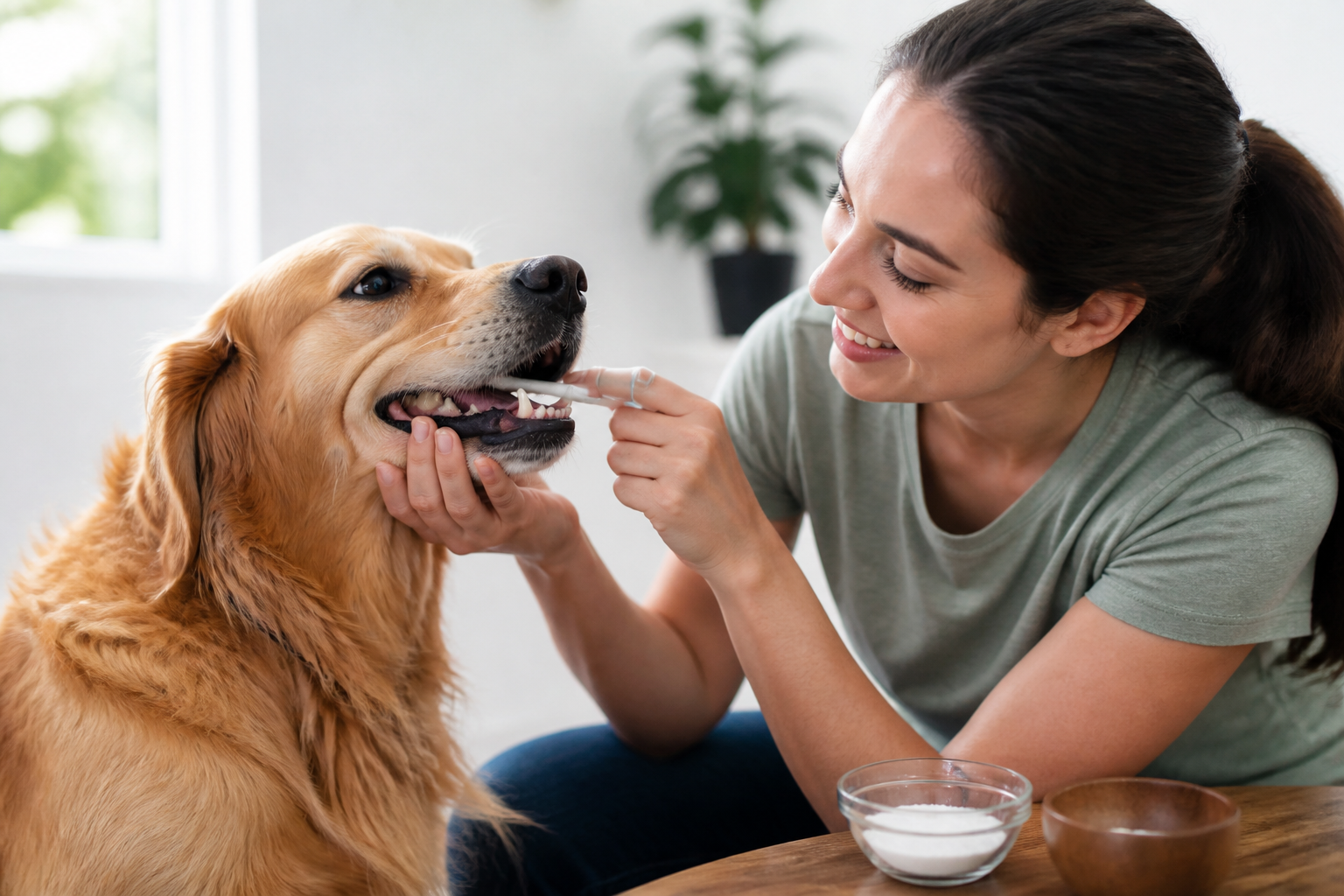
You lean in for a friendly nuzzle and your dog greets you with breath that smells like a damp basement. It is a common moment for every pet owner. You want to help your pup, so you head to the kitchen pantry. You see the box of baking soda and wonder if this classic household cleaner can brighten those canine teeth. While baking soda is a staple for human DIY projects, using it on your pet requires caution.
At BaxterBoo, we know that maintaining a healthy mouth is about more than just fresh breath. Dental hygiene is a cornerstone of overall wellness for your dog. This guide will explore the safety of baking soda and provide practical alternatives for a sparkling smile. We want to help you build a routine that is safe, effective, and stress-free for your four-legged friend. Proper dental care can prevent pain and expensive vet visits later in life.
Quick Answer: You can use baking soda to clean a dog's teeth in very small amounts, but it is generally not recommended. It has an unpleasant taste and can cause stomach upset or enamel damage if used frequently.
The Risks of Using Baking Soda for Dogs
Baking soda, or sodium bicarbonate, is a popular choice for natural cleaning. It is mildly abrasive and helps neutralize odors. However, dogs have different biological needs than humans. What works for your teeth may not be ideal for theirs. There are several reasons why you should think twice before making a DIY baking soda paste for your pet.
Stomach and Digestive Upset
Dogs do not know how to spit. When you brush your dog's teeth, they will inevitably swallow a significant portion of the cleaning agent. Baking soda is highly alkaline. If a dog swallows too much, it can disrupt the natural acid balance in their stomach. This often leads to digestive distress, gas, or vomiting. Large breeds might handle a tiny amount, but smaller dogs are much more sensitive to these changes.
Damage to Tooth Enamel
Baking soda is a crystal-based powder. Its abrasive nature is what helps it scrub away stains. While this sounds helpful, canine enamel is surprisingly thin. If you use baking soda too often, you can actually wear down the protective layer of the teeth. This leaves the teeth vulnerable to sensitivity and decay. Most veterinarians suggest using a product specifically formulated for the unique thickness of dog enamel.
The Flavor Factor
Most dogs find the taste of baking soda quite unpleasant. It is salty and bitter. If you use a substance your dog dislikes, they will quickly learn to hide when they see the toothbrush. Successful dental care relies on cooperation. Using a flavored pet toothpaste makes the process a treat rather than a chore. If your dog associates brushing with a bad taste, you will face a lifelong struggle every time you try to clean their mouth.
The Danger of Human Toothpaste
If you decide against baking soda, you might be tempted to reach for your own tube of toothpaste. This is a dangerous mistake. Human toothpaste is formulated with ingredients that are toxic to pets. You must never use human oral care products on your dog.
- Xylitol: This common sweetener is found in many human toothpastes. It is extremely toxic to dogs and can cause life-threatening low blood sugar and liver failure.
- Fluoride: While fluoride strengthens human teeth, it is poisonous to dogs when swallowed in large quantities.
- Foaming Agents: Ingredients like sodium lauryl sulfate create the suds we like. These can cause severe stomach upset in dogs.
Key Takeaway: Always choose products specifically labeled for dogs. Human toothpaste and excessive baking soda carry risks that far outweigh the benefits of a clean mouth.
Why Enzymatic Toothpaste is Superior
The gold standard for at-home dental care is enzymatic dog toothpaste. Unlike baking soda, which relies on physical scrubbing, enzymatic pastes work chemically. They contain enzymes that break down plaque and bacteria even if you do not scrub every single corner of the mouth.
These pastes are designed to be swallowed. They are safe for the digestive tract and come in flavors like poultry, beef, or peanut butter. When your dog licks the paste, the enzymes start working immediately. This makes the process much more effective for wiggly dogs who only tolerate a few seconds of brushing. We carry a wide variety of these trusted brands at BaxterBoo, including Virbac C.E.T. Enzymatic Pet Toothpaste.
Choosing the Right Tools
The brush you use is just as important as the paste. You have several options depending on your dog's size and comfort level.
- Finger Brushes: These are small, silicone caps that fit over your pointer finger. They have soft bristles on one side. These are excellent for puppies or dogs who are nervous about long objects in their mouth. They give you great control and allow you to feel the teeth as you work.
- Long-Handled Brushes: These look like human toothbrushes but often have angled heads. This helps you reach the very back molars where plaque builds up the fastest. Some have dual heads to clean the top and bottom of the tooth at the same time.
- Gauze Pads: If your dog will not tolerate a brush at all, you can wrap a piece of medical gauze around your finger. Apply the toothpaste to the gauze and rub it along the gum line. It is better than doing nothing and still provides some mechanical cleaning.
A convenient option is the Nutri-Vet Oral Hygiene Kit for Dogs, which includes enzymatic toothpaste, a toothbrush, and a finger toothbrush.
How to Brush Your Dog's Teeth Safely
If you want to keep those pearly whites healthy, consistency is the goal. Do not expect to do a full cleaning on the first day. Follow these steps to build a positive routine.
Step 1: Let them taste the paste. / Put a small dab of dog-safe toothpaste on your finger and let your dog lick it off. Do this for a few days until they get excited when they see the tube.
Step 2: Practice mouth handling. / Gently lift your dog's lips to look at their teeth. Give them a treat afterward. You want them to feel comfortable with you touching their mouth.
Step 3: Introduce the brush. / Put some paste on the brush and let them lick it. Do not try to brush yet. Just let them get used to the feeling of the bristles against their tongue.
Step 4: Start with the front teeth. / Gently brush the large canine teeth in the front using circular motions. Focus only on the outside of the teeth, as this is where most tartar accumulates.
Step 5: Work toward the back. / Gradually move toward the molars. These are the hardest to reach but the most important. If your dog gets restless, stop and try again tomorrow.
For more guidance on building a consistent routine, read these pet dental care tips.
Vet Tip: If you notice bleeding gums, loose teeth, or a strong foul odor that does not go away with brushing, consult your veterinarian. These are signs of periodontal disease that may require a professional cleaning or medical treatment.
Supporting Oral Health Beyond Brushing
Brushing every day is the best way to prevent disease, but it is not the only tool you have. You can support your dog's dental health through their diet and play habits.
Dental Chews and Toys
Specific dental chews are designed to scrape away plaque as your dog gnaws on them. Look for products that have the Veterinary Oral Health Council (VOHC) seal of approval. These have been tested for effectiveness. Hard rubber toys with ridges can also help massage the gums and stimulate saliva flow, which naturally washes away bacteria.
Explore our dog dental care collection for dental chews, wipes, and other oral-care products. You can also compare options in this guide to the 10 best dental chews for dogs.
Water Additives
If your dog is truly resistant to brushing, water additives are a helpful supplement. These are tasteless liquids you add to the water bowl. They contain enzymes or mild antiseptics that help reduce the bacterial load in the mouth. While they do not replace the mechanical action of brushing, they are a great "set it and forget it" option for busy owners.
The Role of Diet
What your dog eats matters. Crunchy kibble can provide some mechanical scraping, but it is not a cure-all. Some specialized dental diets, like those from Farmina Vet Life, are formulated with a specific texture that does not crumble immediately. This forces the dog to chew more, which cleans the teeth more effectively.
Our pharmacy at BaxterBoo offers access to these prescription diets and other FDA-approved medications through our partnership with Pet's Choice. If your vet recommends a specific therapeutic diet for dental or overall health, we can help you get those items delivered right to your door.
The Importance of Professional Cleanings
Even with perfect at-home care, most dogs will eventually need a professional cleaning. Plaque that is not removed within 48 to 72 hours hardens into tartar. Once tartar forms, you cannot brush it off at home. Only a veterinarian using specialized ultrasonic equipment can safely remove it.
During a professional cleaning, the vet can also take X-rays to look for problems beneath the gum line. Many dental issues, like root abscesses or bone loss, are invisible to the naked eye. Regular check-ups ensure these problems are caught before they cause your pet significant pain.
For additional guidance about warning signs, see what to do when your dog has bad teeth.
Bottom line: At-home brushing is preventive care, while professional cleaning is necessary maintenance to handle what a toothbrush cannot reach.
Life Stage Dental Care
The way you handle dental care will change as your dog grows. Starting early is the best way to ensure a lifetime of health.
Puppies
Puppies usually have all their baby teeth by eight weeks old. This is the perfect time to start handling their mouth. Even though they will lose these teeth around four to six months of age, the goal is training. If they learn to accept brushing as a puppy, they will be much easier to manage as 80-pound adults. Be gentle during the teething phase, as their gums may be sore.
For more information about this stage, read when dogs lose their puppy teeth.
Adult Dogs
By the time a dog is three years old, many already show signs of periodontal disease. This is the stage where daily brushing is most critical. Focus on the upper back molars, as the salivary glands are located nearby, leading to faster tartar buildup in that area.
Senior Dogs
Older pets often face more complex dental issues. They may have sensitive gums, missing teeth, or underlying health conditions like heart or kidney disease that are aggravated by oral bacteria. For seniors, we recommend more frequent dental check-ups. If your senior dog has trouble chewing hard kibble, you may need to transition to softer foods while still maintaining a gentle cleaning routine.
Creating a Routine That Sticks
The hardest part of dental care is remembering to do it. Try to pair brushing with another daily activity. Many owners brush their dog's teeth right after the final walk of the night or before a specific meal.
- Keep your supplies in a visible spot.
- Use high-value treats to reward your dog after every session.
- Stay calm and patient. Your dog picks up on your stress.
- Sign up for our Autoship programme on your favorite toothpaste and brushes. This ensures you never run out and keeps you on a consistent schedule.
By making dental care a standard part of your day, you are investing in your dog's long-term comfort. A healthy mouth contributes to a healthy heart and a longer life. We are here to support that journey with the best products and expert advice.
Conclusion
While you can technically use a tiny amount of baking soda to clean a dog's teeth, it is far from the best option. The risks of stomach upset and the negative flavor profile make it a difficult choice for a long-term routine. Instead, rely on flavored, enzymatic toothpastes and brushes designed specifically for canines. These tools are safer, more effective, and much more enjoyable for your pet.
Remember to monitor your dog's mouth for signs of trouble and schedule regular exams with your veterinarian. For all your dental needs, from finger brushes to prescription diets, we have you covered. Our pharmacy partnership with Pet's Choice even makes it easy to manage your pet's professional healthcare requirements alongside their favorite treats.
- Switch to enzymatic dog toothpaste for better results.
- Use a finger brush or soft pet toothbrush.
- Incorporate dental chews to help between brushings.
- Consult your vet for any persistent bad breath or gum redness.
Bottom line: Skip the baking soda and stick to pet-specific products for a safer, happier, and healthier dog.
FAQ
Is baking soda toxic to dogs if they swallow it?
Baking soda is not toxic in the same way that chocolate or grapes are, but it can be harmful in larger amounts. Because it is highly alkaline, it can cause an electrolyte imbalance or severe stomach upset if a dog swallows too much. Since dogs cannot spit out the paste, it is safer to use a pet-specific toothpaste designed for ingestion.
Can I use a human toothbrush on my dog?
Yes, you can use a human toothbrush if it has soft bristles. A child-sized toothbrush is often a great fit for small to medium dogs. However, avoid medium or hard bristles, as these can be too abrasive for a dog's gums and thin tooth enamel. Specific pet brushes are often better because they are angled to reach the back of a dog's unique jaw shape.
How often should I brush my dog's teeth?
Ideally, you should brush your dog's teeth every single day. Plaque begins to turn into hard tartar within 48 to 72 hours. If you cannot manage a daily routine, aim for at least three times per week. Any amount of brushing is better than none, but consistency is the key to avoiding professional dental procedures.
What should I do if my dog's breath still smells after brushing?
Persistent bad breath, also known as halitosis, is often a sign of underlying issues like gum disease, a rotting tooth, or even internal health problems. If brushing does not improve the smell, it is time to visit the vet. You may need a professional cleaning or a prescription diet from our pharmacy to get the situation under control.






