
 Save 15% on your 1st Autoship learn more

 Email us
 Live Chat
 FAQs
FAQs





Introduction
You are finishing your nightly routine and notice that your dog's breath is particularly strong. You might look at your own tube of peppermint toothpaste and wonder if a quick scrub would help freshen their mouth. It seems like a simple, cost-effective solution for a common problem. However, this is one area where sharing with your best friend can lead to a medical emergency. At BaxterBoo, we have spent years helping pet owners navigate the essentials of home care. We know that what works for you can be toxic for them. This article explains why human toothpaste is dangerous for dogs and how you can safely maintain their oral hygiene. You will learn about the risks of specific ingredients and the best ways to keep those canine pearly whites clean without a trip to the emergency room.
Quick Answer: No, you should never use human toothpaste to clean a dog's teeth. Many human formulas contain xylitol, which is lethal to dogs, as well as fluoride and foaming agents that cause severe digestive distress. Always use a toothpaste specifically formulated for pets that is safe to swallow.
The Dangers of Using Human Toothpaste on Dogs
The primary reason you cannot use your toothpaste on your dog is that dogs do not know how to spit. When you brush your teeth, you rinse and expectorate the excess paste. Your dog will swallow every bit of the product you put in their mouth. Human toothpaste is designed with the assumption that it will not be ingested in large quantities.
Xylitol: A Fatal Sweetener
Many modern toothpastes, especially those marketed as natural or whitening, use an artificial sweetener called xylitol. For humans, it is a safe sugar substitute. For dogs, it is a potent toxin. Even a small amount of xylitol can cause a massive release of insulin in a dog's body. This leads to a life-threatening drop in blood sugar called hypoglycemia. If left untreated, xylitol poisoning can cause permanent liver failure and death within hours.
Fluoride Toxicity
Fluoride is a staple in human dental care because it strengthens enamel. However, it is not meant to be swallowed. Since dogs ingest the entire dose, they can easily suffer from fluoride toxicity. Symptoms include drooling, vomiting, diarrhea, and in severe cases, seizures or heart issues. Over time, consistent ingestion of fluoride can lead to chronic health problems.
Foaming Agents and Sodium
Human toothpaste often contains Sodium Lauryl Sulfate (SLS). This is the ingredient that creates the thick foam we associate with a clean mouth. When a dog swallows this foaming agent, it usually causes intense stomach upset. It can lead to vomiting and painful gas. Additionally, some human pastes are high in sodium. This can disrupt the delicate electrolyte balance in your dog's system, especially for senior dogs with underlying heart or kidney concerns.
Vet Tip: If you suspect your dog has swallowed human toothpaste containing xylitol, contact your veterinarian or an animal poison control center immediately. Early intervention is the most effective way to prevent liver damage.
Why Dental Health Matters for Your Dog
Oral hygiene is about much more than fresh breath. It is a vital part of your pet's overall longevity. Experts estimate that over 80 percent of dogs over the age of three show signs of periodontal disease. This condition starts as simple plaque, which is a sticky film of bacteria. If not removed, plaque combines with minerals in the saliva to become tartar. Tartar is a hard substance that can only be removed by a professional cleaning.
When bacteria sit under the gumline, they cause inflammation and infection. This can lead to the destruction of the bone and tissues that hold the teeth in place. Perhaps more importantly, these bacteria can enter the bloodstream. Once they are in the blood, they can travel to the heart, liver, and kidneys. This leads to systemic infections and organ damage over time. Keeping your dog's teeth clean is one of the most effective ways to extend their life.
Professional Solutions and the BaxterBoo Pharmacy
Sometimes, basic brushing is not enough to handle advanced dental issues. If your dog has severe gingivitis or a history of tooth decay, your veterinarian might recommend a specialized approach. Our pet pharmacy offers access to FDA-approved medications and prescription pet foods through our partnership with Pet's Choice.
For dogs with chronic dental concerns, a prescription dental diet can make a significant difference. These foods, like those from Royal Canin or Farmina Vet Life, are formulated with a specific texture. The kibble does not crumble immediately when the dog bites down. Instead, the tooth sinks into the piece, allowing the fibers to scrub the surface of the tooth. Our pharmacy can help you fulfill these prescription needs easily, ensuring your dog gets the professional-grade support they require.
Bottom line: Preventive care at home reduces the need for expensive and invasive dental surgeries later in your dog's life.
Selecting the Right Dog-Safe Toothpaste
Since you cannot use your own toothpaste, you need a product made specifically for the canine mouth. These products are formulated to be safely swallowed and often contain beneficial ingredients that work even without heavy scrubbing. You can explore our dental and breath care selection for dog-safe toothpaste, gels, chews, and related products.
Why Enzymatic Formulas are Effective
The most popular type of pet toothpaste is an enzymatic formula. These pastes contain enzymes like glucose oxidase. These enzymes break down the food particles and bacteria that lead to plaque. The best part is that the enzymes continue to work in the mouth long after you have finished brushing. This makes them perfect for dogs who only tolerate a few seconds of brushing.
Flavors That Make Brushing Easier
Human toothpaste is almost always minty. While we find that refreshing, most dogs find it overwhelming or even unpleasant. Dog toothpaste comes in flavors that appeal to a scavenger's palate. You can find options like:
- Poultry or chicken
- Beef or London Broil
- Peanut butter
- Malt
- Vanilla-mint (a milder version of mint)
Using a flavor your dog loves turns the session into a treat rather than a chore. Brands like Virbac and Nylabone are known for creating flavors that dogs actually look forward to licking off the brush. Our Arm & Hammer brand selection also includes dog toothpaste and other dental care products.
Choosing Your Brushing Tools
The brush you use is just as important as the paste. You have several options depending on your dog's size and comfort level. For more ideas on introducing dental care gradually, see these pet dental care tips.
- Standard Dog Toothbrushes: These look like human brushes but often have angled handles. This helps you reach the back molars more easily. Some have double ends with a large head and a small head to fit different parts of the mouth.
- Finger Brushes: These are small silicone or rubber sleeves that fit over your pointer finger. They have soft bristles on one side. These are excellent for puppies or dogs who are nervous about a long plastic stick in their mouth.
- Gauze Pads: If your dog will not tolerate any brush, you can wrap a piece of sterile gauze around your finger. Apply a dab of toothpaste and rub it against the teeth. The texture of the gauze provides enough abrasion to remove soft plaque.
- Soft Human Baby Brushes: For very small breeds, a standard dog brush may be too bulky. A soft-bristled human baby toothbrush is often the perfect size for a tiny mouth.
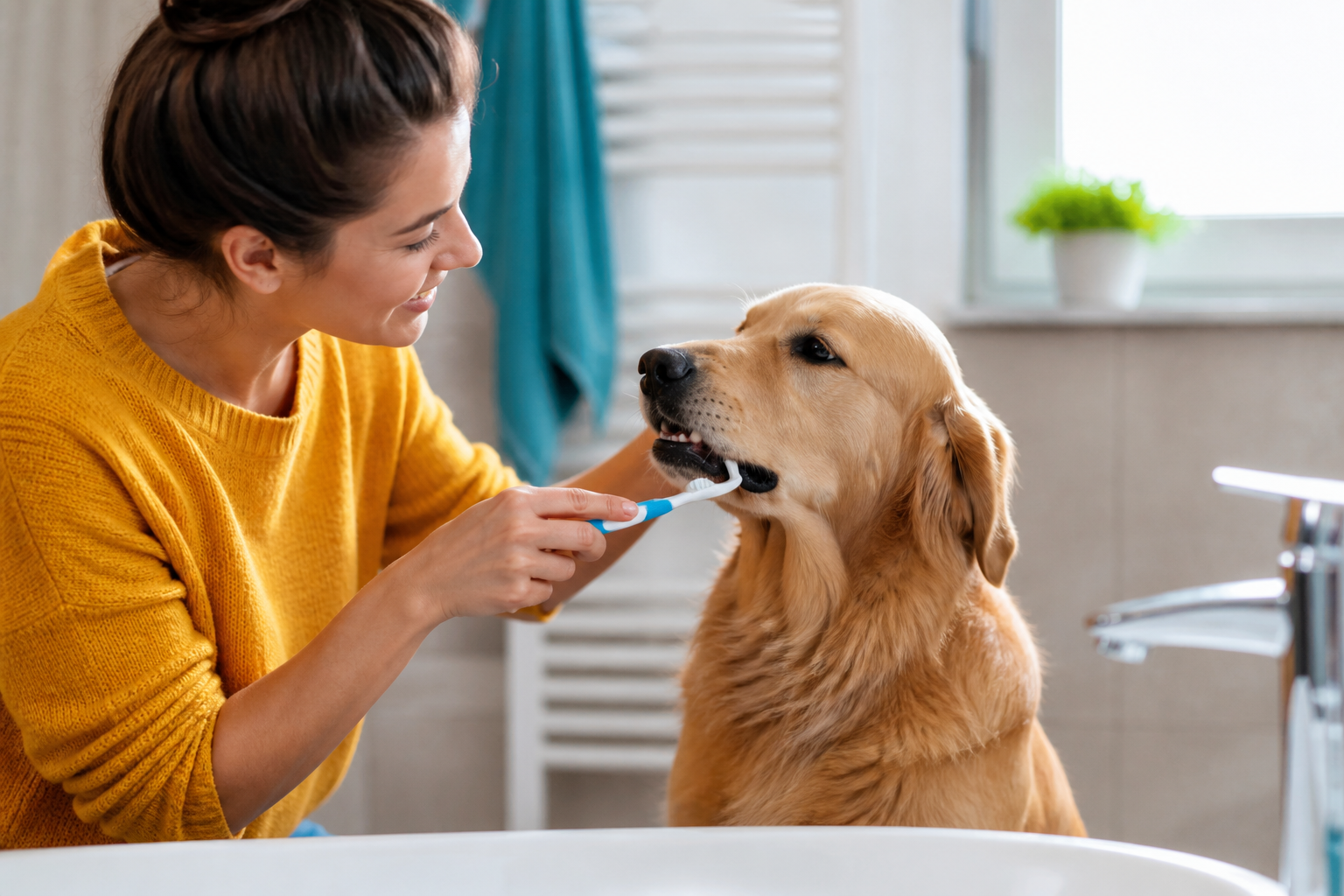
How to Brush Your Dog's Teeth: A Step-by-Step Guide
Do not expect to do a full cleaning on the first day. It is a process that requires patience and positive reinforcement.
- Step 1: The Taste Test. Put a small amount of dog toothpaste on your finger. Let your dog sniff and lick it. You want them to view the paste as a reward.
- Step 2: Touch the Mouth. While your dog is calm, gently lift their lip and touch their teeth with your finger. Do this for just a few seconds and then give them a treat or praise.
- Step 3: Introduce the Tool. Put a bit of paste on your chosen brush or gauze. Let them lick it off the brush. This helps them get used to the texture of the bristles.
- Step 4: The First Scrub. Gently lift the lip and brush the large canine teeth—the long ones in the front. Use a circular motion. If the dog stays calm, move toward the back molars.
- Step 5: Focus on the Outside. You do not need to worry about the inside surfaces of the teeth. A dog's tongue is very abrasive and does a decent job of keeping the inside clean. Focus your energy on the outer surfaces where tartar builds up.
- Step 6: Keep it Short. Aim for about 30 seconds per side. When you are finished, give your dog their favorite toy or a high-value treat to end on a high note.
Key Takeaway: Consistency is more important than perfection. Brushing three times a week for one minute is much better than a ten-minute deep clean once a month.
Alternatives for Dogs Who Hate Brushing
Some dogs simply will not allow a brush in their mouth. If you have a rescue dog with mouth sensitivity or a particularly stubborn pup, there are other ways to manage their dental health.
- Dental Chews: High-quality dental treats like Greenies or products approved by the Veterinary Oral Health Council (VOHC) are designed to scrape away plaque as the dog chews. You can also review our dog dental treats for additional options.
- Rubber Chew Toys: Toys like those from Kong have ridges and textures that massage the gums and help clean the teeth during play.
- Water Additives: You can add specialized dental liquids to your dog's water bowl. These contain enzymes and breath fresheners that reduce the bacterial load in the mouth every time they take a drink.
- Dental Gels: Some gels can be applied to the gums with a finger and do not require any brushing at all. They rely entirely on enzymatic action to break down plaque.
While these alternatives are helpful, they are not as effective as manual brushing. We recommend using them as supplements to a brushing routine rather than a total replacement. For more ideas, read our guide to dental chews for dogs.
Signs Your Dog Needs a Professional Dental Cleaning
Even with the best home care, most dogs will eventually need a professional cleaning. Because dogs must be under anesthesia for a thorough cleaning, this is a procedure that must be performed by a veterinarian.
Watch for these warning signs that home care is no longer enough:
- Extremely bad breath that does not improve with brushing.
- Red, swollen, or bleeding gums.
- Visible brown or yellow crust (tartar) on the teeth.
- Difficulty chewing or dropping food while eating.
- Pawing at the face or rubbing the mouth on the carpet.
- Loose or broken teeth.
If you notice these symptoms, it is time for a checkup. A veterinarian can identify if your dog is in pain or if they have an infection that requires antibiotics. This guide to warning signs of bad teeth can help you recognize when home care may no longer be enough.
Vet Tip: Regular dental checkups should be part of your dog's annual wellness exam. This allows your vet to catch small problems before they turn into expensive extractions.
Conclusion
Caring for your dog's teeth is an essential part of being a responsible pet owner. While it might be tempting to use what you have on hand, human toothpaste is a dangerous choice that can lead to severe illness. By using pet-specific enzymatic pastes and the right tools, you can keep your dog's mouth healthy and their breath manageable. We are here to help you stay stocked with the best supplies, from toothbrushes to prescription diets. You can find everything you need in our dental care collection, and our Autoship programme makes it easy to ensure you never run out of toothpaste. Our pharmacy, in partnership with Pet's Choice, is always available for your prescription needs.
Quick Dental Care Checklist
- Purchase an enzymatic, dog-safe toothpaste.
- Choose a brush or finger tool that fits your dog's size.
- Start slow with taste tests and positive rewards.
- Aim for at least three brushing sessions per week.
- Monitor your dog's mouth for redness, tartar, or bleeding.
FAQ
Can I use baking soda to clean my dog's teeth?
While baking soda is not as toxic as human toothpaste, it is still not recommended for regular use. It has a high alkaline content that can upset a dog's stomach if swallowed in large amounts. Additionally, most dogs dislike the salty taste, which can make them fight against the brushing process.
Is it okay to use a human toothbrush on my dog?
Yes, a human toothbrush is generally safe as long as the bristles are soft. For small dogs, a child's toothbrush is often the best size. The most important thing is to be gentle so you do not irritate their gums or cause bleeding.
How often should I replace my dog's toothbrush?
You should replace your dog's toothbrush every three to four months, just like your own. If the bristles become frayed or if your dog has been sick with a mouth infection, replace it immediately. Always rinse the brush thoroughly and let it air dry after every use.
What should I do if my dog's gums bleed during brushing?
A small amount of bleeding can be normal if you are just starting a routine or if your dog has mild gingivitis. However, if the bleeding is heavy or persistent, you should stop and consult your veterinarian. Persistent bleeding is often a sign of advanced periodontal disease that requires professional treatment.






