
 Save 15% on your 1st Autoship learn more

 Email us
 Live Chat
 FAQs
FAQs





Introduction
You are relaxing on the couch when your dog leans in for a friendly nuzzle. Suddenly, you notice it. That unmistakable scent of stale breath that makes you turn your head. You lift their lip and see a bit of yellow buildup along the gumline. Many pet owners find themselves in this exact moment, wondering if there is a simple, natural way to help. Brushing with traditional dog toothpaste can be a struggle, and many people are looking for gentler alternatives.
At BaxterBoo, we believe that the best pet care comes from practical, everyday habits. We know that dental health is a major concern for dog parents, especially as pets age. This post covers the science behind using coconut oil for canine teeth, how to apply it safely, and what risks to watch for. You will learn how this common pantry staple can support oral hygiene and when it is time to seek professional help from a veterinarian. Using coconut oil is a helpful supplemental tool for maintaining a clean mouth and fresh breath.
Quick Answer: Yes, you can use coconut oil to help clean a dog's teeth. Its high concentration of lauric acid provides antimicrobial properties that reduce the bacteria responsible for plaque and bad breath. While it is a great supplement, it should be used alongside regular brushing and professional veterinary cleanings.
The Science Behind Coconut Oil and Oral Health
To understand why coconut oil works, we have to look at its molecular structure. Coconut oil is unique because it is primarily made of medium chain triglycerides, or MCTs. These are fats that the body processes differently from the long chain fats found in many animal products. The most important component for dental health is lauric acid. Lauric acid makes up about 50 percent of the fatty acids in coconut oil.
When lauric acid comes into contact with bacteria in the mouth, it helps break down the outer layer of those harmful microbes. It acts as a natural antimicrobial agent. This is particularly effective against Streptococcus mutans, which is the primary bacteria involved in tooth decay and plaque formation. By reducing the population of these bacteria, coconut oil makes the mouth a less hospitable environment for plaque to take hold.
The texture of the oil also plays a role. It is slippery and coats the teeth and gums. This coating can make it harder for new food particles and bacteria to stick to the tooth surface. While it does not physically scrub away hardened tartar, it helps manage the biofilm that eventually turns into tartar. Using it regularly creates a protective barrier that supports the natural defenses of the mouth.
Key Takeaway: Lauric acid is the "secret ingredient" in coconut oil that attacks oral bacteria. This helps slow down plaque formation and keeps the mouth cleaner between deep cleanings.
Benefits of Coconut Oil for Canine Teeth
Using coconut oil offers several specific advantages for a dog's oral routine. It is often more palatable than commercial toothpastes, which can taste like artificial chemicals or overly strong mint. Most dogs enjoy the mild, nutty flavor of coconut. This makes the brushing process much less stressful for both the pet and the owner.
Freshening Bad Breath
Bad breath in dogs is usually caused by the metabolic byproducts of bacteria living in the mouth. When these bacteria break down food particles, they release foul-smelling gases. Because coconut oil reduces the overall bacterial load, it naturally leads to fresher breath. It is not just masking the odor with a scent. It is actually addressing one of the root causes of the smell.
Reducing Gum Inflammation
Gingivitis is common in dogs, appearing as a thin red line where the teeth meet the gums. Coconut oil has mild anti-inflammatory properties. When you rub it onto the gums, it can help soothe irritation and reduce redness. Healthy gums are essential because they provide the foundation for the teeth. If the gums are inflamed, bacteria can more easily enter the bloodstream, which can lead to larger health issues over time.
Hardening Tooth Enamel
Some studies suggest that the fats in coconut oil may help with the remineralization of tooth enamel. While this effect is subtle, any support for the hard outer layer of the tooth is beneficial. Strong enamel is the first line of defense against decay and sensitivity. By maintaining a healthy pH balance in the mouth, coconut oil helps ensure that the enamel remains as strong as possible.
Choosing the Best Coconut Oil for Your Dog
Not all coconut oils are the same. If you walk down the baking aisle at the grocery store, you will see refined, unrefined, virgin, and cold pressed options. Choosing the right one is critical for getting the dental benefits you want.
We always recommend choosing organic, virgin coconut oil. "Virgin" or "unrefined" means the oil was extracted from fresh coconut meat without the use of high heat or harsh chemicals. This process preserves the highest levels of lauric acid and other beneficial nutrients. Refined coconut oil is often bleached and deodorized. This removes much of the antimicrobial power that makes the oil useful for dental care.
Look for "cold pressed" on the label. This indicates that the oil was pressed out at low temperatures, which keeps the fats stable and potent. It should have a mild, pleasant coconut aroma. If the oil has no smell at all, it has likely been heavily processed. If it smells sour or sharp, it may be rancid and should be discarded.
Vet Tip: Always check the ingredient list for additives. Some "coconut oil blends" contain xylitol, a sweetener that is highly toxic to dogs. Ensure the product you use is 100 percent pure coconut oil.
Step-by-Step: How to Clean Teeth with Coconut Oil
Introducing a new dental routine should be a slow and positive experience. If your dog is not used to having their mouth touched, start with very short sessions and lots of praise.
Step 1: Introduce the flavor / Let your dog lick a tiny amount of coconut oil off your finger. This builds a positive association with the oil and lets them get used to the taste.
Step 2: Practice mouth handling / Gently lift your dog's lips and touch their teeth and gums with a bare finger. Reward them with a small treat or verbal praise for staying calm.
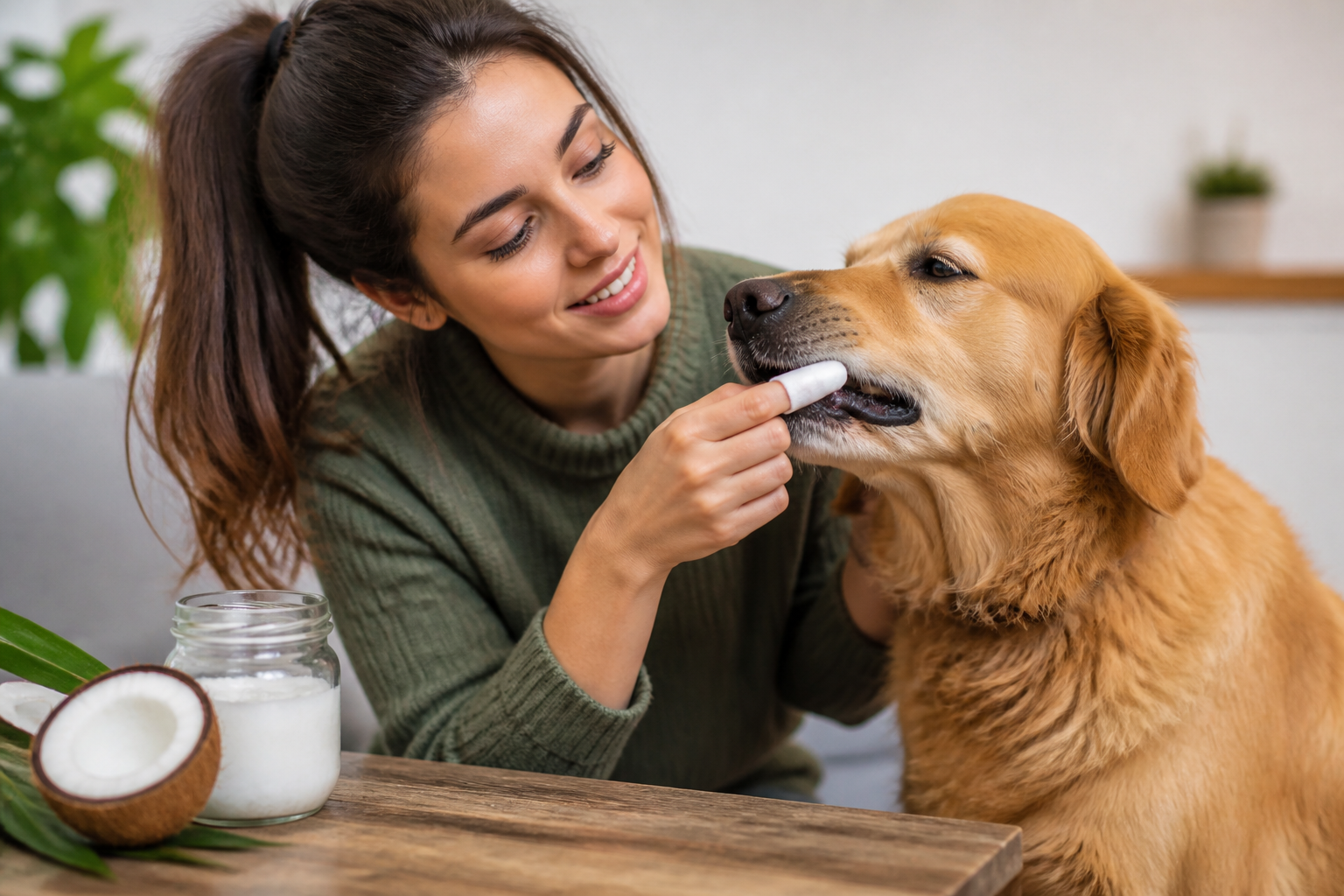
Step 3: Apply the oil / Place a small amount of solid or liquid coconut oil on a finger brush or a soft-bristled dog toothbrush. Rub it gently in a circular motion along the gumline.
Step 4: Focus on the back teeth / The molars in the back of the mouth often collect the most plaque. Try to reach these areas, even if you can only do one side of the mouth per session.
Step 5: Increase duration / Gradually work up from 30 seconds to two minutes of brushing. You do not need to rinse the mouth afterward, as the oil is safe for them to swallow in small amounts.
Bottom line: Start slow and use the oil as a reward to make brushing a stress-free part of your dog's daily life.
How Much Coconut Oil Should You Use?
While coconut oil is healthy, it is also very calorie-dense. It is pure fat, containing about 120 calories per tablespoon. If you use too much, you could inadvertently cause weight gain or digestive issues. The amount you use for brushing should be included in your dog's daily caloric intake.
For small dogs under 20 pounds, use no more than a quarter teaspoon for brushing. Medium dogs can typically handle about half a teaspoon. Large breeds may use up to a full teaspoon. If you are also adding coconut oil to their food, you must reduce the amount used for brushing to ensure they are not getting too much fat.
| Dog Size | Maximum Daily Amount | Brushing Amount |
|---|---|---|
| Small (Under 20 lbs) | 1/2 Teaspoon | 1/4 Teaspoon |
| Medium (20-50 lbs) | 1 Teaspoon | 1/2 Teaspoon |
| Large (Over 50 lbs) | 1 Tablespoon | 1 Teaspoon |
Consistent, small amounts are better than occasional large amounts. If you notice your dog has greasy or loose stools, you are likely using too much. Dial back the amount and see if their digestion improves.
Risks and Potential Side Effects
Coconut oil is generally safe for most dogs, but there are exceptions. Because it is high in saturated fat, it can pose risks for dogs with certain health conditions.
The most serious risk is pancreatitis. This is a painful inflammation of the pancreas often triggered by high-fat meals. If your dog has a history of pancreatitis or belongs to a breed prone to the condition, such as Miniature Schnauzers, talk to your vet before using coconut oil. Even small amounts can sometimes trigger a flare-up in sensitive individuals.
Another consideration is the calorie count. Obesity is a significant health crisis for pets in the US. Extra weight puts stress on the joints, heart, and lungs. If your dog is currently on a weight management plan, you might want to use a different dental solution, such as a water additive or a low-calorie dental gel.
Finally, some dogs may have an allergic reaction or sensitivity to coconut. While rare, it can manifest as itchy skin, hives, or stomach upset. Always start with a very small "test" amount to see how your dog reacts before committing to a daily routine.
When Coconut Oil Isn't Enough
It is important to remember that coconut oil is a preventative tool, not a cure for existing dental disease. If your dog already has thick, brown tartar or bleeding gums, coconut oil will not fix the problem. Hardened tartar, also known as calculus, can only be removed through professional scaling by a veterinarian.
Watch for these red flags that indicate a need for professional care:
- Excessive drooling
- Bleeding or very red gums
- Loose or missing teeth
- Difficulty eating or dropping food
- Pawing at the mouth
- A sudden change in breath odor that smells like rotting meat
If you notice these signs, your dog may be experiencing pain or a deep infection. Dental infections can eventually spread to the heart, liver, and kidneys. In these cases, your vet might recommend a professional cleaning under anesthesia or even prescription medications.
Our pet pharmacy carries a variety of treatments for oral health and other chronic conditions. If your veterinarian prescribes a specific dental diet or oral medication, we can help you get those essential supplies delivered to your door. Prescription diets, like those from Royal Canin or Farmina Vet Life, are often formulated to mechanically scrub teeth or chemically reduce plaque in ways that standard food cannot.
Vet Tip: Professional dental cleanings are a standard part of pet healthcare. Do not rely on home remedies alone if your dog shows signs of pain or advanced decay.
Building a Complete Dental Routine
Coconut oil works best when it is part of a larger strategy. Think of it as one piece of the puzzle. A truly healthy mouth requires a multi-pronged approach that includes diet, mechanical cleaning, and professional oversight.
Dental Chews and Toys
Chewing is a natural behavior for dogs that helps clean their teeth. High-quality dental chews, such as Greenies or items from the Kong collection, are designed to scrape against the tooth surface as the dog bites down. This mechanical action helps knock loose plaque before it hardens. Look for products that carry the Veterinary Oral Health Council (VOHC) seal of approval.
For more ideas, explore dental chews for dogs.
Water Additives and Gels
For dogs that absolutely refuse to have their teeth brushed, water additives can be a helpful backup. These are liquids you add to the water bowl that contain enzymes to break down plaque. While not as effective as physical brushing, they are better than doing nothing at all. You can also find dental wipes, which allow you to wipe the teeth without the bulk of a brush.
The dog dental and breath care collection includes products for brushing, wiping, and supporting your dog’s daily oral routine.
The Role of Diet
What your dog eats every day has a massive impact on their oral health. Highly processed foods with lots of simple carbohydrates can stick to the teeth and feed oral bacteria. Feeding a high-quality, nutrient-dense diet supports the immune system and helps the body fight off gum infections. Some owners find that adding a few raw carrots or apple slices (without seeds) provides a bit of extra mechanical cleaning during snack time.
Key Takeaway: Combine coconut oil brushing with dental toys and a high-quality diet for the best long-term results.
Why Quality Matters at BaxterBoo
Since 2006, we have focused on providing pet owners with products that we would use for our own animals. We know that navigating the world of pet supplements and health trends can be overwhelming. That is why we curate a selection of over 500 brands that meet high standards for safety and effectiveness.
Whether you are looking for a soft-bristled brush to use with your coconut oil or you need a specialized dental toy, we are here to help. Our team in Vernon Hills, Illinois, understands that every dog is different. Some need extra gentle care for sensitive gums, while others need heavy-duty chew toys to keep their teeth sparkling. We strive to offer value without compromising on the quality your pet deserves.
Conclusion
Cleaning your dog's teeth with coconut oil is a practical, natural way to support their oral health. The lauric acid in the oil provides a powerful antimicrobial boost that can freshen breath and slow down plaque buildup. It is an affordable and tasty alternative to many commercial products, making it easier to stick to a daily routine.
To get started with a better dental routine, keep these points in mind:
- Use only organic, virgin, cold-pressed coconut oil.
- Start with very small amounts to avoid digestive upset or weight gain.
- Introduce mouth handling slowly and keep sessions positive.
- Consult your vet if you see signs of pain, bleeding, or heavy tartar.
A healthy mouth leads to a happier, longer life for your dog. If you are ready to upgrade your pet's dental care, explore our collection of dental health supplies. You can also join the MVP Rewards programme to earn points on every purchase, helping you save while you keep your pet healthy.
FAQ
Can I just let my dog lick coconut oil instead of brushing?
While licking coconut oil provides some antimicrobial benefits, it is not nearly as effective as brushing. The physical action of rubbing the oil against the teeth and gumline is what helps disrupt the biofilm and plaque. Licking the oil primarily benefits the digestive system and provides healthy fats, but it won't do much for the back molars where tartar usually builds up.
Is coconut oil safe for puppies' teeth?
Yes, coconut oil is generally safe for puppies, provided you use very small amounts. Puppies are still developing their digestive systems and can be more prone to diarrhea if they get too much fat at once. Start with a tiny smear on your finger to get them used to the sensation of mouth handling, which will make dental care much easier when they are adults.
How often should I use coconut oil on my dog's teeth?
For the best results, aim for two to three times per week. If your dog enjoys the process and does not have weight issues, you can work up to daily application. Consistency is the most important factor in preventing plaque from hardening into tartar. Even a quick thirty-second rub is better than skipping the routine entirely.
Will coconut oil get rid of my dog's brown tartar?
No, coconut oil cannot remove hardened brown tartar, also known as calculus. Once plaque has mineralized into tartar, it is bonded to the tooth and requires professional veterinary tools to remove safely. Coconut oil is a preventative measure designed to stop plaque from turning into tartar in the first place. If you see significant brown buildup, schedule a professional cleaning with your veterinarian.






