
 Save 15% on your 1st Autoship learn more

 Email us
 Live Chat
 FAQs
FAQs





Introduction
You are standing in the bathroom and notice your dog's breath smells quite strong. You reach for your own tube of toothpaste and wonder if a quick scrub with your peppermint paste would solve the problem. It seems like a simple fix for a common issue. However, you should put the tube back in the drawer immediately. Cleaning a dog's teeth with human toothpaste is not just ineffective. It is actually dangerous for their health. At BaxterBoo, we see many pet owners asking about DIY dental care. We want to ensure you have the right facts to keep your pup safe and healthy. This post covers the specific toxins found in human toothpaste and how to establish a safe cleaning routine. You will also learn about the professional dental options available through our pharmacy partnership.
The Toxic Ingredients in Human Toothpaste
Human toothpaste is designed for a species that knows how to spit. Dogs do not have this ability. They will swallow every bit of paste you put in their mouths. This is the primary reason why our personal hygiene products are so hazardous for them. Most human formulas contain ingredients that are perfectly safe for us but toxic to canines.
The Danger of Xylitol
Many brands of human toothpaste use a sweetener called xylitol. It is often found in sugar-free products and is safe for humans. For dogs, xylitol is life-threatening. When a dog eats xylitol, it causes a rapid and massive release of insulin from the pancreas. This leads to a profound drop in blood sugar levels.
This condition is called hypoglycemia and can happen within 30 minutes of ingestion. If left untreated, it can lead to liver failure, seizures, or even death. Even a small amount of toothpaste containing this sweetener is enough to cause an emergency.
Fluoride and Digestive Issues
Fluoride is a staple in human dental care because it strengthens our enamel. However, it is meant to be applied to the teeth and then rinsed away. When a dog swallows fluoride, it can cause severe gastrointestinal distress. You might notice your dog vomiting or having diarrhea shortly after a brushing session with human paste.
In high doses, fluoride can also lead to more serious toxicity. It can interfere with the way a dog's body processes calcium and potassium. Over time, consistent ingestion of fluoride can lead to chronic health issues.
Sodium and Foaming Agents
Human toothpaste often contains sodium lauryl sulfate. This is the ingredient that creates the bubbles and foam we expect when we brush. Dogs do not handle foaming agents well. If they swallow this substance, it usually results in an upset stomach.
Furthermore, many toothpastes have high sodium levels. While we can process this easily, it can make a pet ill if they consume it regularly. Dogs require a much more neutral and mild formula that does not create foam or introduce excess salt into their system.
Quick Answer: No, you cannot use human toothpaste on a dog. It contains ingredients like xylitol and fluoride that are toxic to dogs when swallowed.
Can You Use Baking Soda Instead?
Some owners turn to baking soda as a natural alternative to store-bought paste. While it is not as toxic as xylitol, it is still not a great choice for your dog. Baking soda has a very high alkaline content. If your dog swallows a significant amount, it can upset the acid balance in their digestive tract.
Baking soda also has a very bitter taste. Most dogs find the flavor unpleasant. If you use it to brush their teeth, they may begin to associate dental care with a bad experience. This makes it much harder to maintain a routine as they get older. It is always better to use a flavored pet toothpaste that they actually enjoy.
Identifying Dental Problems in Your Dog
Poor dental hygiene is more than just a matter of bad breath. It can lead to serious infections that affect the heart, liver, and kidneys. Bacteria from the mouth can enter the bloodstream and cause systemic damage. It is estimated that a large majority of dogs show signs of dental disease by age three.
For more guidance, read our article on warning signs of bad teeth in dogs.
Keep an eye out for these red flags:
- Red or swollen gums that bleed easily
- Thick brown or yellow tartar buildup near the gumline
- Excessive drooling or dropping food while eating
- Pawing at the mouth or face
- Loose or missing teeth
- A foul odor that does not go away
Vet Tip: If you notice your dog has bleeding gums or is reluctant to eat, schedule a veterinary exam. These can be signs of advanced periodontal disease that require professional treatment rather than just home brushing.
How to Safely Clean Your Dog's Teeth
Since human products are off the table, you need to use supplies specifically formulated for pets. Dog toothpaste is enzymatic. This means it uses proteins to break down plaque chemically rather than just relying on physical scrubbing. These pastes also come in flavors like poultry, beef, or peanut butter to make the process easier.
You can find brushes, toothpaste, and other supplies in our dog dental care category.
Step-by-Step Brushing Guide
Teaching a dog to accept brushing takes patience. Do not expect to clean the whole mouth on the first day.
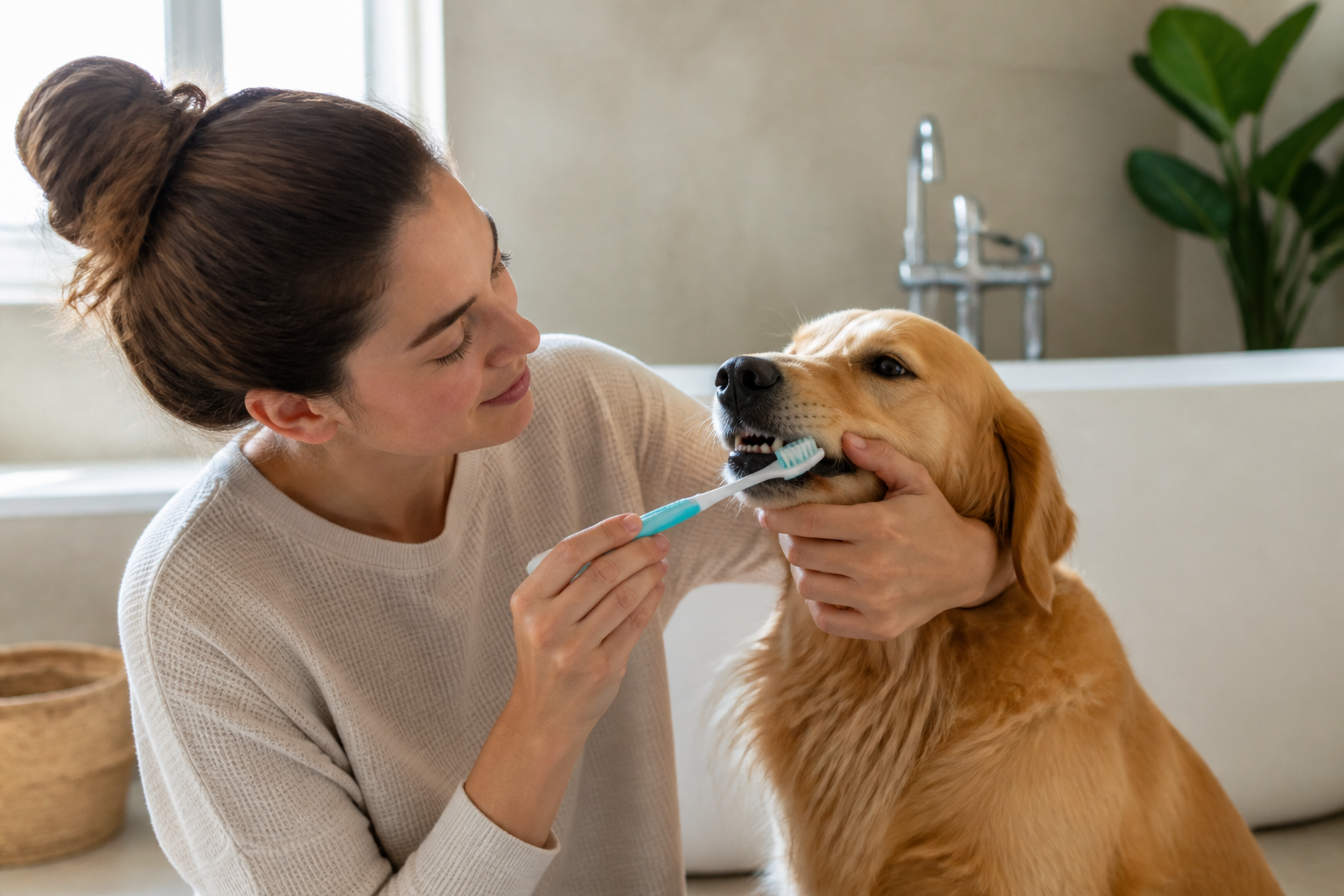
Step 1: Introduce the flavor. / Let your dog lick a small amount of pet toothpaste off your finger. This builds a positive association with the taste.
Step 2: Get them used to touch. / Gently rub your finger along their gums and teeth. Do this for a few days until they are comfortable with you touching their mouth.
Step 3: Introduce the brush. / Use a finger brush or a soft-bristled dog toothbrush. Let them sniff it and lick more paste off the bristles.
Step 4: Use circular motions. / Lift the lip and brush in small circles. Focus on the outside of the teeth where the most tartar builds up.
Step 5: Reward the behavior. / Give them a small treat or plenty of praise immediately after you finish. This ensures they look forward to the next session.
Key Takeaway: Consistency is more important than duration. Brushing for 30 seconds every day is much more effective than a long session once a month.
For additional brushing guidance, see our pet dental care tips.
Choosing the Right Dental Tools
The variety of brushes available can be overwhelming. At BaxterBoo, we carry several styles to fit different needs. A standard long-handled brush is great for reaching the back molars in large breeds. For smaller dogs or puppies, a finger brush often provides more control.
Finger brushes are made of soft silicone and fit over your index finger. They allow you to feel exactly where you are brushing. This can be less intimidating for a nervous dog. If your dog is particularly small, a soft-bristled brush designed for human infants can also work well. Just ensure the bristles are very soft to avoid irritating their gums.
Professional Dental Care and the BaxterBoo Pharmacy
Sometimes home brushing is not enough to keep the mouth healthy. If your dog has significant tartar buildup, they will likely need a professional cleaning from a veterinarian. This procedure usually involves scaling the teeth while the dog is under anesthesia to ensure a thorough job.
In cases of infection or advanced gum disease, your vet may prescribe specific medications. Our pharmacy offers FDA-approved medications and prescription pet foods through our partnership with Pet's Choice. This includes medicated oral rinses and antibiotics that help clear up infections.
If your vet recommends a prescription dental diet, we can help fulfill those orders too. These specialized kibbles are designed to scrub the teeth as the dog chews. They are often a key part of managing chronic dental issues in senior pets. Having access to a reliable pharmacy ensures your dog gets exactly what the vet ordered without a stressful trip back to the clinic.
Alternatives to Brushing
Some dogs simply will not tolerate a toothbrush. If you are struggling with a resistant pet, there are other ways to slow down plaque buildup. These should be used in addition to brushing whenever possible.
- Dental Chews: These are designed to be abrasive and help scrape away plaque. Look for products that have the VOHC (Veterinary Oral Health Council) seal.
- Dental Toys: Rubber toys with ridges or nubs can help clean the teeth while the dog plays.
- Water Additives: These are tasteless liquids you add to your dog's water bowl. They contain enzymes that help kill bacteria in the mouth.
- Wipes: Dental wipes are pre-moistened pads you can use to swipe away film from the teeth. They are often easier for sensitive dogs to handle than a brush.
Explore our dental treats for dogs for chew-based options, or browse our dog dental supplements for water additives and other products.
Bottom line: While brushing is the gold standard, using a combination of chews, toys, and additives provides a solid defense against dental disease.
For more ideas, read our guide to dental chews for dogs.
Summary of Dog Dental Care
Keeping your dog's mouth clean is a vital part of being a responsible pet owner. You should never use human toothpaste because of the risks posed by xylitol and fluoride. Instead, stick to enzymatic pet pastes and tools designed for canine mouths. Start slow and make the experience rewarding for your dog.
Regular checkups with your vet are essential for catching problems early. If your dog needs more than just a brush, remember that we can help with prescription needs. Our pharmacy carries the medications and specialty diets your vet might recommend for ongoing oral health management. By staying consistent with home care and professional advice, you can ensure your dog enjoys a healthy mouth and fresh breath for years to come.
Take the first step toward better oral health by exploring our dog healthcare supplies or talking to your vet about a prescription dental plan.
FAQ
Is there any human toothpaste that is safe for dogs?
No, it is best to assume all human toothpaste is unsafe for dogs. Even if a brand does not contain xylitol, the fluoride and foaming agents can cause significant stomach upset or toxicity. Pet-specific toothpastes are widely available and much safer for your dog to swallow.
What should I do if my dog ate human toothpaste?
Check the ingredient list on the tube immediately for xylitol. If the toothpaste contains xylitol, contact your veterinarian or an emergency pet poison hotline right away. If it does not contain xylitol but your dog is vomiting or acting lethargic, you should still seek professional medical advice.
How often should I brush my dog's teeth?
Ideally, you should brush your dog's teeth every day to prevent the buildup of plaque and tartar. Plaque can harden into tartar within 24 to 48 hours. If daily brushing is not possible, aim for at least three times a week to provide meaningful health benefits.
Can I use a human toothbrush on my dog?
Yes, you can use a human toothbrush as long as the bristles are soft. For small dogs, a child-sized toothbrush is often the perfect fit. However, many owners find that specialized dog brushes with angled handles or finger brushes are easier to use and more comfortable for the dog.






