
 Save 15% on your 1st Autoship learn more

 Email us
 Live Chat
 FAQs
FAQs





Introduction
You lean in for a happy greeting from your dog and realize their breath is anything but fresh. It is a common moment for many of us at BaxterBoo. While "dog breath" is often a joke among pet owners, it usually points to a real need for better oral hygiene. You might wonder if a professional cleaning is the only solution or if you can manage this at home. The answer is that home care is both possible and necessary for your pet's long-term health. We want to help you understand the tools and techniques that make at-home dental care effective. This post covers the best methods for cleaning your dog's teeth and how to spot signs of trouble. Consistent home care can prevent pain and keep your dog's smile bright for years.
Quick Answer: You can absolutely clean your dog's teeth at home using dog-specific toothbrushes, enzyme toothpaste, and dental chews. While home care cannot remove hardened tartar, daily brushing is the best way to prevent plaque from turning into dental disease.
Understanding the Difference Between Plaque and Tartar
Before you start cleaning, it is helpful to know what you are fighting. Dog dental health involves managing two main substances: plaque and tartar. Plaque is a soft, sticky film that forms on the teeth within hours of eating. It contains bacteria that can lead to gum irritation. Because it is soft, you can easily remove plaque with a toothbrush or even a dental wipe.
If plaque stays on the teeth for more than a few days, it reacts with the minerals in your dog’s saliva. This process causes the plaque to harden into tartar, also known as calculus. Tartar is a rock-hard, brown or yellow substance that sticks firmly to the tooth surface. Once tartar forms, a simple toothbrush will not remove it. Only a professional cleaning with specialized veterinary tools can safely scrape tartar away.
Maintaining a clean mouth at home is about staying ahead of that hardening process. By removing plaque daily, you prevent the buildup that leads to more serious issues. For additional guidance, read our article on how to recognize warning signs of bad teeth in dogs. If you notice hard, brown deposits on your dog's teeth, it is time to consult a professional.
Step-By-Step: Brushing Your Dog’s Teeth at Home
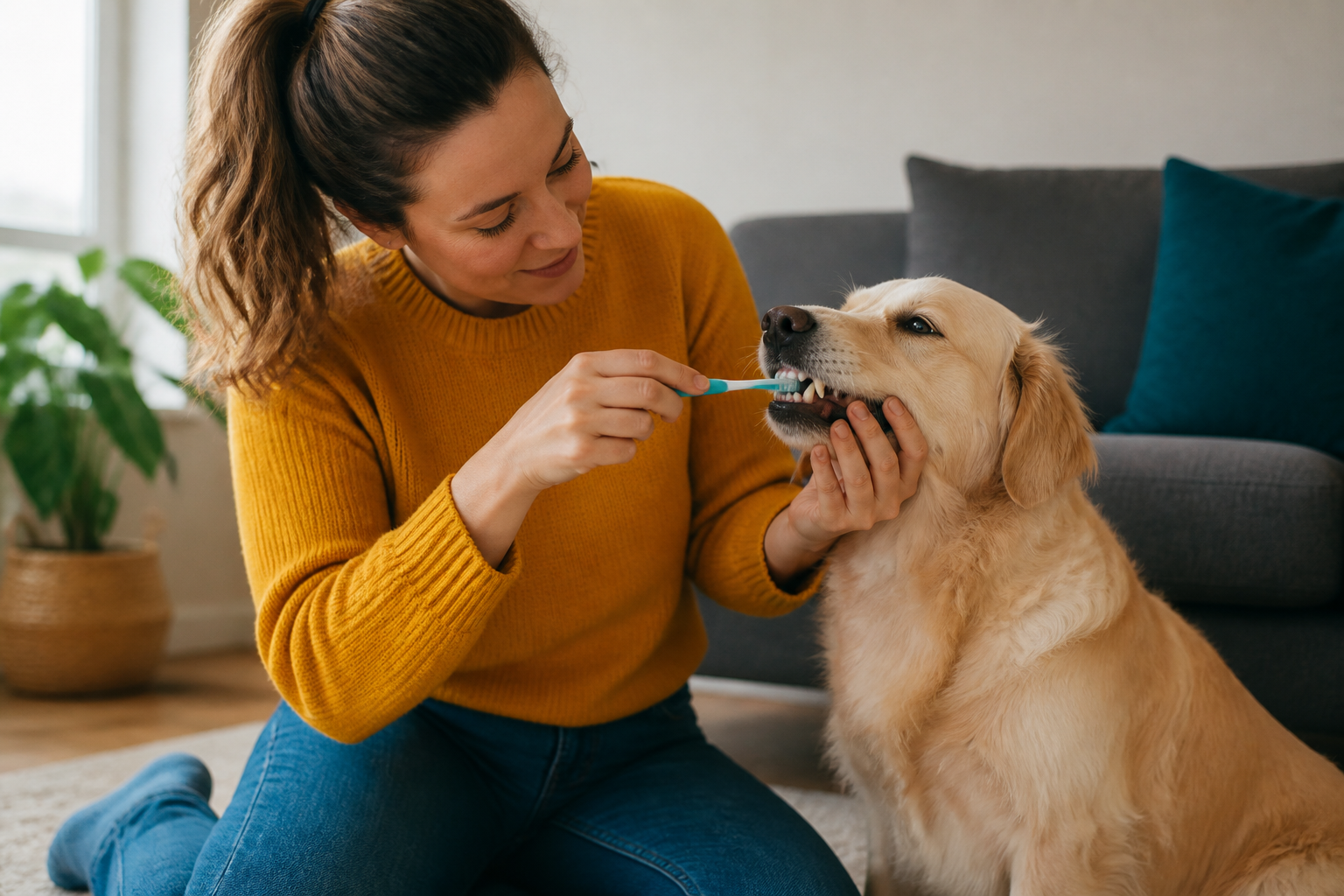
Brushing is the gold standard for dog dental care. It is the most effective way to remove plaque before it hardens. However, most dogs do not instinctively love having a brush in their mouth. You must introduce the process slowly to ensure your dog remains calm and cooperative.
Step 1: Choose the right supplies.
Gather a dog-specific toothbrush and toothpaste. Never use human toothpaste. It contains ingredients like xylitol or fluoride that are toxic to dogs. Dog toothpaste comes in flavors like poultry or beef to make the experience more pleasant.
Step 2: Introduce the taste.
Let your dog lick a small amount of toothpaste off your finger. Do this for a few days without trying to brush. This creates a positive association with the flavor.
Step 3: Get them used to mouth handling.
Gently lift your dog's lips and rub your finger along their gums. If they are comfortable with this, you can move on to the actual brush.
Step 4: Start brushing in circular motions.
Apply a small amount of paste to the brush. Focus on the outside surfaces of the teeth where the lips and cheeks touch. This is where most plaque builds up. Use gentle circular motions. You do not need to worry about the inside surfaces yet, as a dog's tongue helps keep those areas cleaner.
Step 5: Reward and repeat.
Keep the first few sessions very short. Even thirty seconds is a great start. Always follow up with praise or a small treat. Aim to brush their teeth at least three times a week, though every day is the ideal goal.
Key Takeaway: Consistency is more important than perfection when brushing. Even a quick daily brush of the top outer teeth provides more benefit than a deep cleaning once a month.
Choosing the Best Toothbrush for Your Dog
Not every dog needs the same kind of brush. The size of your dog's mouth and their comfort level will determine which tool works best. We carry a wide variety of options to suit different needs, including our selection of Vets Preferred oral-care products.
- Finger Brushes: These are small silicone brushes that fit over your fingertip. They are excellent for puppies or small dogs. They give you a better sense of how much pressure you are applying.
- Double-Headed Brushes: These brushes have two sets of bristles that clean both sides of the tooth at once. They can significantly speed up the process for dogs that will not sit still for long.
- Long-Handled Brushes: These look like human toothbrushes but have an angled neck. They are perfect for reaching the large molars in the back of a big dog's mouth.
- Dental Wipes: If your dog absolutely refuses a brush, dental wipes are a useful alternative. You simply wrap the wipe around your finger and rub the teeth to remove soft plaque.
| Tool Type | Best For | Main Benefit |
|---|---|---|
| Finger Brush | Puppies and small breeds | Better control and tactile feel |
| Long-Handled Brush | Large breeds | Reaches back molars easily |
| Double-Headed Brush | Impatient dogs | Cleans multiple surfaces at once |
| Dental Wipes | Sensitive or stubborn dogs | No "scary" tool involved |
Vet Tip: If your dog has a very small mouth, such as a Toy Poodle or a Pug, dental crowding is common. These breeds often need more frequent brushing because food particles get trapped easily between their teeth.
Alternatives to Brushing
Sometimes brushing is not possible. Your dog might have a sensitive mouth, or they may be too anxious for the process. While brushing is the most effective method, several alternatives can help keep their mouth healthy. You can also review our top pet dental care tips for additional routine-building ideas.
Dental chews are a popular choice. These are designed with specific textures that scrape against the teeth as the dog chews. This mechanical action helps rub away plaque. Look for chews that carry the Veterinary Oral Health Council (VOHC) seal. This seal means the product has been tested and proven to reduce plaque or tartar.
Rubber chew toys can also provide a cleaning effect. Some toys are designed with nubs or ridges that massage the gums and clean the teeth during playtime. Smearing a little dog-safe toothpaste into the grooves of a rubber toy can turn a game of fetch into a cleaning session.
Water additives are another simple option. These are liquid solutions you add to your dog's water bowl. They contain enzymes that help break down the bacteria that cause plaque and bad breath. While they do not provide the mechanical scrubbing of a brush, they are an easy way to support oral health with zero effort from your pet.
The Role of Diet in Dental Health
What your dog eats also impacts their teeth. There is a common belief that all dry kibble cleans teeth, but this is not always true. Most standard kibble is small and brittle. It shatters the moment a dog's tooth hits it, providing very little cleaning action.
However, specific therapeutic dental diets are different. These kibbles are larger and have a fibrous texture that does not shatter immediately. Instead, the tooth sinks into the kibble, allowing the fibers to scrub the tooth surface. These diets are often used for dogs with a high tendency toward tartar buildup.
If your veterinarian recommends a specific therapeutic dental diet to help manage tartar buildup, our pharmacy can help. Through our partnership with Pet's Choice, we provide FDA-approved prescription foods and medications for chronic oral health needs. These specialized diets are formulated to provide complete nutrition while actively fighting dental disease.
Bottom line: While standard kibble offers minimal dental benefits, specialized dental diets use a unique texture to scrub teeth during every meal.
Signs Your Dog Needs Professional Dental Care
Home cleaning is a preventive measure, not a cure for existing disease. It is important to recognize when your dog has moved past the point of home care. If you notice these signs, a trip to the veterinarian is necessary.
Bad breath is often the first indicator. While a slight "doggy" smell is normal, a foul or rotting odor usually signifies an infection. Red or bleeding gums are another red flag. Healthy gums should be a pale pink. If you see a dark red line along the teeth, this is gingivitis.
You should also watch for changes in behavior. If your dog starts dropping food, chewing on only one side of their mouth, or avoiding hard treats, they might be in pain. Some dogs may even become aggressive or shy away when you try to touch their face.
- Heavy brown or yellow tartar buildup
- Loose or broken teeth
- Excessive drooling, sometimes with blood
- Swelling under the eyes (this can indicate a tooth root abscess)
Vet Tip: Never try to scrape tartar off your dog's teeth with metal tools at home. You can easily scratch the enamel or cause a painful injury to the gums. Professional cleanings are performed under anesthesia to ensure a thorough and safe cleaning below the gumline.
Why Professional Cleanings are Necessary
Even with the best home care, most dogs will eventually need a professional dental cleaning. A veterinarian can do things you cannot do at home. The most important part of a professional cleaning is the work done "subgingivally," or below the gumline. This is where the most dangerous bacteria live.
During a professional cleaning, your vet will use an ultrasonic scaler to remove tartar from all surfaces. They will also take dental X-rays. Since the majority of a tooth is hidden beneath the gum, X-rays are the only way to find hidden infections, bone loss, or root damage.
Anesthesia is a vital part of this process. It keeps the dog still and pain-free while the vet works with sharp instruments. It also allows the vet to place a tube that protects your dog's lungs from the bacteria being scaled off the teeth. Modern anesthesia is very safe, and your vet will perform blood work beforehand to ensure your dog is a good candidate.
The Cost of Neglecting Dental Health
Ignoring your dog's teeth can lead to more than just bad breath. Chronic dental disease is a constant source of inflammation. Bacteria from the mouth can enter the bloodstream through the sensitive gum tissue. Once in the blood, these bacteria can travel to and damage major organs, including the heart, liver, and kidneys.
Managing dental disease early is much more affordable than treating the complications that come later. A professional cleaning is an investment in your dog's overall longevity. By combining regular vet visits with the at-home steps we have discussed, you are protecting your dog's whole-body health.
We offer a range of products to help make this routine easier and more affordable. Our MVP Rewards program allows you to earn points on every purchase of dental supplies, from toothbrushes to specialized treats. This makes it easier to stay consistent with your dog's oral care routine.
Creating a Dental Care Routine That Sticks
The best way to succeed with at-home cleaning is to make it a habit. Tie the dental care to an existing part of your day. For example, you might brush your dog's teeth right after you brush your own at night. Or, you could give them a dental chew every morning after their walk.
If you are just starting out, do not feel pressured to do everything at once. Pick one method and stick with it for a few weeks. Once your dog is comfortable with a dental chew, you can try introducing a finger brush. Every little bit of effort helps reduce the bacterial load in their mouth.
Keep your supplies in a visible and convenient place. If the toothbrush is tucked away in a drawer, you are less likely to use it. Keeping a jar of dental wipes on the coffee table makes it easy to do a quick cleaning while you are relaxing with your dog in the evening.
Key Takeaway: Success in dental care comes from small, daily actions. Combining brushing with dental chews and the right diet provides the most comprehensive protection against disease.
Conclusion
Cleaning your dog's teeth at home is a vital part of responsible pet ownership. While it takes some patience and the right tools, the benefits are clear. You can reduce the risk of painful infections and help your pet live a longer, healthier life. Start by choosing a dog-safe toothpaste and introducing it slowly. Use alternatives like dental chews and water additives to supplement your routine. Most importantly, keep an eye out for signs of pain or infection and consult your vet regularly.
- Brush at least three times a week with dog-specific paste.
- Use VOHC-approved dental chews for mechanical cleaning.
- Monitor for red gums or foul odors.
- Schedule annual veterinary dental exams.
Our pharmacy is here to support you if your dog needs prescription care or a therapeutic diet. Through our partnership with Pet's Choice, we make it simple to get the medications and foods your veterinarian recommends. Visit our dog dental care category today to find the perfect tools to keep your dog's smile healthy and bright.
FAQ
Can I use human toothpaste to clean my dog's teeth?
No, you should never use human toothpaste for your dog. Human toothpaste often contains xylitol, an artificial sweetener that is extremely toxic to dogs and can cause life-threatening low blood sugar or liver failure. It also contains foaming agents and fluoride that are not meant to be swallowed. Dog-specific toothpaste is safe to swallow and comes in flavors they enjoy.
How often do I really need to brush my dog's teeth?
Ideally, you should brush your dog's teeth every day to remove plaque before it hardens into tartar. However, if your schedule is busy, aiming for three times a week can still make a significant difference in their oral health. Consistency is key, as plaque begins to mineralize into tartar within 24 to 48 hours.
Are dental chews as effective as brushing?
While dental chews are a helpful tool, they are not as effective as manual brushing. Brushing allows you to target the gumline and specific teeth where buildup is heaviest. Dental chews provide mechanical scraping as the dog bites down, but they may miss certain areas of the mouth. Use them as a supplement to brushing rather than a total replacement.
My dog’s gums bleed a little when I brush. Should I stop?
A small amount of bleeding can occur if your dog has mild gingivitis or if you are just starting a brushing routine. However, it is a sign that the gums are inflamed. You should continue to be very gentle and consult your veterinarian. If the bleeding is heavy or the gums look very red and swollen, stop brushing and seek a professional dental exam to check for advanced periodontal disease.






