
 Save 15% on your 1st Autoship learn more

 Email us
 Live Chat
 FAQs
FAQs





Introduction
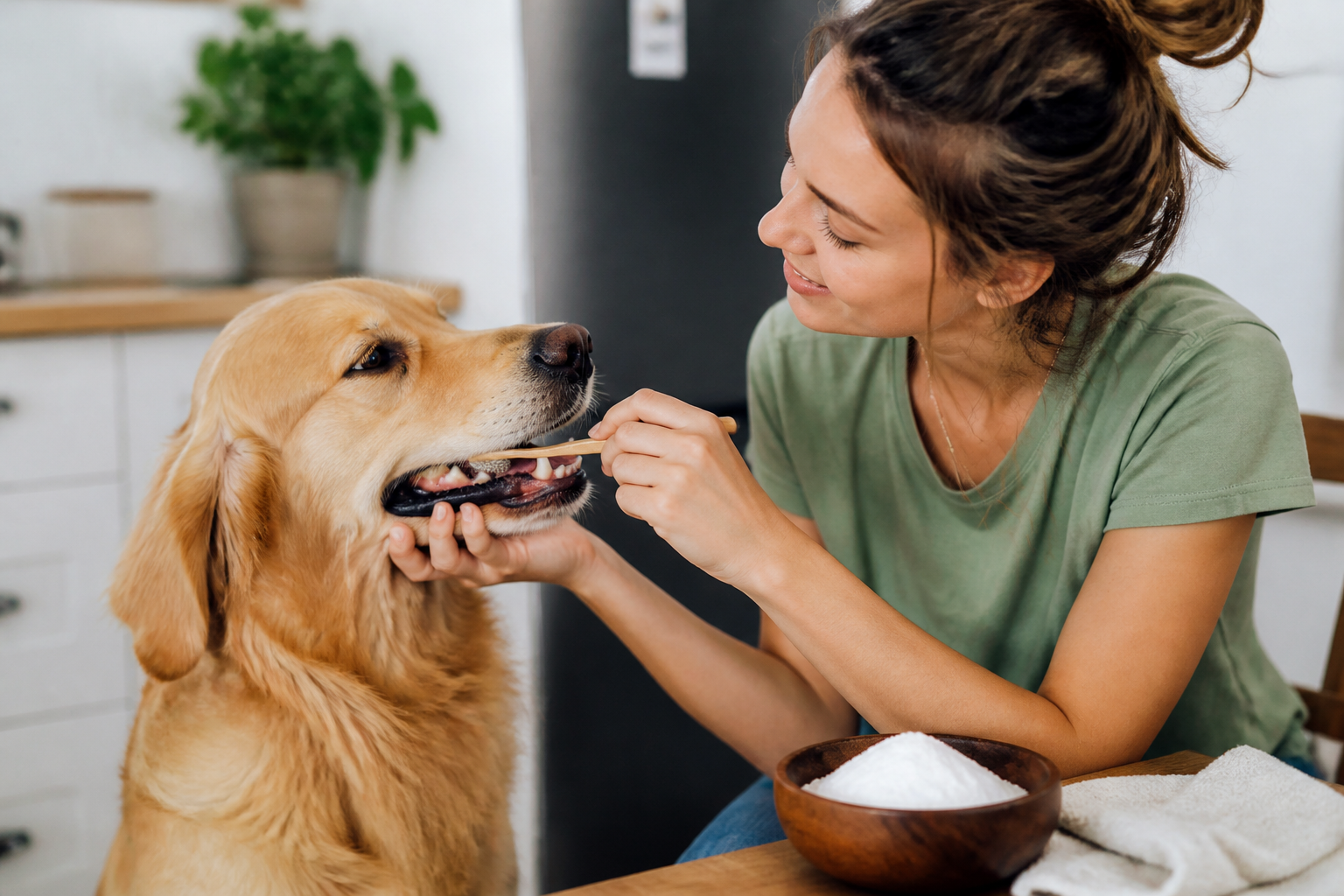
You might be standing in your kitchen looking at a box of baking soda and wondering if it can solve your dog's bad breath. It is a common household staple for cleaning and even human dental care. However, the needs of your dog are very different from your own. While it seems like a quick and cheap fix for yellowing teeth, using it requires caution. At BaxterBoo, we know that maintaining your pet's oral health is one of the most important parts of their overall wellness routine. This article will explain the risks of using baking soda for canine dental care and provide safer, more effective alternatives. We will help you understand how to keep those pearly whites sparkling without risking a tummy ache.
Quick Answer: While baking soda is not strictly toxic, it is not recommended for cleaning a dog's teeth. Its high alkalinity can cause significant stomach upset and electrolyte imbalances if swallowed. It also has a bitter taste that can make your dog resist future brushing attempts.
Why Baking Soda Is Risky for Dogs
Baking soda is scientifically known as sodium bicarbonate. It is an alkaline substance, which means it has a high pH level. Humans use it to scrub away stains because it is mildly abrasive. For dogs, the main problem is that they cannot spit. When you brush a dog's teeth, they inevitably swallow a large portion of whatever paste you use.
If a dog swallows a significant amount of baking soda, it can disrupt the natural acid balance in their stomach. This often leads to digestive distress, gas, and even vomiting. In more serious cases, especially for small dogs, ingesting too much sodium bicarbonate can lead to an electrolyte imbalance. This is a condition where the minerals in the blood become poorly regulated.
The Problem of Palatability
Beyond the physical health risks, there is a behavioral concern. Baking soda tastes salty and bitter to a dog. Most dogs already find the sensation of a toothbrush strange or intrusive. If the experience also involves a bad taste, your dog will likely become "brush shy." This makes it much harder to establish a consistent long term routine.
Abrasiveness and Enamel
While baking soda is great at removing surface stains, it is still an abrasive. If used too frequently or with too much pressure, it can eventually wear down a dog's tooth enamel. Once enamel is gone, it does not grow back. This leaves the sensitive inner parts of the tooth exposed to bacteria and decay.
Safer Alternatives for Healthy Gums
The best way to clean your dog's teeth is with a toothpaste formulated specifically for pets. These products are designed to be swallowed safely. They also come in flavors that dogs actually enjoy, such as poultry, beef, or peanut butter. You can explore our dog dental care category for toothpaste, brushes, and other oral care supplies.
Most high quality pet toothpastes are enzymatic. This means they contain enzymes that help break down plaque and bacteria even if you do not get a perfect scrub on every tooth. We carry several trusted brands that offer enzymatic formulas to make your job easier.
Vet Tip: If you notice your dog has very red gums, persistent bad breath, or seems to be dropping food while eating, consult your veterinarian. These are often signs of periodontal disease that require professional treatment rather than just home brushing. Our pet pharmacy, through our partnership with Pet's Choice, provides FDA-approved medications and prescription diets for dogs managing chronic oral health issues.
Choosing the Right Tools
A human toothbrush is often too hard and too large for a dog's mouth. Instead, look for tools designed for canine anatomy. A Virbac C.E.T. Dual-Ended Pet Toothbrush has large and small ends for reaching different areas of the mouth.
- Finger Brushes: These are made of soft silicone and fit over your fingertip. They give you excellent control and are less intimidating for puppies.
- Double-Ended Brushes: These have a large head for canines and a small head for the tiny teeth at the front of the mouth.
- Angled Brushes: These help you reach the back molars where the most tartar typically accumulates.
How to Start a Dental Routine
If you have never brushed your dog's teeth before, do not expect to finish the whole mouth on the first day. It is a process that requires patience and positive reinforcement. For more guidance, read our pet dental care tips.
Step 1: Let them taste the paste. / Put a small amount of dog-safe toothpaste on your finger and let your dog lick it off. This builds a positive association with the flavor.
Step 2: Practice touching the mouth. / Gently lift your dog's lips to expose the teeth and gums. Reward them with praise or a small treat for staying still.
Step 3: Introduce the brush. / Put a little paste on the brush and let them sniff it. Gently rub just one or two front teeth in a circular motion.
Step 4: Gradually increase the time. / Slowly work your way toward the back molars over several sessions. Aim for about 30 seconds of brushing on each side.
Key Takeaway: Consistency is more important than perfection. Brushing three to four times a week can significantly reduce the risk of plaque hardening into tartar, which usually happens within 48 to 72 hours.
Beyond the Brush: Other Dental Supports
Brushing is the gold standard, but it is not the only way to support oral health. If your dog is particularly stubborn about brushing, you can use a combination of other tools to keep their mouth clean. Our dental supplements offer additional options for building an at-home routine.
Dental Chews and Toys
High quality dental chews, like those from Greenies, are designed with a texture that scrapes the teeth as the dog bites down. Many of these products are approved by the Veterinary Oral Health Council (VOHC). There are also rubber toys with ridges and nubs that can massage the gums and help dislodge food particles. You can browse our selection of Greenies products for dental chews and other treats.
Water Additives
Water additives are a "hands-off" way to reduce bacteria. You simply add a capful to your dog's water bowl. These solutions often contain enzymes or antimicrobial agents that help prevent plaque from sticking to the teeth. They are especially helpful for dogs that do not tolerate any mouth handling. The OxyFresh Pet Dental Water Additive is one brushless option designed for daily water bowls.
Diet and Nutrition
What your dog eats matters. Some prescription dental diets are formulated with larger, air-filled kibble that does not shatter immediately. This forces the dog to chew more, which provides a mechanical cleaning effect. Our pharmacy carries prescription diets from brands like Royal Canin and Farmina Vet Life for dogs with specific health needs.
- Avoid giving your dog sugary treats that feed bacteria.
- Offer crunchy vegetables like carrots or apple slices (without seeds) for a natural scrub.
- Consider a probiotic supplement to support a healthy balance of bacteria in the mouth.
Bottom line: A multi-pronged approach involving brushing, dental chews, and regular vet checkups is the most effective way to prevent painful dental disease.
The Role of Professional Cleanings
Even with the best at-home care, most dogs will eventually need a professional cleaning. Just like humans go to the dentist for a deep clean, dogs need a veterinarian to remove tartar that has hardened under the gum line.
During a professional cleaning, the vet can take X-rays to look for problems you cannot see. This includes root abscesses, jawbone loss, or fractured teeth. If your vet prescribes antibiotics or pain relief following a dental procedure, the BaxterBoo pharmacy is here to help you fill those prescriptions conveniently. Our pharmacy for dogs offers prescription medications with a veterinarian's prescription.
For additional information about warning signs, read our guide to signs of bad teeth in dogs.
Signs Your Dog Needs Professional Help
- Bleeding gums when they chew or play.
- Loose or broken teeth.
- Excessive drooling.
- Pawing at the mouth or face.
- Yellow or brown crust on the teeth near the gum line.
Conclusion
While baking soda is a versatile tool for your home, it is not the best choice for your dog's teeth. The risks of stomach upset and the bitter taste outweigh the benefits of its abrasive cleaning power. By choosing dog-specific toothpastes and starting a slow, positive routine, you can protect your dog from the pain and health risks of dental disease. We are committed to helping you find the right supplies for every stage of your pet's life.
To help you stay consistent, consider our Autoship programme. You can save on your favorite dental chews and toothpaste while ensuring you never run out.
Key Takeaway: Professional-grade pet toothpaste is safer, tastier, and more effective than baking soda for daily dental care.
FAQ
Is a tiny bit of baking soda okay for my dog?
Using a very small amount once or twice is unlikely to cause a medical emergency, but it is still not ideal. The primary issue is that baking soda does not provide the enzymatic benefits of pet toothpaste. It also tastes bad to your dog, which may cause them to fight you during future grooming sessions.
Can I mix baking soda with coconut oil for my dog's teeth?
Some owners mix baking soda with coconut oil to create a DIY paste. While coconut oil has some antimicrobial properties, the mixture still carries the risk of upsetting the stomach if the dog swallows too much. It is much safer to use a product specifically balanced for a dog's unique internal pH.
How often should I brush my dog's teeth?
Ideally, you should brush your dog's teeth every single day. Plaque can begin to harden into tartar in as little as 36 hours. If daily brushing is not possible, aim for at least three times a week to keep the buildup manageable between professional cleanings.
Does dry food really clean a dog's teeth?
While dry kibble is better than soft canned food for dental health, most regular kibble is too small to provide much cleaning. Most dogs swallow kibble whole or it shatters too quickly to scrape the teeth. Dedicated dental diets use larger, specially textured kibble designed specifically to scrub the tooth surface.






