
 Save 15% on your 1st Autoship learn more

 Email us
 Live Chat
 FAQs
FAQs





Introduction
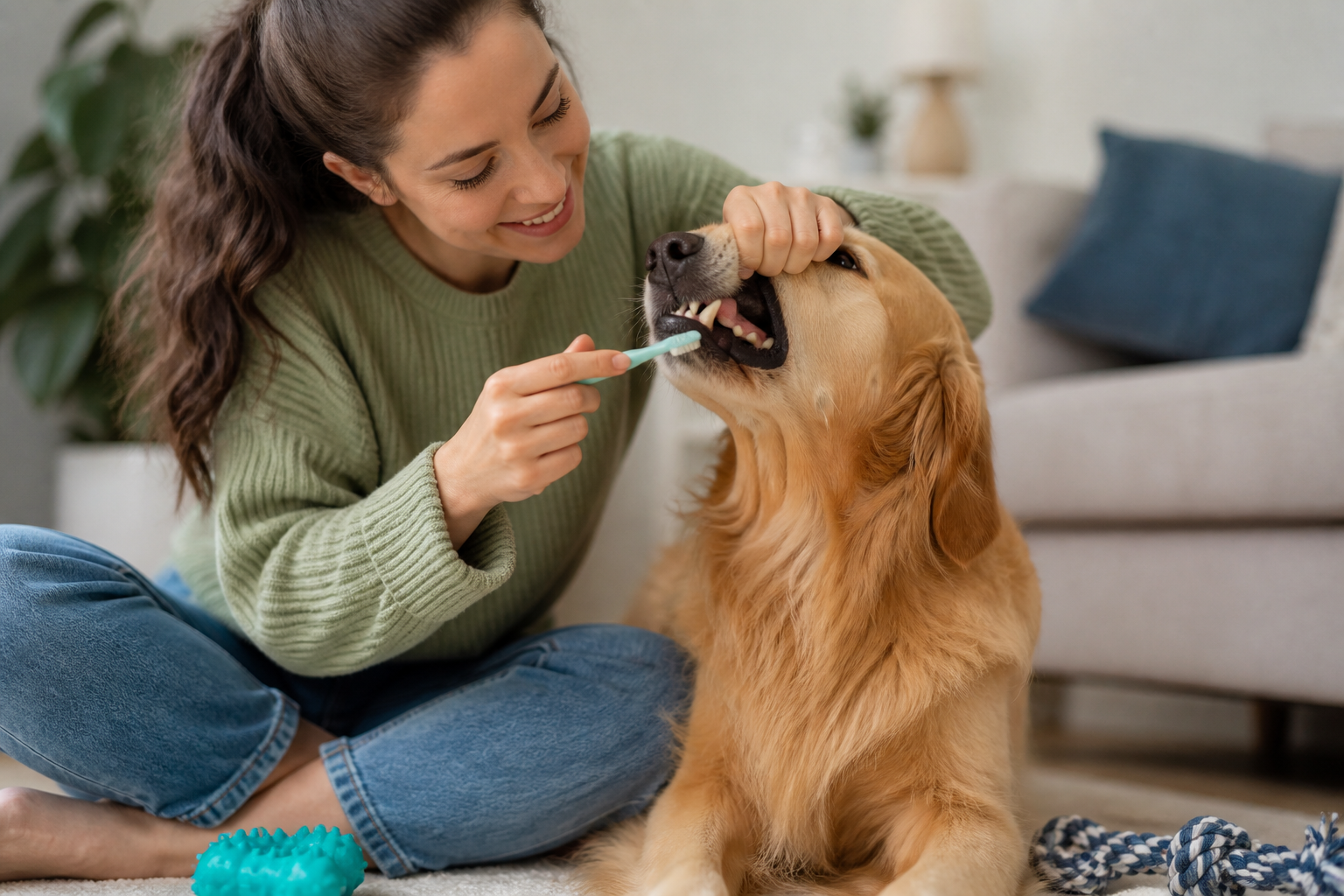
You are sitting on the couch when your dog leans in for a lick. Suddenly, you notice a smell that is more than just typical dog breath. You might pull back their lip and see a bit of yellow film or brown buildup along the gums. This is the moment most owners ask if they can handle this problem at home. At BaxterBoo, we know that keeping up with oral hygiene can feel like a daunting task. The good news is that you can absolutely clean your dog's teeth yourself. Regular at-home care is the best way to prevent expensive vet bills and painful dental issues later. This guide will walk you through the tools you need and the steps to take for a cleaner smile. You can manage your pet's dental health effectively with a little patience and the right routine.
The Basics of At-Home Dental Care
Dental hygiene for dogs is very similar to our own. Plaque is a soft film of bacteria that forms on the teeth shortly after eating. If it is not removed, it combines with minerals in the saliva to become tartar. Tartar is hard, crusty, and much more difficult to remove. While you can easily brush away plaque at home, tartar usually requires professional intervention.
Cleaning your dog's teeth yourself is primarily about prevention. By removing plaque daily, you stop tartar from ever forming. This protects the sensitive tissues of the gums. When gums become inflamed, it can lead to periodontal disease. This condition can eventually cause tooth loss or even damage to internal organs like the heart and kidneys.
Quick Answer: Yes, you can clean your dog's teeth at home using a dog-specific toothbrush and toothpaste. While at-home care is excellent for removing plaque and preventing tartar, it cannot replace professional deep cleanings if your dog already has severe dental disease.
How to Brush Your Dog's Teeth: A Step-by-Step Guide
Brushing is the gold standard for oral care. It provides the mechanical action needed to scrub away debris. However, most dogs do not instinctively love having a brush in their mouth. You need to introduce the process slowly so they stay calm.
Step 1: Get them used to your touch.
Spend a few days gently rubbing your finger along your dog's gums and teeth. Do this when they are relaxed and keep the sessions short.
Step 2: Introduce the toothpaste.
Let your dog lick a small amount of dog-safe toothpaste off your finger. These pastes are usually flavored like poultry or beef to make them taste like a treat.
Step 3: Use a finger brush.
Once they are comfortable with your finger in their mouth, try a soft rubber finger brush. This fits over your fingertip and allows you to feel exactly where you are cleaning.
Step 4: Transition to a handled brush.
If your dog is comfortable, move to a dog-specific toothbrush with a long handle. This helps you reach the back molars where most plaque tends to hide.
Step 5: Focus on the outside surfaces.
Most plaque builds up on the side of the teeth facing the cheeks. Use gentle circular motions. You do not need to worry too much about the inside of the teeth. A dog's tongue generally does a good job of keeping those surfaces clean.
For additional guidance on building a routine, read our tips for brushing your pet’s teeth.
Key Takeaway: Consistency is more important than perfection. Brushing for just sixty seconds every day is much better than a long scrubbing session once a month.
Essential Tools for Home Cleaning
You cannot use human products on your dog. This is the most important rule of at-home dental care. Human toothpaste often contains xylitol, which is a sweetener that is highly toxic to dogs. It also contains foaming agents that are meant to be spit out. Since dogs swallow everything, these agents can cause upset stomachs.
Our warehouse at BaxterBoo stocks a variety of specialized tools designed specifically for canine mouths. You should look for soft bristles that will not irritate the gums. Finger brushes are excellent for puppies or small breeds. Dual-headed brushes are great for larger dogs because they can clean the top and sides of the tooth at the same time.
- Dog-specific toothpaste: Look for enzymatic formulas that help break down plaque.
- Soft-bristled brushes: Ensure the size matches your dog's mouth.
- Finger brushes: These offer more control for beginners.
- Dental wipes: These are a good alternative if your dog absolutely refuses a brush.
You can explore our dog dental care collection for toothpaste, brushes, wipes, and other oral-care options.
Vet Tip: If you notice your dog's gums are bleeding heavily or if they pull away in pain during brushing, stop immediately. This can be a sign of advanced gingivitis or a cracked tooth. Schedule a checkup with your veterinarian to rule out underlying issues.
Alternatives to Brushing
Sometimes brushing is simply not possible. Your dog might have a sensitive mouth or a very stubborn personality. While brushing is the most effective method, there are other ways to keep teeth clean. These methods focus on mechanical scraping through chewing or chemical prevention through water additives.
Dental Chews and Treats
Dental chews like Greenies are designed with a specific texture. As your dog bites down, the chew scrapes against the surface of the tooth. Many of these treats also contain ingredients that help freshen breath. This is a very easy way to supplement a dental routine.
The Ark Naturals Brushless Toothpaste Dog Chews are one option for adding a chew-based product to your dog's routine.
Interactive Toys
Certain toys are built to clean teeth during playtime. Kong toys and other textured rubber toys can help rub away plaque. If you add a bit of dog-safe dental gel to the grooves of a toy, it becomes an even more effective cleaning tool.
Water Additives
These products are often called drinkable mouthwash for pets. You add a small amount to your dog's water bowl every day. The ingredients help kill the bacteria that cause bad breath and plaque. This is a completely passive way to improve oral health.
Bottom line: A combination of brushing, chews, and toys provides the most comprehensive protection against dental disease.
Recognizing the Signs of Dental Disease
Even with the best at-home care, some dogs are genetically prone to dental issues. Smaller breeds like Pugs or Chihuahuas often have crowded teeth. This creates small gaps where food and bacteria get trapped. You should inspect your dog's mouth once a week to look for changes.
Look for these red flags:
- Persistent bad breath that does not go away after eating.
- Yellow or brown crust along the gumline.
- Red, swollen, or bleeding gums.
- Loose or missing teeth.
- Difficulty eating or dropping dry food.
- Pawing at the mouth or face.
For a closer look at warning signs, read what to do when your dog has bad teeth.
If you see these signs, it is time for a professional evaluation. At-home cleaning can prevent these problems, but it cannot fix them once they have started. Our pharmacy offers access to FDA-approved medications and specialized treatments through our partnership with Pet's Choice. If your vet prescribes a specific oral rinse or medication for an infection, our pet pharmacy can help you get those needs met.
The Role of Prescription Dental Diets
For dogs with chronic dental struggles, a standard kibble might not be enough. Some dogs benefit from therapeutic dental diets. These kibbles are usually much larger than standard food. They are designed not to crumble immediately when bitten. Instead, the tooth sinks into the kibble, which scrubs the surface of the tooth.
These diets often require a prescription from your veterinarian. Because they are formulated to manage a specific health condition, they are handled differently than standard retail food. We carry brands like Royal Canin and Farmina Vet Life that offer these specialized options. You can fulfill these orders through the BaxterBoo pharmacy, making it easy to keep your pet's specialized food on hand alongside their treats and toys.
Professional Cleaning vs. Home Care
There is a significant difference between what you can do at home and what a vet does in the clinic. At home, you are cleaning the "crown" of the tooth. This is the part you can see. However, most dental disease happens below the gumline.
Veterinarians perform cleanings while the dog is under anesthesia. This allows them to use ultrasonic scales to remove hard tartar from underneath the gums. They can also take X-rays to see if the roots of the teeth are healthy. There are "anesthesia-free" cleanings available, but these are mostly cosmetic. They make the teeth look white, but they do not address the bacteria hiding under the gums.
Key Takeaway: Home cleaning is your daily maintenance, while professional cleaning is the deep "tune-up" that every dog needs periodically.
Conclusion
Cleaning your dog's teeth yourself is a practical and rewarding part of being a pet owner. It takes just a few minutes a day to make a massive difference in your dog's comfort and long-term health. Start slow, stay consistent, and use the right tools. While at-home care is vital, remember that it works best when paired with regular veterinary checkups. If you are just starting your dental journey, consider signing up for our Autoship program. This ensures you never run out of toothpaste or dental chews. Plus, you will earn rewards through the MVP Rewards programme on every purchase. Keeping those pearly whites clean has never been easier for you or your dog.
FAQ
Can I use a regular human toothbrush on my dog?
You can use a soft-bristled child's toothbrush if you are in a pinch, but a dog-specific brush is usually better. Dog brushes are angled to reach the back of a canine's mouth and have bristles designed for their specific enamel thickness. Never use human toothpaste, as it contains ingredients that are toxic to dogs.
How often should I clean my dog's teeth myself?
Ideally, you should brush your dog's teeth every single day to prevent plaque from hardening into tartar. If your schedule is too busy for daily brushing, try to aim for at least three times a week. Supplementing with dental chews and water additives on the days you skip brushing can also help.
What if my dog's gums bleed when I brush them?
A tiny bit of spotting can happen if you are just starting a routine, similar to when a person hasn't flossed in a long time. However, if the bleeding is heavy or the gums look very red and swollen, it is a sign of gingivitis. You should consult your veterinarian before continuing to ensure you aren't causing your pet pain.
Can dental chews replace brushing entirely?
While dental chews are a helpful tool, they are not a complete replacement for the mechanical action of a toothbrush. Chews mostly clean the chewing surfaces of the teeth and might miss the gumline where most bacteria collect. Using both chews and brushing provides the best level of protection for your dog.






