
 Save 15% on your 1st Autoship learn more

 Email us
 Live Chat
 FAQs
FAQs





Introduction
You are standing in the hallway with a shedding dog and a messy coat. You reach into the grooming bin but only find the small, soft brush you use for the family cat. It is a common moment for multi-pet households. You might wonder if that cat brush can handle a dog's fur without causing discomfort or breaking.
At BaxterBoo, we know that grooming is about more than just looking good. It is a vital part of your pet's overall health and comfort. While you can technically use a cat brush on a dog, the results depend entirely on the dog's size and coat type. This post covers when it is safe to swap tools and when your dog needs gear designed specifically for their breed.
Quick Answer: Yes, you can use a cat brush on a dog if the dog is small or has a very fine, thin coat. Cat brushes are generally gentler and smaller, making them ideal for a dog's face, ears, and paws, but they are often too weak for thick double coats or large breeds.
The Difference Between Cat and Dog Brushes
To understand why a cat brush may or may not work, you have to look at how they are built. Most cats have relatively thin skin and fine fur. Because of this, cat brushes often feature softer bristles and shorter pins. Manufacturers design them to be lightweight and easy to maneuver around a cat's smaller frame.
Dog brushes come in a much wider variety. Dogs have a massive range of coat textures, from the wiry fur of a terrier to the thick, insulating undercoat of a husky. A brush meant for a cat often lacks the durability to penetrate a dog's thick fur. It might simply glide over the top of the coat without reaching the skin or removing loose hair.
Pins and Bristles
Cat slicker brushes usually have very fine, flexible wire pins. These pins are great for removing loose fluff from a feline. On a dog with a dense coat, these fine pins might bend or snap. Our dog brushes and combs often have firmer designs to handle the resistance of thicker hair.
Size and Ergonomics
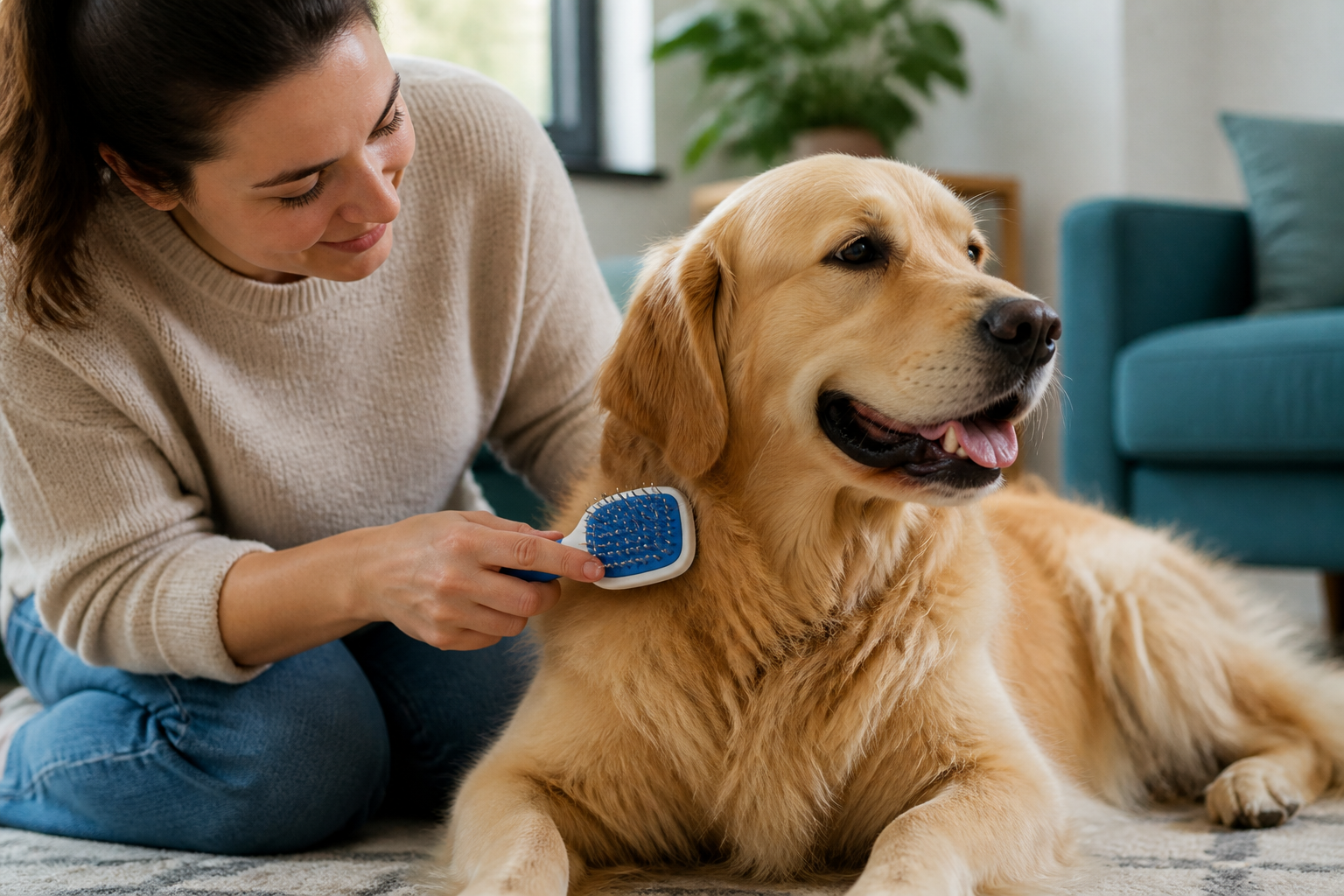
The most obvious difference is the size of the brush head. A cat brush is typically small, often only two or three inches wide. If you try to brush a Golden Retriever with a cat brush, the job will take hours. Dog brushes have larger heads and sturdier handles to make grooming a larger animal more efficient.
When Using a Cat Brush Makes Sense
There are specific situations where a cat brush is actually a better choice than a standard dog brush. Many professional groomers keep cat-sized tools in their kits for detailed work on dogs.
Grooming Small Breeds
If you own a Toy Poodle, a Chihuahua, or a Maltese, a standard dog brush can feel like a giant rake. Small dogs have tiny limbs and delicate features. A cat brush fits these proportions much better. It allows you to reach under the armpits and around the tail without bumping the dog's joints with a heavy plastic frame.
Focusing on Sensitive Areas
Even large dogs have sensitive spots where a big brush is too aggressive. The face, the base of the ears, and the back of the legs are often tender. A soft-bristle cat brush or a small cat slicker allows for precision. You can remove "sleepy" crust from the eyes or tiny tangles behind the ears with much more control.
Training Puppies
Puppies often find grooming sessions scary or overwhelming. The heavy sound and feel of a large dog brush can cause them to squirm. Starting with a soft cat brush is a great way to introduce the sensation of grooming. It is light and less likely to accidentally poke their sensitive puppy skin.
Key Takeaway: Use a cat brush for detail work on a dog's face, ears, and paws, or as a starter tool for small puppies who are still learning to enjoy grooming.
When to Avoid Cat Brushes for Dogs
While the cat brush works for some, it will fail miserably for others. Using the wrong tool can lead to a frustrated owner and a dog that still has mats hiding deep in its fur.
Double Coated Breeds
Dogs like German Shepherds, Labradors, and Newfoundlands have a thick undercoat. This layer of fur is designed to trap heat and repel water. A cat brush is not strong enough to reach through the guard hairs to the undercoat. If you only use a cat brush on these breeds, the undercoat will eventually pack down and form painful mats against the skin.
Wire and Curly Coats
Wire-haired breeds like Airedale Terriers have very stiff, coarse fur. A cat brush with soft pins will simply skim over the surface. Similarly, curly coats like those on Standard Poodles need firm pins to fluff the curls and prevent tangles from tightening. A cat brush will likely get stuck in the curls or fail to separate the hairs properly.
Large Surface Areas
Efficiency matters in pet care. If you have a 70-pound dog, a cat brush is a poor use of your time. Large dog brushes are designed to cover more ground with every stroke. This keeps grooming sessions short, which most dogs appreciate. Prolonged grooming with an undersized tool can make a dog restless and impatient.
Matching the Brush to the Dog Coat
If you are unsure whether your cat brush is up to the task, look at your dog's specific coat type. We see many owners at BaxterBoo who find that a mix of tools works best for their routine.
- Short, Smooth Coats: For Boxers or Dalmatians, a soft cat bristle brush works well to add shine and remove surface dust.
- Silky Coats: For Yorkies or Cocker Spaniels, a cat slicker is fine for daily touch-ups, but you will still need a metal dog comb to check for mats.
- Thick, Heavy Coats: For Huskies or Collies, put the cat brush away. You need a long-pinned slicker brush and an undercoat rake.
- Wire Coats: These dogs require a firm dog slicker or a stripping comb to manage their unique texture.
The Essential Role of the Comb
No matter what brush you use, a comb is the final judge of your work. Brushes often hide mats by smoothing the top layer of fur over the tangle. After using a cat brush on your dog, always follow up with a metal greyhound-style comb. If the comb catches, you know the brush did not get deep enough.
Our Master Grooming Tools selection includes slicker brushes, finishing combs, dematting tools, and undercoat rakes for different grooming needs.
Step 1: Inspect the coat. / Run your hands over your dog to feel for any large mats or sensitive areas before you begin.
Step 2: Brush with the grain. / Use your brush in the direction the hair grows, starting from the head and moving toward the tail.
Step 3: Work in sections. / Divide the coat into small areas to ensure you do not miss any spots, especially behind the ears.
Step 4: Verify with a comb. / Gently run a metal comb through the fur to ensure the brush reached all the way to the skin.
Vet Tip: If you find a mat that is tight against the skin, do not pull on it with a brush or comb. This can tear the skin and cause significant pain. Consult your veterinarian or a professional groomer if your dog has extensive matting that is causing skin irritation.
Skin Safety and Sensitivity
Dogs and cats have different skin pH levels and thicknesses. Because cat skin is generally thinner, cat brushes are designed to be very gentle. This is a benefit if your dog has a rash or sensitive skin. However, if a brush is too soft, you might find yourself pressing harder to get results.
Pressing down with a brush is a mistake. This causes "brush burn," which is a painful scrape on the skin surface. If you feel the need to push the brush into the coat to make it work, the tool is too weak for the job. You should always use light, repetitive strokes.
Regular grooming is also the best time to check for health issues. As you brush, look for:
- Redness or hot spots
- Bumps or lumps under the skin
- Flea dirt or live fleas
- Dry, flaky skin
Our dog healthcare category carries many solutions for these issues, including prescription flea and tick preventives and medicated shampoos. Through our partnership with Pet's Choice, we can help you manage chronic skin conditions or allergies once your vet provides a prescription. Keeping the skin healthy makes the grooming process much more comfortable for your dog.
Building a Professional Grooming Kit
While a cat brush can be a handy temporary fix, every dog owner should eventually invest in tools made for their pet's specific needs. Having the right gear makes the job easier for you and more pleasant for your dog.
We recommend a three-tool approach for most dog owners:
- A Primary Brush: A slicker or bristle brush sized for your dog's body.
- A Detail Brush: This is where that cat brush comes in handy for the face and paws.
- A Metal Comb: To ensure the coat is completely tangle-free down to the skin.
At BaxterBoo, we curate our selection to include brands like Kong and Coastal Pet, which offer ergonomic handles. This is important for your comfort, too. If the brush is easy for you to hold, you are more likely to keep up with a regular grooming schedule. Frequent brushing reduces shedding in your home and keeps your dog's coat shiny by distributing natural oils.
For a gentle option that can be used during brushing or bathing, consider the KONG Zoom Groom Natural Rubber Dog Grooming Brush.
Key Takeaway: A complete grooming kit should include a large brush for the body, a small brush for details, and a sturdy metal comb for deep checking.
Common Grooming Mistakes to Avoid
Many owners make the mistake of only brushing the parts of the dog they can see easily. They focus on the back and sides but skip the belly and the "trousers" on the back legs. These are the areas where mats form most quickly.
Another mistake is brushing a dirty coat. While a quick brush after a walk is fine, a deep grooming session is most effective after a bath and a thorough dry. Dirt and grit act like sandpaper on your brushes and can damage the hair shaft. Make sure you use a high-quality shampoo to keep the hair soft and manageable.
Our dog grooming supplies include brushes, combs, shampoos, conditioners, and other tools for maintaining your dog's coat.
Finally, do not forget to reward your dog. Grooming should be a bonding experience. If you use a cat brush because it is gentler and your dog prefers it, that is a win for your relationship. Always follow a session with a high-value treat or a favorite game.
Bottom line: Using a cat brush on a dog is a helpful technique for small breeds and sensitive areas, but it cannot replace a sturdy dog brush for full-body grooming of larger or thicker-coated pets.
Conclusion
Sharing tools between your pets can be a practical way to save space and money, especially when it comes to grooming. A cat brush is a gentle, precise tool that works wonders on small dogs, puppies, and the delicate facial features of larger breeds. However, it lacks the power to manage the heavy shedding and deep undercoats found in many popular dog breeds.
To keep your dog's coat in top condition, use the cat brush for the "finish" work and invest in a dedicated dog brush for the heavy lifting. Regular grooming prevents painful mats and allows you to catch skin issues early. For all your grooming needs, from brushes and combs to prescription skin care through our pet pharmacy and Pet's Choice partnership, we are here to help. You can even save on your favorite grooming supplies by using our Autoship programme for regular deliveries.
FAQ
Can I use a cat slicker brush on a Golden Retriever?
You can use it on the dog's face and the feathers on the back of the legs, but it will be ineffective for the main body. The pins are likely too short and soft to reach the Golden Retriever's dense undercoat. You would be better off using a large, firm dog slicker for the majority of the grooming.
Is it safe to use a cat deshedding tool on a dog?
Yes, but only if the dog is very small and has a similar coat texture to a cat. Deshedding tools like the Furminator come in different sizes and blade depths. A cat version might not have a blade deep enough to reach a dog's undercoat, which could lead to pulling or snagging rather than smooth hair removal.
Why does my dog seem to prefer the cat brush?
Cat brushes are usually much softer and lighter than dog brushes. If your dog has sensitive skin or has had a bad experience with a painful metal rake, the gentle touch of a cat brush might feel more like a massage. It is a great tool for building trust with a nervous dog before moving up to more efficient gear.
What should I do if the cat brush won't go through my dog's fur?
If the cat brush is getting stuck, stop immediately. Forcing a small, weak brush through thick fur can cause the pins to snap or pull painfully on your dog's skin. This is a clear sign that your dog needs a more robust tool, such as an undercoat rake or a wide-tooth metal comb designed for dogs.






