
 Save 15% on your 1st Autoship learn more

 Email us
 Live Chat
 FAQs
FAQs





Introduction
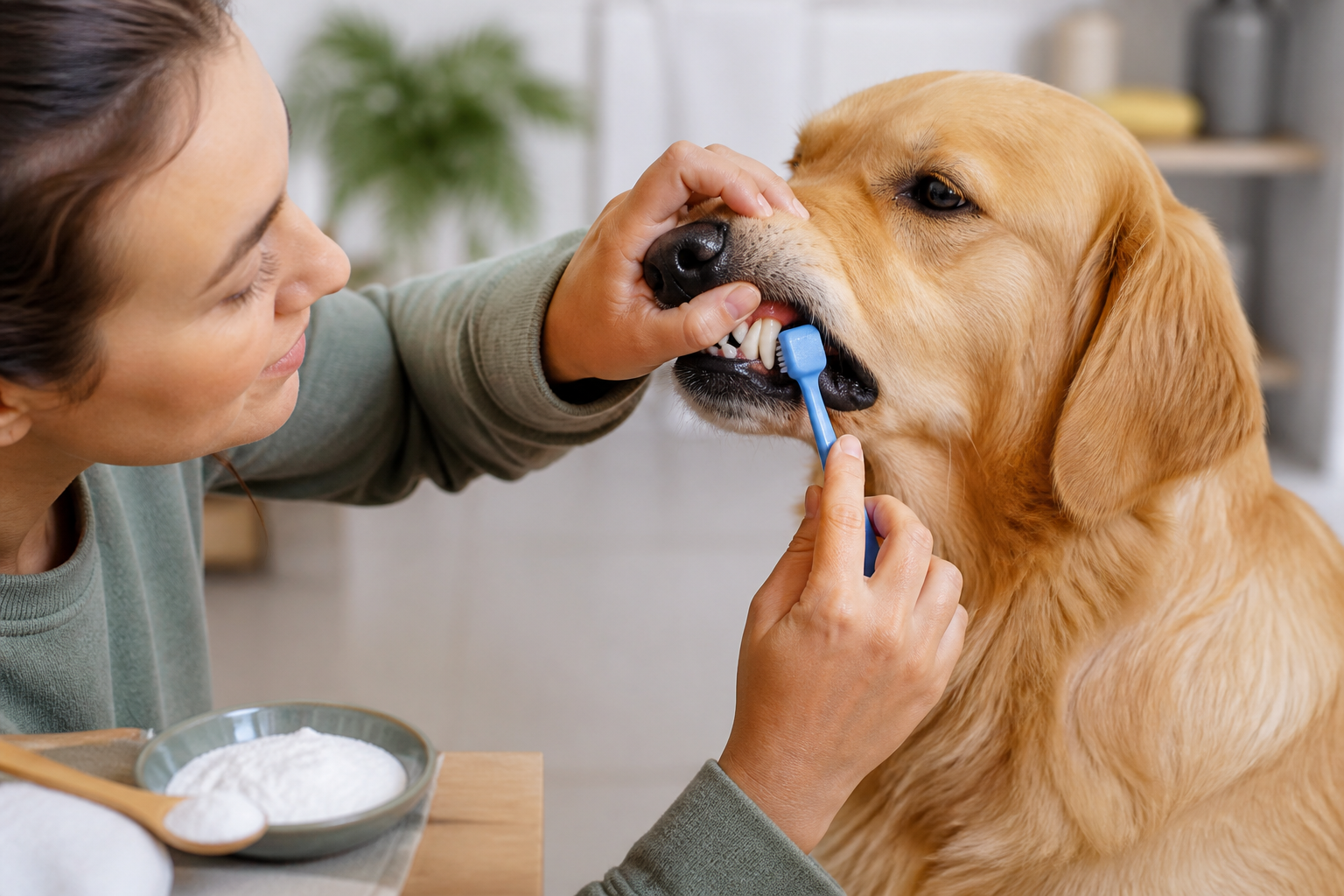
You are standing in your kitchen. Your dog just gave you a big, smelly yawn. You remember you have a box of baking soda in the pantry. It works for human teeth and tough stains, so it seems like a natural, cheap fix for your pup. At BaxterBoo, we hear this question often from owners trying to do the right thing for their pet's health. While it might seem like a simple home remedy, using baking soda for canine dental care comes with some significant drawbacks. This article explains the risks of using this common household powder. It also provides safer, more effective ways to keep your dog's mouth fresh. We want to help you build a dental routine that actually works without causing your dog discomfort.
Quick Answer: While technically possible in tiny amounts, you should not use baking soda to clean your dog’s teeth. It is highly alkaline and can upset their stomach if swallowed. It also has a bitter taste that can make your dog fear the toothbrush.
Why Baking Soda Is Not Ideal for Dogs
Baking soda is a staple in many DIY cleaning guides. In the human world, it is praised for its ability to scrub away stains. However, dogs have very different biological needs than we do. The most immediate issue with baking soda is its alkalinity. It has a high pH level. When a dog swallows even a small amount, it can disrupt the natural acid balance in their stomach. This often leads to digestive upset, gas, or even vomiting.
Another concern is the texture of the powder. Baking soda is a mild abrasive. While this helps remove surface stains on human enamel, a dog's enamel is thinner than ours. Repeatedly scrubbing with a gritty powder can cause micro-abrasions on the surface of the tooth. These tiny scratches actually give bacteria more places to cling to. Over time, this makes plaque buildup worse rather than better.
Finally, consider the experience for your dog. Baking soda tastes salty and bitter. Most dogs find the flavor very unpleasant. If you use something that tastes bad, your dog will start to associate the toothbrush with a negative experience. This makes it much harder to maintain a consistent routine. You want your dog to enjoy the process so they stay still.
Key Takeaway: Baking soda is too alkaline for a dog's stomach and too abrasive for their thin enamel. It also tastes bad, which can ruin your dog’s willingness to cooperate during grooming.
The Risks of Human Products in a Dog's Mouth
It is tempting to grab what is already in your bathroom cabinet. However, human dental products are formulated with the assumption that the user will spit them out. Dogs cannot spit. They swallow every bit of paste or powder you put in their mouth. This is why you must avoid human toothpaste at all costs.
Many human toothpastes contain Xylitol. This is an artificial sweetener that is perfectly safe for humans but deadly for dogs. Even a small amount of Xylitol can cause a rapid drop in blood sugar and liver failure. Human products also contain fluoride. While fluoride strengthens human teeth, it is toxic to dogs when ingested in the quantities found in toothpaste.
Using baking soda might seem safer than human toothpaste because it lacks these chemicals. But as we discussed, the sodium content and pH issues still pose a risk. If your dog has an underlying heart condition or kidney issue, the extra sodium in baking soda can be particularly dangerous. It is always better to stick to products made specifically for the canine body.
Better Alternatives for At Home Dental Care
The good news is that there are many safe ways to clean your dog's teeth. Modern pet care has come a long way since the days of home remedies. At BaxterBoo, we recommend using enzymatic toothpastes designed for dogs. These pastes often come in flavors like poultry, beef, or peanut butter. This makes the experience feel like a treat for your dog.
Enzymatic cleaners are different because they do not rely solely on scrubbing. The enzymes in the paste work to break down the proteins that form plaque. This means even if you cannot reach every corner of the mouth with a brush, the paste still provides some benefit. You can find these items in our dog dental care category.
If your dog absolutely refuses a brush, you can use dental wipes. These are textured pads that you wrap around your finger. They allow you to wipe away the daily film of bacteria before it hardens. You can also look into water additives. These are liquids you pour into your dog's water bowl. They contain safe ingredients that help reduce the bacterial load in the mouth throughout the day.
Vet Tip: If your dog has red gums, bleeding, or extremely foul breath, please consult your veterinarian. These are often signs of periodontal disease that require professional treatment rather than just home brushing.
Choosing the Right Toothbrush for Your Dog
The tool you use is just as important as the paste. A human toothbrush is often too stiff for a dog’s sensitive gums. You have several options when picking a canine brush.
- Dual Head Brushes: These have a large brush on one end and a tiny one on the other. This allows you to reach the tiny teeth in the front and the large molars in the back.
- Finger Brushes: These are made of soft silicone and fit over your fingertip. They are excellent for puppies or dogs who are nervous about a long plastic handle.
- 360 Degree Brushes: These have bristles all the way around the head. They are great for dogs who wiggle, as you can clean multiple surfaces at once.
If you are just starting out, a finger brush is usually the best choice. It gives you the most control and feels more like you are just petting your dog’s face. As they get used to the sensation, you can transition to a more traditional brush with a long handle. A purpose-made option is the Pure and Natural Pet Organic Dental Solutions Bamboo Dog Toothbrush.
How to Start a Dental Routine Without the Stress
You should not expect to brush your dog's entire mouth on the first day. It is a process that requires patience and positive reinforcement. If you rush it, you might end up with a dog that hides whenever they see the brush.
Step 1: Introduce the flavor. / Put a small dab of dog-safe toothpaste on your finger. Let your dog lick it off. Do this for a few days until they get excited about the taste.
Step 2: Touch the teeth. / While your dog is licking the paste, gently rub your finger along their gums. This gets them used to the feeling of your hand in their mouth.
Step 3: Introduce the brush. / Put some paste on the brush and let them lick it. Do not try to scrub yet. Just let them feel the bristles on their tongue.
Step 4: Start small. / Lift the lip and brush one or two of the large teeth in the front. Use a circular motion. Stop quickly and give them a high value treat.
Step 5: Expand the area. / Gradually work your way toward the back of the mouth. The back molars are where the most tartar builds up, so those are the most important.
Bottom line: Success with dog dental care comes from slow introductions and tasty, pet-specific toothpaste rather than household powders.
For more guidance on building a calm routine, read these pet dental care tips.
The Role of Diet and Dental Chews
What your dog eats every day plays a major role in their oral health. While some people believe dry kibble cleans teeth, most standard kibble is too small. Dogs often swallow it whole or it shatters instantly. However, there are specific dental diets designed with a larger, fibrous kibble. These act like a squeegee on the tooth as the dog bites down.
Our pharmacy carries several prescription dental diets through our partnership with Pet's Choice. These are often recommended for dogs who are prone to heavy tartar buildup. If your vet suggests a specific diet like Farmina Vet Life or Royal Canin, you can fulfill those needs through our pet pharmacy.
Dental chews are another great addition to your routine. Brands like Greenies are designed to be chewy. This allows the tooth to sink into the treat, scraping away plaque. When choosing a chew, look for the VOHC seal. This means the Veterinary Oral Health Council has verified that the product actually does what it claims to do. You can browse our selection of Greenies products.
Understanding Plaque Versus Tartar
It is important to understand what you are trying to remove when you brush. Plaque is the soft, sticky film of bacteria that forms on the teeth after eating. You can easily remove plaque with a brush or a wipe. If you leave plaque on the teeth for more than 48 to 72 hours, it begins to mineralize.
Once plaque hardens, it becomes tartar, also known as calculus. Tartar is like concrete. You cannot brush it off at home. No amount of baking soda or enzymatic paste will remove hard tartar. At this stage, your dog needs a professional cleaning by a veterinarian. The vet uses ultrasonic scalers to vibrate the tartar off the teeth while the dog is under anesthesia.
Regular brushing at home is designed to stop plaque from ever turning into tartar. If you see brown or orange crusty buildup near the gum line, that is tartar. If you try to scrub this off too hard, you will likely cause pain and bleeding. This is another reason why a vet visit is the best next step for an older dog with existing buildup.
For additional information about tartar, gum problems, and professional care, see this guide to warning signs of bad teeth in dogs.
Small Breed Dental Considerations
Small and toy breeds have unique dental challenges. While they have much smaller jaws than a Labrador, they often have the same number of teeth. This leads to crowding. When teeth are crowded, there are more nooks and crannies where food and bacteria can hide.
Small dogs are also more prone to losing bone density in their jaw due to gum disease. For these pets, daily brushing is not just a suggestion. It is a necessity. If you have a small dog, pay extra attention to the very back of the mouth. Because their mouths are so small, it is easy to miss the molars where the most damage occurs.
We carry smaller toothbrushes and finger brushes specifically scaled for these tiny mouths. Using the right size tool makes the job easier for you and more comfortable for them. Consistency is the secret to avoiding expensive extractions later in your dog's life.
Signs of Dental Pain in Dogs
Dogs are experts at hiding pain. They will often continue to eat even if they have a broken tooth or a painful infection. You have to look for subtle signs that your dog’s mouth is bothering them.
- Dropping food: If your dog takes a bite and then lets pieces fall out of their mouth, they might have a sore spot.
- Chewing on one side: Watch your dog eat. If they only use the left or right side of their mouth, they are likely avoiding a painful tooth on the other side.
- Paw-ing at the face: This can be a sign of a tooth root abscess or general discomfort.
- Hiding or lethargy: Chronic dental pain can drain a dog's energy.
- Blood on toys: If you see pink or red stains on their chew toys, their gums are inflamed.
If you notice these behaviors, stop any home brushing immediately. Brushing a painful mouth will only make your dog fear you. See your vet to address the underlying issue first. Once their mouth is healthy and pain-free, you can restart your preventative routine.
Why a Professional Cleaning Matters
Even with the best home care, most dogs will eventually need a professional cleaning. Think of your own dental visits. You brush and floss every day, but you still go to the dentist for a deep clean. The same logic applies to your dog.
A professional cleaning allows the vet to clean under the gum line. This is where the most dangerous bacteria live. They can also take X-rays to see what is happening beneath the surface. Many dental problems in dogs occur in the roots, which you cannot see just by looking in their mouth.
We recommend checking with your vet during your annual exam to see if a cleaning is necessary. If your vet prescribes specific medications for a gum infection or a special recovery diet, our pharmacy is here to help. Our partnership with Pet's Choice ensures you get the exact medications your vet ordered.
Safe Home Habits for Fresh Breath
Beyond brushing and chews, you can make small changes to your home routine to support oral health. Keep their water bowl clean. Bacteria thrive in standing water, and a slimy bowl can introduce more germs to their mouth.
Consider the toys they play with. Very hard toys, like real bones or heavy nylon bones, can actually fracture teeth. A fractured tooth is a direct highway for bacteria to reach the root. Stick to toys that have some "give" to them. If you cannot indent the toy with your thumbnail, it might be too hard for your dog’s teeth.
You can also use natural breath fresheners. Some owners add a little fresh parsley to their dog’s food. While this does not replace brushing, it can help neutralize some odors. However, remember that "dog breath" is not normal. It is usually a sign of bacteria. If the breath is truly offensive, no amount of parsley or baking soda will fix the root cause.
Practical Tips for Success
Consistency is more important than perfection. If you can only brush for thirty seconds, that is better than not brushing at all. Try to link the habit to something you already do. Maybe you brush your dog’s teeth right after you brush your own.
Keep your supplies in a visible place. If the brush and paste are hidden in a drawer, you are less likely to use them. Having them out on the counter serves as a daily reminder. Also, make sure everyone in the family is on the same page. If everyone takes a turn, the dog gets used to different people handling their mouth.
If you have multiple dogs, give each one their own toothbrush. This prevents the spread of bacteria from one mouth to another. It also helps you keep track of when it is time to replace a worn-out brush. We suggest replacing the brush every three months, just like your own.
Making Dental Care Affordable
Pet dental care can become expensive if you wait until there is a major problem. Extractions and oral surgery can cost hundreds or even thousands of dollars. By investing in a good toothbrush, enzymatic paste, and quality chews now, you save a significant amount of money in the long run.
At BaxterBoo, we want to make it easy to stay stocked up on these essentials. Our Autoship program is perfect for dental supplies. You can set your toothpaste and Greenies to arrive every month so you never run out. This also qualifies you for savings on your orders and a free MVP Gold membership.
If you are a new customer, you can take advantage of our introductory reward to get your dental kit started. Combining home care with regular vet check-ups is the best way to ensure your dog stays healthy and happy for years to come. You can also explore the MVP Rewards programme for additional membership information.
Bottom line: While the kitchen pantry has many uses, baking soda should stay in the box when it comes to your dog's teeth. Stick to safe, flavored pastes and soft brushes for the best results.
FAQ
Is baking soda toxic to dogs if they eat it?
In small amounts, baking soda is usually not toxic, but it can cause significant stomach upset and gas. If a dog eats a large quantity, such as a whole box, it can lead to dangerous electrolyte imbalances and requires immediate veterinary attention. It is best to avoid using it for brushing to prevent any risk of ingestion.
Can I use a human toothbrush on my dog?
You can use a soft-bristled human toothbrush, but a child-sized one is usually better for most dogs. However, human brushes are not angled for a dog's mouth, making it harder to reach the back molars. A brush designed specifically for pets or a silicone finger brush is often more effective and comfortable for the animal.
How often should I actually brush my dog's teeth?
Ideally, you should brush your dog's teeth every single day to remove plaque before it hardens into tartar. If daily brushing is not possible, aim for at least three to four times a week. Brushing once a month or only during grooming appointments provides very little benefit for long-term oral health.
What should I do if my dog's gums bleed during brushing?
Minor bleeding can be a sign of gingivitis, which means the gums are inflamed from bacteria. If you see a small amount of blood, continue brushing gently to help improve the gum health over time. However, if the bleeding is heavy or if your dog seems to be in pain, stop brushing and schedule a visit with your veterinarian to check for deeper issues.






