
 Save 15% on your 1st Autoship learn more

 Email us
 Live Chat
 FAQs
FAQs





Introduction
You might be standing in front of your bathroom mirror and noticing that your dog has some yellowing near the gumline. Or maybe a sudden whiff of "dog breath" has you reaching for the medicine cabinet. Hydrogen peroxide is a staple in most American homes for disinfecting minor cuts or whitening surfaces. It seems like a logical, low-cost solution for cleaning a dog’s teeth. However, using this chemical in your pet’s mouth is not a safe or effective choice.
At BaxterBoo, we know that pet owners want the best for their companions without overcomplicating things. While DIY hacks are popular on social media, some can be genuinely harmful to your dog's long-term health. This article covers why you should keep the peroxide away from your dog’s mouth and what safe alternatives actually work. We will also look at how to build a routine that keeps those pearly whites healthy.
Quick Answer: No, you should never use hydrogen peroxide to clean your dog's teeth. It is an oral irritant that can damage sensitive gum tissue and cause severe stomach upset or vomiting if swallowed.
The Science of Why Hydrogen Peroxide Fails
Hydrogen peroxide works through a process called oxidation. When it touches an enzyme called catalase, it breaks down into water and oxygen. This is what causes the bubbling action you see on a scraped knee. While this bubbling can lift debris out of a wound, it is also destructive. In a dog’s mouth, this chemical does not discriminate between bad bacteria and healthy tissue.
The gum tissue in a dog’s mouth is highly vascular and sensitive. Applying peroxide can lead to chemical burns or significant irritation. It can also delay the healing of any existing small sores or gingivitis. Instead of helping, the peroxide can make the mouth more painful. This often leads to a dog becoming "mouth shy," making it much harder for you to brush their teeth in the future.
Damage to Tooth Enamel
Some people think peroxide might whiten a dog’s teeth just like it does for humans. The enamel on a dog’s tooth is actually thinner than human enamel. Using harsh chemicals can wear down this protective layer over time. Once enamel is lost, it does not grow back. This leaves the sensitive inner layers of the tooth exposed to bacteria and temperature changes. This can lead to chronic dental pain that your dog cannot tell you about.
The Ingestion Risk
One of the biggest dangers of using hydrogen peroxide for dental care is the risk of swallowing. Dogs do not know how to "rinse and spit." Whatever you put on their teeth will eventually end up in their stomach. In veterinary medicine, hydrogen peroxide is sometimes used for a very specific purpose: to induce vomiting after a dog eats something toxic. Even then, it is only done under the strict guidance of a professional.
If your dog swallows peroxide during a routine tooth cleaning, it can cause immediate nausea. It can also lead to more serious issues like gastritis or stomach ulcers. The bubbling action inside the stomach can cause bloating and discomfort. There is also a risk of aspiration. If a dog vomits and breathes in some of the foam, it can lead to aspiration pneumonia. This is a life-threatening lung infection.
Vet Tip: Never use any household chemical or human dental product in your dog’s mouth without asking your veterinarian first. If your dog accidentally swallows a large amount of hydrogen peroxide, contact your vet or an animal poison control center immediately.
Common DIY Dental Mistakes to Avoid
The internet is full of "natural" recipes for pet toothpaste. Many of these rely on household items that are safe for humans but problematic for dogs. Understanding why these items fail can help you choose better products from our dog dental care collection.
The Problem with Baking Soda
Baking soda is another frequent ingredient in DIY pet dental recipes. While it is not as caustic as hydrogen peroxide, it has its own set of risks. Baking soda has a very high sodium content. If a dog swallows too much, it can cause an electrolyte imbalance. This is especially dangerous for senior dogs or those with heart or kidney conditions. It also has a bitter taste that most dogs dislike, which can make them fight you during the cleaning process.
Human Toothpaste and Xylitol
This is perhaps the most dangerous mistake a pet owner can make. Many human toothpastes contain xylitol, a sugar substitute. Xylitol is extremely toxic to dogs. Even a small amount can cause a rapid drop in blood sugar and liver failure. Human toothpastes also contain foaming agents like sodium lauryl sulfate. These are meant to be spit out. If swallowed, they cause significant gastric distress in pets.
Coconut Oil Limitations
Coconut oil is often praised as a miracle cure for dog dental health. While it is generally safe for dogs to eat in small amounts, it is not a replacement for mechanical cleaning. It does not have the abrasive quality needed to scrub away plaque. Also, coconut oil is very high in fat. Adding a large amount to a dog's daily routine can lead to weight gain or even pancreatitis in sensitive breeds.
Key Takeaway: Stick to products specifically formulated for dogs. These are designed to be swallowed safely and come in flavors that dogs actually enjoy, which makes the process easier for everyone.
Safe and Effective Alternatives for At-Home Care
The goal of dental care is to remove plaque before it hardens into tartar. Plaque is a soft, sticky film of bacteria. Once it mixes with minerals in the saliva, it turns into rock-hard tartar, also known as calculus. Brushing is the gold standard for removing plaque.
Choosing the Right Toothpaste
Pet-specific toothpaste is the best tool you have. These formulas use enzymes that help break down plaque chemically. They are also made to be delicious to dogs. You can find flavors like poultry, beef, or peanut butter. When a dog likes the taste of the paste, they see the cleaning as a treat rather than a chore. A product such as Arm & Hammer Dental Complete Care Dog Toothpaste - Chicken is made specifically for canine dental care.
Selecting a Toothbrush
You do not need a fancy electric brush for your dog. A simple, soft-bristled brush works best. You can use a brush specifically designed for dogs, which often has a long handle and an angled head to reach the back molars. Many owners also find success with finger brushes. These are small rubber caps that fit over your fingertip. They give you better "feel" and control, though they may not reach as deep into the crevices as a traditional brush.
How to Brush Your Dog’s Teeth: A Step-by-Step Guide
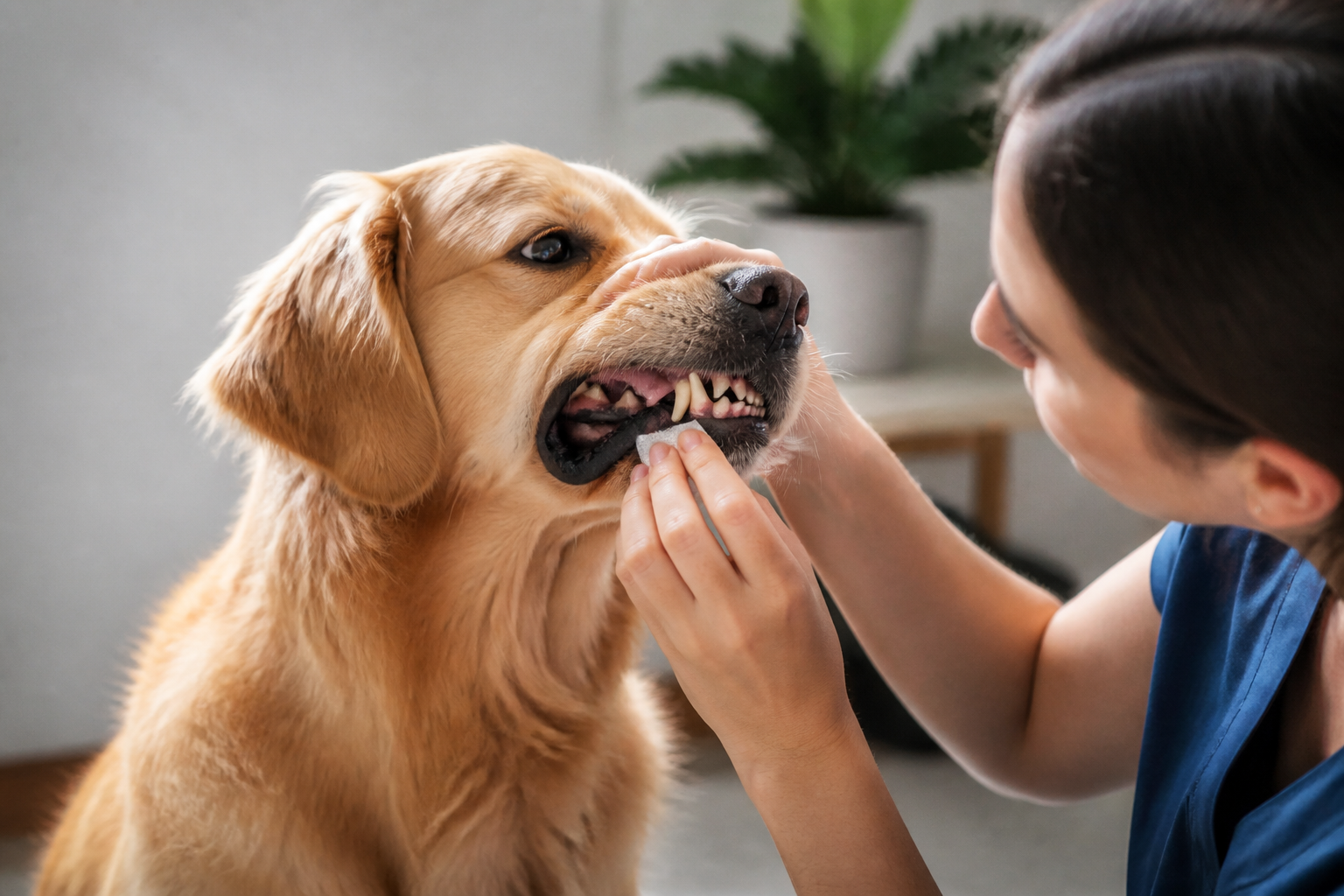
If you have never brushed your dog’s teeth before, do not expect to do a full cleaning on the first day. It is a process that requires patience and positive reinforcement. For additional guidance, read these pet dental care tips.
Step 1: Choose a quiet time and place. / Find a moment when your dog is relaxed. Avoid times when they are high energy or waiting for a walk.
Step 2: Introduce the toothpaste. / Put a small amount of pet toothpaste on your finger. Let your dog lick it off. Do this for a few days until they get excited when they see the tube.
Step 3: Get them used to mouth handling. / Gently lift your dog's lips and rub your finger over their teeth and gums. Give them a high-value treat immediately after.
Step 4: Introduce the brush. / Put some toothpaste on the brush and let them lick it. Then, gently brush just the front teeth using a circular motion.
Step 5: Work toward the back. / Gradually increase the number of teeth you brush each session. Focus on the outside surfaces of the teeth, as this is where most plaque builds up.
- Keep sessions short (30 to 60 seconds).
- Always end on a positive note with praise or a toy.
- Aim for daily brushing, but three times a week is a great starting goal.
- Do not worry about the inside surfaces of the teeth. A dog's tongue usually keeps those areas cleaner.
Key Takeaway: Consistency is more important than perfection. Brushing a few teeth every day is better than a full cleaning once a month.
Supporting Dental Health Through Diet and Chews
Brushing is the most effective method, but it is not the only way to support oral health. We carry a wide variety of supplemental products that can help between brushings. You can compare options in our dog dental treats and chews category.
VOHC Approved Products
When shopping for dental treats, look for the Veterinary Oral Health Council (VOHC) seal. This organization reviews data to ensure that a product actually reduces plaque or tartar by a certain percentage. Brands like Greenies are well known for this. These treats are designed with a specific texture that "scrubs" the tooth as the dog chews.
The Role of Dental Kibble
Some dogs benefit from a specific dental diet. These kibbles are usually larger and have a fibrous structure. Instead of crumbling immediately, the kibble stays intact longer, forcing the dog to chew. This provides a mechanical cleaning action. We carry several premium brands, such as Royal Canin and Farmina, that offer dental-specific formulas.
Dental Toys
Chewing is a natural behavior for dogs and helps keep their jaws strong. Hard rubber toys from brands like Kong can help scrape away soft plaque. Look for toys with ridges or "nubs" that can massage the gums. Avoid natural bones, antlers, or hard nylon toys. These are often harder than the tooth itself and can cause painful slab fractures.
For more ideas about choosing and using dental chews, see this guide to dental chews for dogs.
Water Additives and Oral Sprays
If your dog absolutely refuses to have a brush in their mouth, you are not out of luck. Water additives and oral sprays can be a helpful backup. Water additives are tasteless liquids you add to your dog’s water bowl. They contain enzymes or mild antiseptics that help reduce the bacterial load in the mouth.
Oral sprays are applied directly to the teeth and gums. They work similarly to dental toothpaste but require no scrubbing. While these are not as effective as brushing, they are a great way to manage "dog breath" and slow down plaque accumulation in difficult pets. You can explore our breath fresheners and teeth cleaning products for additional options.
Recognizing Signs of Dental Disease
Even with the best at-home care, dogs can still develop dental issues. It is important to know what to look for so you can catch problems early. Dental disease is not just about the mouth. Bacteria from infected gums can enter the bloodstream and damage the heart, liver, and kidneys. These warning signs of bad teeth in dogs can help you know when to contact your veterinarian.
- Bad Breath: A "doggy" smell is normal, but a truly foul or rotten odor is a sign of infection.
- Red or Bleeding Gums: Healthy gums should be a light pink. Redness at the gumline indicates gingivitis.
- Difficulty Eating: If your dog drops food, chews on one side, or stops eating hard kibble, they may have a painful tooth.
- Loose or Missing Teeth: This is a sign of advanced periodontal disease.
- Swelling: Any lumps or bumps on the gums or swelling under the eye can indicate a tooth root abscess.
If you notice any of these signs, it is time to schedule a visit with your veterinarian. They can perform a professional assessment and determine if a clinical cleaning is necessary.
The Importance of Professional Cleanings
At-home care is like brushing and flossing your own teeth. Professional veterinary cleanings are like going to the dentist for a deep scale and polish. No matter how well you brush, you cannot reach the area under the gumline. This is where the most dangerous bacteria live.
A professional cleaning must be done under general anesthesia. This allows the veterinarian to safely scale the teeth, polish the enamel, and take X-rays. X-rays are vital because more than half of a dog's tooth is hidden below the gumline. A tooth can look perfectly healthy on the outside but have a painful infection at the root.
BaxterBoo Pharmacy and Prescription Care
Sometimes, dental health requires more than just a cleaning. If your dog has a severe infection or needs a specialized diet for weight and oral management, we can help. Our pet pharmacy offers FDA-approved medications and prescription pet foods through our partnership with Pet's Choice. Whether your vet prescribes a medicated oral rinse or a specific dental diet like Farmina Vet Life, you can find the support you need through our pharmacy services.
Conclusion
Keeping your dog's mouth healthy is a vital part of being a pet owner. While it might be tempting to reach for a bottle of hydrogen peroxide, the risks far outweigh any perceived benefits. From chemical burns to stomach ulcers, peroxide is simply too harsh for canine oral care.
Instead, focus on safe, effective tools like pet-specific toothpaste, soft brushes, and VOHC-approved chews. Start slow, stay consistent, and always use positive reinforcement. By building a solid at-home routine and partnering with your veterinarian for professional care, you can help your dog live a longer, happier, and pain-free life.
Bottom line: Skip the household chemicals and invest in a quality pet-safe dental kit to keep your dog's breath fresh and their gums healthy.
Explore our full collection of dental care products or visit our pharmacy for any prescription needs your veterinarian has recommended. For repeat-purchase dental supplies, our Autoship programme can help simplify your routine.
FAQ
What happens if my dog swallows hydrogen peroxide?
If your dog swallows a small amount of hydrogen peroxide, they may experience nausea, drooling, or mild vomiting. If a larger amount is ingested, it can lead to more serious issues like stomach ulcers or even life-threatening lung irritation if they inhale the foam. Always contact your veterinarian if your dog ingests a household chemical.
Is human toothpaste safe for dogs?
No, you should never use human toothpaste on a dog. Many human toothpastes contain xylitol, which is highly toxic to dogs and can cause liver failure. They also contain foaming agents that are not meant to be swallowed and can cause significant stomach upset for your pet.
How often should I brush my dog’s teeth?
Ideally, you should brush your dog’s teeth every day to prevent plaque from hardening into tartar. If a daily routine is not possible, aiming for at least three times a week can still provide significant health benefits. Consistency is key to preventing long-term dental disease.
Can dental chews replace brushing entirely?
While dental chews are a helpful tool for reducing plaque, they are not a complete replacement for brushing. Chews often only reach the chewing surfaces of the teeth and may not clean the gumline effectively. For the best results, use dental chews as a supplement to a regular brushing routine.






