Save 15% on your 1st Autoship learn more

 Email us
 Live Chat
 FAQs
FAQs





Introduction
You are relaxing on the sofa with your favorite feline when you notice tiny white specks scattered across their dark fur. At first, you might think it is just a bit of dust or lint. However, as you pet them, more flakes appear. Seeing these white flecks can be a bit concerning for any pet owner. While a few flakes might seem like a cosmetic issue, they often signal that your cat’s skin needs a little extra attention. At BaxterBoo, we know that a healthy coat starts from the inside out. This post covers the most common causes of feline flakes and provides practical cat dandruff solutions to help your pet feel comfortable again. Understanding the root of the problem is the best way to restore that glossy, soft fur you love to pet.
Quick Answer: Cat dandruff is usually caused by dry skin, poor grooming habits, or nutritional gaps. Solutions include regular brushing, increasing hydration, and using high quality supplements like Omega-3 fatty acids. If flakes are accompanied by redness or hair loss, a veterinary exam is necessary to rule out parasites or underlying health conditions.
Understanding Cat Dandruff versus Dander
It is very common to use the terms dandruff and dander interchangeably. However, they are actually two different things. Every cat produces dander. Dander consists of microscopic skin cells that shed naturally as part of the body's normal renewal process. You cannot see dander with the naked eye. It is the protein found in this dander that often triggers allergies in humans. Because it is microscopic and normal, dander is not something you can or should try to eliminate.
Dandruff is different. These are larger, visible flakes of dead skin that have clumped together. You will see them on your cat's fur, their bedding, or your clothes after a cuddle session. While dander is a sign of a healthy skin cycle, dandruff usually indicates an imbalance. This might mean the skin is too dry, too oily, or that your cat is unable to groom those dead cells away.
Identifying Flea Dirt
Before you assume those flakes are just dry skin, look closely at the color. If the specks are black and look like ground pepper, you are likely looking at flea dirt rather than dandruff. Flea dirt is actually parasite waste. You can test this by placing the black specks on a wet white paper towel. If they turn red, it is flea dirt. Dandruff will always be white, tan, or gray. Keeping your cat on a consistent preventive from brands like Frontline or NexGard is the best way to keep these pests away. For additional guidance, read our article on flea and tick prevention products.
Common Causes of Flaky Skin
Finding the right cat dandruff solutions begins with identifying the trigger. Most cases of flaky skin come down to environmental factors or lifestyle habits. Cats are meticulous groomers, so when flakes start to pile up, it usually means something is interfering with their natural process.
Low Humidity and Dry Air
During the winter months, indoor heating strips moisture from the air. This can cause your cat's skin to become brittle and dry. Just like humans get itchy skin in the winter, cats experience the same discomfort. This is especially common in cats that spend a lot of time near heat vents or sunny windows.
Lack of Proper Grooming
If a cat stops grooming, dead skin cells and loose hair build up quickly. This often happens in older cats who develop arthritis. Reaching the lower back or the base of the tail becomes painful, so they simply stop trying. Obesity is another major factor. If a cat is overweight, they physically cannot reach certain parts of their body to clean them. This leads to matted fur and a heavy accumulation of dandruff in those hard to reach spots.
Nutritional Deficiencies
Skin health requires a lot of energy and specific nutrients. If a cat's diet is low in high quality proteins or essential fatty acids, their skin will be the first place to show it. The skin is the body's largest organ. It needs Omega-3 and Omega-6 fatty acids to maintain a strong moisture barrier. Without these, the skin becomes "leaky," loses moisture, and begins to flake. Our cat healthcare selection includes supplements and wellness products for everyday feline care.
Key Takeaway: Dandruff is a visible symptom of an underlying issue like dry air, poor grooming, or a lack of healthy fats in the diet.
Health Conditions That Cause Flakes
Sometimes, flaky skin is a sign of a more complex medical issue. While home care helps many cats, some require professional intervention. If your cat's dandruff is persistent or appears suddenly, it might be time to look deeper.
Parasites and Fungal Infections
Certain mites, such as Cheyletiella, are often called "walking dandruff." These mites are large enough to be seen with the naked eye. They look like moving white flakes. Fungal infections like ringworm can also cause scaling and crusty skin. Both of these conditions are contagious and require specific medications to clear up.
Metabolic and Hormonal Disorders
Conditions like hyperthyroidism or diabetes can change the texture of a cat's skin and coat. These diseases affect the way the body uses nutrients and regulates moisture. Often, a dull, flaky coat is one of the first signs an owner notices before a diagnosis is made. Our pharmacy carries a variety of FDA-approved medications for chronic conditions through our partnership with Pet's Choice. If your vet prescribes a daily medication to manage a metabolic issue, we can help you manage those prescriptions.
Allergies
Cats can have allergies to things in their environment or their food. Skin inflammation is a common reaction to allergens. When the skin is inflamed, the cell turnover rate speeds up. This means skin cells die and shed faster than normal, leading to a heavy buildup of flakes.
Vet Tip: If you notice your cat is losing hair, scratching constantly, or has red, raw skin, schedule a vet visit. These symptoms suggest an infection or allergy that needs medical treatment rather than just a grooming change.
Grooming as a Primary Solution
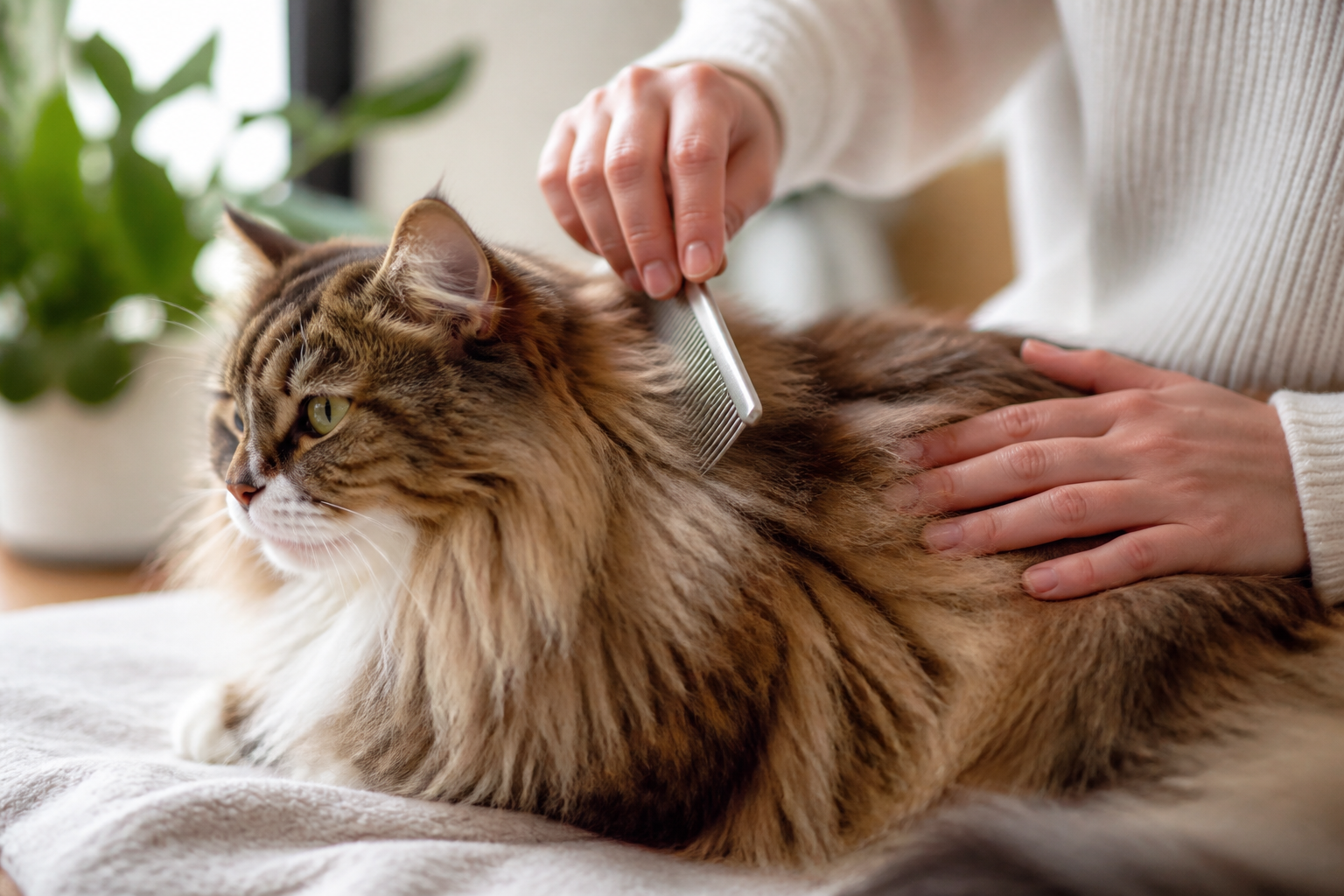
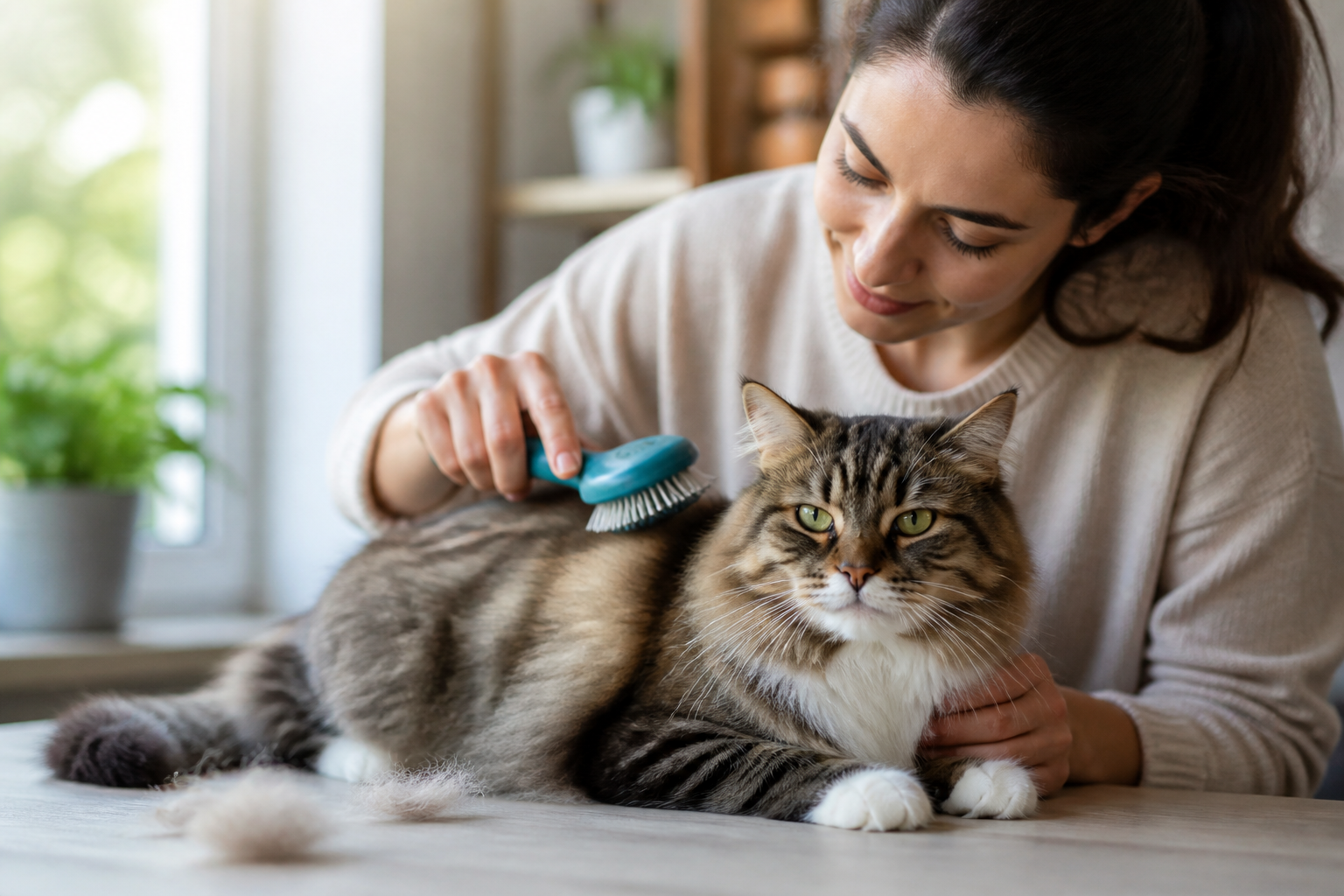
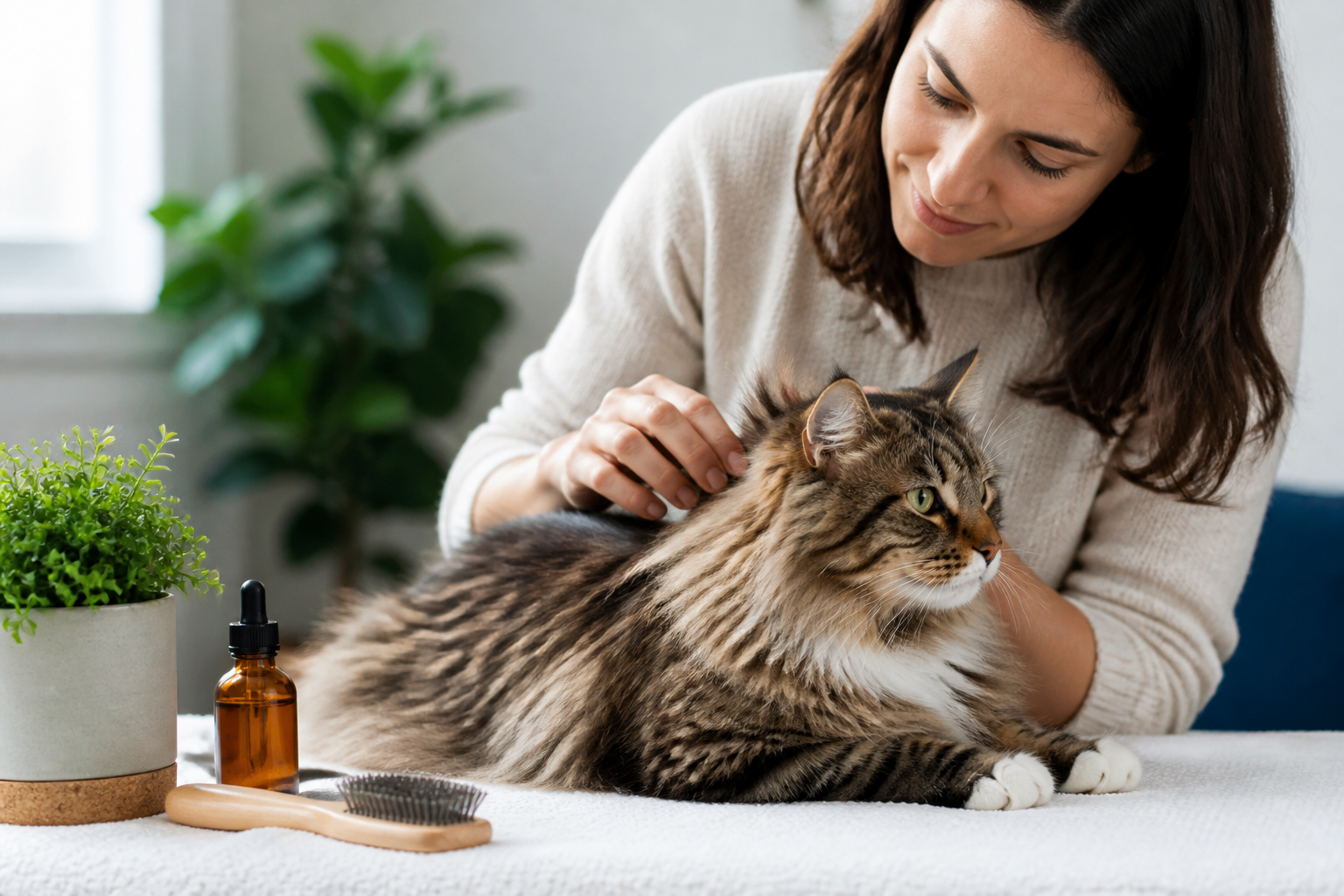
One of the most effective cat dandruff solutions is a regular grooming routine. Since many cats have flakes because they cannot groom themselves properly, you can step in to help. This is particularly important for senior cats or those with limited mobility. Explore our cat grooming supplies to find brushes, combs, and other helpful tools.
Step 1: Choose the right tool. / A soft bristle brush or a high quality slicker brush from a brand like Kong works well for most coats. Long-haired cats may need a stainless steel comb to reach the undercoat.
Step 2: Brush in the direction of hair growth. / Use gentle, short strokes. This helps lift the dead skin cells and distribute natural oils across the fur.
Step 3: Focus on problem areas. / Pay extra attention to the lower back and the base of the tail. These are the most common spots for dandruff to accumulate.
Step 4: Keep sessions short. / Most cats prefer several two-minute sessions rather than one long grooming marathon. Reward them with a treat afterward to create a positive association. For more feline grooming guidance, see our article about caring for cats during grooming.
Should You Bathe a Cat with Dandruff?
Most experts recommend avoiding baths unless your cat is physically dirty or has a greasy skin condition. Water and soap can actually strip away the natural oils your cat needs to keep their skin hydrated. If you must use a topical product, look for a waterless foam shampoo or a moisturizing wipe designed specifically for cats. These are much less stressful and help hydrate the skin without the need for a full dunk in the tub.
Improving Nutrition and Hydration
What your cat eats directly impacts the quality of their skin. If you are looking for long term cat dandruff solutions, start with the food bowl. High quality protein and healthy fats are the building blocks of a flake-free coat. Browse our cat food category for recipes and nutrition options.
The Power of Omega Fatty Acids
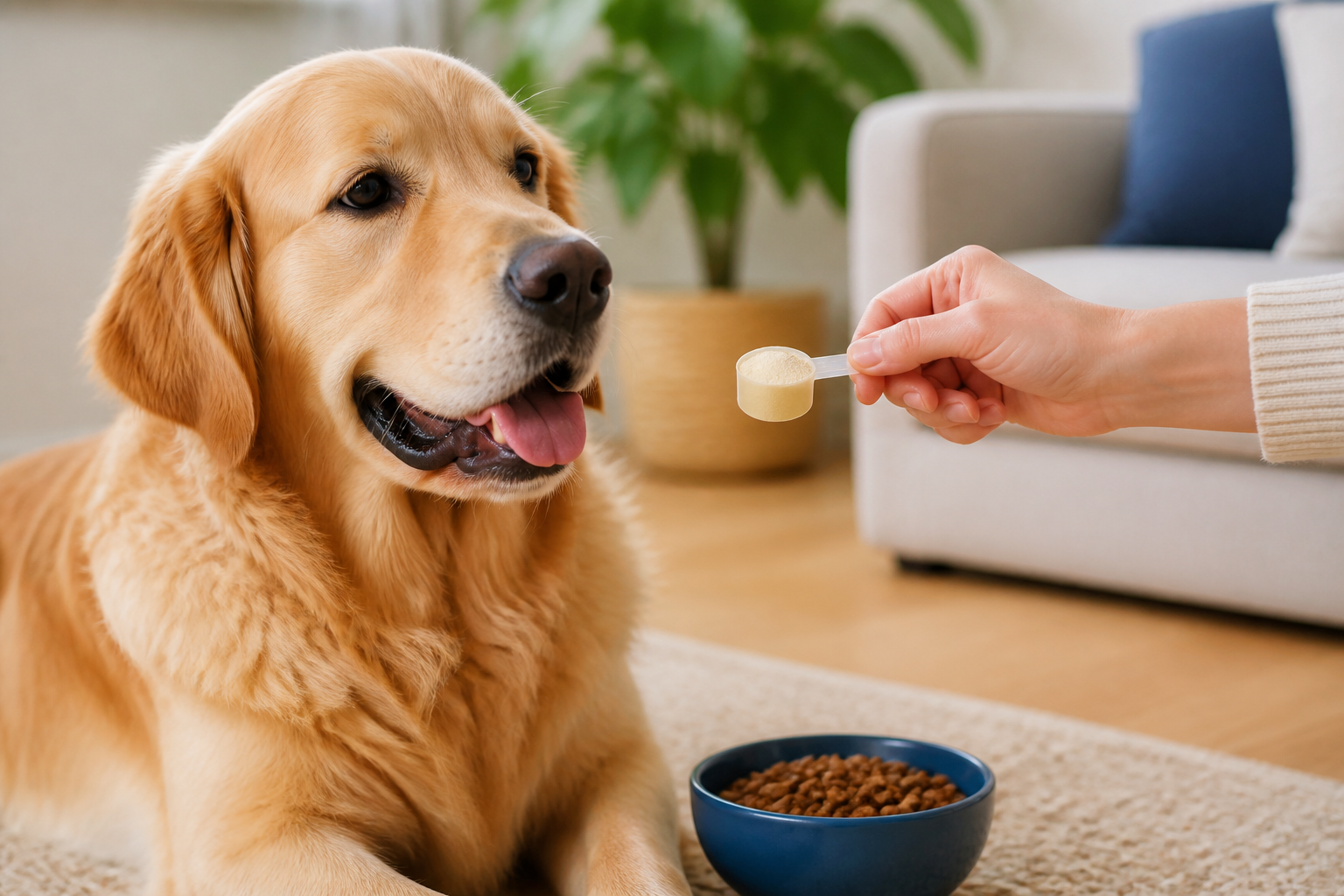
Omega-3 fatty acids, specifically EPA and DHA, are incredible for skin health. They act as natural anti-inflammatories. You can find these in fish oil supplements or in premium cat foods from brands like Stella and Chewy's or Orijen. Adding a squirt of salmon oil to their dinner can make a visible difference in their coat within three to four weeks.
Boosting Hydration
Many cats live in a state of mild dehydration. This is especially true for those who eat only dry kibble. Cats have a low thirst drive because their ancestors obtained most of their moisture from prey. If their body is dehydrated, the skin is one of the first places to lose moisture. Wet cat food options can help add moisture to your cat's daily routine.
- Add wet food to their daily routine to increase water intake.
- Use a pet water fountain to encourage more frequent drinking.
- Mix a tablespoon of water or low-sodium broth into their meals.
- Ensure fresh water is available in multiple locations around the house.
Prescription and Specialized Diets
If your vet determines that a food allergy or a specific medical condition is causing the dandruff, they may recommend a prescription diet. These formulas are designed with limited ingredients or specific nutrient levels to support skin repair. We carry prescription options like Farmina Vet Life and Royal Canin through our pharmacy partnership. These diets are formulated to provide targeted support for cats with sensitive skin or metabolic needs.
Key Takeaway: A combination of high-quality protein, Omega fatty acids, and increased moisture is often the most effective way to treat dry, flaky skin from the inside out.
Environmental Adjustments for Skin Health
Your home environment plays a larger role in your cat’s skin health than you might think. Simple changes to your living space can reduce the likelihood of dry skin and flakes.
Humidifiers
If you notice your own skin feeling tight and dry during the winter, your cat is feeling it too. Running a humidifier in the rooms where your cat spends the most time can help. Maintaining a humidity level of around 40 to 50 percent keeps the air from pulling moisture out of your cat's skin.
Stress Reduction
Stress can cause a variety of physical symptoms in cats, including skin issues. When a cat is stressed, they may over-groom or stop grooming entirely. Both behaviors lead to coat problems. Ensure your cat has a quiet place to retreat and plenty of vertical space. For cats dealing with situational anxiety, calming supplements or pheromone diffusers can help create a more relaxed environment.
Cleaning Products
Sometimes, dandruff is a reaction to harsh chemicals in your home. Laundry detergents used on their bedding or floor cleaners can cause contact dermatitis. Switch to pet-safe, unscented cleaning products to see if your cat's skin improves. Even the scent of a strong air freshener can be enough to irritate a sensitive cat's system.
Bottom line: Controlling the indoor climate and reducing environmental stressors can significantly improve the health of your cat's skin barrier.
When Home Remedies Are Not Enough
While many cat dandruff solutions can be handled at home, you should know when to call in the experts. It is easy to assume it is just dry skin, but sometimes the skin is a window into a more serious internal problem.
You should consult your veterinarian if you notice:
- Large patches of hair loss or thinning fur.
- The dandruff is yellowish or greasy rather than white and dry.
- Your cat is biting or licking their skin until it is raw.
- There are visible scabs, bumps, or sores on the skin.
- Your cat's appetite or energy levels have changed.
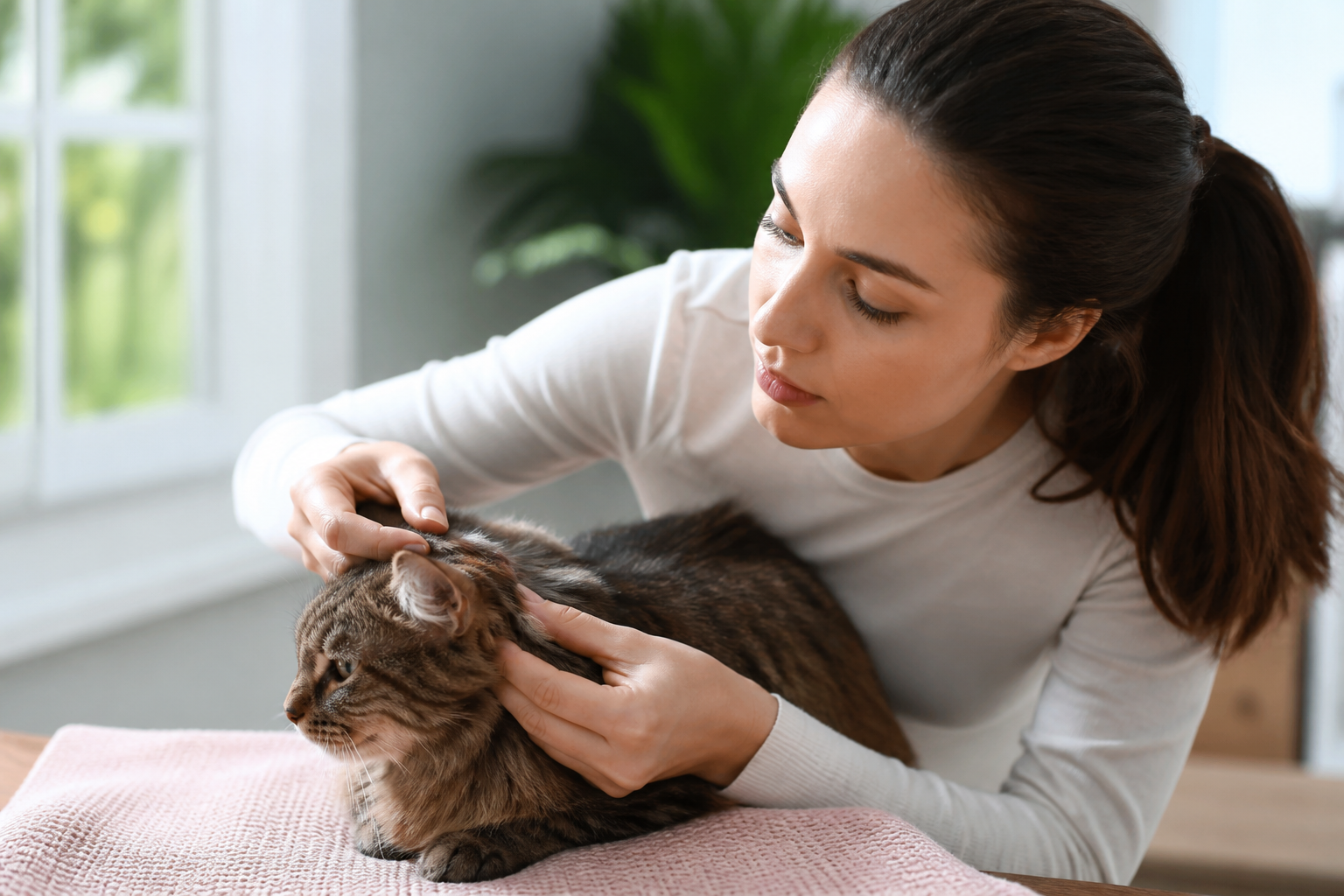
A veterinarian can perform a skin scraping to look for mites or a fungal culture to check for ringworm. They might also suggest blood work to rule out conditions like hyperthyroidism or kidney disease. Early intervention is always better for your pet's comfort and your peace of mind.
Summary of Cat Dandruff Solutions
Managing feline flakes requires a multi-step approach. Start by assessing your cat's environment and diet. Ensure they are getting enough moisture and healthy fats. Step in with a regular grooming routine to help them manage the skin cells they can no longer reach. If the problem persists, do not hesitate to seek professional help to rule out parasites or underlying health conditions. At BaxterBoo, we are committed to helping you provide the best possible care for your pets. Whether you need a new grooming tool, a high quality supplement, or a prescription diet through our pharmacy, we are here to support your journey toward a healthy, flake-free cat.
- Brush your cat daily to remove dead skin and distribute natural oils.
- Increase hydration by adding wet food or using a water fountain.
- Supplement the diet with Omega-3 fatty acids for skin barrier support.
- Use a humidifier during dry winter months to prevent environmental dryness.
- Keep up with flea and tick prevention to avoid parasite-related skin irritation.
For recurring flea concerns, browse our cat flea and tick collection.
Bottom line: A proactive approach involving grooming, nutrition, and environmental care will solve most cases of cat dandruff.
FAQ
Is cat dandruff the same as dander?
No, they are different things. Dander consists of microscopic skin cells that all cats shed naturally, while dandruff refers to the large, visible white flakes that indicate dry skin or a grooming issue.
Can I use human dandruff shampoo on my cat?
You should never use human shampoo on a cat because the pH balance is completely different. Human products often contain ingredients that are toxic to cats if swallowed during grooming; always use a product specifically formulated for felines.
Why does my cat only have dandruff on their lower back?
This is the most common area for dandruff because it is the hardest spot for many cats to reach. If a cat has arthritis or is overweight, they may stop grooming their lower back and tail area entirely, leading to a buildup of flakes.
Will changing my cat's food help with dandruff?
Yes, nutrition is a major factor in skin health. Switching to a high-quality food with balanced Omega-3 and Omega-6 fatty acids can help strengthen the skin barrier and reduce flaking over time.