Save 15% on your 1st Autoship learn more

 Email us
 Live Chat
 FAQs
FAQs





Introduction
You are relaxing on the couch when your cat jumps into your lap for some attention. As you stroke their back, you notice tiny white specks scattered across their dark fur. It looks like a dusting of salt or perhaps small flakes of paper. Your first thought might be that your house is dusty, but those flecks are actually coming from your cat's skin. At BaxterBoo, we know how much you care about your cat's comfort and appearance. Seeing these flakes often leads to a common question: is this normal dander or is it dandruff? While these terms are often used as if they mean the same thing, they represent very different aspects of feline health. Dander is a natural part of being a cat, but dandruff is often a signal that your cat needs a little extra help. This article will help you identify the differences and provide practical steps to keep your cat’s coat shiny and flake-free.
Quick Answer: Cat dander is microscopic, natural skin shedding that all cats experience and is invisible to the eye. Cat dandruff consists of visible white flakes or clumps caused by skin irritation, poor nutrition, or underlying health issues.
What Is Cat Dander?
Every cat produces dander. It is a completely natural biological process where the body sheds old, dead skin cells to make room for new ones. This cycle of skin renewal happens constantly. In a healthy cat, these cells are shed individually and are microscopic in size. Because they are so small, you will never actually see dander on your cat’s fur or on your furniture. It is essentially invisible to the naked eye.
Dander is often discussed in the context of human allergies. Many people believe they are allergic to cat hair, but the true culprit is a protein called Fel d 1. This protein is produced in a cat's saliva and skin glands. When a cat grooms itself, the protein dries on the fur and skin. As the microscopic dander sheds, it carries this protein into the air and onto household surfaces. Because dander is so light, it can remain airborne for a long time, which is why it triggers sneezing and itchy eyes in sensitive individuals. For more information about feline allergens, read our guide to whether Maine Coon cats are hypoallergenic.
Even "hypoallergenic" or hairless breeds produce dander. While these cats might shed less fur, their skin still goes through the same renewal process. If you have a cat, you have dander in your home. It is not a sign of poor health or lack of grooming. It is simply a sign that your cat’s skin is doing its job of regenerating itself.
Identifying Cat Dandruff
Unlike dander, cat dandruff is very visible. It appears as white or grayish flakes that sit on top of the fur or cling to the skin. If you pet your cat and a flurry of white specks falls onto your clothes, you are looking at dandruff. These flakes are actually large clumps of dead skin cells that have stuck together. This happens when the skin’s natural cycle is disrupted, causing cells to shed too quickly or in larger patches.
Dandruff is generally categorized into two types: dry and oily. Dry dandruff is the most common and looks like fine, white powder or small scales. It usually happens when the skin lacks moisture. Oily dandruff, also known as seborrhea, appears as yellowish, greasy flakes that may have a distinct odor. In these cases, the skin is producing too much oil, which traps the dead skin cells and causes them to clump together in heavy patches.
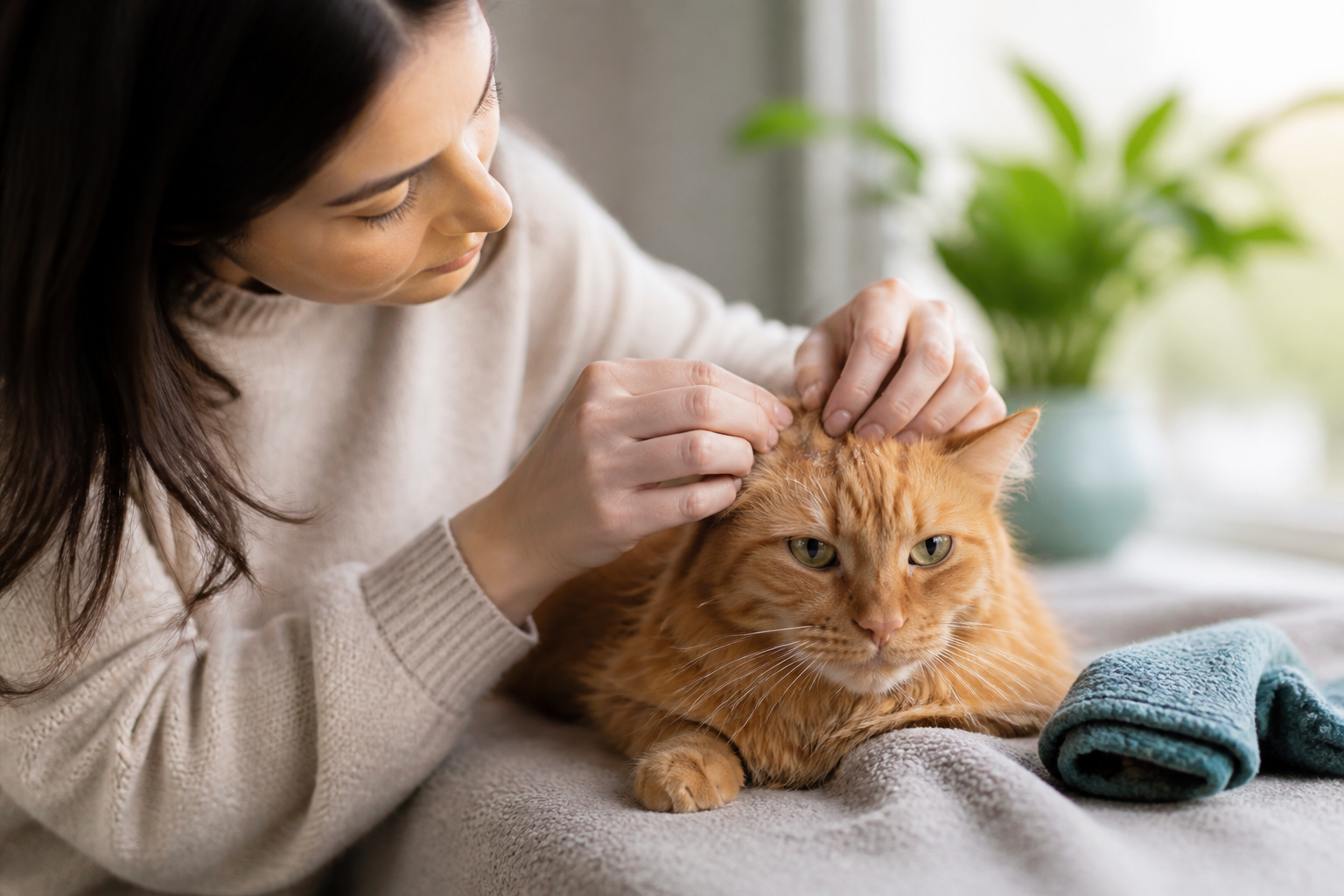
If your cat has dandruff, it is often accompanied by other symptoms. You might notice that their coat looks dull or feels coarse. The skin underneath the fur might look red or irritated. In some cases, your cat might scratch more often or over-groom specific areas. While a few occasional flakes might not be a major concern, persistent dandruff is a message from your cat's body that something in their environment or health needs to be adjusted.
Key Takeaway: If you can see the flakes, it is dandruff. Dander is microscopic and invisible, while dandruff is a visible sign that the skin barrier is struggling.
Common Causes of Flaky Skin in Cats
Understanding why your cat has dandruff is the first step toward fixing it. Several factors can cause the skin to become dry or overly oily. Some are simple environmental issues, while others involve internal health.
Environmental Factors
The air inside your home has a big impact on your cat's skin. During the winter, indoor heating systems can strip moisture from the air. This dry environment quickly dries out a cat's skin, leading to those familiar white flakes. Similarly, if you live in a very arid climate, your cat may struggle with dry skin year-round.
Another environmental cause is improper grooming products. Cats have a different skin pH than humans. If you use human shampoo on your cat, it can destroy the protective lipid layer of their skin. This leads to irritation and flaking. Always use products specifically formulated for felines to avoid stripping their natural oils. You can explore our cat grooming collection for feline shampoos, wipes, brushes, and other care supplies.
Nutritional Deficiencies
Healthy skin starts from the inside. A cat’s diet must contain a specific balance of nutrients to maintain a supple skin barrier and a glossy coat. The most important of these are Omega-3 and Omega-6 fatty acids. If a cat's food is low in these essential fats, their skin can become brittle and prone to cracking.
Poor hydration is another nutritional factor. Cats often have a low thirst drive. If they eat a diet consisting only of dry kibble and do not drink enough water, they can become mildly dehydrated. This lack of moisture shows up first in the skin and coat. Increasing water intake can often significantly reduce the appearance of dandruff. Browse our cat food selection when reviewing your cat’s everyday nutrition.
Weight and Mobility Issues
One of the most frequent causes of dandruff, especially along the lower back and base of the tail, is obesity. Cats are meticulous groomers, but if a cat is overweight, they simply cannot reach certain parts of their body. When a cat stops grooming an area, dead skin cells and natural oils build up, eventually flaking off as dandruff.
Age-related conditions like arthritis can also play a role. If a senior cat finds it painful to twist and reach their back or hindquarters, those areas will quickly develop flaky skin. In these cases, the dandruff is a secondary symptom of a mobility problem rather than a primary skin disease.
How to Treat and Prevent Cat Dandruff
The good news is that most cases of cat dandruff are manageable at home. By making a few small changes to your cat's routine, you can often clear up the flakes within a few weeks.
Establish a Grooming Routine
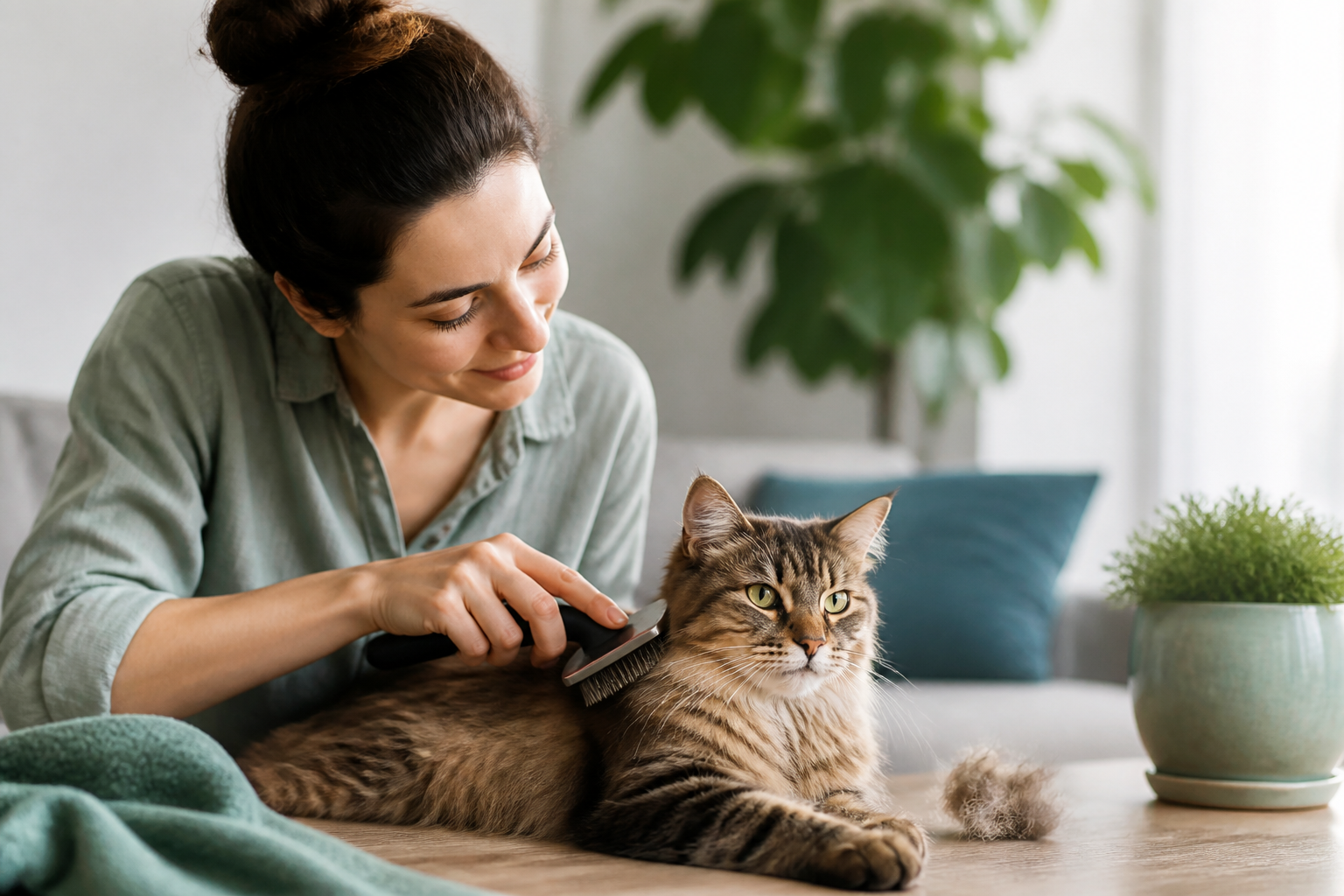
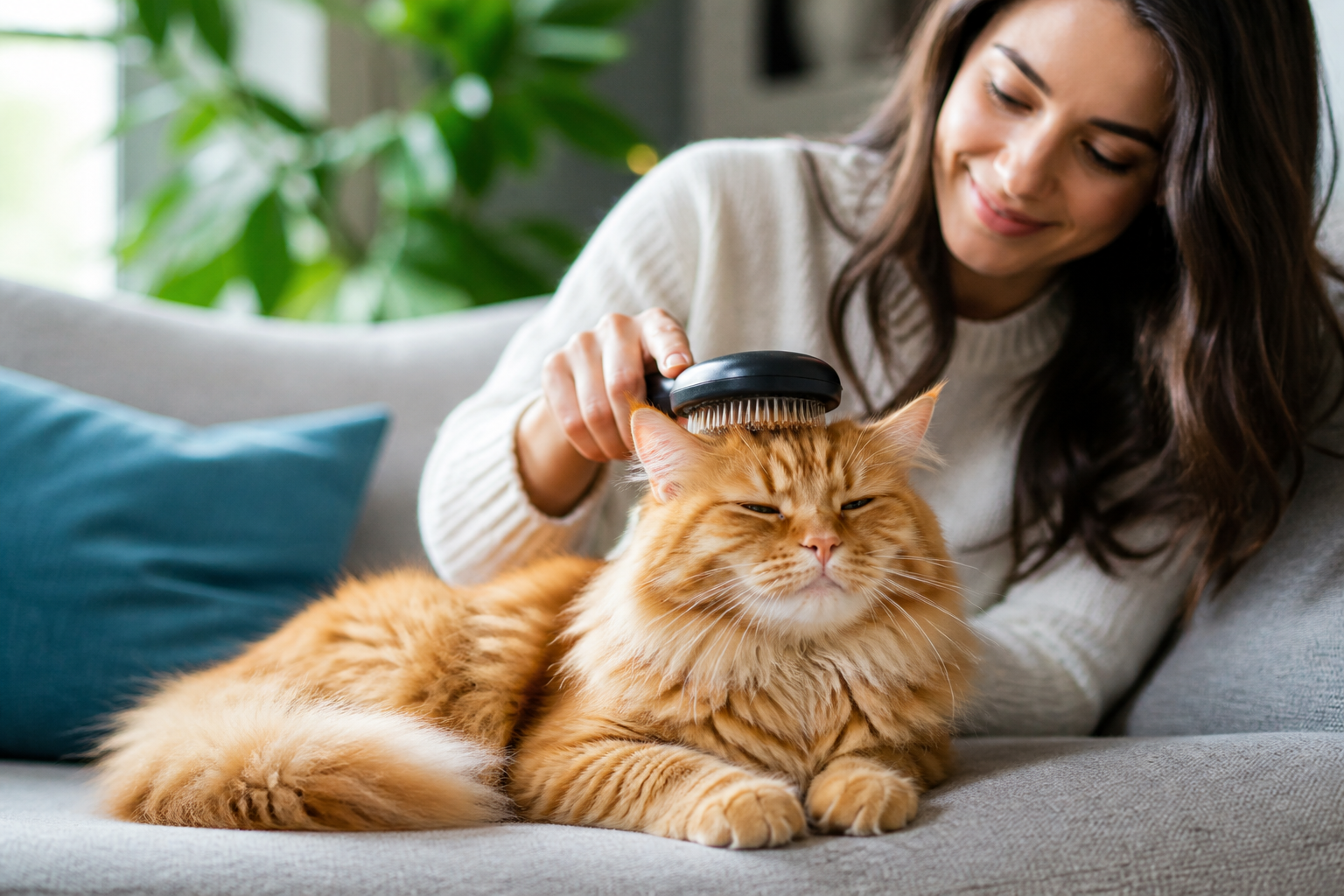
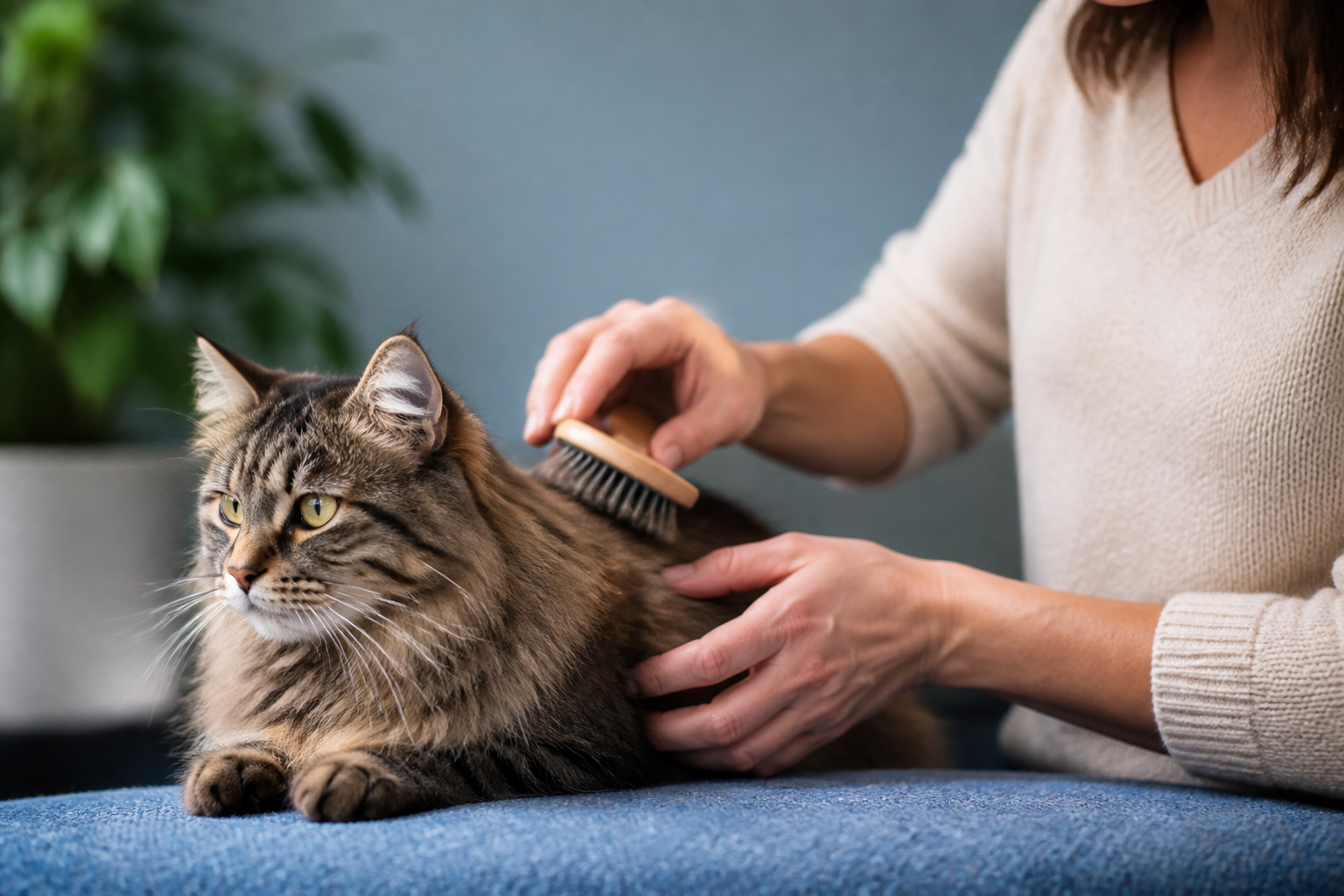
Regular brushing is one of the most effective ways to manage dandruff. It mimics the natural grooming process and helps distribute skin oils across the entire coat. For most cats, a daily session with a soft bristle brush or a slicker brush is enough. At BaxterBoo, we carry a wide selection of grooming tools specifically designed to remove loose undercoat hair and stimulate the skin without causing irritation.
Step 1: Choose the right tool / Use a soft-bristle brush for short-haired cats and a slicker brush or undercoat rake for long-haired cats.
Step 2: Start gently / Begin brushing in the direction of hair growth, focusing on areas the cat might struggle to reach, like the lower back.
Step 3: Check the skin / As you brush, look for any redness, bumps, or signs of parasites like fleas.
Step 4: Keep it positive / Offer a small treat after grooming to make it an activity the cat enjoys.
Improve Diet and Hydration
If environmental changes do not help, look at your cat's bowl. Switching to a high-quality food that is rich in fish oils can provide the fatty acids needed for skin health. Brands like Farmina and Royal Canin offer specialized formulas that focus on skin and coat sensitivity.
You can also add a salmon oil or Omega-3 supplement to their current food. These supplements help support the skin's moisture barrier from the inside out. To help with hydration, consider adding a little wet food to their diet or investing in a pet water fountain. Many cats prefer running water over a still bowl and will drink significantly more when a fountain is available.
Manage the Home Environment
If your cat's dandruff gets worse in the winter, a humidifier can be a great investment. Adding moisture back into the air helps prevent the skin from drying out. You should also ensure your cat has a stress-free environment. Stress can cause a cat to over-groom or stop grooming altogether, both of which lead to skin issues.
Vet Tip: If your cat's dandruff is accompanied by hair loss, scabs, or intense itching, consult your veterinarian. These symptoms could indicate a fungal infection like ringworm or a parasitic infestation like Cheyletiella mites, often called "walking dandruff."
When to See a Veterinarian
While most dandruff is a minor cosmetic issue, it can sometimes be a red flag for more serious health problems. The skin is the largest organ of the body, and it often reflects what is happening internally.
Conditions like diabetes, hyperthyroidism, and kidney disease can all cause changes in a cat's skin and coat. These diseases often lead to dehydration or changes in metabolism that result in a dull, flaky appearance. If you notice your cat is drinking much more water than usual, losing weight, or acting lethargic in addition to having dandruff, a vet visit is necessary.
Parasites are another reason to seek professional help. Fleas and mites can cause significant skin irritation. Some mites actually look like large white flakes moving across the skin. Our cat pharmacy offers prescription medications and parasite-control products. If your vet confirms a parasite issue, these treatments should be used according to veterinary guidance.
Key Takeaway: Persistent dandruff that does not respond to grooming or diet changes deserves a veterinary checkup to rule out underlying medical conditions.
Dander and Human Allergies
If you are a cat owner who suffers from allergies, you are likely more concerned with dander than dandruff. While you cannot stop a cat from producing dander, you can manage the amount that stays in your home.
Dander sticks to soft surfaces. Regularly washing your cat's bedding in hot water can significantly reduce the allergen load in your house. Vacuuming with a machine that has a HEPA filter is also helpful, as it traps the tiny dander particles rather than blowing them back out into the air.
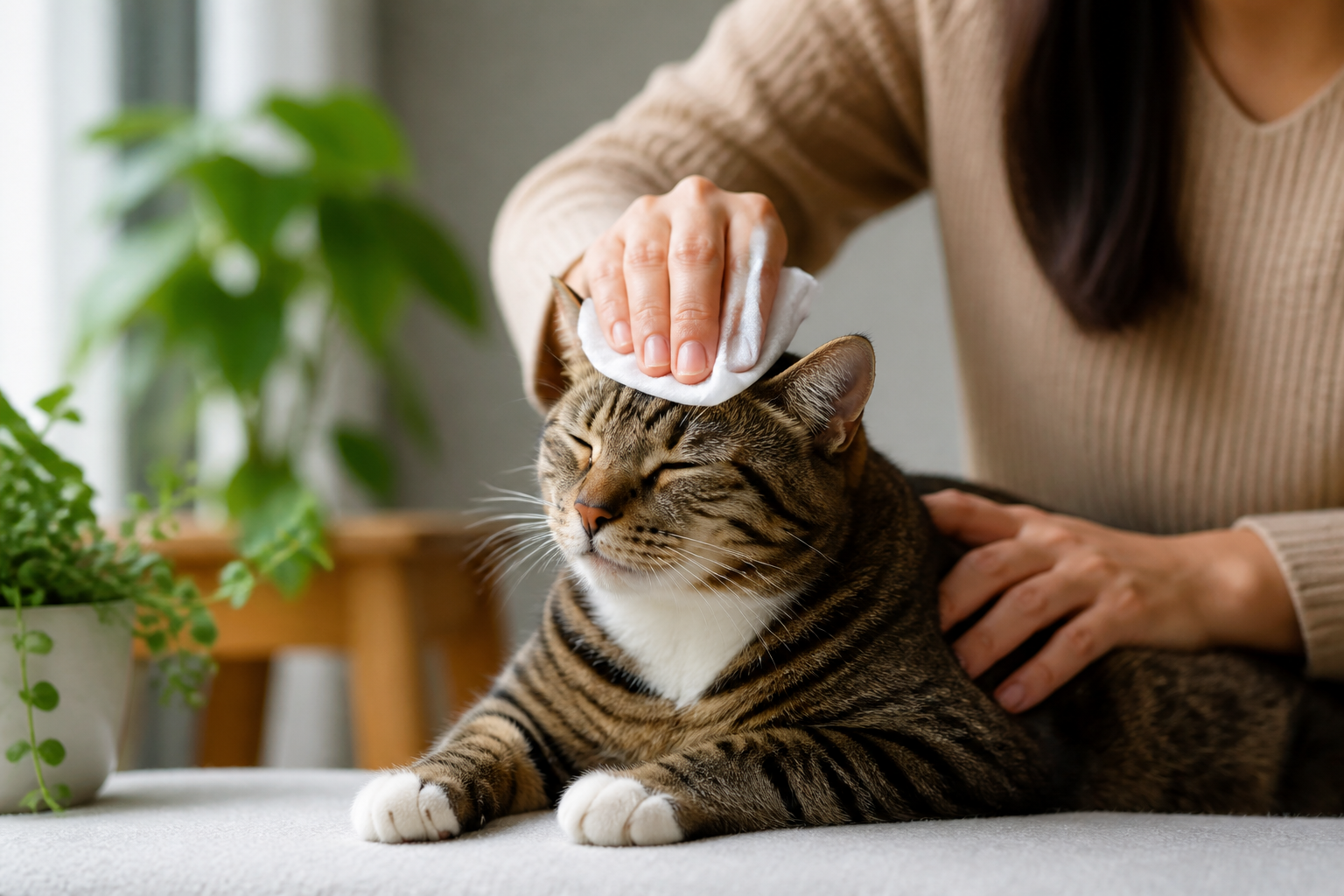
Bathing your cat can temporarily reduce dander, but most cats find baths very stressful. A better alternative is using a damp microfiber cloth to gently wipe your cat's fur once a day. This picks up the saliva proteins and loose dander before they can become airborne. Since dander is invisible, you have to be proactive with these cleaning steps even if your cat looks perfectly clean.
For additional allergy-management ideas, see our tips for managing cat allergens at home.
Bottom line: Dander is unavoidable, but regular cleaning and air filtration can help allergy sufferers coexist comfortably with their cats.
Summary of Cat Skin Care
Managing your cat’s skin health is a long-term commitment that involves both external care and internal support. By distinguishing between natural dander and problematic dandruff, you can respond quickly to your cat's needs.
- Dander is invisible, natural, and cannot be stopped.
- Dandruff is visible, abnormal, and usually treatable.
- Grooming helps distribute oils and removes dead cells.
- Nutrition provides the building blocks for a healthy skin barrier.
- Health checkups are vital if flakes are accompanied by other symptoms.
Keeping your cat’s coat in top shape does more than just make them look good. It ensures they are comfortable and free from the itchiness that often accompanies dry skin. Whether you are adjusting their diet or stepping up your brushing routine, these small acts of care go a long way.
For all your grooming and nutritional needs, you can browse our cat skin and coat care collection for grooming products, supplements, and everyday support. If your cat requires prescription skin support or parasite control, our pet pharmacy is a convenient resource for managing those ongoing needs with the help of your veterinarian. We also recommend our Autoship programme for your favorite skin-supporting foods and supplements so you never run out of the essentials.
FAQ
Can I use human dandruff shampoo on my cat?
No, you should never use human dandruff shampoo on a cat because the pH levels are very different. Human shampoos often contain ingredients like zinc pyrithione or salicylic acid at concentrations that can be toxic or highly irritating to feline skin. Always use a shampoo specifically formulated for cats to ensure it safely cleanses without damaging their protective skin barrier.
Why does my cat have flakes only at the base of their tail?
Flakes concentrated at the base of the tail are often a sign that the cat cannot reach that area to groom properly. This is common in cats that are overweight or those suffering from arthritis in their spine or hips. Increasing your manual brushing in that specific area and talking to your vet about weight management or joint support can help resolve the issue.
Is cat dandruff contagious to humans?
Standard dandruff caused by dry skin or poor nutrition is not contagious to humans. However, if the "dandruff" is actually caused by parasites like Cheyletiella mites or a fungal infection like ringworm, these can be passed to humans and other pets. If the flakes seem to move or if you develop itchy red spots on your own skin, see a veterinarian immediately.
How long does it take for cat dandruff to go away?
If you make changes to your cat's diet or start a new grooming routine, it typically takes about three to four weeks to see a significant improvement. This is because it takes time for new, healthy skin cells to grow and for the coat to reflect the improved nutrition. Be consistent with your care and consult a vet if you do not see progress after a month.