
 Save 15% on your 1st Autoship learn more

 Email us
 Live Chat
 FAQs
FAQs





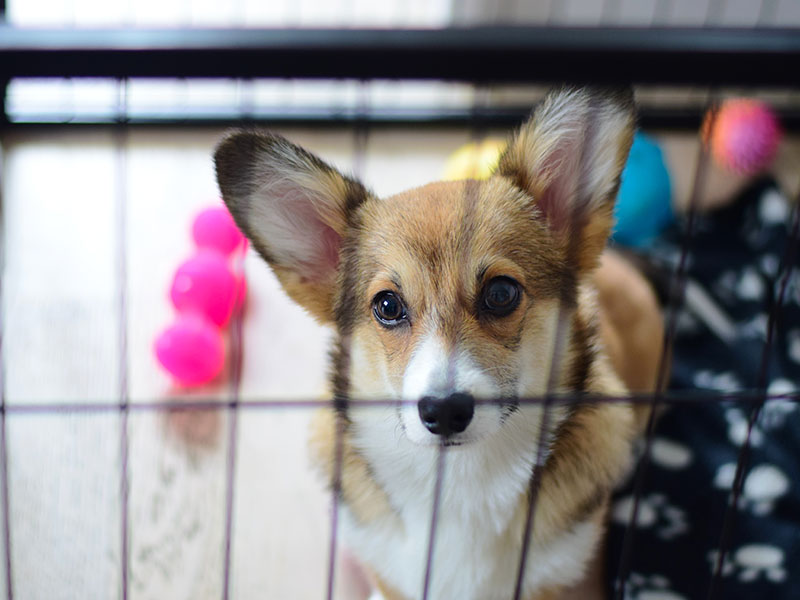
Crate training benefits both you and your pup. For your dog, crate time means privacy and security in his own den, a feeling of safety when left home alone, and the ability to better control bathroom breaks. In addition, crate training allows your pet to safely and securely go with you on family road trips, travel in airplanes, and go to the vet, groomer, or a kennel as needed. Training your dog to spend time in a crate also benefits you by creating peace of mind in knowing your dog is safe when you are asleep or not at home.
Are There Any Drawbacks to Crate Training?
There are some potential drawbacks to crate training your dog. The crate can be too overwhelming for a dog that suffers from separation anxiety. He may try to destroy his crate in an attempt to get out and find you. Trying to destroy the crate could cause injury.
Another drawback could be whining and barking. While you're home, whining could cause confusion since you'll have trouble determining whether he just wants to be with the family or needs to go outside. Of course, nighttime whining can also make it more difficult for the family to sleep.
Never use the crate as a punishment if your dog is destructive or eliminates in the house. If you send him there when he's in trouble, he'll begin to associate it with fear, and training him will become even more difficult.
How Do You Choose the Right Crate for a Dog?
Crates are typically available in three varieties: flight kennels made of plastic, fabric crates on a collapsible frame, and metal pens on a collapsible frame. They also come in a wide variety of sizes. Your dog should be able to stand up, turn around, and lay down comfortably. If you're purchasing a crate for a puppy, factor in his adult size when choosing one. Otherwise, you'll need to spend more money as he grows.
It's also important not to purchase a crate that is too big. When it is too large, your dog may choose to use part of it as a bathroom. If you're crate training a puppy, block off the excess space until he is large enough to need it. You can do so with an expandable dog crate divider.
How Do You Introduce Your Dog to the Crate?
Set up your dog's crate in an area of the home that your family uses a lot. Typically, this is the family room or kitchen. It is important for your dog to feel like he can still be with the family even when crated.
Before you introduce your pet to the new space, put his favorite blanket, his bed, or a towel inside it to create more comfort. Consider adding his favorite toy as well. Bring him to the crate while talking to him in an excited and happy tone of voice. Encourage him to enter it by dropping a few treats just inside the door. Make sure the door is securely open so it doesn't hit him and make him fearful. Never force him into it, either.
Throughout the day, continue using toys, treats, and enthusiasm to get him used to the crate. As he becomes used to it, you can feed him his meals inside the crate so that he becomes comfortable being in it for longer periods.
Confine him inside for short periods while you're home, remaining encouraging throughout the process. Use the same command anytime you want him to go to his kennel to avoid confusion. Eventually, you can begin leaving him while you run short errands, working your way up until he can handle longer times confined.
Remember to leave the door open even when he isn't crated. This way, he can use the kennel as a safe space and will likely be more willing to go into it when the time comes.
How Long Can a Dog Stay in His Crate?
The length of time your dog can safely be in a kennel depends on his age. Puppies and senior dogs cannot hold their bladder or bowels for as long and should not be crated more than 2-4 hours at a time. Adult dogs can typically be in their crate for up to 8 hours a day. Never leave your dog confined for long periods while you are home. Dogs are social animals. They need to be around their "pack" (your family) often to remain happy and healthy. Never leave your dog in a crate for hours without water. You can purchase a hanging pet bowl to ensure he has what he needs.
What Can You Do Instead of Crating Your Dog?
Dogs shouldn't be confined for more than 8 hours at a time, but workdays tend to last longer when you factor in lunch breaks and commute times. For this reason, it is important to consider other options. Some workplaces allow well-behaved dogs to come to the office. Can you bring your pup with you sometimes?
If taking your dog with you is not an option, consider hiring a dog walker. He or she can check on your pup in the middle of the day and ensure he has water, can go outside to use the bathroom, and get some extra pets. Another option is doggie daycare. If your dog loves to run and play with other dogs, a daycare situation will keep him happy, allow him to exercise, and ensure he doesn't spend too much time alone in a kennel.
Some dogs take to crates right away while others need to warm up to the idea of spending time in a kennel. If you become frustrated, save your training for another day. By remaining calm and sticking to a routine, you and your puppy are sure to see success and have a healthier, happier bond because of it.








