Save 15% on your 1st Autoship learn more

 Email us
 Live Chat
 FAQs
FAQs





Introduction
You might be petting your favorite feline and notice a flurry of white specks on their dark fur. Or perhaps you see small flakes left behind on their favorite sunny windowsill. It is common to wonder if these flakes are a sign of a health problem or just a normal part of being a cat. At BaxterBoo, we talk to many owners who feel confused about the difference between dander and dandruff. While both involve shedding skin cells, one is a natural biological process and the other often signals a need for extra care. This guide will help you identify what you are seeing and how to support your cat's skin health. Understanding these differences ensures your pet stays comfortable and your home stays clean.
What is Cat Dander?
Cat dander is a normal and healthy part of a cat's life. It consists of microscopic skin cells that shed as your cat's skin renews itself. Every cat produces dander regardless of their breed or hair length. Even hairless cats produce these tiny particles because dander comes from the skin rather than the fur.
Dander is generally too small to see with the naked eye. If your cat has a healthy coat and you do not see visible flakes, they are still producing dander. This is often the primary trigger for human allergies. A specific protein called Fel d 1 is found in cat saliva and skin glands. When cats groom themselves, this protein sticks to the dander. As the dander sheds, it floats through the air and settles on furniture.
Key Takeaway: Dander is a microscopic, natural shedding process that occurs in all cats and is the main cause of cat allergies in humans.
What is Cat Dandruff?
Cat dandruff is the visible flaking of skin. Unlike dander, dandruff is not a normal state for a healthy cat. It occurs when skin cells shed in large clumps instead of individual microscopic pieces. You will notice these as white or yellowish flakes on the fur, bedding, or floor.
Dandruff usually means the skin is either too dry or too oily. When the skin lacks moisture, the top layer cracks and peels away. If the skin is too oily, dead cells can get trapped and clump together before falling off. You might also notice a dull coat, localized itching, or even thinning hair in areas where dandruff is most prominent.
Comparing Dander vs Dandruff Cat
It is helpful to see the specific differences side by side. This helps you determine if your cat is experiencing a normal bodily function or an issue that requires a change in routine.
| Feature | Cat Dander | Cat Dandruff |
|---|---|---|
| Visibility | Microscopic and invisible | Visible white or yellow flakes |
| Normalcy | Perfectly normal and healthy | Sign of a health or environmental issue |
| Size | Tiny particles that float in air | Larger flakes that settle on fur or bedding |
| Prevention | Cannot be prevented | Can be managed and treated |
| Symptoms | No physical symptoms for the cat | May include itching, redness, or oily fur |
Quick Answer: Dander is invisible and normal for all cats. Dandruff is visible flaking that suggests your cat has dry skin, an underlying health condition, or a lack of proper grooming.
Common Causes of Cat Dandruff
If you see visible flakes, it is time to look for the "why" behind the skin irritation. Several factors can cause a cat's skin to become imbalanced.
Environmental Factors
Low humidity is a major cause of dry skin in cats. This is especially common during the winter months when indoor heating systems dry out the air. If the air is dry, the skin loses moisture quickly. Using a humidifier in the rooms where your cat spends the most time can provide significant relief.
Nutrition and Hydration
A cat's skin and coat reflect what they eat. Diets low in essential fatty acids, particularly Omega-3 and Omega-6, can lead to a dry and brittle coat. Poor hydration also plays a role. Since many cats have a low thirst drive, they may not drink enough water to keep their skin hydrated from the inside out. You can explore our cat food selection when reviewing your cat's daily nutrition.
Grooming Challenges
Cats are usually excellent at grooming themselves. However, certain conditions can make it hard for them to reach every spot.
- Obesity: Overweight cats often cannot reach their lower back or base of the tail.
- Arthritis: Senior cats with joint pain may find it uncomfortable to twist and groom.
- Illness: A cat that feels unwell often stops grooming entirely.
When a cat stops grooming, oils and dead skin cells build up. This leads to visible dandruff and sometimes matting. Regular brushing by an owner can help bridge this gap.
Vet Tip: If your cat has sudden or severe dandruff along with hair loss or scabs, consult your veterinarian. They can rule out parasites like fleas or mites and check for underlying conditions like hyperthyroidism or diabetes.
How to Manage and Reduce Flakes
Once you identify that your cat has dandruff, you can take practical steps to improve their skin health. Most cases of mild dandruff respond well to simple changes at home.
Step 1: Establish a Brushing Routine
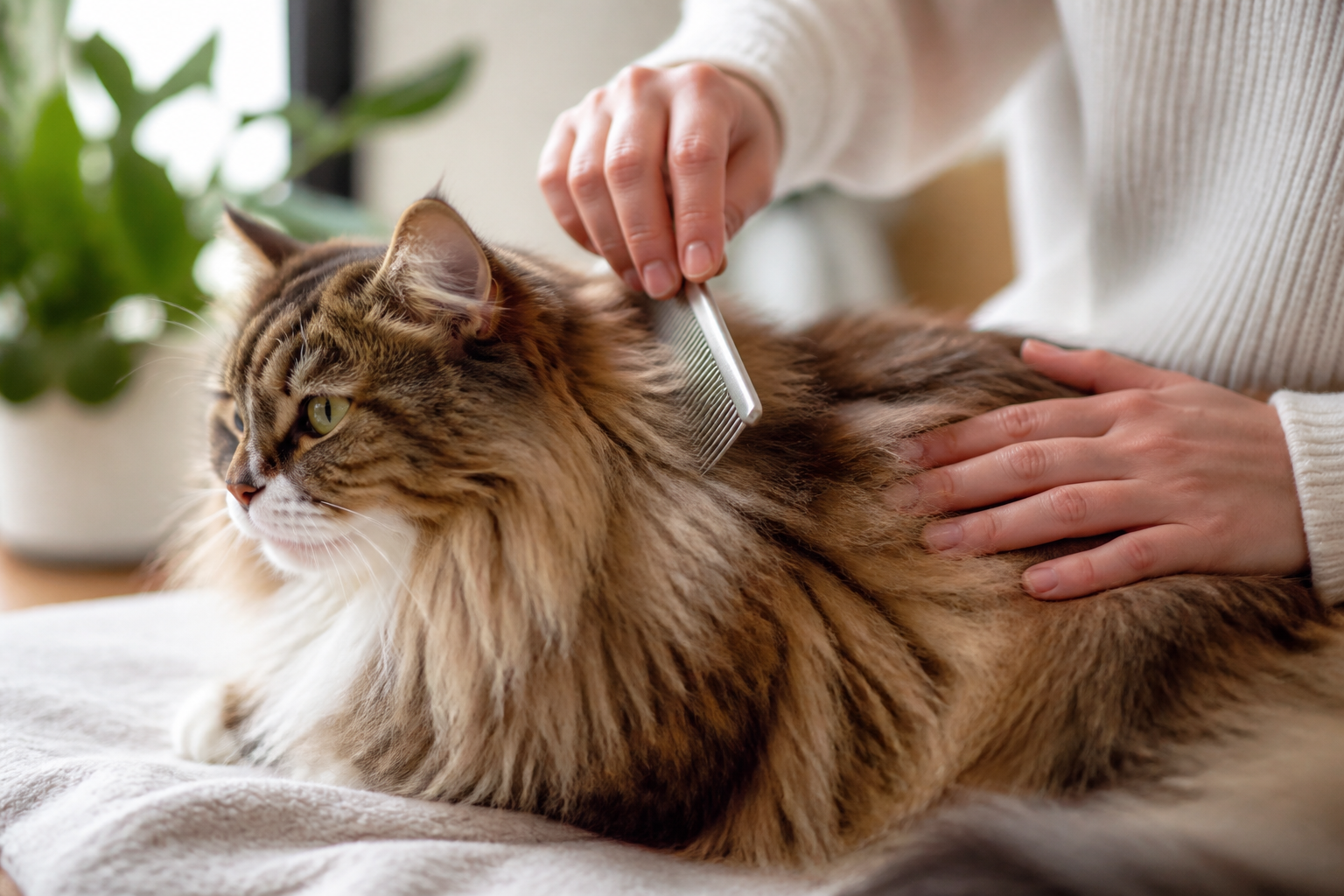
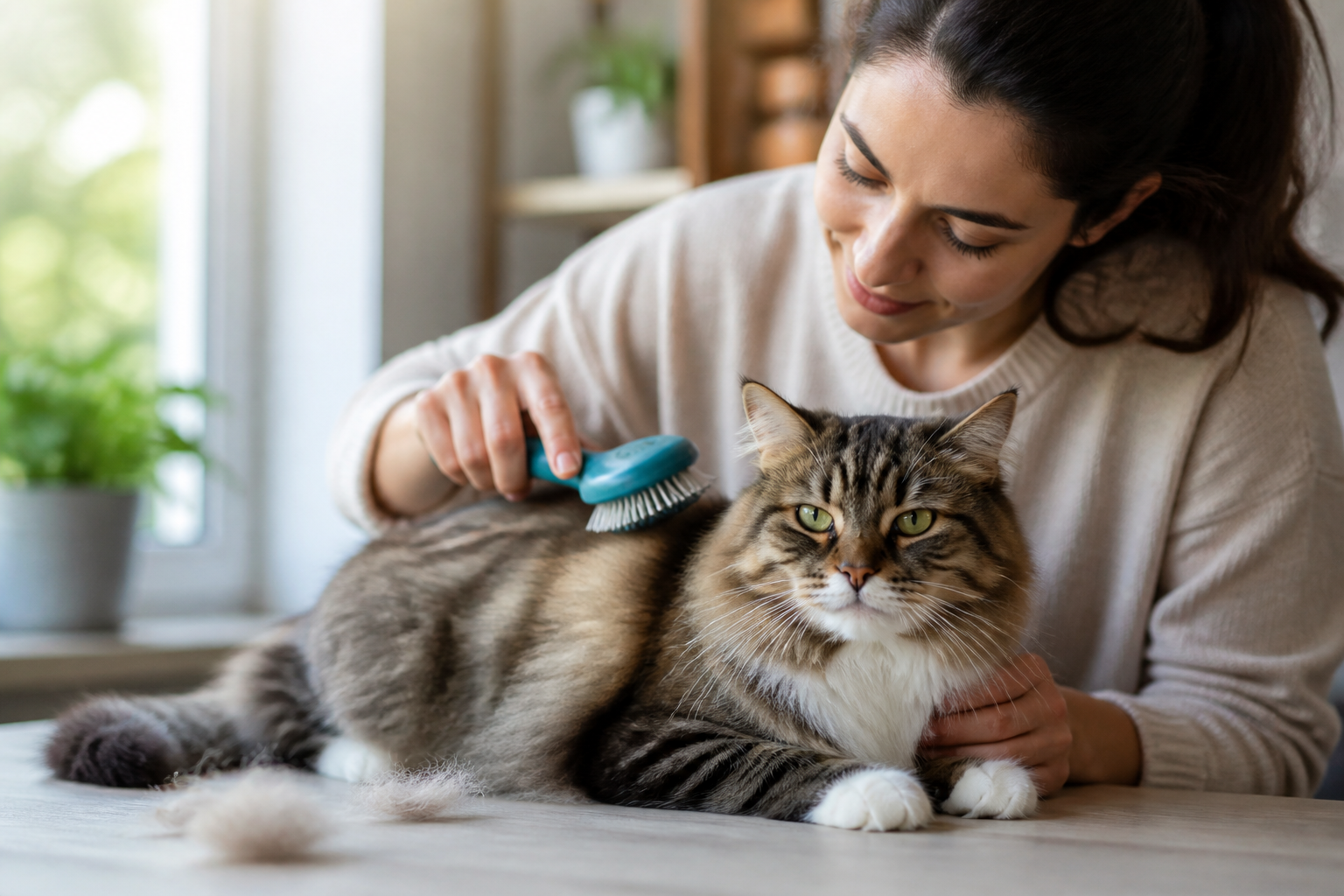
Brushing your cat daily is the most effective way to manage skin health. It removes loose fur and dead skin cells before they can clump. More importantly, brushing distributes the natural oils produced by the skin across the entire coat. For short-haired cats, a soft bristle brush works well. Long-haired cats may need a slicker brush or a metal comb to reach the undercoat. Our cat grooming supplies include brushes, combs, shampoos, and other useful tools.
Step 2: Improve Nutrition and Hydration
Switching to a high-quality food can make a world of difference. Look for recipes that include fish oils or added Omega fatty acids. You might also consider adding a hydration supplement or a water fountain. Many cats prefer running water over a still bowl, which encourages them to drink more throughout the day.
Step 3: Address Health and Hygiene
In some cases, your vet may recommend a medicated or moisturizing shampoo. Be sure to use products specifically formulated for cats, as human shampoos have the wrong pH balance for pet skin. If your cat is struggling with weight or mobility issues, talk to your vet about a management plan.
Our cat skin and coat care collection offers products related to grooming and coat support.
Our pharmacy carries FDA-approved medications and prescription diets through our pet pharmacy. This is a great resource if your vet prescribes a specific therapeutic food for skin support or weight management.
Bottom line: Regular grooming and proper nutrition are the best defenses against cat dandruff.
Reducing Dander for Allergy Sufferers
While you cannot stop a cat from producing dander, you can reduce its impact on your home. This is vital if someone in your household has allergies.
- Use Air Purifiers: HEPA filters are designed to trap microscopic particles like dander.
- Clean Regularly: Vacuum carpets and wash cat bedding weekly in hot water.
- Wipe Down the Cat: Using a damp cloth or pet-safe dander wipes can trap dander before it becomes airborne.
- Designate Cat-Free Zones: Keep cats out of bedrooms to provide an allergy-free sleeping environment.
For more allergy-focused guidance, read our article about managing cat allergens and grooming routines.
When to See a Veterinarian
Most dandruff is a minor cosmetic issue, but it can sometimes point to more serious health problems. You should schedule a vet visit if you notice:
- Red, inflamed, or sore skin under the flakes.
- Patches of total hair loss.
- Excessive scratching, biting, or licking of the skin.
- A greasy or foul-smelling coat.
- Changes in appetite or energy levels.
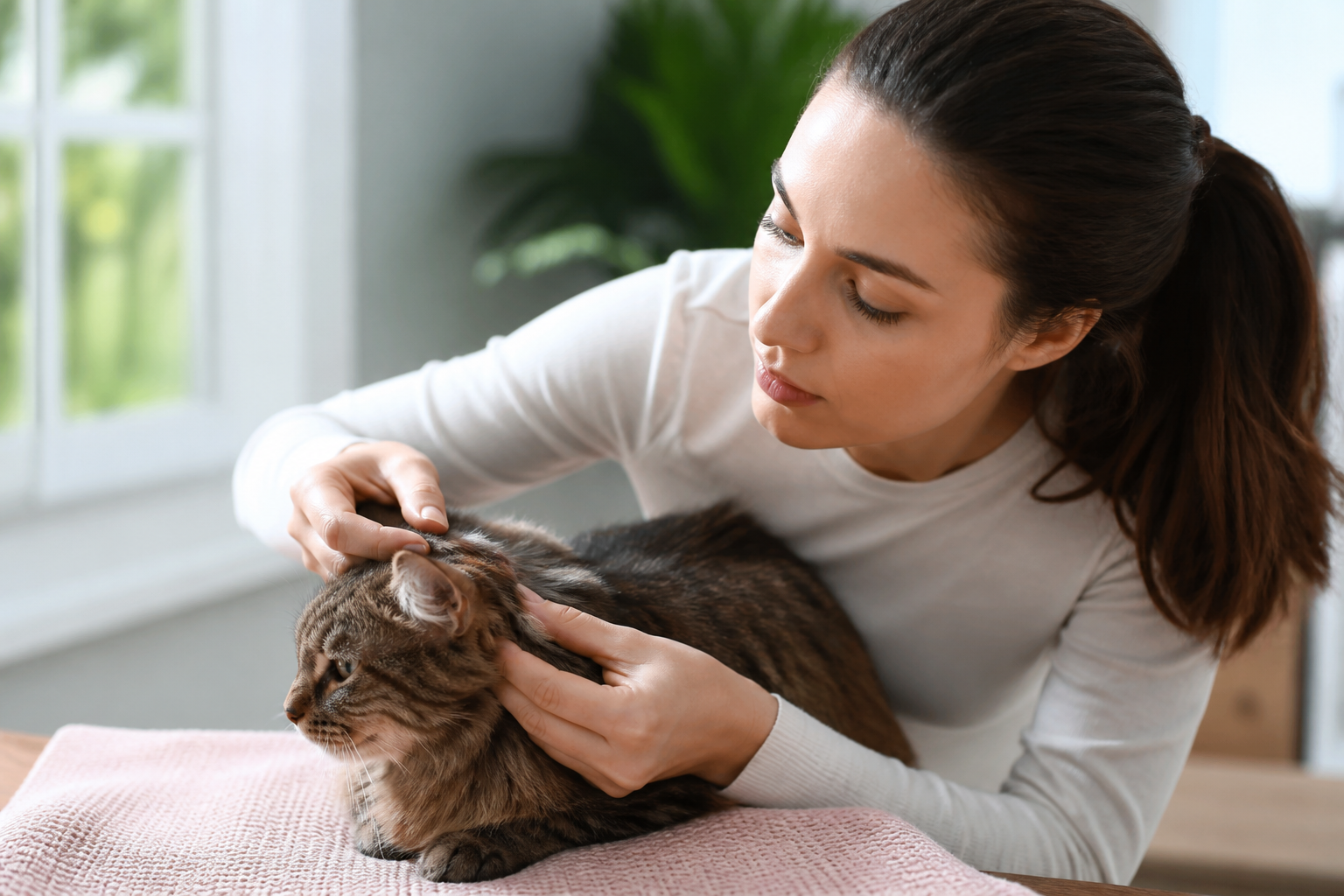
Your veterinarian can perform skin scrapings or blood tests to find the root cause. This ensures your cat receives the right treatment, whether it is a simple supplement or a prescription medication.
Conclusion
Distinguishing between dander and dandruff is the first step in being a proactive cat owner. Remember that dander is an invisible, natural part of every cat. Dandruff is a visible sign that your cat's skin needs some extra support. By focusing on high-quality nutrition, regular brushing, and a comfortable home environment, you can keep your pet's coat shiny and flake-free.
We are here to help you find the right tools for the job. Our team at BaxterBoo offers a curated selection of grooming supplies and supplements to keep your cat feeling their best. Consider signing up for our Autoship programme to save on recurring needs like skin-support treats or flea prevention. You can also join the MVP Rewards programme to earn points on every purchase you make for your feline friend.
FAQ
Can I get rid of cat dander entirely?
No, you cannot completely eliminate cat dander because it is a natural byproduct of skin cell renewal. Every cat produces it, even hairless ones. You can, however, reduce the amount of dander in your home by using HEPA air purifiers, vacuuming frequently, and brushing your cat daily.
Is cat dandruff contagious to humans or other pets?
Standard dandruff caused by dry skin or poor grooming is not contagious. However, if the "dandruff" is actually caused by parasites like Cheyletiella mites (often called walking dandruff), it can spread to other pets and occasionally cause itchy spots on humans. If you suspect your cat has a parasitic infection, see a vet for a proper diagnosis and treatment.
Does bathing my cat help with dandruff?
Occasional bathing with a moisturizing cat shampoo can help remove existing flakes and hydrate the skin. However, bathing a cat too often can actually strip away natural oils and make dry skin worse. Most cats do better with regular brushing and improved nutrition rather than frequent baths.
What is the best way to tell the difference between dander and dandruff?
The simplest way to tell the difference is by sight. If you see white flakes on your cat's fur or their favorite sleeping spot, you are looking at dandruff. If you do not see anything but you or a guest are sneezing, you are likely reacting to the invisible dander that all cats shed.