
 Save 15% on your 1st Autoship learn more

 Email us
 Live Chat
 FAQs
FAQs





Introduction
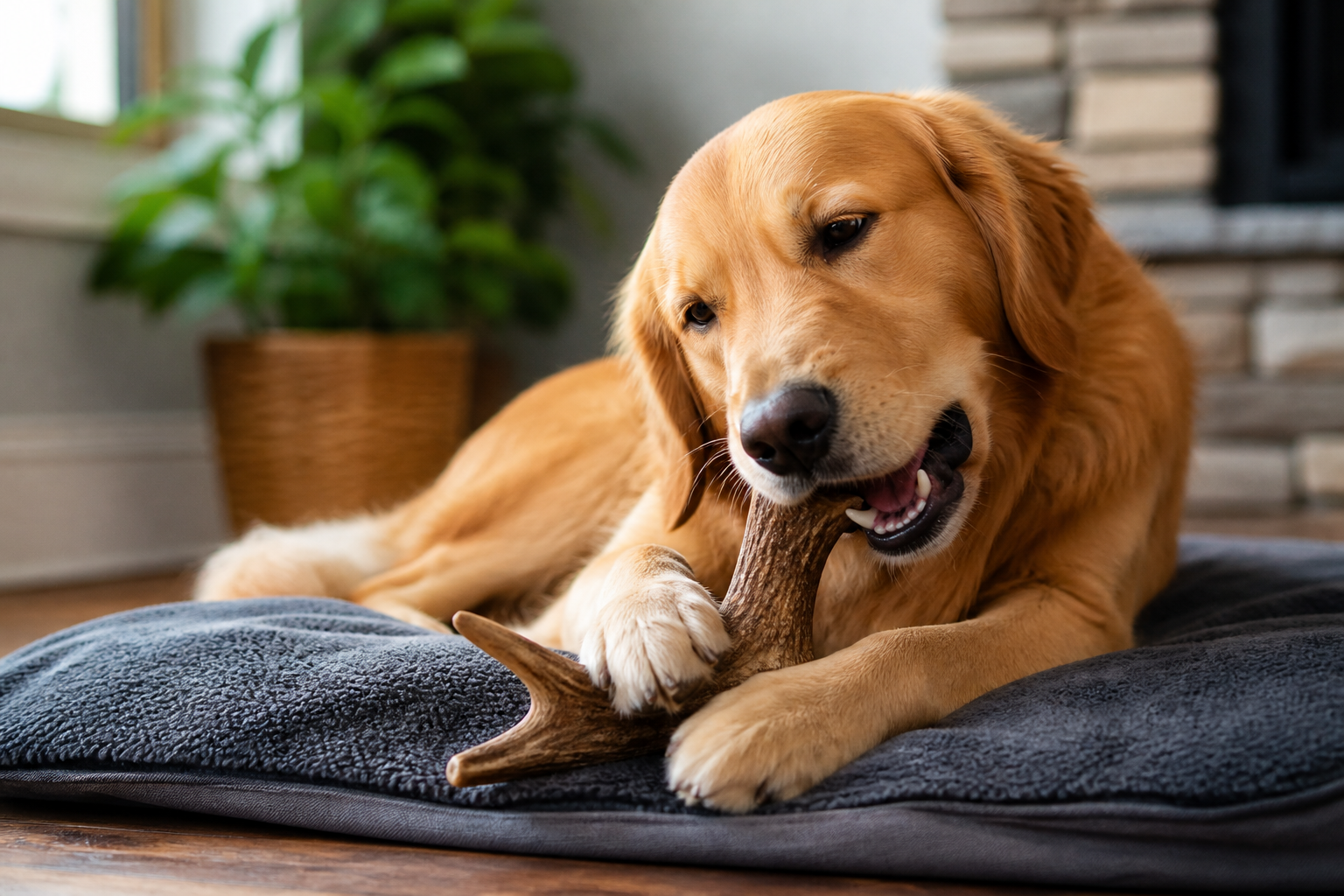
You are standing in the pet supply aisle, looking at a bin of natural antlers. They look sturdy, they do not smell, and the label claims they will scrub away the tartar on your dog's back molars. Every dog owner wants to avoid the stress and expense of a professional dental cleaning under anesthesia. If a natural chew can do the work for you, it seems like a win for everyone. At BaxterBoo, we get questions about antlers every day from people who want to keep their pets' breath fresh and their teeth white.
Quick Answer: Antlers do help clean teeth through mechanical scraping as a dog gnaws on the hard surface. However, they carry a high risk of causing painful tooth fractures and gum injuries. Most veterinarians recommend safer, more flexible alternatives for daily dental care.
This article explores how antlers interact with dental health. We will look at the different types of antlers available and the specific risks they pose to your dog's mouth. We also provide a list of safer alternatives that protect the enamel while still freshening breath.
How Antlers Mechanically Clean Teeth
The primary way antlers clean teeth is through mechanical friction. When your dog gnaws on a hard object, the surface of that object rubs against the tooth. This action can scrape away plaque, which is the soft, sticky film of bacteria that forms after a meal. If plaque is not removed, it hardens into tartar within about 48 hours. Once tartar forms, it is much harder to remove without professional tools.
Antlers are particularly effective at this scraping action because they are incredibly dense. They do not give way when the dog bites down. Instead, the tooth must slide across the surface of the antler. This "sandpaper" effect is what many owners notice when they see their dog's teeth looking whiter after a chewing session.
However, this cleaning is mostly limited to the tips and the flat surfaces of the teeth. It does not reach the gumline, which is where the most dangerous bacteria live. Periodontal disease starts under the gums, and no hard chew can effectively reach that area.
Key Takeaway: While antlers can scrape away surface plaque, they cannot replace the deep cleaning of the gumline that occurs during a professional veterinary dental exam.
The Significant Risk of Dental Fractures
The biggest concern with using antlers for dental health is their hardness. A dog's teeth are covered in enamel, which is the hardest substance in their body. However, enamel is also brittle. If a dog bites down on something harder than their enamel with enough force, the tooth will break before the object does.
Antlers are essentially bone. They are designed by nature to be weapons for male deer and elk. They do not have the "give" or flexibility of a rubber toy or a softer dental chew. Many veterinarians report that antlers are one of the most common causes of slab fractures in their clinics.
What is a Slab Fracture?
A slab fracture occurs when a large piece of the tooth breaks off, usually from the side of the fourth upper premolar. This is the large carnassial tooth that dogs use for heavy chewing. This type of break often exposes the pulp or the nerve of the tooth.
An exposed nerve is extremely painful. Because dogs are experts at hiding pain, you might not notice the fracture right away. You may see your dog chewing on only one side of their mouth or suddenly losing interest in hard treats. If left untreated, a fractured tooth can lead to a root abscess, facial swelling, and systemic infection.
Gum and Soft Tissue Injuries
Beyond the teeth themselves, the sharp edges of a chewed antler can damage the soft tissues of the mouth. As a dog wears down the antler, the edges can become jagged. This can lead to:
- Lacerations on the tongue
- Bleeding gums
- Punctures in the roof of the mouth
- Small splinters getting stuck between teeth
Vet Tip: If you notice your dog has a broken tooth or bleeding gums after chewing, contact your veterinarian immediately. A fractured tooth with an exposed nerve requires professional repair or extraction to prevent infection and pain.
Understanding Different Antler Varieties
Not all antlers are created equal. They vary in density and hardness based on the animal they came from and how they were processed. Understanding these differences can help you evaluate the risk level.
Deer Antlers
Deer antlers are generally the densest and hardest variety. They have a very thick outer wall and a smaller amount of inner marrow. Because they are so hard, they are the most likely to cause a tooth fracture in an aggressive chewer. We usually suggest avoiding these for dogs with any history of dental sensitivity.
Elk Antlers
Elk antlers are often larger and have a slightly less dense outer core than deer antlers. They contain more "marrow," which is the softer, porous material inside. Many retailers sell split elk antlers. These are cut down the middle to expose the marrow immediately. Split antlers are a bit safer because the dog can focus on scraping the softer marrow rather than gnawing on the hard outer shell.
Moose Antlers
Moose antlers are often sold as "paddles" or "slices." They tend to be the softest of the three main types. While still hard, they have a different mineral structure that makes them slightly more prone to wearing down rather than causing a snap. They are still quite hard, though, and should be monitored closely.
Bottom line: While elk and moose antlers are slightly less dense than deer antlers, they all pose a risk of dental fractures due to their lack of flexibility.
How to Tell if a Chew is Too Hard
At BaxterBoo, we want you to be able to test any toy or chew before you give it to your dog. There are two simple "rules of thumb" used by veterinary dental experts to determine if a chew is safe.
- The Knee Test: If you would not want to be hit in the kneecap with the object, it is too hard for your dog's teeth.
- The Thumbnail Test: Try to press your thumbnail into the surface of the chew. If the chew is so hard that your nail leaves no mark or indentation, it does not have enough "give" to be safe for heavy chewing.
Antlers fail both of these tests. They are hard, heavy, and completely rigid. This is why many experts suggest moving away from antlers and toward products that have more flexibility.
Evaluating Your Dog's Chewing Style
Your dog's individual personality also determines the risk level.
- The Nibbler: This dog slowly licks and gnaws at the edges of a chew. They rarely apply full jaw pressure. Antlers may be less risky for them, but still not risk-free.
- The Destroyer: This dog wants to crack the chew in half. They use their back molars to apply massive pressure. This dog is at the highest risk for a slab fracture.
- The Gulper: This dog tries to swallow pieces whole. For them, antlers are a major choking and blockage hazard.
Safer Alternatives for Dental Health
If your goal is to clean your dog's teeth, there are several options that are much safer than antlers. These products provide the same mechanical scraping action but are designed to crumble or flex under pressure.
Dental Chews and Treats
High-quality dental treats are formulated to be hard enough to scrape teeth but soft enough to break apart before a tooth does. We carry brands like Greenies and Zesty Paws that are designed specifically for this purpose. Many of these treats also contain ingredients like chlorophyll or cinnamon to help freshen breath.
When choosing a dental treat, look for the Veterinary Oral Health Council (VOHC) seal. This seal means the product has been tested and proven to reduce plaque or tartar. You can compare options in our dental treats collection.
Durable Rubber Toys
If your dog needs the mental stimulation of chewing, durable rubber toys are a better choice. Brands like Kong or West Paw create toys with a "bounce" or "give." These toys massage the gums and can help scrape away some soft plaque without the risk of fracturing the enamel. You can even smear some dog-safe toothpaste or a bit of peanut butter inside the grooves to encourage more chewing time. Explore our dental dog toys for flexible playtime options.
Manual Brushing
No chew, toy, or treat is as effective as a toothbrush. Brushing your dog's teeth with a pet-safe toothpaste is the gold standard of care. It allows you to reach the gumline and remove plaque before it mineralizes into tartar.
For more at-home guidance, read these pet dental care tips.
Bottom line: Combining daily brushing with VOHC-approved dental treats is the most effective and safest way to manage your dog's oral hygiene.
The Role of Diet in Dental Health
What your dog eats every day also impacts their dental health. Some "kibble" is marketed as being better for teeth, but most standard dry food crumbles too easily to provide any real scraping benefit.
However, there are specific prescription dental diets available. These kibbles are larger and have a fibrous structure that does not shatter when the dog bites into it. Instead, the tooth sinks into the kibble, allowing the fibers to scrub the tooth all the way to the gumline.
Our pharmacy at BaxterBoo, operated through our partnership with Pet's Choice, provides these FDA-approved prescription dental diets. If your veterinarian recommends a specific food like Royal Canin Dental or Farmina Vet Life for your dog's oral health, you can fulfill that prescription through our pet pharmacy.
When to Visit the Vet for Dental Concerns
Dental health is about more than just white teeth. It is a major component of your dog's overall wellness. Bacteria from the mouth can enter the bloodstream and cause damage to the heart, kidneys, and liver.
You should schedule a veterinary exam if you notice:
- Bad Breath: Constant foul breath is often a sign of infection or decaying teeth.
- Discolored Teeth: Yellow or brown buildup near the gumline is tartar that needs professional removal.
- Difficulty Eating: Dropping food or crying out while eating are signs of oral pain.
- Red or Swollen Gums: This indicates gingivitis or more advanced periodontal disease.
Vet Tip: Regular professional cleanings are the only way to remove tartar from beneath the gumline. Talk to your vet about a dental schedule that fits your dog's age and breed, especially if they are a small breed prone to dental issues.
For additional warning signs, see how to recognize hidden dental problems in dogs.
Conclusion
Antlers offer a tempting, natural way to keep a dog busy and scrape away surface plaque. However, the risk of a thousand-dollar dental surgery for a fractured tooth is a high price to pay for a "natural" treat. While some dogs chew antlers for years without an issue, the density of these chews makes them a gamble for your pet's enamel.
To keep your dog's mouth healthy, we suggest focusing on:
- Daily brushing with pet-safe toothpaste
- VOHC-approved dental treats
- Flexible rubber toys for heavy chewers
- Regular veterinary checkups and professional cleanings
You can find a wide selection of safer dental chews and toys in our Dental Care section. If your dog needs specific medical support for their teeth, our pharmacy partnership with Pet's Choice is here to help with prescription diets and medications. Signing up for the MVP Rewards program is a great way to save on the daily dental treats that keep your dog's breath fresh and their teeth strong.
FAQ
Can antlers cause my dog's teeth to wear down over time?
Yes, constant chewing on very hard surfaces like antlers can lead to attrition. This is a condition where the enamel is gradually worn away, exposing the brown dentin underneath. While this is a slower process than a sudden fracture, it can still lead to tooth sensitivity and a higher risk of decay.
Are split antlers safer than whole antlers for dogs?
Split antlers are considered slightly safer because the soft, nutrient-rich marrow is exposed. This encourages the dog to scrape at the center rather than biting down hard on the dense outer shell. However, the outer edges remain just as hard as a whole antler, so the risk of a fracture is still present during the chewing process.
My dog has been chewing antlers for years without a problem; are they safe for him?
Every dog has a different chewing style, but previous success does not guarantee future safety. As a dog ages, their teeth can become more brittle, making them more susceptible to fractures. Even a "gentle" chewer can accidentally apply too much pressure at the wrong angle and cause a slab fracture.
What should I do if my dog swallows a large piece of an antler?
If your dog swallows a large or sharp piece of an antler, you should contact your veterinarian or an emergency clinic immediately. Because antlers do not break down in the stomach, they can cause a life-threatening blockage in the intestines or lacerate the digestive tract. Watch for signs of distress, vomiting, or a lack of appetite.






