
 Save 15% on your 1st Autoship learn more

 Email us
 Live Chat
 FAQs
FAQs





Introduction
You lean in for a morning nuzzle from your pup and are immediately hit by a wave of stinky breath. You look closer and see a brown, concrete-like buildup at the base of their fangs. This is a common moment for many pet owners. It often leads to the question: do bones clean dogs teeth? At BaxterBoo, we hear this question frequently from owners who want to avoid the struggle of daily tooth brushing.
The short answer is yes, certain bones can help reduce plaque and tartar. However, the type of bone and how you give it matters immensely for your dog's safety. This post covers the science behind bone chewing, the risks of different bone types, and how to choose the right dental aids. Understanding these nuances helps you protect your dog’s smile without risking a trip to the emergency vet.
Quick Answer: Bones can help clean teeth through mechanical scraping that removes soft plaque before it hardens into tartar. While they are effective at reducing surface buildup, they cannot replace professional veterinary cleanings for existing gum disease.
The Science of How Bones Clean Teeth
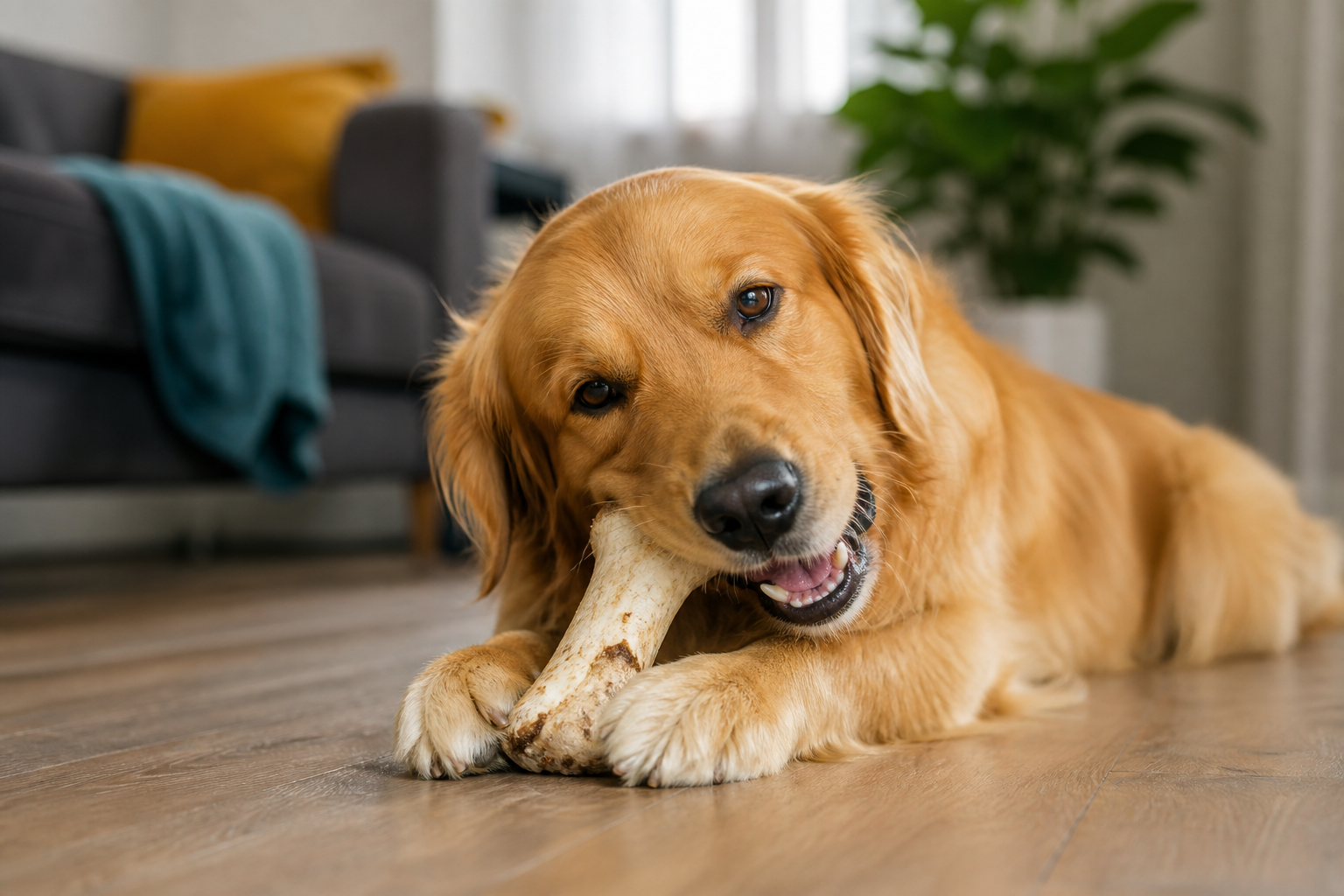
When a dog chews on a bone, they are not just eating. They are engaging in a mechanical process that mimics the way wild canines maintain their oral health. As the dog gnaws, the hard surface of the bone rubs against the enamel of the teeth. This friction acts like a toothbrush to scrape away food particles and soft plaque.
Meaty bones provide even more benefit. When a dog has to pull meat, gristle, and cartilage off a bone, it creates a flossing effect. The fibers of the meat slide between the teeth and scrub the gum line. This action is often more effective than chewing a perfectly clean, smooth bone.
Research has shown that raw beef bones can significantly reduce dental tartar in adult dogs. In some studies, dogs that chewed raw bones saw a reduction in tartar by over 70 percent in just two weeks. This is because the abrasive nature of the bone breaks down the mineralized deposits that regular kibble cannot touch.
Plaque vs. Tartar
It is important to know what bones can and cannot do. Plaque is the soft, sticky film of bacteria that forms on teeth after eating. Bones are excellent at removing this. Tartar is plaque that has mineralized and hardened onto the tooth. While bones can chip away at some tartar, they are rarely able to remove it all once it has firmly bonded to the enamel.
Key Takeaway: The mechanical action of gnawing on a bone provides both a scrubbing and flossing effect that helps prevent the formation of hard tartar.
For more at-home care ideas, review these pet dental care tips.
Raw Bones vs. Cooked Bones
This is the most critical distinction for any pet owner. You should never feed your dog cooked bones. When bones are cooked, the heat changes the molecular structure of the bone. This makes the bone brittle and prone to splintering.
Cooked bones from your dinner table can shatter into sharp shards. These shards can slice the mouth, throat, or intestines. They can also cause life-threatening obstructions in the digestive tract. Raw bones, by contrast, are more flexible and break down differently in the stomach.
At BaxterBoo, we recommend sticking to raw or specifically prepared air-dried bones. Air-dried options provide the same cleaning benefits as raw bones but are more convenient for travel and storage. They are dried at low temperatures to maintain their structural integrity without becoming brittle.
The Dangers of Certain Bone Types
- Chicken and Turkey Bones: While raw poultry necks are often safe for small dogs, cooked poultry bones are notorious for splintering.
- Pork Bones: These are often very fatty and can cause upset stomachs or even pancreatitis. They are also softer, which allows dogs to break off large chunks that might cause a blockage.
- Beef T-Bones: The shape of these bones makes them easy to swallow whole or get stuck in the roof of the mouth.
Vet Tip: If your dog has a history of pancreatitis or a sensitive stomach, avoid high-fat marrow bones. Consult your veterinarian before introducing raw bones to a dog with existing health conditions.
Choosing the Right Bone Size and Texture
Not every bone is right for every dog. A bone that is too small can be a choking hazard for a large breed. A bone that is too hard can cause a painful tooth fracture. You must match the bone to your dog's size and chewing style.
Edible Bones
Edible bones are soft and do not contain marrow. Examples include raw chicken wings, chicken necks, and turkey necks. Dogs can chew and swallow these entirely. Because they are softer, they provide a great source of calcium and phosphorus. However, because they are quickly consumed, they offer less dental cleaning time than harder bones.
Recreational Bones
Recreational bones are meant to be gnawed on but not swallowed. These include large beef knuckle bones or femur bones. These are excellent for dental health because the dog spends a long time scraping their teeth against the surface.
The Rule of Thumb for Hardness
A common rule among vets is the "knee cap test." If you would not want to be hit in the knee with the object, it is likely too hard for your dog's teeth. Very dense bones from large animals like bison or old cows can lead to slab fractures. This is where a piece of the tooth's side shears off, often requiring a professional extraction.
Bottom line: Select a bone that is larger than your dog’s muzzle so they cannot fit the entire thing in their mouth at once.
Understanding the Risks of Bone Chewing
While bones provide dental benefits, they are not without risk. No chew is 100 percent safe. Being aware of the potential downsides allows you to make an informed decision for your pet.
Tooth Fractures
The most common injury from hard bones is a broken tooth. This usually happens when a dog bites down with extreme force on a very dense bone. The carnassial teeth, which are the large chewing teeth in the back of the mouth, are the most likely to break.
Bacterial Concerns
Raw bones can carry bacteria like Salmonella or E. coli. While a healthy dog’s digestive system is designed to handle more bacteria than a human's, there is still a risk. This risk extends to the humans in the household who handle the bones. Always wash your hands and sanitize any surfaces the raw bone touches.
Digestive Obstructions
If a dog gulps a bone whole or breaks off a large chunk, it can get stuck. This can happen in the esophagus, the stomach, or the intestines. Symptoms of an obstruction include vomiting, lethargy, and straining to have a bowel movement. This is a medical emergency that requires immediate veterinary care.
Key Takeaway: Supervision is mandatory. Never leave your dog alone with a bone, and take the bone away once it has been chewed down to a size that could be swallowed.
If you notice red, swollen, or bleeding gums, review these warning signs of dental disease in dogs.
Safe Alternatives for Dental Cleaning
If you are uncomfortable with the risks of raw bones, there are many other ways to keep your dog's teeth sparkling. We carry a wide variety of dental solutions that provide mechanical cleaning without the same risk of splintering.
Dental Chews and Biscuits
Products like Greenies or specialized dental biscuits are designed to be abrasive. They often contain ingredients that help break down plaque chemically as well. While they are more calorie-dense than a bone, they are a safer option for aggressive chewers who tend to break their teeth.
You can compare options in our dog dental treats category.
Rubber Dental Toys
Brands like Kong offer rubber toys with ridges and grooves. When you stuff these with a bit of wet food or dog-safe peanut butter, your dog will spend time licking and gnawing. This action helps move the rubber ridges against the teeth and gums.
Rawhide Strips
Traditional rawhide has a bad reputation for being hard to digest. However, flat, single-layer rawhide strips can be a useful dental tool. Avoid the "compressed" rawhide bones that are made of many layers pressed together. These can expand in the stomach and cause issues. Plain, thin strips are much easier for the body to process.
| Product Type | Dental Benefit | Risk Level | Best For |
|---|---|---|---|
| Raw Meaty Bones | High (Mechanical & Flossing) | Moderate (Fractures/Bacteria) | Experienced chewers |
| Dental Chews | Moderate (Mechanical/Chemical) | Low (Calories) | Daily maintenance |
| Rubber Toys | Low to Moderate (Mechanical) | Very Low | Puppies and light chewers |
| Rawhide Strips | Moderate (Mechanical) | Moderate (Choking) | Dogs who chew slowly |
For additional options, browse our dog dental care and breath care selection.
The Role of the Pharmacy in Dental Health
Sometimes, a bone or a chew is not enough. If your dog already has significant dental disease, they may need more intensive support. This is where our pharmacy partnership with Pet's Choice becomes a vital resource for you.
If your veterinarian diagnoses your dog with periodontal disease, they may prescribe a specific dental diet. These prescription foods, like Royal Canin Dental or Hill’s Prescription Diet t/d, are formulated with a specific fiber matrix. The kibble does not shatter when the dog bites it. Instead, the tooth sinks into the kibble, allowing the fibers to scrub the tooth all the way to the gum line.
Our pharmacy also carries FDA-approved treatments and medicated dental rinses. These products can be essential for dogs that cannot have traditional bones due to health issues like chronic pancreatitis or severe food allergies.
Vet Tip: Schedule a dental checkup at least once a year. Your vet can identify hidden problems under the gum line that a bone simply cannot fix. If your dog needs a prescription diet, you can easily fulfill that through our pet pharmacy.
How to Introduce Bones to Your Dog
If you decide to try bones for dental health, do not just toss one to your dog and walk away. A slow introduction helps prevent digestive upset and ensures your dog knows how to chew safely.
Step 1: Choose a high-quality raw bone. / Start with something like a lamb rib or a turkey neck. These are softer and easier for a beginner to manage.
Step 2: Limit the first session. / Let your dog chew for only 10 to 15 minutes. This prevents them from getting too much rich marrow or protein at once, which can cause diarrhea.
Step 3: Monitor the stool. / Check your dog's bowel movements the next day. If the stool is very hard or white, they may have had too much bone. If it is loose, the rich marrow might be the culprit.
Step 4: Establish a routine. / For the best dental results, offer a bone two to three times a week. This consistent mechanical cleaning prevents plaque from hardening into tartar.
Bottom line: A gradual introduction is the best way to avoid the "bone diarrhea" that often happens when a dog gets too much fat or calcium at once.
For repeat-purchase dental items, consider our Autoship programme.
When to Avoid Bones Entirely
Bones are not a universal solution. There are specific situations where you should skip the bone and look for other dental aids.
- Senior Dogs: Older dogs often have brittle teeth or existing fractures. They are at a much higher risk for breaking a tooth on a hard bone.
- Dogs with Restorative Work: If your dog has had a root canal or a crown, a bone can easily ruin that expensive dental work.
- Brachycephalic Breeds: Flat-faced dogs like Bulldogs or Pugs have crowded teeth and unique jaw structures. They may struggle to chew bones safely and are at a higher risk for choking.
- Resource Guarders: If your dog becomes aggressive when they have a high-value item like a bone, it is better to use dental treats that are consumed quickly.
If your dog falls into these categories, we have plenty of other options at BaxterBoo. You can find enzymatic toothpastes, water additives, and soft dental wipes that help manage oral health without the physical stress of a hard bone.
Creating a Total Dental Care Plan
Bones are a great tool, but they are just one piece of the puzzle. A total dental care plan should involve several different layers of protection.
- Mechanical Cleaning: This is where bones, dental toys, and brushing come in. This physical scrubbing is the most important step.
- Chemical Support: Water additives and enzymatic toothpastes help kill the bacteria that cause plaque in the first place.
- Dietary Management: Feeding a high-quality diet with the right nutrients supports healthy gums and strong enamel.
- Professional Care: Regular vet visits and professional cleanings are the only way to treat disease below the gum line.
Remember that dental health affects the whole body. Bacteria from infected gums can enter the bloodstream and damage the heart, liver, and kidneys. Taking care of your dog’s teeth is about much more than just fresh breath. It is a fundamental part of their overall longevity.
For a broader routine, explore these top pet dental care tips.
Final Thoughts on Bones and Dental Health
Bones can be a highly effective and natural way to keep your dog's teeth clean. They provide the mechanical scraping and flossing action that most commercial diets lack. However, the safety of your pet must always come first. By choosing raw bones, selecting the correct size, and supervising every chew session, you can enjoy the benefits while minimizing the risks.
We are committed to helping you find the right balance of treats, toys, and health supplies. Whether you choose raw bones or decide on a prescription dental diet through our pharmacy, the goal is a happy, healthy dog with a pain-free mouth.
- Only use raw or air-dried bones; never cooked.
- Match the bone size to your dog's breed and chewing power.
- Supervise all chewing to prevent choking or fractures.
- Use our pharmacy for prescription dental needs and professional guidance.
For more specialized dental support, explore our Medical and Mobility section or check out the MVP Rewards programme to save on your dog's favorite dental chews.
FAQ
Can I give my dog bones every day for their teeth?
While chewing is beneficial, giving bones every day might be too much of a good thing. Too much bone can lead to constipation because of the high calcium content. Most experts recommend offering a recreational bone two to three times a week for optimal dental maintenance without causing digestive issues.
What should I do if my dog swallows a large piece of bone?
If your dog swallows a large chunk, stay calm but act quickly. Watch for signs of distress such as gagging, repeated vomiting, or a bloated abdomen. If they seem uncomfortable or cannot keep water down, contact your veterinarian immediately as this could indicate an obstruction in the esophagus or stomach.
Are store-bought "ham bones" safe for cleaning teeth?
Many store-bought ham bones are smoked or baked, which makes them essentially cooked bones. These are often very brittle and can splinter easily. Additionally, ham bones are often high in salt and fat, which can cause stomach upset. It is generally safer to choose raw beef knuckle bones or specially formulated dental chews.
Will bones help if my dog already has red, bleeding gums?
If your dog's gums are red, swollen, or bleeding, they likely already have periodontal disease. In this case, a hard bone might actually cause pain or further injury to the sensitive tissue. You should consult your vet for a professional cleaning first, and then use bones as a preventative measure once the mouth has healed.






