
 Save 15% on your 1st Autoship learn more

 Email us
 Live Chat
 FAQs
FAQs





Introduction
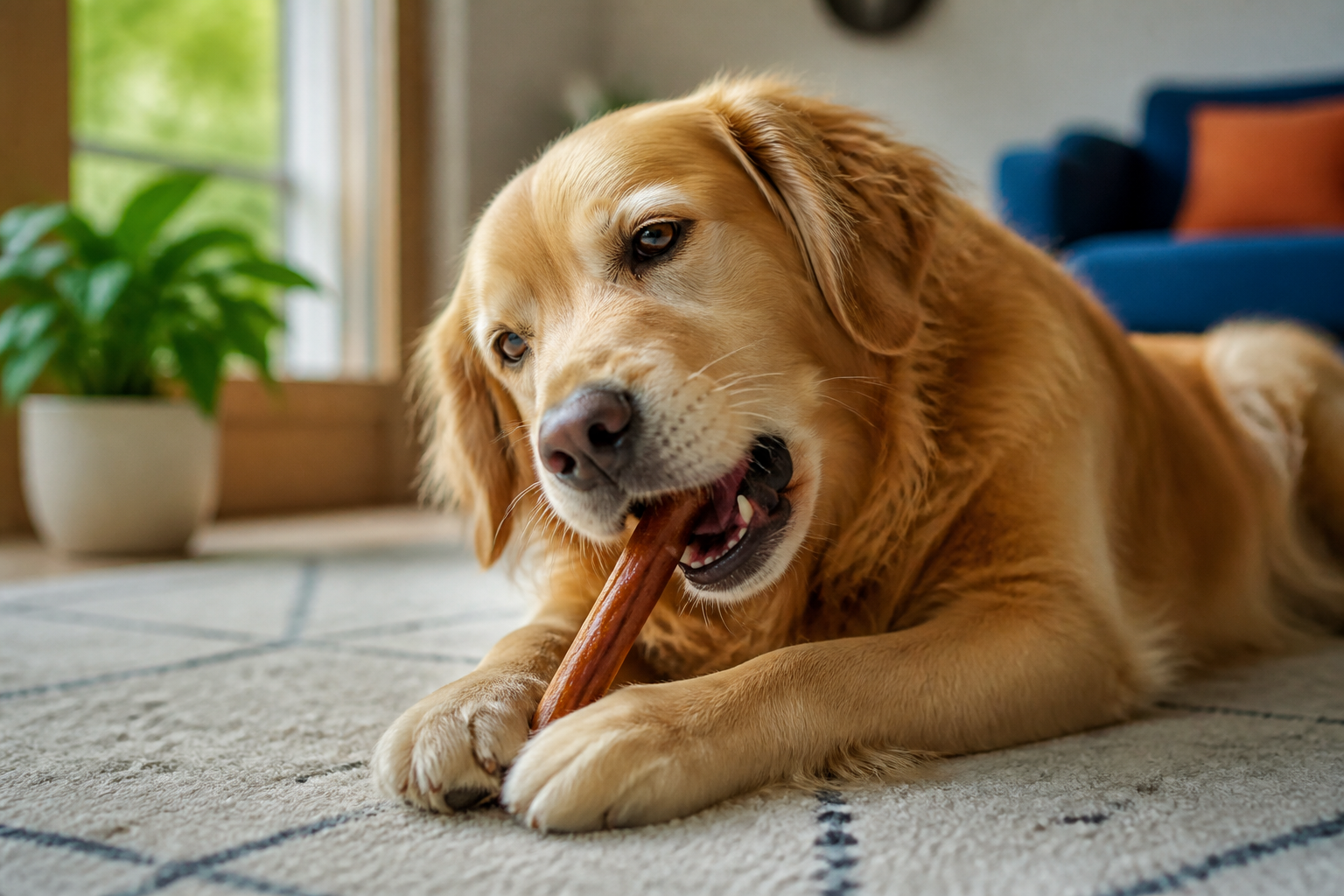
You are relaxing on the couch when your dog leans in for a friendly lick. Instead of a sweet moment, you are hit with a wave of "dog breath" that makes you recoil. It is a common situation for many pet owners. We see customers at BaxterBoo every day looking for ways to improve their dog's oral hygiene without the daily struggle of a toothbrush. You might have heard that bully sticks are a natural solution for pearly whites.
This post covers how bully sticks work to improve dental health and what the latest research says about their effectiveness. We also discuss safety risks and how to choose the right size for your dog. Bully sticks are a powerful tool for dental maintenance when used as part of a broader health routine.
Quick Answer: Bully sticks help clean a dog's teeth through the mechanical action of chewing, which scrapes away plaque. They also stimulate saliva production to wash away bacteria. While they are highly effective, they work best when combined with regular brushing and professional veterinary care.
The Mechanical Magic of Chewing
To understand how bully sticks work, you have to look at the physical act of chewing. When a dog gnaws on a tough, fibrous treat, their teeth sink into the material. This creates friction against the surface of the tooth. This friction acts like a natural scrub brush. It helps move soft plaque before it has a chance to harden into tartar.
Tartar is much harder to remove. Once plaque mineralizes into tartar, or calculus, it usually requires a professional cleaning by a veterinarian. Bully sticks are most effective at the early stage of plaque accumulation. Because these sticks are made of high protein beef muscle, they are firm enough to provide resistance. However, they are not so hard that they break teeth easily like some bones or antlers might. For more options, browse our dog dental treats.
The Power of Saliva
Saliva is one of the most underrated tools in canine dental health. As your dog spends fifteen or twenty minutes working on a bully stick, their mouth produces a significant amount of spit. This is not just a messy byproduct. Saliva contains enzymes and antibacterial properties that help keep the mouth clean.
The extra moisture helps rinse away food particles. It also helps neutralize acids produced by oral bacteria. A longer chewing session means more saliva and a better natural rinse for the gums and teeth. This is why long lasting chews like bully sticks are often more beneficial than quick treats that are swallowed in seconds. You can also explore our broader dental and breath care selection for additional options.
Reaching the Back Teeth
Many dogs do most of their heavy chewing with their premolars and molars. These are the large teeth at the back of the mouth. These areas are also where plaque and tartar tend to build up the fastest. Because bully sticks are long and require a dog to use their back teeth to break them down, they target these problem zones effectively.
What the Science Says About Bacteria
It is easy to say a chew "cleans teeth," but real data is even better. A study from Rutgers University looked at how different products affected oral bacteria in dogs. The researchers compared brushing, veggie chews, raw bones, and bully sticks.
The results were impressive. Bully sticks reduced the amount of bacteria on a dog’s teeth by 60.2 percent. For comparison, brushing with enzymatic toothpaste reduced bacteria by 70.3 percent. While brushing remains the gold standard, a 60 percent reduction from a simple treat is a massive win for pet parents.
Key Takeaway: Bully sticks are roughly 85 percent as effective at removing oral bacteria as manual brushing. This makes them one of the most effective natural dental aids available for dogs today.
Bully Sticks vs. Other Dental Chews
There are hundreds of dental treats on the market. Some are made of compressed starches and vegetable fibers. While these can be helpful, they often lack the durability of a bully stick. Many "veggie" style chews are designed to be eaten quickly. If a dog finishes a treat in two minutes, they are not getting much mechanical cleaning. For additional ideas, see our guide to the best dental chews for dogs.
Bully sticks are a single ingredient product. They are made from 100 percent beef muscle, specifically bull pizzle. This makes them highly digestible. Unlike rawhide, which can sit in the stomach for a long time and cause blockages, bully sticks break down completely.
Why Texture Matters
The texture of a bully stick changes as a dog chews. It starts as a hard, dry stick. As it mixes with saliva, the ends become frayed and soft. This frayed texture allows the fibers to wrap around the tooth. It reaches the small gaps and the gum line more effectively than a smooth, hard plastic toy.
Comparison Table: Common Dental Options
| Product Type | Effectiveness | Digestibility | Best For |
|---|---|---|---|
| Bully Sticks | High | Very High | Daily maintenance and long chewing sessions. |
| Manual Brushing | Highest | N/A | Total oral health and preventing gingivitis. |
| Raw Bones | Very High | Moderate | Advanced chewers, but carries risk of tooth fracture. |
| Veggie Chews | Moderate | High | Dogs on low protein diets or quick treats. |
| Rawhide | Low | Low | Not recommended due to digestion and safety issues. |
Choosing the Right Size for Safety
Safety is a priority when choosing any chew. A stick that is too small can be a choking hazard. A stick that is too large might be frustrating for a small dog. At BaxterBoo, we always recommend sizing up if you are unsure. You can read more about safe sizing and supervision in our guide to bully stick safety.
For a small dog like a Yorkie or a Jack Russell, a thin 6 inch stick is usually plenty. A larger dog like a Lab or a Golden Retriever will need a thick 12 inch stick. If your dog is a "power chewer" who tries to swallow things whole, consider a braided bully stick. These are three sticks twisted together. They are much harder to break apart and provide even more surface area for cleaning.
The "Nubble" Rule
When a bully stick gets down to the last inch or two, it becomes a safety risk. Dogs often try to swallow the remaining piece. This can lead to choking or a blockage in the digestive tract.
Vet Tip: Always supervise your dog while they enjoy a bully stick. When the chew becomes small enough to fit entirely inside their mouth, take it away and replace it with a new one. This prevents accidental swallowing of the "nub."
When Chewing Is Not Enough
While bully sticks are fantastic for maintenance, they cannot fix everything. If your dog already has red, inflamed gums or loose teeth, a chew will not solve the problem. In fact, chewing on a hard stick could be painful for a dog with active dental disease.
Periodontal disease is very common in dogs. It affects the structures supporting the teeth. If you notice your dog bleeding from the gums or dropping their food, it is time for a vet visit. Some dogs may require prescription dental diets or specific oral medications. For more warning signs, read how to recognize bad teeth in dogs.
Our pharmacy offers a range of FDA-approved options through our partnership with Pet's Choice. This includes prescription foods like Farmina Vet Life that are formulated for specific health needs. If your vet recommends a professional cleaning or a special diet, you can find those resources through our dog pharmacy.
Nutritional Considerations
Bully sticks are high in protein and low in fat. This makes them a healthier alternative to many processed treats. However, they do contain calories. For a dog on a strict weight management plan, you must account for the calories in their daily total.
Most 6 inch bully sticks contain between 40 and 60 calories. A 12 inch stick can have 80 to 100 calories. If your dog is struggling with weight, you might want to limit chewing sessions to 15 minutes and then put the stick away for the next day.
Bottom Line: Bully sticks are a high protein treat. Always adjust your dog's daily meal portions to account for the calories in their dental chews.
Tips for a Safe Chewing Routine
Introducing a new dental routine should be a gradual process. Some dogs have sensitive stomachs. If they are not used to high protein treats, they might experience loose stools if they eat a whole stick at once.
Step 1: Start with a short session. Let your dog chew for 5 to 10 minutes, then trade the stick for a small piece of kibble.
Step 2: Watch for any signs of digestive upset over the next 24 hours.
Step 3: Gradually increase the time as your dog's system adjusts.
Step 4: Inspect the stick after each use. If it has become sharp or splintered, throw it away.
Step 5: Store the stick in a cool, dry place. You can even keep it in a sealed bag in the freezer to keep it fresh and make it a bit harder.
Handling the Odor
One of the main complaints about bully sticks is the smell. Because they are a natural animal product, they can have a strong scent. This is often what makes them so attractive to dogs. If the smell is too much for you, look for "odor free" options. These are dried for a longer period to remove the moisture that causes the scent. They still provide the same dental benefits without the heavy aroma.
Conclusion
Bully sticks are more than just a tasty distraction. They are a scientifically backed tool that can reduce oral bacteria by over 60 percent. By providing a natural way to scrape away plaque and increase saliva, they help keep your dog's breath fresher and their gums healthier.
Remember to choose the correct size for your dog's breed and chewing style. Always keep an eye on them while they chew to prevent choking. While we love the benefits of bully sticks, they are just one part of a good health plan. Regular vet checkups and occasional brushing will ensure your dog's smile stays bright for years to come. For more ways to build a consistent routine, explore these pet dental care tips.
If you are looking to start a dental routine, check out our selection of dental chews and bully sticks. You can even use our Autoship program to ensure you never run out of your dog's favorite chews. This also earns you a free MVP Rewards membership for even better rewards on every purchase.
FAQ
Can bully sticks replace brushing my dog's teeth?
No, bully sticks should not completely replace brushing. While they reduce bacteria by about 60 percent, manual brushing with enzymatic toothpaste is still more effective at reaching every surface and the gum line. Think of bully sticks as a helpful supplement that makes your job easier between brushings.
Are bully sticks safe for puppies?
Bully sticks are generally safe for puppies once they are old enough to handle hard food and treats. They are actually a great way to soothe a teething puppy. Just be sure to choose a size appropriate for their small mouths and supervise them closely to ensure they do not swallow large pieces. You can learn more about when dogs lose their puppy teeth.
Do bully sticks cause weight gain in dogs?
Bully sticks contain calories just like any other treat. If a dog eats them frequently without a reduction in their regular meal portions, they could gain weight. It is best to treat a bully stick as part of their daily caloric intake and monitor their weight regularly.
Can a bully stick break my dog's teeth?
Bully sticks are much softer than bones or antlers, so the risk of a tooth fracture is very low. However, if a dog has existing dental issues or very weak enamel, any hard chew could pose a risk. If you are concerned about your dog's tooth strength, consult your veterinarian before introducing hard chews.






