
 Save 15% on your 1st Autoship learn more

 Email us
 Live Chat
 FAQs
FAQs





Introduction
You are picking up your dog from a fresh grooming session. They look wonderful and smell like blueberries. Then they lean in for a lick and that familiar, swampy breath hits you. It is a common moment for many pet owners. You might wonder if your groomer can simply handle the teeth during the bath. While many grooming salons offer dental services, there is a big difference between a cosmetic refresh and a medical cleaning.
At BaxterBoo, we have helped pet parents navigate hygiene choices since 2006. We know that clear information helps you make the best decisions for your dog. This post covers what groomers actually do for teeth, why some services are risky, and when you need to see a veterinarian. Understanding these boundaries ensures your dog stays comfortable and healthy for years to come.
The Difference Between Brushing and Medical Cleaning
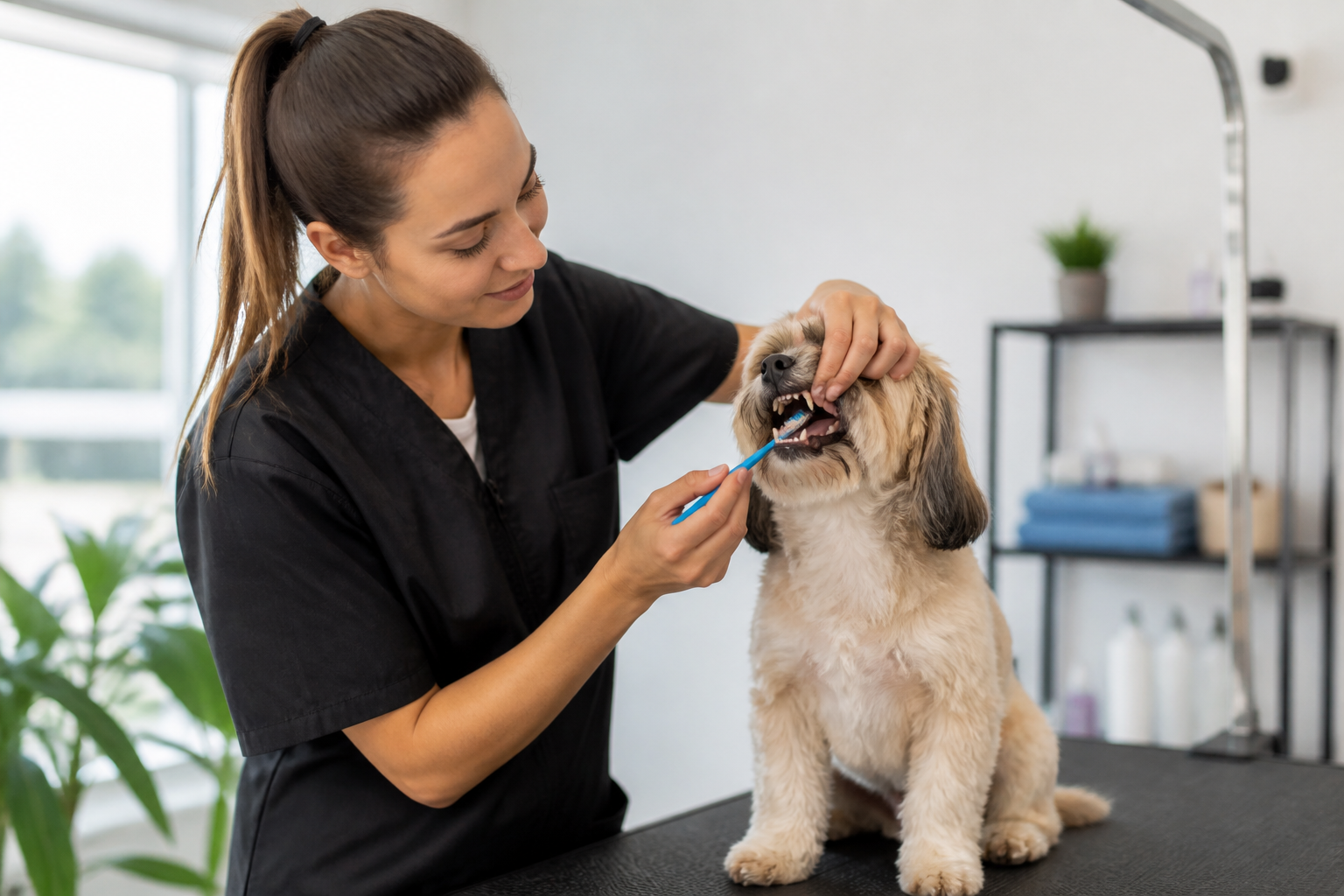
Most dog groomers offer a service called teeth brushing. This usually involves a finger brush or a small toothbrush and dog-safe toothpaste. It is a helpful add-on for a spa day. It can help remove some surface plaque and freshen the breath for a few hours. However, it is not a deep cleaning.
A medical dental cleaning is a procedure performed by a licensed veterinarian. This involves scaling away tartar and cleaning below the gumline while the dog is under anesthesia. Many people use the word cleaning for both services. This leads to confusion about what is actually happening in the grooming van or shop.
Quick Answer: Dog groomers can brush your dog's teeth to remove surface plaque and freshen breath. They cannot perform deep medical cleanings or remove tartar from below the gumline. Real dental cleanings require a veterinarian and professional medical equipment.
What Groomers Usually Provide
Groomers focus on the parts of the dog you can see. Their dental services are generally limited to maintenance. This includes applying a flavored paste and giving the teeth a quick scrub. Some may also use a dental foam or spray. These products help slow down the buildup of new plaque.
What Groomers Should Not Do
You may find some groomers who offer "anesthesia-free scaling." This involves using metal tools to scrape tartar off the teeth while the dog is awake. Most veterinary experts advise against this. It can be painful and stressful for the dog. It also fails to address the bacteria hidden under the gums.
Why Anesthesia-Free Scaling is Risky
It is tempting to choose a cleaning that does not require anesthesia. It often costs less and feels safer. However, scraping teeth on an awake dog has several downsides. First, a dog will not sit perfectly still while a metal tool moves near their gums. One wrong move can cause a painful cut or nick.
Second, scaling only removes the "stones" you can see on the surface. The real cause of dental disease is the bacteria living in the pockets under the gumline. A groomer cannot reach these areas on an awake animal. This leaves the infection behind while making the teeth look white on the surface. This can give owners a false sense of security.
Key Takeaway: Surface scraping makes teeth look clean but ignores the infection under the gums. Always prioritize medical cleanings from a vet to protect your dog's long-term health.
Enamel Damage
When a vet scales teeth, they follow up with polishing. This smooths out the microscopic scratches left by the cleaning tools. Most groomers do not have the equipment to polish. If the enamel is left rough, plaque will actually stick to the tooth faster than before. This can speed up the return of tartar.
The Risk of Bacteremia
Scraping at inflamed gums releases bacteria into the bloodstream. In a veterinary setting, the dog is often monitored or given antibiotics if needed. In a grooming setting, this release of bacteria can put a dog at risk for heart or kidney issues. This is especially true for senior dogs with existing health concerns.
What Happens During a Veterinary Dental Cleaning
A professional cleaning at a clinic is a full medical procedure. It is much more involved than a grooming visit. Because the dog is under anesthesia, the vet can perform a thorough exam that is impossible when the pet is awake.
The Professional Process
Step 1: Pre-anesthetic blood work. / This ensures your dog is healthy enough for the procedure.
Step 2: General anesthesia and monitoring. / A technician tracks the dog's heart rate and oxygen levels.
Step 3: Dental X-rays. / This is the only way to see if roots are rotting or if there are hidden abscesses.
Step 4: Scaling and sub-gingival cleaning. / Tools remove tartar from above and below the gumline.
Step 5: Polishing and rinsing. / The enamel is smoothed to prevent future plaque buildup.
Vet Tip: If your dog has very bad breath or bleeding gums, skip the groomer's dental add-on. Schedule an exam with your vet to see if a professional cleaning is necessary. They can diagnose underlying issues that a groomer might miss.
Signs Your Dog Needs More Than a Brush
How do you know when a groomer's brushing is not enough? You should check your dog's mouth once a week. This helps you catch problems before they become painful. For more guidance, read our article on warning signs of bad teeth in dogs.
- Persistent Bad Breath: While "dog breath" is normal, a foul or rotten smell is not.
- Red or Bleeding Gums: Healthy gums should be pale pink. Redness along the tooth line indicates gingivitis.
- Yellow or Brown Buildup: This hard material is tartar. It cannot be removed with a toothbrush.
- Difficulty Eating: If your dog drops food or chews on only one side, they may have a painful tooth.
- Loose or Missing Teeth: This is a sign of advanced periodontal disease.
If you notice these symptoms, a grooming visit will not solve the problem. In fact, brushing a dog with an active infection can be very painful for them. It is best to get a medical diagnosis first.
Preventive Care You Can Do at Home
The best way to keep the vet bills down is to maintain hygiene at home. We carry many tools in our dog dental and breath care category that make this easier. You do not have to be a professional to make a difference in your dog's oral health.
Finding the Right Brush
Many dogs do not like long-handled toothbrushes. Finger brushes are often a better starting point. They allow you to feel exactly where you are cleaning. For larger dogs, a dual-headed brush can clean the top and bottom of the tooth at the same time.
Using Dog-Safe Paste
Never use human toothpaste for your dog. It contains foaming agents and sweeteners like Xylitol that are toxic to pets. Dog toothpaste comes in flavors like poultry or beef. This makes the experience feel like a treat rather than a chore.
Dental Chews and Toys
Chewing is a natural way for dogs to clean their teeth. Brands like Kong and Greenies offer products specifically designed to scrub teeth as the dog plays. The texture of these items helps scrape away soft plaque before it hardens into tartar. You can browse our selection of Greenies products for dental chews and other pet-care options.
Key Takeaway: Home care is about consistency. Brushing once a day is ideal, but even three times a week can significantly reduce the risk of dental disease.
The Role of Diet in Dental Health
What your dog eats affects their mouth environment. Some dogs benefit from specific dental diets. These kibbles are often larger and have a fibrous texture. They do not shatter immediately when bitten. Instead, the tooth sinks into the kibble, which provides a scrubbing action.
We offer several premium brands like Royal Canin and Hills that formulate foods for dental support. For dogs with chronic issues, your vet might recommend a prescription diet. Our pharmacy carries a wide range of prescription pet foods through our partnership with Pet's Choice. These diets are specifically designed to manage health conditions that require more than over the counter nutrition.
Bottom line: Diet is a powerful tool for dental health, but it works best when combined with regular brushing.
Using the BaxterBoo Pharmacy for Health Needs
When dental issues go beyond simple cleaning, your dog might need medication. This is common after a tooth extraction or for managing chronic gum infections. Our pharmacy provides a convenient way to get FDA-approved medications delivered to your door.
Through our partnership with Pet's Choice, we handle everything from antibiotics to specialized pain relief. If your vet prescribes a medication or a specific prescription diet, you can easily fulfill that through us. This is part of our commitment to being a one stop shop for your pet's wellness. We cannot run ads for these medical products, so we want our regular customers to know this resource is always available.
Connecting Dental Health to Overall Wellness
Dental health is not just about the mouth. It is linked to the heart, liver, and kidneys. Bacteria from the mouth can enter the bloodstream and cause inflammation in these vital organs. This is why we advocate for a proactive approach to care.
If you are worried about the cost of dental procedures, consider looking into FIGO Pet Insurance. We partner with them to help owners manage the unexpected costs of pet care. Having a plan in place makes it easier to say yes to the treatments your dog needs.
Making the Most of Your BaxterBoo Experience
We want to help you save while you care for your dog. If you find a dental chew or a specific toothpaste that works, consider our Autoship programme. You will save on your first order and get a free MVP Gold membership. This makes it easy to keep your supplies stocked without having to remember to reorder.
Our MVP Rewards program also lets you earn up to 5% back on every purchase. Whether you are buying a new leash from RC Pets or a bag of Orijen food, those points add up. It is our way of rewarding the people who trust us with their pet's needs. See how the MVP Rewards programme works before your next purchase.
How to Introduce Brushing to a Reluctant Dog
If your dog hides when they see a toothbrush, do not worry. You can train them to accept it. It takes patience and a lot of positive reinforcement. Our guide to pet dental care tips also covers gradual introductions and regular home care.
Step 1: Let them lick the paste. / Put a small amount of flavored dog toothpaste on your finger. Let them sniff and lick it off.
Step 2: Touch the teeth. / While they lick the paste, gently rub your finger along their gums and teeth.
Step 3: Introduce the brush. / Put some paste on the brush and let them lick it. Do not try to brush yet.
Step 4: Start small. / Gently brush just the front teeth for a few seconds. Follow with a high-value treat.
Step 5: Increase the time. / Gradually work your way toward the back teeth over several weeks.
Conclusion
A dog groomer is a vital part of your pet's care team. They keep your dog looking and smelling great. However, they are not a replacement for a veterinarian when it comes to dental health. Groomers can help with surface brushing and breath freshening. For anything deeper, such as tartar removal or treating infections, a medical professional is required.
By combining regular grooming with at-home brushing and professional checkups, you give your dog the best chance at a pain-free life. Keep an eye on those gums and don't ignore bad breath. Your dog will thank you with plenty of happy, healthy kisses.
- Groomers handle surface brushing and cosmetic maintenance.
- Veterinarians perform medical cleanings under anesthesia.
- Home care with dog-safe products is the best preventive measure.
- Prescription diets and medications are available through our pharmacy.
If you are ready to start a home care routine, explore our Dental Care category. We have the brushes, pastes, and treats you need to keep those pearly whites shining.
FAQ
Can a groomer remove tartar from my dog's teeth?
A groomer should not attempt to remove tartar with metal tools. This process is called scaling and it can be painful or dangerous if the dog is awake. While some groomers offer this, it is best to leave tartar removal to a veterinarian who can use anesthesia and professional equipment.
How often should I have the groomer brush my dog's teeth?
If your dog goes to the groomer every four to six weeks, having them brush the teeth is a great way to maintain hygiene. However, once-a-month brushing is not enough to prevent dental disease on its own. You should still aim to brush your dog's teeth at home several times a week.
Is anesthesia-free dental cleaning safe for dogs?
Most veterinarians advise against anesthesia-free cleaning. It is often stressful for the dog and does not allow for cleaning under the gumline where most bacteria live. It can also result in accidental nicks or scratches to the tooth enamel that lead to faster plaque buildup.
What should I do if my dog's breath still smells after the groomer brushes their teeth?
If your dog's breath is still foul after a professional grooming, it usually indicates an underlying health issue. This could be a sign of gum disease, a rotting tooth, or even a digestive problem. You should schedule an appointment with your veterinarian for a full dental exam and X-rays.






