
 Save 15% on your 1st Autoship learn more

 Email us
 Live Chat
 FAQs
FAQs





Introduction
You are dropping your dog off for a much-needed bath and haircut when you notice a "dental cleaning" add-on for a small fee. Your pup’s breath has been a bit strong lately, and the idea of checking another chore off the list feels like a win. However, it is important to know exactly what a groomer means when they say they clean teeth. At BaxterBoo, we have helped thousands of pet owners navigate the line between routine grooming and essential veterinary care since 2006. While groomers play a vital part in your dog's hygiene, their role in oral health is limited to surface-level maintenance. This article explains the difference between a grooming brush-up and a medical cleaning, the risks of certain grooming practices, and how to keep those pearly whites healthy.
The Difference Between Brushing and Scaling
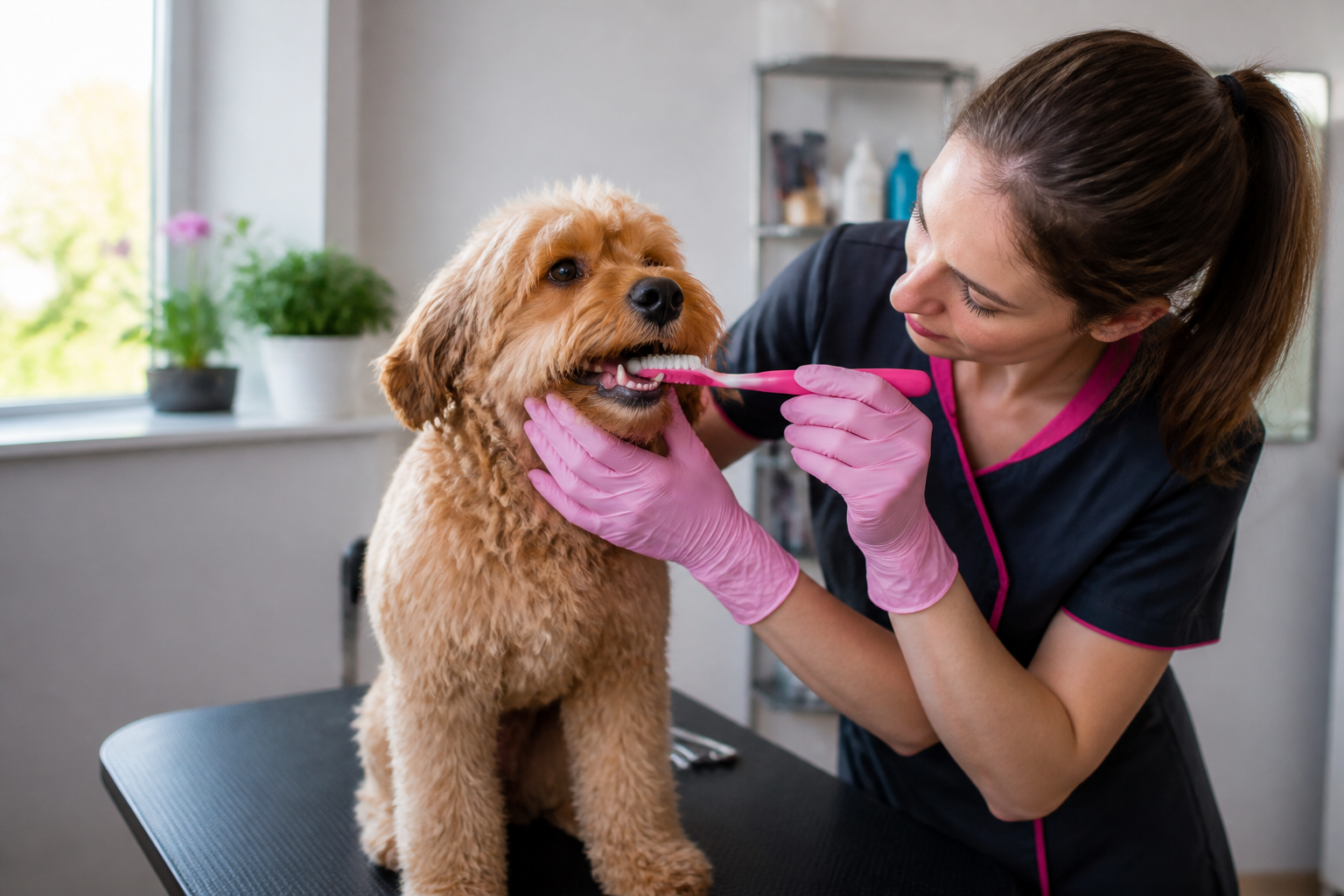
When you see a dental service listed on a grooming menu, it almost always refers to a standard teeth brushing. This is a cosmetic and preventative service. The groomer uses a dog-specific toothbrush and flavored paste to scrub the surfaces of the teeth they can see. This helps remove food particles and some surface plaque, much like when you brush your own teeth at home. It is a great way to freshen breath and slow down the buildup of tartar.
A professional dental cleaning performed by a veterinarian is a medical procedure. This is often called a dental prophylaxis. It involves scaling the teeth to remove hard tartar both above and below the gum line. It also includes polishing the enamel to prevent future buildup and a thorough examination of every tooth.
Quick Answer: Dog groomers generally offer teeth brushing to freshen breath and remove surface plaque. They do not perform deep medical cleanings, which require anesthesia and specialized tools found only at a veterinary clinic.
Why Groomers Do Not Perform Deep Cleanings
There is a significant reason why groomers do not go beneath the gum line. Medical dental cleaning requires the dog to be under general anesthesia. It is impossible to safely and effectively scrape away tartar from the sensitive areas under the gums while a dog is awake. If a dog moves suddenly while a sharp tool is in their mouth, it can cause severe injury to the gums or tongue.
Groomers are also not trained to diagnose oral diseases. While they might notice a loose tooth or a bleeding spot, they cannot treat the underlying infection. Their tools are designed for surface cleaning, not for the surgical precision needed to handle periodontal disease.
Key Takeaway: Grooming dental services are for maintenance and prevention, while veterinary dental services are for treating existing tartar and disease.
The Risks of Anesthesia-Free Scaling
Some grooming facilities or specialized "dental boutiques" offer anesthesia-free scaling. While this sounds appealing to owners worried about anesthesia, it is often discouraged by veterinary professionals. When a dog is awake, the technician can only scrape the tartar they can see. This creates a false sense of security for the owner because the teeth look white, but the disease continues to thrive under the gum line.
Manual scaling on an awake dog can also be quite painful. If a dog has even mild gingivitis, scraping near the gums causes significant discomfort. This can lead to a dog becoming fearful of any mouth handling in the future. Furthermore, scaling creates tiny scratches in the tooth enamel. In a vet clinic, these are polished smooth. Without polishing, those scratches actually help more bacteria and tartar stick to the tooth even faster than before.
What Happens During a Veterinary Dental Cleaning
If your dog has significant yellowing, brown tartar, or very bad breath, it is time for a trip to the vet. This procedure is much more involved than a grooming visit. It starts with a physical exam and often blood work to ensure your dog is healthy enough for anesthesia.
Once your dog is safely under, the vet or a licensed technician uses an ultrasonic scaler. This tool vibrates at a high frequency to shatter tartar without damaging the tooth. They clean deep into the pockets of the gums where the most harmful bacteria live.
- Oral X-rays are taken to check the health of the roots.
- Each tooth is checked for stability and pocket depth.
- The enamel is polished to a smooth finish.
- If a tooth is rotten or broken, it can be safely extracted while the dog is asleep.
Vet Tip: Schedule an annual dental exam with your veterinarian to catch signs of periodontal disease before they cause pain or tooth loss. If your vet prescribes a special dental diet or medication, you can find many of these through our pet pharmacy via our partnership with Pet's Choice.
Identifying Signs of Dental Disease
As a pet owner, you are the first line of defense. You do not need to wait for a grooming appointment to check your dog's mouth. Knowing what to look for can help you decide if you need a simple brush or a medical consultation.
Bad breath is often the first sign. While "dog breath" is a common phrase, a healthy dog's mouth should not smell foul or like rot. If the smell is strong enough to notice from a distance, an infection may be present.
- Red, swollen, or bleeding gums.
- Yellow or brown crust (tartar) near the gum line.
- Difficulty eating or dropping food.
- Pawing at the mouth or face.
- Loose or missing teeth.
- Excessive drooling.
If you notice these symptoms, a groomer’s brushing service will not be enough to fix the problem. In fact, brushing an infected mouth can be painful for your dog. You should always consult your vet if you see bleeding or heavy tartar buildup.
Bottom line: Visible tartar and red gums are medical issues that require a veterinarian rather than a groomer.
For more guidance, read the warning signs of bad teeth in dogs.
The Role of the Groomer in Your Dog's Dental Routine
Even though they cannot perform medical cleanings, groomers are excellent partners in your dog's care. Many dogs are more cooperative for a groomer than they are for their owners. Having your groomer brush your dog's teeth every few weeks is a helpful supplement to your at-home routine.
Groomers can also act as an early warning system. Because they are looking closely at your dog's head and mouth during the drying and clipping process, they may spot lumps, bumps, or broken teeth that you missed. A good groomer will tell you if they notice something that looks "off" so you can bring it to your vet's attention.
Step 1: Ask your groomer to include a teeth brushing during their regular spa day. / This helps keep surface plaque under control between vet visits.
Step 2: Check the "grooming report card" or talk to the groomer afterward. / They will often note if the gums bled or if they saw any heavy buildup.
Step 3: Follow up at home. / Use the groomer's visit as a reminder to restart your daily brushing habit.
Building an At-Home Dental Care Plan
The most effective way to keep your dog's teeth clean is a daily habit at home. You do not need to be an expert to make a difference. Consistency is much more important than perfection. If you can only brush for thirty seconds, that is still better than not brushing at all.
Start by getting your dog used to having their mouth touched. Rub your finger along their gums while giving them praise. Once they are comfortable, introduce a dog-specific toothbrush and paste. Never use human toothpaste. It often contains xylitol, which is toxic to dogs, and foaming agents that can upset their stomachs.
Choosing the Right Tools
There are many options for dogs that resist a traditional toothbrush. Finger brushes are small rubber caps that fit over your fingertip. They allow you to feel exactly where you are brushing and are often less intimidating for a puppy or a nervous dog.
Dental wipes are another alternative. These are pre-moistened cloths that you wrap around your finger to wipe away slime and plaque. While they do not get into the crevices as well as bristles, they are a great starting point for dogs who will not tolerate a brush.
For additional guidance, explore these pet dental care tips.
Dental Chews and Toys
At BaxterBoo, we carry a wide variety of toys and treats designed to support oral health. Brands like Greenies or Kong offer products with specific textures that help scrub teeth as the dog chews. When a dog gnaws on a textured rubber toy, the friction helps scrape away soft plaque before it hardens into tartar.
Dental water additives are also a popular choice for busy owners. These are tasteless liquids you add to your dog's water bowl. They contain enzymes or ingredients that help break down bacteria in the mouth. While they do not replace brushing, they are a helpful "passive" way to fight bad breath.
You can also try Greenies Dental Dog Chew - Fresh as part of your dog's dental routine.
Key Takeaway: A combination of daily brushing, dental treats, and water additives provides the best protection against tartar.
How Diet Impacts Dental Health
What your dog eats every day plays a role in their oral hygiene. There is a common belief that dry kibble cleans teeth better than wet food because it is crunchy. While some kibble is specifically formulated to be "dental diet" food, most standard kibble crumbles too quickly to provide much scrubbing action.
Specific dental prescription diets are different. These kibbles are usually larger and have a fibrous structure that does not shatter immediately. This forces the dog to chew, allowing the food to wrap around the tooth and scrub the surface. If your vet recommends a prescription diet like Royal Canin Dental or Farmina Vet Life, our pharmacy can help fulfill those needs conveniently.
Safe Chewing Habits
Chewing is a natural behavior for dogs, but not all chews are safe for teeth. Very hard items like cow hooves, certain large bones, or stones can actually cause teeth to fracture. If a dog chews too aggressively on something that does not "give," the tooth can snap, leading to a painful exposed nerve.
We recommend sticking to dental chews that are specifically designed for dogs. These are firm enough to provide cleaning action but will eventually dissolve or break down, making them safer for both the teeth and the digestive system. Always supervise your dog when they are enjoying a new chew or toy.
The Cost of Neglect vs. The Cost of Prevention
Some owners hesitate to book a veterinary dental cleaning because of the cost of anesthesia and the procedure. However, waiting until a dog has severe dental disease is much more expensive in the long run. When an infection is left untreated, it can lead to multiple tooth extractions, jaw bone loss, and systemic health issues.
Bacteria from an infected mouth can enter the bloodstream through the gums. This is called bacteremia. These bacteria can travel to the heart, liver, and kidneys, potentially causing organ damage over time. By investing in routine brushing at the groomer and regular vet cleanings, you are protecting your dog's entire body, not just their smile.
Vet Tip: If your dog has a heart condition or other chronic illness, dental health is even more critical. Consult your vet about the safest way to manage their oral hygiene, as infections in the mouth can complicate other health issues.
Training Your Dog to Accept Dental Care
If your dog runs away at the sight of a toothbrush, do not give up. You can use positive reinforcement to change their mind. Start by letting them lick the toothpaste off your finger. Most dog pastes are flavored like poultry or peanut butter, so they see it as a treat.
Once they love the paste, touch the brush to one tooth and then give them a high-value treat. Slowly work up to brushing one side of the mouth, then the whole mouth. We find that many dogs eventually look forward to their "dental time" because it involves so much one-on-one attention and rewards.
If your dog is truly resistant, do not force it. This can lead to bites or a complete breakdown in trust. In these cases, focus on water additives and dental treats, and rely more heavily on professional veterinary cleanings under anesthesia.
Try a dog-specific option such as Vets Preferred Enzymatic Dog Toothpaste when introducing brushing at home.
Bottom line: Positive reinforcement makes dental care easier for both you and your dog, reducing stress during grooming and home care.
Summary of Professional Roles
To keep your dog healthy, it helps to view your groomer and your vet as a team. Neither one can completely replace the other.
- The Groomer: Provides cosmetic brushing, freshens breath, and alerts you to visible problems.
- The Vet: Performs deep cleaning under the gum line, takes X-rays, treats infections, and performs extractions.
- The Owner: Provides daily brushing, healthy chews, and monitors for changes in smell or behavior.
By utilizing all three of these roles, you ensure your dog stays comfortable and pain-free throughout their life.
Conclusion
While dog groomers do not perform deep medical teeth cleanings, their brushing services are a valuable part of a preventative routine. A groomer helps keep your dog's breath fresh and can spot early warning signs of trouble. However, for real tartar removal and the treatment of dental disease, a veterinarian is the only professional equipped to help.
At BaxterBoo, we are committed to helping you find the right tools for the job, whether that is a new toothbrush, a bag of dental chews, or a prescription diet from our pharmacy. Keeping your dog's mouth healthy is one of the best things you can do for their long-term well-being. Start a simple routine today, and your pup will thank you with plenty of fresh-smelling kisses.
Visit our dog dental care category to find the best brushes, pastes, and toys to start your at-home routine. You can also make repeat purchases easier with our Autoship programme.
FAQ
Is it worth paying a groomer to brush my dog's teeth?
Yes, it is a helpful service if you find it difficult to brush your dog's teeth at home. While it does not replace a deep medical cleaning, frequent surface brushing helps slow down the accumulation of plaque and keeps their breath smelling much better.
Can a groomer remove brown tartar from my dog's teeth?
A groomer cannot safely remove hard, brown tartar because it usually requires scaling tools and often reaches beneath the gum line. Attempting to scrape this off while a dog is awake can damage the enamel and be very painful for the pet.
How often should I have my dog's teeth professionally cleaned by a vet?
Most veterinarians recommend a professional dental exam and cleaning once a year, though some small breeds or dogs prone to dental issues may need it more often. Regular checkups allow your vet to catch problems before they require expensive extractions.
Why does my dog's breath still smell bad after the groomer brushed their teeth?
If bad breath persists after a surface brushing, there is likely an underlying issue like an infection, a rotten tooth, or tartar buildup beneath the gums. In these cases, the smell is coming from bacteria that a toothbrush cannot reach, and you should consult your veterinarian.






