
 Save 15% on your 1st Autoship learn more

 Email us
 Live Chat
 FAQs
FAQs





Introduction
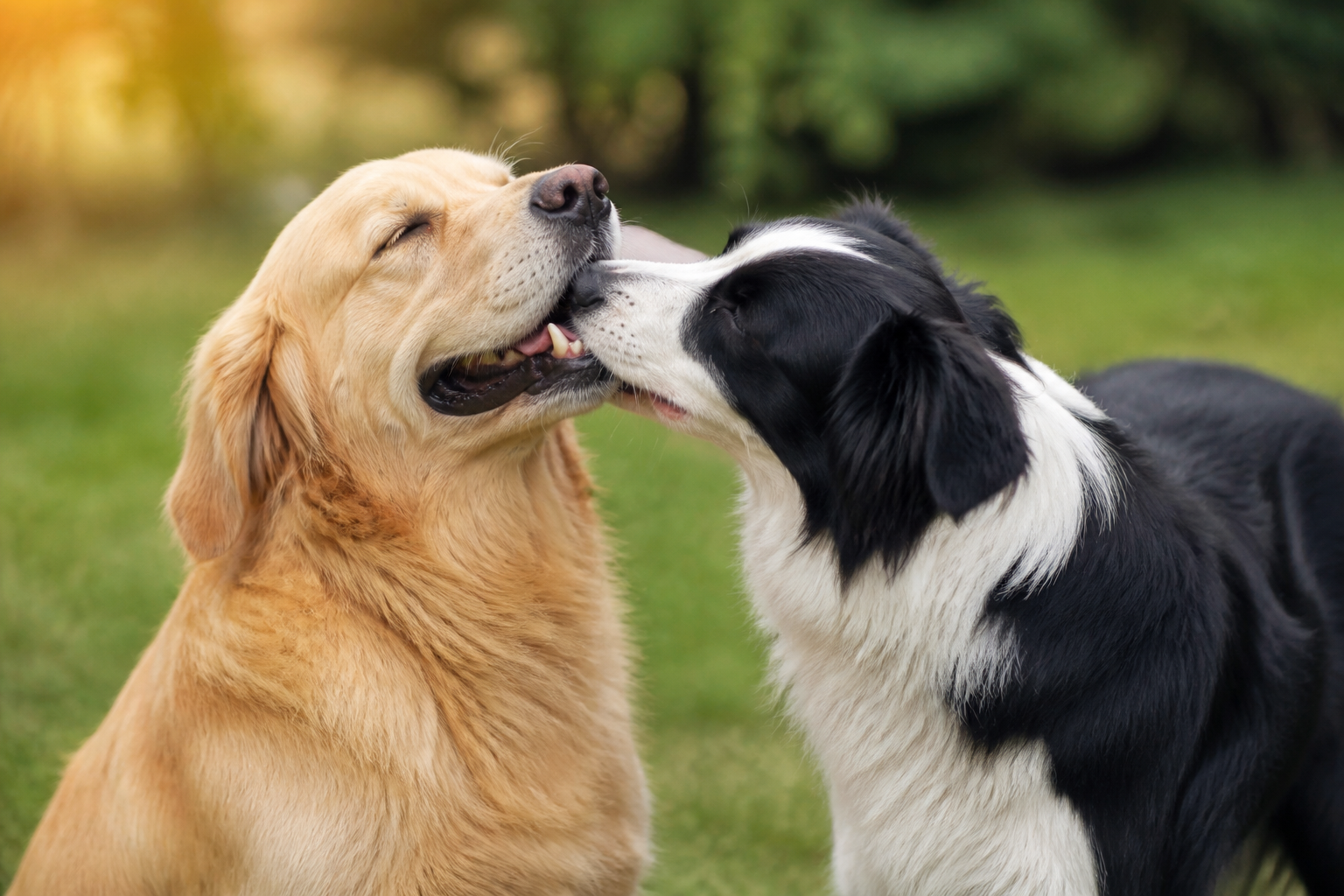
You might be sitting on the sofa when you notice your two dogs engaged in a focused grooming session. One dog sits patiently while the other licks intently around their muzzle and mouth. It looks deliberate and thorough. As a pet owner, you might wonder if they are helping each other out with a bit of dental hygiene. We see this behavior often at BaxterBoo, and customers frequently ask if these "doggy dentists" are actually doing any good.
While it looks like a cleaning service, the reality is more complex. This behavior is rooted in ancient instincts, social hierarchies, and basic communication. It is rarely about plaque removal or preventing cavities. In this article, we will explore why dogs lick each other's faces and what it means for their health and social bonds. We will also look at how you can support their actual dental needs when their four legged friends fall short.
The Social Hierarchy of Mouth Licking
In the world of dogs, licking is a primary form of communication. When one dog licks the mouth of another, it is often a sign of respect or submission. This behavior begins almost immediately after birth. Puppies lick their mother's face to show they are hungry or to acknowledge her authority. As they grow up, this habit stays with them.
In a multi dog household, you might notice the more submissive dog licking the face of the "alpha" or the more confident dog. It is a way of saying, "I am not a threat." It helps maintain peace within your home. This gesture is similar to a human handshake or a polite nod. It reinforces the social structure without any need for aggression.
Quick Answer: Dogs do not effectively clean each others' teeth. While they may lick away food scraps or debris, they cannot remove plaque or tartar. This behavior is primarily a social gesture used for bonding, communication, and showing respect.
Ancient Instincts and the Hunger Signal
There is a biological reason why puppies are so focused on the mouth area. In the wild, when a mother dog returns from a hunt, she carries food in her stomach. Puppies lick her muzzle to trigger a regurgitation reflex. This is how they transition from milk to solid food.
Even though your pampered pet gets their meals from a bowl, that hardwired instinct remains. A dog might lick another dog's mouth simply because they smell something interesting. If one dog just finished a tasty treat, the other dog might try to "clean up" the leftovers. They are not worried about gingivitis. They are looking for a snack.
Why the Instinct Persists
- It provides a sense of security and comfort.
- It triggers the release of oxytocin in both dogs.
- It serves as a greeting after being apart.
- It allows dogs to identify what the other has been eating.
Information Gathering Through Taste
Dogs have an incredible sense of smell, but they also use taste to understand the world. They have a special sensory organ called the vomeronasal organ, or Jacobson's organ. It is located in the roof of the mouth. When a dog licks another dog, they are bringing scent molecules and pheromones directly to this organ.
This allows them to "read" the other dog. They can tell if the other dog is stressed, healthy, or even what they ate for breakfast. If a dog has an infection or a dental issue, the other dog might lick the area more frequently. They are curious about the change in scent and flavor caused by bacteria or inflammation.
Key Takeaway: Face licking is a "social status update." Dogs use their vomeronasal organ to gather chemical information about their companion's health and emotional state.
The Grooming Aspect: Is It Actually Clean?
Dogs are naturally clean animals. They spend a lot of time licking themselves to remove dirt and loose fur. When they extend this to another dog, it is called allogrooming. It is a sign of deep trust and affection. You will often see this between dogs that are very close.
They might focus on the ears, eyes, and mouth. These are areas the dog cannot reach themselves. While the "groomer" might lick away some surface debris or dried food from the fur around the mouth, they are not doing anything for the teeth themselves. In fact, the bacteria in a dog's mouth can sometimes make things worse. If one dog has a gum infection, constant licking might spread bacteria to the other dog.
The Limits of Allogrooming
Step 1: Identify the behavior. Watch if the licking is focused on the fur or the actual teeth. Usually, it is the lips and muzzle.
Step 2: Check for irritation. Ensure the "patient" dog is not getting red or raw skin from the constant moisture.
Step 3: Look for dental health. If you see yellowing teeth or red gums, the licking is not helping. You must step in with actual dental tools.
When Licking Becomes a Problem
Most of the time, this behavior is harmless. However, there are instances where you should intervene. If the licking becomes obsessive, it can lead to skin problems. Constant moisture on the fur can cause "hot spots" or bacterial skin infections.
You should also watch for the recipient's reaction. Not every dog enjoys having their face washed by a housemate. If you see the recipient dog turning away, growling, or showing "whale eye" (the whites of their eyes), it is time to redirect the groomer. Use a toy or a training command to break the cycle.
Vet Tip: If your dog is suddenly and obsessively licking another dog's mouth or ears, it might be a sign of a health problem in the other pet. Check the recipient for bad breath, discharge, or redness, and consult your veterinarian if you suspect an infection.
The Reality of Canine Dental Health
Since we know dogs are not actual dentists, the responsibility for their oral health falls on us. Plaque begins to harden into tartar in as little as 24 to 48 hours. Licking does nothing to stop this process. Without intervention, dogs can develop periodontal disease. This leads to pain, tooth loss, and even organ damage if bacteria enter the bloodstream.
At us, we offer a wide range of products in our dog dental care category to fill the gap left by social grooming. While your dogs are busy bonding, you can focus on the actual cleaning. This includes manual brushing, which remains the gold standard of pet care.
Tools for Real Dental Cleaning
If you want your dog to have healthy teeth, you need a routine. We carry everything from flavored toothpastes to specialized brushes. Most dogs prefer poultry or beef flavored paste over the minty versions humans use. Never use human toothpaste, as it often contains xylitol, which is toxic to dogs.
Effective Dental Solutions
- Manual Brushing: Using a finger brush or a long handled pet brush.
- Dental Chews: Products like Greenies dental dog chews or Whimzees that use mechanical action to scrub teeth.
- Water Additives: Easy solutions that help break down biofilm in the water bowl.
- Dental Diets: Prescription foods from brands like Royal Canin or Farmina Vet Life, which are designed to scrub teeth as the dog chews.
For more guidance on building a routine, read these pet dental care tips.
Utilizing the Pharmacy for Oral Health
Sometimes, a simple toothbrush is not enough. If your dog has advanced dental disease or a persistent mouth infection, they may need professional help. Our pharmacy offers FDA approved medications and prescription diets through our partnership with Pet's Choice.
If your veterinarian prescribes a specific dental diet or an antibiotic for a gum infection, you can fulfill that prescription through our pet pharmacy warehouse. This is especially helpful for senior dogs who may be more prone to tooth decay. We make it easy to manage these chronic health needs alongside your regular food and toy orders.
Key Takeaway: Professional dental care is a partnership between you and your vet. Our pharmacy provides the prescription tools you need to manage oral health when basic brushing is not enough.
Redirecting Excessive Licking
If your dogs are licking each other because they are bored, it is helpful to provide other outlets. Enrichment toys can keep their mouths busy in a productive way. We recommend using puzzle toys or treat dispensers to redirect that energy.
A Kong stuffed with peanut butter or a lick mat can provide the same oxytocin release that social grooming offers. This keeps the peace in the house and prevents any skin irritation from over grooming. It also helps with dental health if you use dental friendly treats in those toys.
Top Enrichment Options
- Lick Mats: These mimic the repetitive motion of grooming and help calm anxious dogs.
- Snuffle Mats: These encourage foraging behavior and use their sense of smell.
- Chew Toys: Durable rubber or nylon toys that help scrape teeth during play.
- Autoship Rewards: Keep a steady supply of dental treats arriving at your door with our Autoship programme so you never run out. Our Autoship program even gives you a free MVP Gold membership.
The Role of Diet in Dental Hygiene
What your dog eats every day matters for their teeth. Dry kibble is often better than wet food for dental health because it provides some friction. However, not all kibble is created equal. Some brands are specifically formulated with a larger kibble size or a specific texture to help clean the teeth.
We carry premium brands like NutriSource, Acana, and Orijen that focus on high quality ingredients. While these are great for overall health, you might need a dedicated dental kibble if your dog is prone to tartar. Always check the ingredient list for calcium sequestering agents, which help prevent tartar from forming.
Bottom line: While dogs lick each other for social bonding and instinctual reasons, it is not an effective way to clean teeth; owners must provide manual brushing and dental treats to ensure oral health.
Monitoring Your Dog's Progress
Consistency is the most important part of any dental routine. You should check your dog's mouth at least once a week. Look for red gums, broken teeth, or a foul odor that goes beyond "dog breath." If your dog stops eating or only eats on one side of their mouth, they are likely in pain.
When you notice these signs, a vet visit is the only solution. They may recommend a professional cleaning under anesthesia. After that cleaning, you can start fresh with the supplies we provide to maintain those pearly whites.
For additional warning signs, see what to know about bad teeth in dogs.
Strengthening the Bond
The fact that your dogs lick each other's faces is a beautiful sign of their friendship. It shows they feel safe and connected in your home. You do not need to stop this behavior unless it becomes harmful. Instead, view it as a signal that your dogs are well socialized and happy.
By taking over the "dentist" duties yourself, you allow them to focus on the "friendship" duties. Whether you use the MVP Rewards programme to save on dental chews or set up an Autoship for their favorite toothbrushing treats, you are playing a vital role in their longevity.
Summary of Canine Mouth Licking
To recap, dogs lick each other's mouths for several reasons:
- Respect: It is a submissive gesture toward a more dominant dog.
- Bonding: It releases feel-good hormones and builds trust.
- Hunger: It is an instinctual carryover from puppyhood feeding habits.
- Information: They use their vomeronasal organ to check the other dog's health and diet.
- Grooming: It is a way to clean areas the other dog cannot reach, though it does not clean teeth.
Our team at BaxterBoo is here to help you navigate these quirks of pet ownership. We have been operating since 2006, and we have seen just about every behavior a dog can exhibit. Our goal is to provide the gear and knowledge you need to keep your pets thriving.
Conclusion
Watching your dogs groom each other is a heartwarming part of pet ownership. While they aren't actually cleaning each others' teeth in a way that prevents disease, the behavior is a vital part of their social lives. To keep their mouths truly healthy, you should rely on a combination of brushing, dental chews, and regular vet checkups. We are proud to offer the supplies and pharmacy services necessary to keep those tails wagging and those smiles bright.
Key Takeaway: Don't rely on your dog to be a dentist; use their grooming sessions as a reminder to check their oral health and start a brushing routine.
The next time you see a face-licking session, take a moment to admire the bond your pets share. Then, grab a toothbrush or a dental treat to help them out. You can find everything you need in our Dental Care category to keep your dog's mouth as healthy as their friendship.
FAQ
Do dogs ever actually clean the teeth of another dog? No, dogs do not have the physical ability or intent to clean another dog's teeth. While they might lick away a piece of stuck food, they cannot remove the biofilm, plaque, or tartar that leads to dental disease. You must provide manual brushing or dental treats to achieve real hygiene.
Is it safe for dogs to lick each other's mouths? Generally, it is safe and a normal part of canine social interaction. However, if one dog has an oral infection, a cold, or a parasite, licking can potentially spread those issues. It is best to monitor their behavior and ensure both dogs are healthy and comfortable with the interaction.
How can I tell if my dog's dental health is poor? Common signs of dental issues include very bad breath, red or bleeding gums, and yellow or brown buildup on the teeth. You might also notice your dog dropping food, pawing at their mouth, or becoming reluctant to play with chew toys. If you see these signs, it is time to consult your veterinarian for a professional evaluation.
Can dental treats replace brushing for my dog? While dental treats are a great supplement and help reduce plaque through mechanical chewing, they are rarely a total replacement for brushing. Brushing allows you to reach the gum line where most bacteria hide. Using a combination of both, along with products from our pharmacy if needed, provides the best protection for your dog's oral health.






