
 Save 15% on your 1st Autoship learn more

 Email us
 Live Chat
 FAQs
FAQs





Introduction
You are standing at the grooming counter, and your dog has just been washed and fluffed. The groomer mentions that for a small extra fee, they can add a teeth cleaning to the service. Your dog’s breath has been a little ripe lately, so it sounds like a convenient solution. However, there is a big difference between a quick brush and a medical dental cleaning. Understanding this distinction is vital for your dog’s long-term health. At BaxterBoo, we want to help you navigate these choices so your pet gets the right care at the right time. This post covers what groomers actually do, why professional veterinary cleanings are necessary, and how you can manage oral health at home. Proper dental hygiene is a team effort between you, your groomer, and your veterinarian.
Quick Answer: Groomers can provide basic teeth brushing to help maintain oral hygiene and freshen breath. They cannot perform deep medical dental cleanings or scale tartar below the gumline. For safety and health, professional cleanings that involve removing tartar must be done by a veterinarian under anesthesia.
The Difference Between Brushing and Cleaning
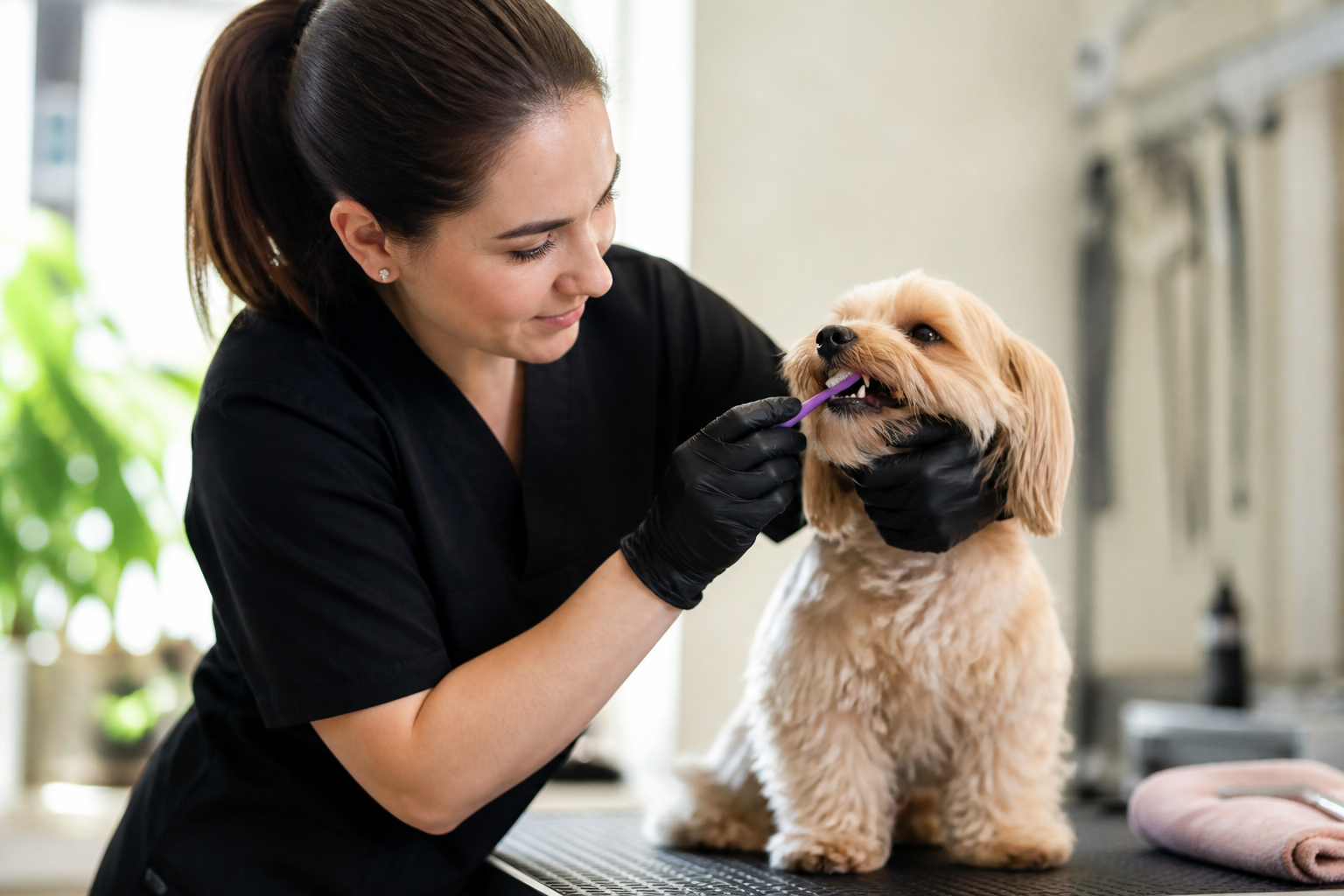
The terminology used in the pet industry can sometimes be confusing for owners. When a groomer offers a dental service, they are almost always referring to teeth brushing. This involves using a pet-safe toothbrush and flavored toothpaste to scrub the surface of the teeth. It is a cosmetic service designed to freshen breath and remove very loose debris. It is a helpful maintenance step, but it is not a medical procedure.
A professional dental cleaning is a medical service performed at a veterinary clinic. This involves scaling the teeth to remove hardened tartar and plaque. It also includes cleaning the area under the gums where most dental disease hides. Veterinarians use specialized tools like ultrasonic scalers and polishers that require the dog to be under general anesthesia.
What to Expect from a Groomer
- Application of pet-safe toothpaste.
- Manual brushing of the visible tooth surfaces.
- Use of dental sprays or foams to neutralize odors.
- Observations about red gums or loose teeth to report back to you.
For routine grooming support, you can also browse our dog grooming supplies.
What to Expect from a Veterinarian
- Pre-anesthetic blood work to ensure safety.
- Full oral examination while the dog is sedated.
- Scaling above and below the gumline.
- Dental X-rays to check for bone loss or root infections.
- Polishing the enamel to prevent future plaque buildup.
Key Takeaway: Think of a groomer like a quick tooth brushing session at home and a veterinarian like a deep cleaning at the dentist. One is for maintenance, while the other is for health and prevention.
The Risks of "Anesthesia-Free" Scaling
Some grooming facilities or independent practitioners offer what they call anesthesia-free dental cleanings. This involves scaling the tartar off a dog’s teeth while they are fully awake. While this might sound safer or more cost-effective than a vet visit, it carries significant risks.
First, scaling the teeth with metal tools is uncomfortable. A dog that is awake will move, which makes it very easy for the tool to slip and cut the gums or cheeks. Expecting a dog to sit perfectly still while someone scrapes their teeth is a lot to ask. It can create a negative association with mouth handling, making future brushing at home much harder.
Second, manual scaling only removes the tartar you can see. The most dangerous bacteria live under the gumline. A groomer cannot safely reach these areas in an awake animal. If the tartar is removed from the surface but left under the gums, the pet still has active dental disease. This creates a false sense of security for the owner because the teeth look white, even though the roots may be rotting.
Finally, scaling leaves tiny scratches in the tooth enamel. In a veterinary setting, the teeth are polished after scaling to smooth these grooves. Groomers rarely have the equipment to polish. Without polishing, those scratches act like Velcro for new plaque. This causes tartar to build up even faster than it did before.
Vet Tip: Never allow a non-veterinary professional to use metal scaling tools on your dog’s teeth. This can cause permanent enamel damage and leaves the most dangerous bacteria behind under the gums. Always consult your vet for tartar removal.
Why Anesthesia Is Necessary for Real Cleaning
Many owners feel nervous about putting their dog under anesthesia for a dental cleaning. However, modern veterinary practices use advanced monitoring to keep pets safe. Anesthesia is the only way to perform a thorough and humane dental procedure.
When a dog is sedated, the vet can perform a 360-degree inspection of every tooth. They can use a probe to check for "pockets" in the gums, which indicate infection. They can also take X-rays. Since 60 percent of a dog's tooth is hidden under the gumline, X-rays are the only way to see if a tooth is actually healthy.
Anesthesia also protects the dog's airway. During a cleaning, water and bacteria are sprayed into the mouth. A breathing tube prevents the dog from inhaling this dirty water into their lungs, which could cause pneumonia. An awake dog at a groomer does not have this protection.
Key Takeaway: Anesthesia allows the veterinarian to address the root causes of bad breath and pain. It is a controlled, safe environment that ensures the dog feels no pain during the procedure.
The Systemic Impact of Dental Disease
Dental health is about much more than just a bright smile. It is a gateway to the rest of the body. When a dog has periodontal disease, their gums become inflamed and bleed easily. This allows bacteria from the mouth to enter the bloodstream directly.
Once in the blood, these bacteria can travel to major organs. Over time, chronic dental infections can lead to:
- Heart valve inflammation (endocarditis).
- Kidney disease and reduced filtration.
- Liver infections and scarring.
- Weakened immune system function.
By the time a dog is three years old, nearly 80 percent of them show some signs of dental disease. Regular maintenance by your groomer and deep cleanings by your vet are essential to extending your dog’s lifespan. If you notice your dog is dropping food, pawing at their mouth, or has extremely foul breath, these are signs of pain that need immediate veterinary attention. For more guidance, read the warning signs of dental disease in dogs.
How to Maintain Teeth Between Grooming Visits
While the groomer can help, the best results come from daily care at home. You do not need to be an expert to keep your dog's mouth healthy. Consistency is much more important than perfection.
Step 1: Choose the right tools
Buy a toothbrush specifically designed for dogs. These often have angled heads or fit over your finger. Use only dog-specific toothpaste. Human toothpaste contains xylitol and fluoride, both of which are toxic to dogs.
A ready-to-use option is the Nutri-Vet Oral Hygiene Kit for Dogs, which includes toothpaste and brushing tools.
Step 2: Introduce the paste
Let your dog lick the toothpaste off your finger. Most brands like Zesty Paws or Honest Paws offer flavors like poultry or peanut butter that dogs actually enjoy. Do this for a few days without the brush.
Step 3: Start slow
Gently lift the lip and rub the paste onto the outer surfaces of the teeth. You do not even need to open their mouth at first. Focus on the back molars where the most buildup occurs.
Step 4: Add the brush
Once they are comfortable with your finger, introduce the brush. Use gentle circular motions. Aim for 30 seconds on each side. Always follow up with a high-value treat or a favorite toy. You can find additional ideas in these pet dental care tips.
Bottom line: Daily brushing at home is the single most effective way to reduce the number of professional cleanings your dog will need over their lifetime.
Supplements and Treats for Dental Support
Sometimes brushing is simply not possible for every dog. If you have a dog that becomes aggressive or extremely stressed by mouth handling, you can use other tools to slow down plaque accumulation. We carry a wide variety of these products at BaxterBoo to make your life easier. Explore our dog dental and breath care collection.
Dental chews like Greenies are popular because they are designed to scrub the teeth as the dog chews. The mechanical action of chewing helps scrape away soft plaque before it can harden into tartar. For the best results, look for products with the VOHC (Veterinary Oral Health Council) seal of approval. You can browse our selection of Greenies products.
Water additives and dental powders are another option. These are simply added to your dog's daily water bowl or sprinkled on their food. They use enzymes to break down the biofilm that leads to plaque. While these are not as effective as brushing, they are a great addition to a multi-layered dental care plan.
If your dog is a heavy chewer, rubber toys with ridges can also help. Brands like Kong make durable toys specifically textured to massage gums and clean teeth during play. Our Autoship programme is a great way to ensure you never run out of these essential supplies, and it saves you money on every recurring order.
When to Seek a Prescription Solution
In some cases, a dog may have a chronic condition or be highly prone to rapid tartar buildup. Small breeds like Poodles and Chihuahuas are notorious for dental struggles. If your veterinarian identifies a significant issue, they may prescribe a specific dental diet.
These diets, such as those from Royal Canin or Farmina Vet Life, have a unique kibble structure. The pieces are often larger and fibrous, forcing the dog to chew rather than swallow whole. This provides a scrubbing effect on the tooth surface. These foods also contain minerals that bind calcium in the saliva, preventing it from turning plaque into hard tartar.
Our pharmacy provides easy access to these prescription diets and medications. Through our partnership with Pet's Choice, we offer FDA-approved medications for dental infections and prescription foods that support oral health. If your vet writes a script for your dog’s teeth, you can fulfill it through our pet pharmacy for home delivery or warehouse pickup.
Note: Prescription dental diets are formulated differently than standard kibble. Always talk to your vet before switching your dog to a medical diet to ensure it meets their specific nutritional needs.
Recognizing the Signs of Oral Pain
Dogs are experts at hiding pain. This is an evolutionary trait to avoid looking vulnerable to predators. Because of this, many owners do not realize their dog has a dental problem until it is quite advanced. Since the groomer only sees your dog every few weeks or months, you are the first line of defense.
Watch for subtle changes in behavior. If your dog suddenly stops playing with their favorite hard toys, it might be because it hurts their teeth. You might also notice them chewing only on one side of their mouth. In some cases, a dog might become "picky" about their food, when in reality, the hard kibble is simply too painful to crunch.
Physical signs include:
- Red, swollen, or bleeding gums.
- Visible brown or yellow crust on the teeth.
- Excessive drooling, sometimes tinged with blood.
- A "rotten" smell that persists even after brushing.
- Lumps or bumps on the gums or under the tongue.
If you notice any of these signs, skip the groomer's brushing service and head straight to the vet. Brushing inflamed gums can be very painful and may cause more bleeding. A veterinary exam is the only way to determine if there is an underlying infection that requires antibiotics or an extraction.
Creating a Dental Care Routine
The most successful pet owners treat dental care like any other part of the daily routine. It should be as normal as going for a walk or filling the water bowl. When you integrate it into your life, it stops feeling like a chore and starts feeling like a bonding moment.
You can coordinate with your groomer to have them brush your dog’s teeth during every visit. This acts as a professional "reset" for their breath. Between those visits, aim to brush at home at least three times a week. Use dental treats on the days you don't brush.
By using MVP Rewards at BaxterBoo, you can earn points on every toothbrush, paste, and dental chew you buy. This makes it more affordable to keep up with the supplies you need for a healthy mouth. Over time, these small habits prevent expensive surgeries and keep your dog's heart and kidneys healthy for years to come.
Summary of Pet Dental Care Responsibilities
| Feature | Groomer | Veterinarian | Owner (You) |
|---|---|---|---|
| Teeth Brushing | Yes (Maintenance) | No (Usually only cleaning) | Yes (Daily/Weekly) |
| Tartar Removal | No (Unsafe/Illegal) | Yes (Scaling) | No |
| Gumline Cleaning | No | Yes | No |
| Diagnosis | No (Observations only) | Yes | No |
| X-rays/Surgery | No | Yes | No |
| Breath Freshening | Yes | Yes | Yes |
Bottom line: Your groomer is your partner in maintenance, but your veterinarian is your partner in medical health. Both are necessary for a happy, healthy dog.
Conclusion
A groomer plays a helpful role in your dog's hygiene by providing basic teeth brushing and reporting any abnormalities they see. However, they cannot replace the medical expertise of a veterinarian. Real dental cleaning requires scaling below the gumline and professional tools that can only be used safely under anesthesia. To keep your dog's mouth in top shape, combine regular vet checkups with at-home brushing and high-quality dental treats. If your vet recommends a specialized diet or medication, our pharmacy and the Pet's Choice partnership are here to help you get exactly what you need.
- Brush your dog's teeth at home regularly.
- Schedule an annual dental exam with your veterinarian.
- Use VOHC-approved treats for mechanical cleaning.
- Monitor for signs of oral pain or bleeding.
Check out our full collection of dental care products or visit our pharmacy section to manage your dog's prescription dental needs today.
FAQ
How often should a groomer brush my dog's teeth?
If your dog visits the groomer every four to six weeks, it is a great idea to have them brush the teeth during every visit. While this is not enough on its own to prevent all dental disease, it provides a deep scrub and breath freshening that complements your at-home routine. For dogs that are difficult to brush at home, this professional touch can be especially helpful.
Can a groomer remove brown tartar from my dog's teeth?
No, groomers should not attempt to remove hardened tartar or plaque using scaling tools. This process is a medical procedure that requires a veterinary license and anesthesia. Attempting to scrape tartar off an awake dog can lead to enamel damage, gum injuries, and incomplete cleaning that leaves bacteria trapped under the gumline.
Why does my dog still have bad breath after the groomer brushes their teeth?
If your dog's breath is still foul shortly after a brushing, it usually indicates an underlying health issue. Brushing only cleans the surface of the teeth, but "dog breath" is often caused by bacteria living deep under the gums or by decaying teeth. Persistent bad breath is a signal that you should schedule a veterinary dental exam to check for infections.
Are anesthesia-free dental cleanings a good alternative to the vet?
Generally, anesthesia-free cleanings are not recommended by veterinary experts. They are primarily cosmetic, removing only the visible tartar while leaving the dangerous bacteria under the gumline untouched. Additionally, the process can be stressful and painful for the dog, and it lacks the polishing step necessary to keep the teeth smooth and resistant to future plaque.






