
 Save 15% on your 1st Autoship learn more

 Email us
 Live Chat
 FAQs
FAQs





Introduction
You lean in for a morning nuzzle from your favorite four-legged friend and a wave of "dog breath" hits you. While we often joke about stinky canine kisses, that odor is usually the first sign that something is amiss in your dog's mouth. At BaxterBoo, we talk to pet owners every day who wonder if they actually need to brush their dog’s teeth or if a few crunchy biscuits are enough to do the job.
Maintaining oral hygiene is one of the most overlooked aspects of pet ownership. It is not just about fresh breath. It is about preventing pain and systemic health issues. This article covers why dental care is mandatory, how to spot trouble, and the best ways to keep those pearly whites shining. Caring for your dog’s mouth today can prevent expensive and painful procedures later in their life.
The Short Answer to Dental Care
The simple answer is yes. You absolutely need to clean your dog's teeth. Dogs do not have "self-cleaning" mouths. While wild ancestors chewed on tough hides and bones that provided some natural scraping, our domestic companions eat diets that often allow plaque to flourish.
Quick Answer: Yes, cleaning your dog's teeth is essential for preventing periodontal disease, tooth loss, and infections that can spread to the heart and kidneys. A combination of daily at-home brushing and annual professional veterinary exams is the gold standard for canine health.
Plaque begins to form on teeth just hours after a meal. If it is not brushed away, it combines with minerals in the saliva to harden into tartar within days. Once tartar forms, it is like concrete. You cannot simply brush it off at home. This buildup leads to gingivitis and eventually periodontal disease.
Why Dental Hygiene Is Mandatory for Dogs
Many owners assume that because their dog is eating and acting normally, their teeth are fine. However, dogs are experts at hiding oral pain. By the time a dog stops eating due to a toothache, the dental disease is usually quite advanced.
The Connection Between the Mouth and the Body
Poor oral health does not stay in the mouth. When gums are inflamed and bleeding, bacteria can enter the bloodstream. These bacteria can travel to major organs. Research suggests a strong link between periodontal disease and heart, liver, and kidney damage in dogs.
Preventing Pain and Discomfort
Imagine never brushing your teeth or visiting a dentist for years. The discomfort would be immense. Dogs suffer from the same toothaches, abscesses, and broken teeth that humans do. Regular cleaning ensures your dog is not living with chronic, hidden pain that affects their quality of life.
Saving on Long-Term Costs
Preventive care is always more affordable than reactive surgery. A toothbrush and a tube of dog-safe toothpaste cost very little. In contrast, a professional dental extraction under anesthesia can cost hundreds or even thousands of dollars. Using products from BaxterBoo to stay ahead of the game is a smart financial move for any pet owner.
Key Takeaway: Oral health is a window into your dog's overall wellness. Keeping teeth clean prevents bacteria from migrating to vital organs and protects your pet from silent, chronic pain.
Signs Your Dog Needs a Professional Cleaning
You should check your dog's mouth at least once a week. Lift the lips and look at the back molars. This is where most of the trouble starts.
Look for these specific warning signs:
- Persistent bad breath that does not go away
- Yellow or brown crusty buildup (tartar) near the gumline
- Red, swollen, or bleeding gums
- Difficulty picking up food or dropping kibble while eating
- Pawing at the mouth or face
- Loose, broken, or missing teeth
- Excessive drooling
If you notice any of these symptoms, it is time for a professional evaluation. Do not wait for the next annual checkup if your dog’s gums look angry or if their breath has changed significantly. For more guidance, read our guide to warning signs of bad teeth in dogs.
Vet Tip: If your dog's gums bleed during a routine brushing, it is a sign of early gingivitis. Consult your veterinarian for a professional assessment to ensure there is no infection lurking beneath the gumline that requires medication or deep cleaning.
How to Clean Your Dog's Teeth at Home
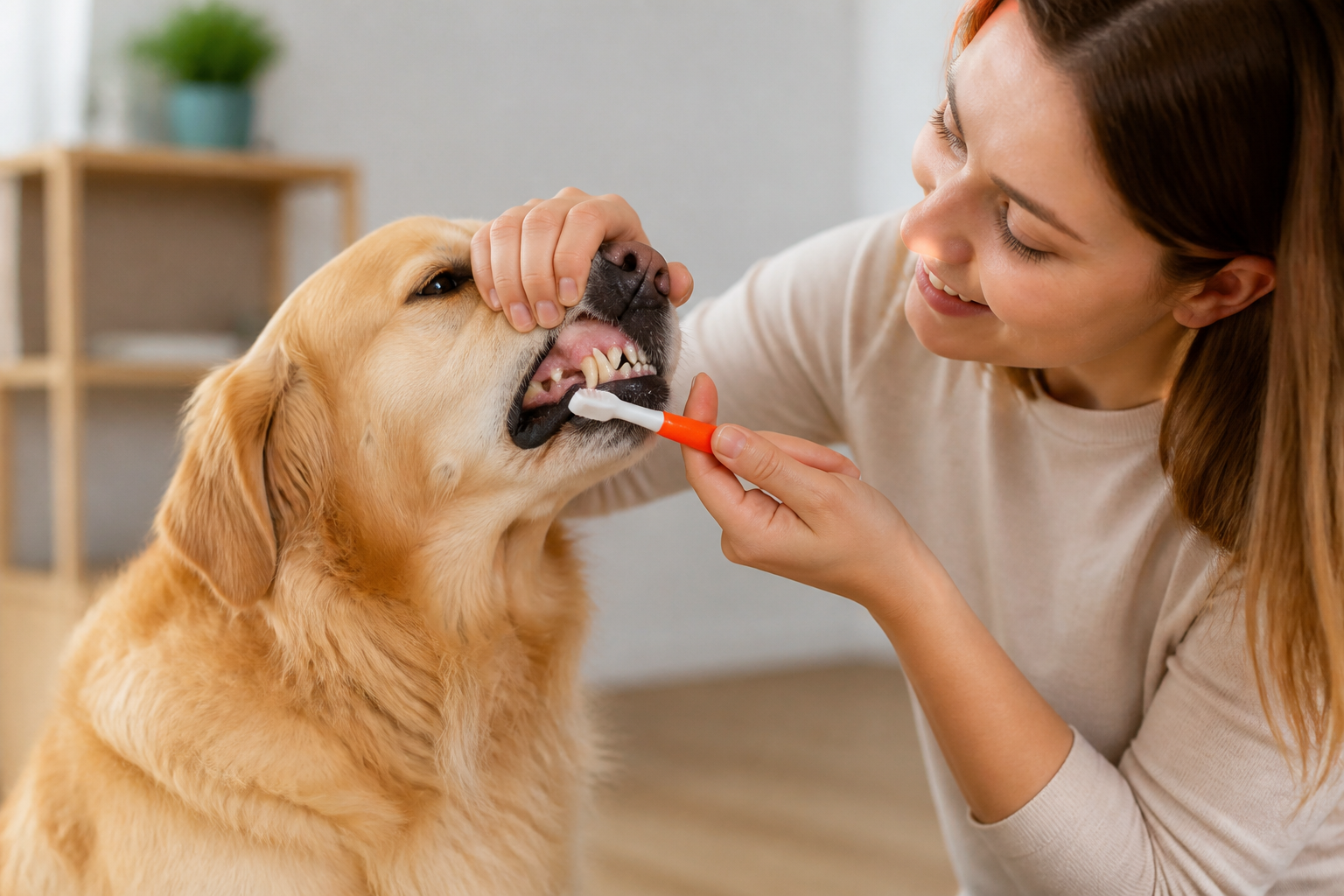
Brushing is the most effective way to remove plaque. While it might seem daunting at first, most dogs can learn to enjoy the process if you move slowly.
Step 1: Choose the Right Tools
Never use human toothpaste on a dog. It often contains xylitol, which is highly toxic to dogs. It also contains foaming agents that can upset their stomach. Use a toothpaste specifically formulated for pets in flavors like poultry or beef. You can use a soft-bristled dog toothbrush or a silicone finger brush. For additional guidance, see these pet dental care tips.
Step 2: Introduce the Taste
Let your dog lick a bit of the toothpaste off your finger. Do this for a few days without even touching their teeth. You want them to associate the flavor with a positive experience.
Step 3: Touch the Teeth
Slowly rub your finger along their gums and teeth. Do not use the brush yet. Keep these sessions very short and follow up with a high-value treat or praise.
Step 4: Start Brushing
Apply a small amount of paste to the brush. Focus on the outside surfaces of the teeth. This is where the most plaque accumulates. You do not usually need to worry about the inside surfaces because the tongue helps keep those areas clean.
Step 5: Be Consistent
Daily brushing is ideal. If that is not possible, aim for at least three times a week. Anything less than that allows tartar to harden, making the brushing less effective.
Bottom line: Brushing is the gold standard for at-home care and should be introduced gradually to keep the experience stress-free.
The Role of Dental Chews and Treats
We know that life gets busy. Sometimes daily brushing just does not happen. This is where dental treats and chews become valuable allies. Explore our dog dental care category for brushing aids, chews, wipes, and water additives.
Brands like Greenies are specifically designed to scrub the teeth as the dog chews. The texture is engineered to allow the tooth to sink into the chew, creating a mechanical scraping action. This helps remove plaque from the hard-to-reach areas near the gums. You can also browse our selection of Greenies products.
However, treats are not a total replacement for brushing. Think of them like chewing sugarless gum for humans. It helps, but you still need to brush. When choosing treats, look for those that have been tested for dental efficacy. We carry a wide selection of these at BaxterBoo to help you maintain your dog's routine.
Safe Chewing Options
- Rubber toys like those from Kong can help massage gums.
- Specific dental-diet kibble has a larger, air-filled structure that prevents the kibble from crumbling immediately.
- Water additives can help reduce the bacterial load in the mouth.
Avoid extremely hard items like natural bones, antlers, or hooves. While people often think these clean teeth, they are actually a leading cause of fractured teeth. If a chew is too hard to indent with your thumbnail, it is likely too hard for your dog's teeth.
Professional Veterinary Cleanings
At-home care is about prevention. Professional care is about treatment and deep cleaning. Most dogs will need at least one professional cleaning in their lifetime. Some breeds may need them every year.
What Happens During a Professional Cleaning?
A real dental cleaning must be done under general anesthesia. "Anesthesia-free" cleanings are largely cosmetic. They scrape the visible tartar but cannot reach the most important area: under the gumline.
During a professional cleaning, the vet will:
- Perform a full oral exam and "chart" every tooth.
- Take dental X-rays to look for abscesses or bone loss.
- Scale the teeth with an ultrasonic cleaner to remove tartar.
- Polish the teeth to smooth out microscopic scratches.
- Perform extractions if a tooth is dead or painful.
Key Takeaway: Professional cleanings are the only way to remove hardened tartar and address issues hidden under the gums.
Breed and Age Considerations
Not all dogs are created equal when it comes to dental health. Your dog’s breed and age play a massive role in how much attention you need to pay to their mouth.
Small and Toy Breeds
Small dogs like Yorkies, Chihuahuas, and Pugs often have "crowded" mouths. They have the same 42 teeth as a German Shepherd but in a much smaller space. This crowding traps food and bacteria easily. Small breeds are notorious for retaining baby teeth, which creates even more places for plaque to hide. If you have a small dog, you should start dental care as early as possible.
Flat-Faced (Brachycephalic) Breeds
Dogs with short snouts often have misaligned jaws. This means their teeth do not meet correctly, which prevents the natural cleaning that happens when a dog chews. These breeds are at a much higher risk for early-onset periodontal disease.
Senior Dogs
As dogs age, their immune systems change. Chronic inflammation in the mouth becomes harder for the body to manage. Senior dogs are more likely to have recessed gums and exposed roots. These areas are very sensitive and prone to decay. Regular dental checkups are a vital part of senior pet care.
| Factor | High Risk Groups | Recommended Frequency |
|---|---|---|
| Breed Size | Toy and Small Breeds | Daily brushing; Yearly vet exam |
| Jaw Shape | Brachycephalic (Pugs, Bulldogs) | Daily brushing; Frequent vet checks |
| Age | Seniors (7+ years) | Twice-yearly oral exams |
| Diet | Wet food only | Daily brushing and dental chews |
Diet and Dental Health
The food your dog eats affects their teeth, though perhaps not as much as common myths suggest. There is a long-standing belief that dry kibble cleans teeth simply because it is crunchy. In reality, most kibble is small and shatters quickly. It does very little to scrape the teeth.
If your dog has significant dental issues, your vet might recommend a specific prescription dental diet. These diets use a specialized fiber matrix that does not shatter. Instead, the tooth sinks into the kibble, providing a cleaning effect. Our dog pharmacy offers access to prescription diets through our partnership with Pet's Choice. If your vet prescribes a specific food like Royal Canin Dental or Farmina Vet Life for dental health, you can fulfill that need through our pharmacy services.
Supplements and Additives
If your dog refuses to let you brush, you can look into water additives or dental powders. These products often contain enzymes that break down plaque or substances that prevent bacteria from sticking to the tooth surface. They are an excellent "extra layer" of protection for difficult-to-handle pets.
The Danger of "Anesthesia-Free" Dental Cleaning
You may see advertisements for "anesthesia-free" or "non-anesthetic" dental cleanings. These are often offered at grooming salons or by independent providers. While they sound appealing because they avoid the risks of anesthesia, they are often a waste of money.
Dogs will not sit still for a stranger to scrape under their gums with sharp metal tools. These services only clean the parts of the tooth you can see. This leaves the bacteria and tartar under the gumline, which is where the real disease happens. It gives owners a false sense of security while the dog's dental health continues to decline.
How to Save on Dental Costs
Dental care can be expensive, but there are ways to manage the costs without sacrificing your dog's health.
- Start Early: Puppies who are used to brushing will have fewer issues as adults.
- Use MVP Rewards: When you buy your brushes, toothpaste, and dental treats at BaxterBoo, you can earn up to 5% back on your purchases to use on future care. Learn more about the MVP Rewards programme.
- Check for Dental Months: Many veterinary clinics offer discounts in February (National Pet Dental Health Month).
- Invest in Insurance: Programs like FIGO Pet Insurance can help cover the costs of unexpected dental injuries or illness.
- Be Consistent: Five minutes of brushing a week can save you five thousand dollars over the life of your dog.
Training Your Dog to Accept Dental Care
If you have an older dog who is not used to having their mouth touched, do not give up. It is never too late to start a routine. The key is to keep the sessions positive and very short.
Use a "touch and treat" method. Touch the lip, give a treat. Lift the lip, give a treat. Once they are comfortable with that, touch a tooth with your finger, then give a treat. Gradually work your way up to using a brush. If your dog becomes stressed or growls, stop immediately and go back a step. You want them to think of dental time as "special treat time."
Vet Tip: For dogs with existing dental pain, brushing can be physically painful. Always have a vet check your dog's mouth for sores or loose teeth before starting a vigorous brushing routine. You want to make sure you aren't accidentally hurting them.
Conclusion
Cleaning your dog's teeth is not an optional "beauty" routine. It is a fundamental part of responsible pet ownership. By combining daily brushing with effective dental treats and regular veterinary checkups, you can ensure your dog lives a long life free from oral pain.
We are here to help you every step of the way. From the best toothbrushes and finger brushes to high-quality dental treats like Greenies Dental Dog Chew - Fresh, we carry over 500 trusted brands to support your dog’s health. If your dog requires specialized care, remember that our BaxterBoo pharmacy provides FDA-approved medications and prescription diets through our Pet's Choice partnership.
Take a moment today to look at your dog's teeth. If you see redness or smell something foul, make an appointment with your vet. Then, head over to our dental chews collection to find the tools you need to keep that smile healthy.
Key Takeaway: A healthy mouth leads to a healthy heart and a longer life. Start a dental routine today to protect your pet for years to come.
FAQ
How often do I really need to brush my dog's teeth?
Ideally, you should brush your dog's teeth every single day to prevent plaque from hardening into tartar. If daily brushing is not realistic for your schedule, aim for a minimum of three times per week. Consistency is more important than the length of the session, as even a quick thirty-second brush helps disrupt bacterial films.
Can I just use dental treats instead of brushing?
While dental treats and chews are helpful tools, they are not a substitute for brushing. Treats primarily clean the chewing surfaces of the teeth, whereas brushing allows you to reach the gumline where periodontal disease begins. Think of dental treats as a supplement to a regular brushing routine rather than a replacement.
Is it safe to have my senior dog's teeth cleaned under anesthesia?
Modern anesthesia is very safe for senior dogs, provided they have a thorough pre-operative screening. Your vet will typically perform blood work to check organ function before the procedure. For many seniors, the risk of untreated dental infection is actually much higher than the risk of a controlled anesthetic event.
What should I do if my dog's breath still smells bad after brushing?
If your dog has persistent bad breath despite regular brushing, it usually indicates that there is an underlying issue. This could be a sign of a rotted tooth, a deep infection, or even a non-dental health problem like kidney or digestive issues. You should schedule an appointment with your veterinarian for a professional oral exam to find the source of the odor.






