
 Save 15% on your 1st Autoship learn more

 Email us
 Live Chat
 FAQs
FAQs





Introduction
You are sitting on the couch and your dog leans in for a happy lick. Instead of a sweet moment, you are hit with a wave of foul breath that makes you recoil. Many owners think "dog breath" is just a natural part of owning a pet. At BaxterBoo, we know that a smelly mouth is actually a cry for help from your dog’s gums and teeth. Cleaning your dog’s teeth is not a luxury or a cosmetic choice. It is a vital part of their overall health care that can prevent pain and expensive vet bills. This article covers why dental hygiene matters, how to start a routine at home, and when you need professional help. We want to help you understand that a clean mouth leads to a much longer and happier life for your furry friend.
Why Dog Dental Care Is Essential
Most dogs show signs of dental disease by the time they are three years old. This is because plaque and tartar build up just as quickly on canine teeth as they do on ours. Plaque is a sticky film of bacteria that forms on the teeth after eating. If it is not brushed away, it hardens into tartar within about 48 hours. Tartar is much harder to remove and provides a home for even more bacteria.
When bacteria sit against the gumline, they cause inflammation. This is known as gingivitis. You might see a thin red line where the tooth meets the gum. If this is ignored, it progresses to periodontal disease. This condition destroys the bone and tissues that hold the teeth in place. It is painful for your dog and eventually leads to tooth loss.
The danger does not stop in the mouth. The mouth has a massive supply of blood vessels. Bacteria from infected gums can enter the bloodstream. From there, they travel to major organs like the heart, kidneys, and liver. Chronic dental infections are linked to heart valve disease and kidney failure. Taking care of your dog’s teeth is one of the best ways to protect their internal organs.
Key Takeaway: Dental care is about more than fresh breath. It prevents painful infections that can eventually damage your dog's heart and kidneys.
Spotting the Signs of Dental Disease
Dogs are experts at hiding pain. This is an instinctual trait from their wild ancestors. Your dog might have a throbbing toothache but will continue to eat and play as if nothing is wrong. You have to be the detective. Checking your dog's mouth once a week is a great habit. For additional guidance, read about warning signs of bad teeth in dogs.
Look for these common warning signs:
- Persistent bad breath that does not go away after a meal.
- Yellow or brown crusty buildup near the gumline.
- Red, swollen, or bleeding gums.
- Excessive drooling or dropping food while eating.
- Pawing at the face or rubbing the muzzle on the carpet.
- Refusing to eat hard kibble or crunchy treats.
- Loose, broken, or missing teeth.
If you notice any of these symptoms, it is time for a professional evaluation. A dog with bleeding gums or loose teeth is likely in significant discomfort.
Vet Tip: If your dog only chews on one side of their mouth or stops enjoying their favorite chew toys, they may have a fractured tooth or a deep infection. Consult your veterinarian for a thorough oral exam and potential X-rays.
The Daily Brushing Routine
Brushing your dog’s teeth is the gold standard for home care. It is the most effective way to break up plaque before it turns into tartar. While daily brushing is the goal, even doing it three times a week makes a significant difference. For more ideas, review these pet dental care tips.
You cannot use human toothpaste for your dog. Our toothpaste contains foaming agents and fluoride that are toxic to dogs when swallowed. Most human toothpastes also contain xylitol, which is a sweetener that can be fatal to dogs. Pet-safe toothpaste comes in flavors like poultry, beef, or peanut butter. This makes the experience much more enjoyable for the animal.
Step 1: Introduce the taste. / Let your dog lick some pet toothpaste off your finger for a few days. This creates a positive association with the flavor.
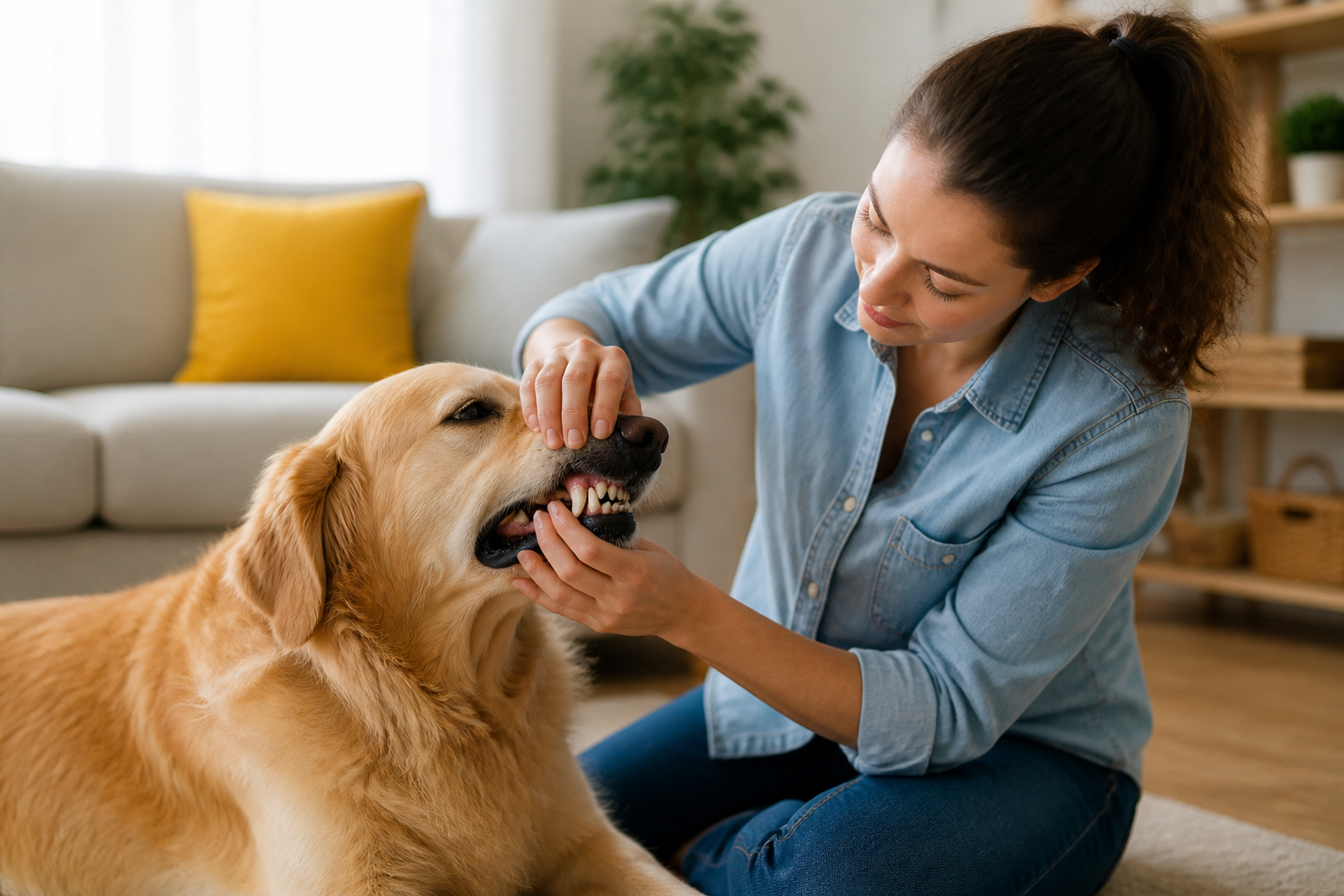
Step 2: Get them used to mouth handling. / Gently lift their lips and rub your finger along their gums. Reward them with praise and a small treat afterward.
Step 3: Introduce the brush. / Use a soft-bristled dog toothbrush or a silicone finger brush. Put a small amount of paste on it and let them sniff it.
Step 4: Start brushing. / Aim for a 45-degree angle toward the gumline. Focus on the outside surfaces of the teeth where the cheeks touch. This is where most plaque accumulates.
Step 5: Keep it short. / You do not need to do the whole mouth at once. Start with just the front teeth and work your way back over several sessions.
Choosing the Right Dental Tools
The right gear makes the process easier for both you and your dog. At BaxterBoo, we carry a wide selection of brushes and pastes from trusted brands to fit every mouth size. Browse our dog dental care collection for products designed to support your routine.
If you have a small dog like a Yorkie or a Chihuahua, a standard toothbrush might be too bulky. A finger brush gives you more control and fits into tight spaces.
Large breeds like Golden Retrievers or Labradors often do well with long-handled brushes. These allow you to reach the very back molars without putting your hand too far into their mouth. Some brushes have dual heads to clean the top and bottom of the tooth at the same time.
If your dog absolutely refuses a brush, dental wipes are a good alternative. These are textured pads treated with enzymes that help break down plaque. You simply wrap the wipe around your finger and rub it over the teeth. While not as thorough as a brush, it is much better than doing nothing at all.
Beyond the Brush: Chews and Additives
We understand that some dogs are very difficult when it comes to mouth handling. If brushing is a constant struggle, you can use secondary tools to help maintain oral hygiene. These should supplement brushing rather than replace it entirely. You can compare additional options in this guide to the best dental chews for dogs.
Dental chews are designed to scrape the teeth as the dog bites down. Many of these products have the Veterinary Oral Health Council (VOHC) seal of approval. This seal means the product has been tested and proven to reduce plaque or tartar. Brands like Greenies dental products or dental sticks from Redbarn are popular choices that dogs love.
Water additives are another easy option. You simply add a capful of the solution to your dog’s water bowl. These additives contain enzymes that neutralize bad breath and help prevent plaque from sticking to the teeth. They are tasteless and odorless so most dogs do not even notice they are there.
Bottom line: Combining daily brushing with dental chews provides the best protection against periodontal disease.
The Role of Professional Cleanings
Even with perfect home care, your dog will eventually need a professional cleaning. Just like humans go to the dentist to get tartar scraped away, dogs need the same. A professional cleaning at the vet is very different from what you do at home.
The biggest difference is the use of anesthesia. Many owners are nervous about anesthesia, but it is necessary for a safe and effective cleaning. A vet cannot use sharp instruments to clean under the gumline while a dog is awake and moving. Anesthesia also allows the vet to place a tube in the windpipe. This prevents the dog from inhaling bacteria and water during the procedure.
During a professional cleaning, the vet will:
- Perform a full physical exam and bloodwork to ensure your dog is healthy.
- Take dental X-rays to check for problems below the gumline.
- Use an ultrasonic scaler to remove tartar from every surface of the tooth.
- Polish the teeth to smooth out microscopic scratches.
- Extract teeth that are too damaged or infected to be saved.
Prescription Diets and the BaxterBoo Pharmacy
If your dog has a history of severe dental issues, your vet might recommend a prescription dental diet. These kibbles are specifically engineered to be larger and have a fibrous texture. Instead of crumbling immediately, the kibble stays intact longer so it can scrub the tooth surface.
Our pharmacy offers a range of prescription pet foods and medications through our partnership with Pet's Choice. If your dog undergoes a dental procedure and needs antibiotics or pain relief, you can have those prescriptions filled through our dog pharmacy for home delivery. We carry FDA-approved medications for a variety of health needs. Having these items delivered can save you a trip to the clinic during your dog's recovery.
Our pharmacy also carries specialized oral rinses and gels that may be required after a tooth extraction. These help keep the site clean while it heals. Managing your dog’s health is a lifelong commitment, and we are here to provide the specialized supplies you need.
Vet Tip: Always follow the full course of antibiotics if your vet prescribes them after a dental surgery. Stopping early can allow resistant bacteria to remain in your dog's system.
Breed and Age Considerations
Not all dogs face the same dental risks. Small and toy breeds are much more likely to suffer from overcrowding. Because their mouths are small, their teeth are often cramped together. This creates many tiny crevices where food and bacteria get trapped. Breeds like Pugs and Bulldogs also have misaligned jaws that prevent the teeth from cleaning themselves naturally through chewing.
If you own a small breed, you should start a dental routine as early as possible. Most small dogs need their first professional cleaning by age two or three. Larger dogs may be able to wait until they are five or six, but this depends on their diet and chewing habits.
Senior dogs require extra attention. As dogs age, their immune systems may not be as strong. A dental infection can take a greater toll on an older dog's body. Many owners worry that their senior dog is "too old" for anesthesia. However, modern anesthetic protocols are very safe for older pets. A painful mouth can significantly decrease a senior dog's quality of life, making it hard for them to eat and stay nourished.
Creating a Long-Term Dental Plan
Success in pet dental care comes down to consistency. It is easier to prevent tartar than it is to remove it. If you make dental care a part of your daily routine, it becomes a bonding moment rather than a chore. Start by picking a specific time of day, such as right before bed, to brush or provide a dental chew.
Pairing the routine with our Autoship program is a smart way to stay consistent. You can set your favorite dental treats, toothpaste, and even prescription diets to arrive on a regular schedule. This ensures you never run out of the tools you need to keep your dog's mouth healthy. Plus, you will earn rewards through the MVP Rewards program with every purchase.
If you are a new customer, you can get a $10 reward on your first order of $39 or more when you sign in at checkout. This is a great way to stock up on a variety of dental care items to see what your dog likes best. We have been serving pet owners since 2006, and we are proud to offer over 500 brands that help your pets thrive.
Conclusion
Cleaning your dog’s teeth is a fundamental part of responsible pet ownership. It prevents the pain of tooth loss and protects your dog's vital organs from dangerous bacteria. While professional cleanings are necessary, your daily efforts at home are what keep dental disease at bay. By combining brushing, quality dental chews, and regular vet checkups, you can ensure your dog enjoys a healthy mouth for years to come.
- Brush your dog's teeth at least three times a week with pet-safe paste.
- Look for the VOHC seal on treats and chews.
- Schedule an annual dental exam with your veterinarian.
- Watch for signs of pain or difficulty eating.
Key Takeaway: Consistent home care and regular professional cleanings are the two pillars of a healthy canine mouth.
The most important next step is to check your dog's teeth today. If you see heavy tartar or red gums, call your vet. If their mouth looks healthy, browse our dog dental care category to find the brushes and treats that will help keep it that way.
FAQ
Is it too late to start brushing my older dog's teeth?
It is never too late to start a dental routine, but you should have a vet check their mouth first. If an older dog already has loose teeth or painful infections, brushing could cause them significant pain. Once a vet has treated any existing disease, you can start a gentle brushing routine to prevent future problems.
Why can't I use human toothpaste on my dog?
Human toothpaste contains ingredients like sodium lauryl sulfate for foaming and fluoride for enamel strength, both of which are toxic to dogs when swallowed. Many brands also use xylitol as a sweetener, which is extremely dangerous and can cause life-threatening low blood sugar or liver failure in dogs. Always use a paste specifically formulated for pets.
How often does my dog really need a professional cleaning?
Most dogs benefit from a professional cleaning once a year, but small breeds may need them every six to nine months. Your veterinarian will assess your dog's dental health during their annual wellness exam and provide a recommendation based on the amount of tartar buildup and the health of the gums.
Are dental chews as good as brushing?
Dental chews are a helpful supplement, but they are not as effective as brushing. Chews primarily clean the chewing surfaces of the teeth and may not reach the gumline where most periodontal disease starts. Think of chews like a piece of dental gum for humans; they help, but they do not replace the need for a toothbrush.






