
 Save 15% on your 1st Autoship learn more

 Email us
 Live Chat
 FAQs
FAQs





Introduction
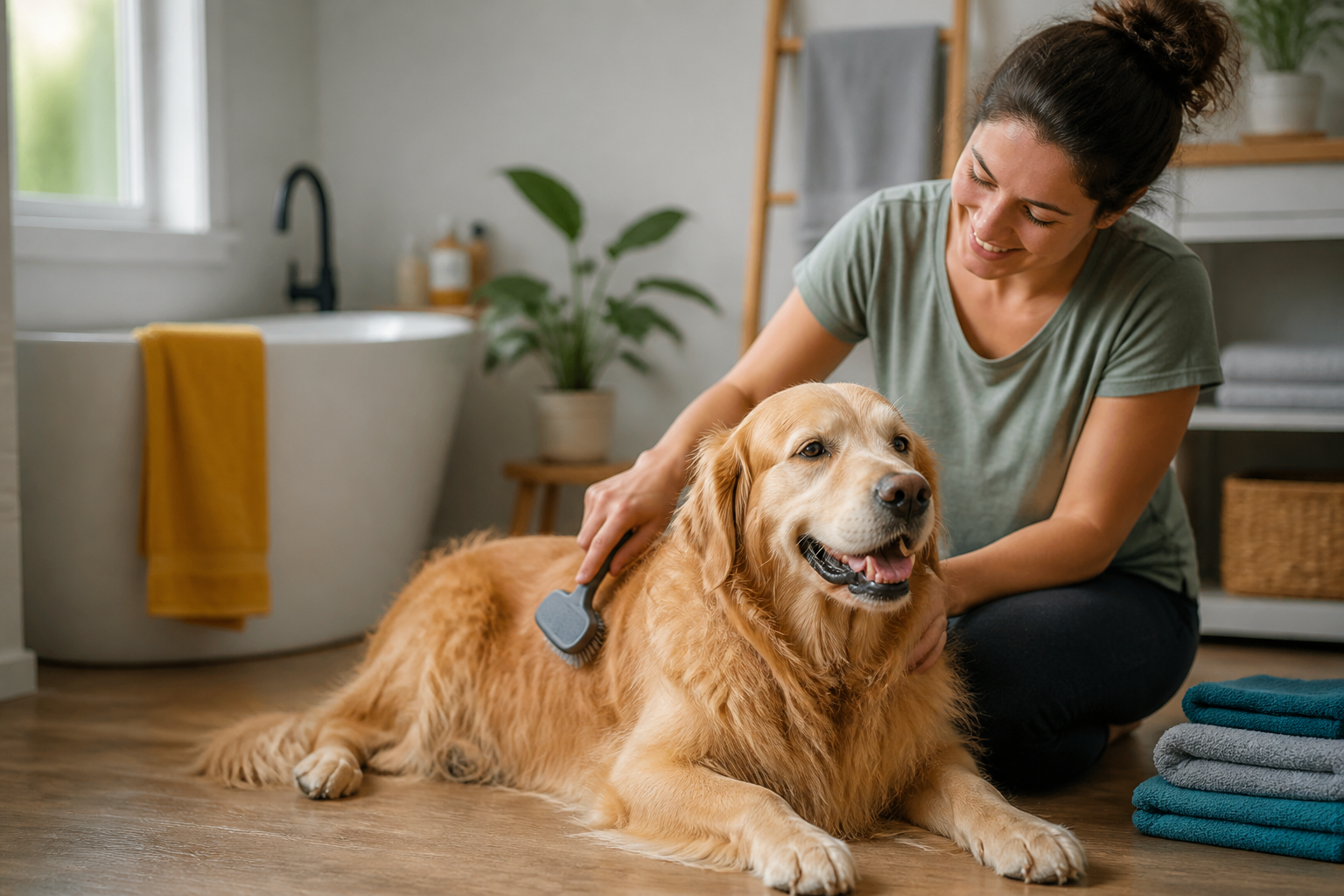
You are standing in the bathroom with a dog that smells like a swamp and looks like a cloud of tangled fluff. You have the shampoo ready and the towels stacked. Then the big question hits you. Should you start brushing now or wait until the coat is clean and wet? This is a common point of confusion for many pet owners we meet at BaxterBoo. The order in which you brush and bathe your dog can be the difference between a painless spa day and a stressful afternoon of pulling on tangles. Getting it wrong can actually make mats tighter and more difficult to remove. This article covers the mechanics of dog hair, why water changes the grooming process, and the specific steps you should take for different coat types. Understanding these basics ensures your dog stays comfortable while their skin remains healthy.
Quick Answer: For most dogs, you should brush thoroughly before the bath to remove loose fur and tangles. Water often acts like a glue that tightens existing mats, making them nearly impossible to remove once the dog is wet.
The Case for Brushing Before the Bath
The general rule among professional groomers is to brush before the water starts running. There are several structural reasons for this. First, dirt and debris often hide deep within the coat. If you put a dirty dog in the tub, that dirt mixes with water to create a muddy slurry. This mud can get trapped against the skin, especially in breeds with thick undercoats. Brushing first helps lift that debris away so the shampoo can actually reach the skin.
Water also has a unique effect on tangled hair. When hair gets wet, it swells. As it dries, it shrinks and tightens. If your dog has a small knot or a mat before the bath, the wetting and drying process will often turn that knot into a hard, felted lump. These mats can pull on the skin and cause significant discomfort. By removing these tangles while the coat is dry, you prevent the water from locking them into place.
Brushing a dry coat also helps you manage shedding. Dogs with double coats, like Labradors or Golden Retrievers, have a dense layer of soft fur underneath their guard hairs. If you do not brush this out before the bath, that loose fur will clump together when wet. This creates a thick barrier that makes it very hard to rinse out all the soap. Leftover soap residue is a leading cause of skin irritation and "hot spots" in dogs.
The Dangers of Brushing Wet Fur
It is a common mistake to think that brushing a wet dog is easier because the hair seems slick. However, hair is at its weakest and most vulnerable state when it is saturated with water. The elasticity of the hair increases when it is wet. This means the hair shafts can stretch significantly before they snap. While that might sound like a good thing, it actually causes the hair to lose its structural integrity.
When you pull a brush through wet fur, you are often stretching the hair to its breaking point. This leads to split ends and a frizzy, damaged texture once the coat dries. Damaged hair is much more prone to future tangling. Furthermore, the skin is often softer and more sensitive after being soaked in warm water. A slicker brush that feels fine on dry skin might cause "brush burn" or irritation on damp skin.
Key Takeaway: Brushing dry hair prevents mats from tightening and protects the hair shafts from stretching or breaking. Always aim to have a tangle-free dog before the water touches their fur.
Exceptions to the Dry Brushing Rule
While dry brushing is the standard, there are a few exceptions. If you are using a high-quality conditioner or a de-matting spray, some light brushing during the bath can be helpful. This is usually done while the conditioner is still in the fur to provide "slip." This technique is common for long-haired breeds where the conditioner helps the brush glide through the hair without pulling. You can find suitable options in our dog grooming collection.
Another exception involves short-haired breeds with smooth coats, such as Boxers or Beagles. These dogs do not mat. You can use a rubber grooming tool, like a Kong ZoomGroom, while they are covered in suds. This helps massage the skin and pull away loose, dead hair that is ready to fall out. For these breeds, the order is less critical because there is no risk of tightening knots.
Understanding Your Dog's Coat Type
Different coats require different strategies. A routine that works for a Poodle will not be effective for a German Shepherd. We carry over 500 brands at our warehouse to cover these various needs, but the tools only work if the timing is right.
Double-Coated Breeds
Huskies, Shepherds, and Collies have two layers of fur. These dogs require a deep "line brushing" before the bath. If you skip this, the undercoat will trap moisture against the skin. This can lead to a musty smell or even fungal infections if the dog does not dry completely. Use an undercoat rake to reach the bottom layer before you head to the tub. Our dog brushes and combs include tools designed for different coat types.
Curly and Long-Coated Breeds
Poodles, Doodles, and Shih Tzus have hair that grows continuously. This hair is very prone to matting. For these dogs, you must be able to run a metal comb through the entire coat without it getting stuck before you start the bath. If the comb catches, a mat is forming. Use a slicker brush to break up the tangle, then follow up with the comb.
Wire-Haired Breeds
Terriers often have a coarse, wiry outer coat. These dogs generally need less pre-bath brushing than long-haired breeds, but they still benefit from a quick once-over to remove surface dirt. Brushing after the bath once they are dry helps to reset the coat and keep it laying flat.
The Role of the Pharmacy in Grooming
Sometimes, a dog's coat and skin issues go beyond simple tangles. If your dog is constantly itchy, has flaky skin, or suffers from chronic ear infections after baths, the problem might be medical. Our pet pharmacy offers prescription medications for dogs with veterinary guidance.
If your veterinarian prescribes a specific medicated wash for allergies or fungal issues, the "brush first" rule becomes even more important. These shampoos often need to sit on the skin for 10 to 15 minutes to be effective. If the coat is matted and dirty, the medicine cannot reach the skin where it is needed. Brushing before the bath ensures the prescription treatment can do its job properly.
Vet Tip: If your dog has red, inflamed skin or a strong odor that persists after washing, consult your veterinarian. They may recommend a prescription shampoo from a pharmacy to treat underlying skin conditions like seborrhea or yeast overgrowth.
A Step-By-Step At-Home Grooming Routine
To get the best results, follow this logical progression. This routine protects the skin and ensures the coat looks its best.
Step 1: Perform a thorough dry brush. / Use a slicker brush or rake to remove all loose fur. Run a metal comb through the coat to ensure there are no hidden mats.
Step 2: Check the "high friction" areas. / Pay close attention to the armpits, behind the ears, and where the collar sits. These areas mat the fastest and must be clear before getting wet.
Step 3: Bathing with the right temperature. / Use lukewarm water. Hot water can dry out the skin and cause itching. Apply shampoo and massage it down to the skin.
Step 4: Rinse until the water runs clear. / This is the most important part of the bath. If you see any bubbles or feel any "slime" on the fur, keep rinsing.
Step 5: Towel dry or blow dry. / Squeeze the water out of the fur rather than rubbing it vigorously. Rubbing with a towel can create new tangles in long hair.
Step 6: The final finishing brush. / Once the dog is 100 percent dry, do a final light brush. This fluffing stage removes any last bits of loose hair and gives the coat a polished look.
Choosing the Right Tools
The tools you use are just as important as the timing. We see many owners using the wrong brush for their dog's specific coat, which can lead to accidental skin damage.
- Slicker Brushes: These have fine wire bristles. They are excellent for removing tangles in medium to long hair.
- Bristle Brushes: These are best for short-haired dogs. They help distribute natural oils and add shine.
- Undercoat Rakes: These feature long, sturdy teeth designed to reach through the topcoat and pull out the dead undercoat.
- Rubber Curry Brushes: These are perfect for bath time use on short-coated breeds. They are gentle on the skin and very effective at removing "dead" hair.
Dealing with Severe Matting
If you find a mat that is tight against the skin, do not try to wash it out. And more importantly, do not try to cut it out with kitchen scissors. It is very easy to accidentally cut a dog's thin skin when trying to remove a mat. If the mat is too tight to brush out while dry, it is often best to consult a professional groomer or your vet.
In some cases, if the matting is extreme, the most humane option is to clip the fur short. This allows the skin to breathe and a new, healthy coat to grow in. If the skin underneath the matting is red or moist, your vet might need to provide a topical treatment from our pharmacy to help the area heal.
Bottom line: Never bathe a heavily matted dog, as the water will only make the situation more painful and difficult to resolve.
Maintaining the Coat Between Baths
Most dogs only need a bath once a month. However, they need brushing much more frequently. Regular brushing between baths reduces the amount of work you have to do on bath day. It also keeps your home cleaner by capturing loose hair before it hits your furniture.
For long-haired dogs, a daily five-minute brush-over is much more effective than a one-hour marathon session once a month. This consistency keeps the hair cuticles smooth and prevents knots from forming in the first place. It also serves as a great bonding time and allows you to check for any new lumps, bumps, or ticks on your dog's body.
Our MVP Rewards program is a great way to save on these essential grooming tools. By earning points on every purchase, you can keep your grooming kit updated with high-quality brushes and combs from brands like Kong and RC Pets. Keeping these tools in good condition is a key part of successful at-home care. See how the MVP Rewards programme can fit into your regular pet-supply shopping.
Common Post-Bath Mistakes to Avoid
Even if you brush before the bath, you can still run into trouble during the drying phase. Many owners let their dogs "air dry" by running around the house or yard. While this is fine for short-haired dogs, it can be a disaster for dogs with long or curly hair.
As the dog shakes and rolls to dry themselves, the damp hair can tangle into "pin curls." If these are not brushed out immediately after the dog is dry, they can quickly turn into mats. Another mistake is using a human hairdryer on a high heat setting. Dogs have much more sensitive skin than we do. Always use the "cool" or "low" setting to avoid accidental burns.
If you find that your dog's coat is consistently difficult to manage, consider their diet. A coat that is brittle or prone to tangling can sometimes be a sign of a lack of Omega-3 fatty acids. Our dog skin and coat care collection includes supplements and grooming products for ongoing coat-care routines.
Final Thoughts on Grooming Logic
The routine you establish for your dog impacts their long-term health and their willingness to be handled. By choosing to brush before the bath, you are prioritizing their comfort and ensuring a more effective cleaning. This simple shift in timing prevents the formation of painful mats and keeps the hair shafts healthy and strong.
Our goal is to provide the products and the knowledge you need to care for your pets with confidence. Whether you are visiting our warehouse in Vernon Hills or ordering online for home delivery, we want you to feel empowered. Remember that grooming is not just about looks. It is a vital part of preventative health care.
- Brush before the bath to prevent mats from tightening.
- Only brush wet hair if you are using a heavy conditioner.
- Ensure the dog is completely dry before the final "finish" brush.
- Use the pharmacy for any skin issues that seem beyond normal dryness.
Key Takeaway: Proper grooming sequence saves time, reduces pet stress, and keeps the coat in peak condition. Start dry, wash thoroughly, and finish with a gentle fluff once the fur is completely dry.
The most relevant next step for maintaining a healthy coat is exploring our selection of professional-grade grooming tools. If your dog has persistent skin issues, talking to your vet about prescription options through our pharmacy partnership is the best way to ensure they get the specific care they need.
FAQ
Is it ever okay to brush my dog while they are in the bath?
It is generally only recommended for short-haired breeds or when using a specific conditioner on long-haired dogs to help the brush slide. For most dogs, brushing while wet can stretch and damage the hair. Always ensure the coat is mostly tangle-free before the dog gets wet to avoid making mats worse.
Why do mats get tighter after a bath?
Dog hair is made of proteins that react to moisture. When the hair gets wet, it expands, and as it dries, it contracts and twists. If there is already a knot in the hair, this drying process causes the fibers to tighten around each other, often creating a solid mass that is very difficult to remove without clippers.
My dog hates being brushed; can I just skip the pre-bath brush?
Skipping the pre-bath brush often leads to more pain later because the mats will become harder to remove. Instead of skipping it, try using high-value treats and keeping the sessions very short. You can also use a gentle grooming glove to get them used to the sensation of being brushed before moving to a slicker brush.
What should I do if I find a mat after the bath?
Wait until the dog is completely dry before attempting to brush it out. Use a detangling spray to provide some lubrication to the hair shafts. Gently use the edge of a slicker brush to pick at the mat from the outside in, rather than pulling from the skin, to minimize discomfort for your dog.






