
 Save 15% on your 1st Autoship learn more

 Email us
 Live Chat
 FAQs
FAQs





Introduction
You lean in for a pup kiss and get a whiff of something that smells like a dumpster in July. We have all been there. It is easy to think that "dog breath" is just part of the package, but it is actually a primary sign that your pet needs help. At BaxterBoo, we talk to owners every day who wonder if they really need to scrub those pearly whites or if a chew toy is enough to do the job. This guide covers why dental hygiene is non-negotiable, how to start a routine at home, and when you need to call the vet. Keeping your dog’s mouth healthy is one of the best ways to extend their life and keep them happy.
Quick Answer: Yes, you should clean your dog's teeth daily using dog-specific toothpaste and a soft brush. While chews and toys help, they cannot replace the physical action of brushing to remove plaque before it hardens into tartar.
Why Cleaning Your Dog's Teeth Is Mandatory
Many owners assume that because wild wolves do not brush, their pet dog does not need to either. However, our pets live much longer than their wild ancestors and eat diets that are quite different. Plaque starts to form on teeth just hours after a meal. If it is not brushed away, it mixes with minerals in the saliva and hardens into tartar. You cannot brush tartar away. Once it is there, only a professional cleaning can remove it.
Ignoring dental health leads to more than just a smelly mouth. Bacteria from infected gums can enter the bloodstream. From there, it travels to the heart, liver, and kidneys. This can cause permanent organ damage over time. Periodontal disease is also painful. Dogs are masters at hiding pain, so they may keep eating even if their gums are throbbing or a tooth is loose.
Key Takeaway: Oral health is a full-body health issue. Bacteria in the mouth do not stay in the mouth, and preventing buildup now saves your dog from pain and organ stress later.
How to Brush Your Dog's Teeth at Home
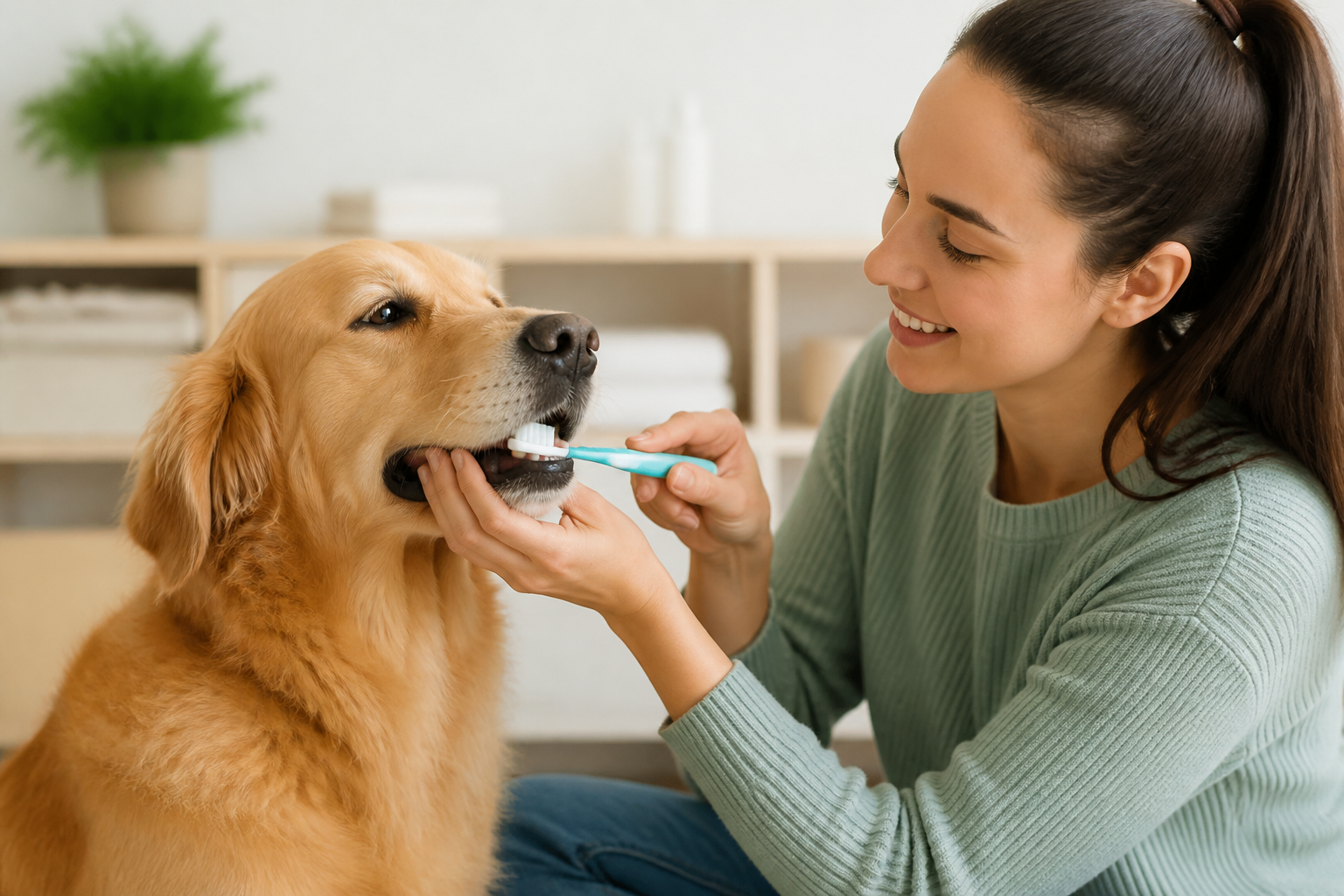
Starting a brushing routine can feel daunting if your dog is not used to having their mouth touched. The goal is to make it a positive experience, not a chore. You should never use human toothpaste. It often contains xylitol, which is toxic to dogs, and foaming agents that can upset their stomachs. Dog toothpaste comes in flavors like poultry or peanut butter that most pets actually enjoy. Our dental and breath care supplies include toothpaste, toothbrushes, gels, and other tools for building a routine.
Step 1: Get them comfortable with touch. / Spend a few days just lifting your dog's lips and rubbing their gums with your finger. Reward them with a small treat afterward.
Step 2: Introduce the paste. / Let your dog lick a bit of dog-safe toothpaste off your finger so they associate the flavor with a reward.
Step 3: Use a finger brush or soft toothbrush. / Apply a small amount of paste and gently rub the outside of the teeth in a circular motion. Focus on the gum line where plaque likes to hide.
Step 4: Keep it short. / You do not need to scrub for two minutes like a human. Even 30 seconds of focused brushing on the back molars and canines makes a massive difference.
Vet Tip: If your dog is older or has visible brown buildup, schedule a vet exam before you start brushing. Brushing over inflamed gums or loose teeth can be very painful and may cause your dog to become fearful of the process.
For additional guidance, read these pet dental care tips.
Beyond the Brush: Chews and Diets
While brushing is the gold standard, other tools can help keep the mouth clean between sessions. Dental chews like Greenies are designed with a texture that helps scrub the tooth surface as the dog bites down. Some toys, like those from Kong, have ridges or nubs specifically built to massage the gums and scrape away soft debris. You can browse our selection of Greenies products for dental chews and other pet treats.
Diet also plays a role. While the idea that all kibble cleans teeth is a bit of a myth, certain dental diets are formulated differently. These kibbles are usually larger and do not shatter immediately. This forces the dog to chew, creating a mechanical cleaning action. We carry brands like Royal Canin and Farmina Vet Life that offer specific formulas for dental support.
- Look for the VOHC (Veterinary Oral Health Council) seal on treats and food.
- Avoid extra-hard items like antlers or real bones, which can cause painful tooth fractures.
- Consider water additives that help break down biofilm in the mouth.
Bottom line: Dental treats and toys are great supplements, but they work best when combined with regular brushing.
When to Seek Professional Help
Even with the best home care, most dogs will eventually need a professional cleaning. This is especially true for small breeds like Yorkies or Pugs. Their teeth are often crowded together, which creates tiny pockets where bacteria thrive. A professional cleaning at the vet is done under general anesthesia. This allows the vet to clean below the gum line and take X-rays to check for hidden infections.
You might notice signs that home care is no longer enough. If your dog is dropping food, pawing at their face, or has gums that look bright red and angry, it is time for a visit. Professional cleanings can vary in cost depending on whether your dog needs extractions or specialized care. For more warning signs, read what to know about bad teeth in dogs.
| Feature | Home Brushing | Professional Cleaning |
|---|---|---|
| Frequency | Daily | Annually or as needed |
| Tool Used | Soft brush & paste | Ultrasonic scaler |
| Reach | Surface of the tooth | Above and below the gum line |
| Anesthesia | None | Required |
| Purpose | Prevention | Treatment and deep cleaning |
Managing Chronic Dental Issues
Some dogs deal with ongoing oral health challenges due to genetics or age. For these pets, a vet might prescribe specific medications or therapeutic diets. Our pet pharmacy provides a way for you to get prescription medications and prescription diets with veterinary guidance. Whether your vet recommends an oral antibiotic for an infection or a prescription food to prevent rapid tartar buildup, having a reliable source for these items is essential for long-term management.
If your dog is a senior, they may have sensitive teeth or missing ones. In these cases, switching to a softer diet or using specialized dental wipes instead of a brush can keep them comfortable. We see many owners find success with supplements like those from Zesty Paws or Honest Paws to support overall immune health, which helps the body fight off oral bacteria more effectively.
Key Takeaway: Long-term dental success requires a three-pronged approach: daily home brushing, appropriate dental toys or treats, and regular veterinary checkups.
Shopping for Dental Supplies
When you are looking for supplies, quality matters. We have curated a selection of over 500 brands to ensure you have access to the best options for your dog's specific needs. From finger brushes for puppies to specialized rinses for seniors, having the right gear makes the job much easier. Our MVP Rewards programme also helps you earn points on these regular purchases, making it more affordable to keep up with your dog’s daily routine.
If you find a brand your dog loves, like Greenies or NutriSource, you can use our Autoship programme. This ensures you never run out of the treats that keep their breath fresh. Plus, you get a discount on your first order and a free MVP Gold membership. Consistency is the most important part of dental care, and having supplies arrive at your door helps you stay on track.
Signs of Dental Disease to Watch For
It is a good habit to check your dog's mouth once a week. You are looking for changes that might indicate a problem. Healthy gums should be a nice bubblegum pink color. If they are red, purple, or bleeding, that is a sign of gingivitis.
- Discolored teeth: Yellow or brown buildup near the gum line is tartar.
- Persistent bad breath: A slightly "doggy" smell is normal, but a foul or rotting odor is not.
- Loose or broken teeth: These can cause significant pain and lead to abscesses.
- Excessive drooling: If your dog suddenly starts drooling more than usual, their mouth might be bothering them.
- Changes in eating habits: This includes chewing on one side of the mouth or acting hungry but hesitating to eat.
Vet Tip: If you notice a lump or bump on the gums or under the tongue, have a veterinarian look at it immediately. Oral tumors can grow quickly, and early detection is vital for a good outcome.
Dental Care for Different Life Stages
Puppies need to start early. Even though they will lose their baby teeth, getting them used to the routine is the goal. Use this time to handle their mouth frequently. By the time their adult teeth come in around six months, they should be a pro at having their teeth brushed.
Senior dogs require a gentler touch. They are more prone to cracked teeth and gum recession. If your senior dog has lost several teeth, they can still benefit from oral rinses or water additives. These help reduce the bacterial load in the mouth even if there are fewer teeth to scrub. Regular vet visits are even more important for seniors to ensure that dental pain is not contributing to other issues like irritability or loss of appetite.
Small breeds often need more frequent care than large breeds. Because their mouths are so small, their teeth are crowded. This crowding makes it very easy for food to get stuck and for plaque to build up. If you have a toy breed, you might need to be extra diligent with daily brushing to avoid frequent professional cleanings. You can also explore dental dog toys as a supplemental option for chewing and play.
Bottom line: A dog's dental needs evolve as they age, so stay flexible with your routine and consult your vet as your pet enters new life stages.
FAQ
How often should I brush my dog's teeth?
Ideally, you should brush your dog's teeth every single day. Plaque can turn into hard tartar in as little as 24 to 48 hours, so consistency is the most effective way to prevent buildup. If daily brushing is not possible, aim for at least three times a week to maintain a basic level of oral hygiene.
Can I use human toothpaste for my dog?
No, you should never use human toothpaste for a dog. Many human pastes contain xylitol, which is a sweetener that is highly toxic to dogs and can cause liver failure or life-threatening drops in blood sugar. Human toothpaste also contains foaming agents meant to be spit out, which can cause stomach upset if swallowed by your pet.
Do dental chews actually work for cleaning teeth?
Dental chews can be a helpful supplement, but they are not a replacement for brushing. They work by using mechanical abrasion to scrape the surface of the teeth as the dog chews. For the best results, look for products with the Veterinary Oral Health Council (VOHC) seal of approval and use them alongside regular brushing.
Does my dog really need to be put under anesthesia for a cleaning?
Yes, a thorough dental cleaning requires anesthesia to be safe and effective. Anesthesia allows the veterinarian to clean under the gum line where the most dangerous bacteria live and to take accurate X-rays. It also prevents your dog from feeling pain or stress during the procedure and protects their airway from water and debris.






