
 Save 15% on your 1st Autoship learn more

 Email us
 Live Chat
 FAQs
FAQs





Introduction
You are relaxing on the couch when your dog leans in for a close-up nuzzle. Instead of a sweet moment, you are hit with a wave of breath that smells like old gym socks or rotten fish. Many owners assume that "dog breath" is just a natural part of being a canine. However, that smell is often the first sign of a much larger health problem. At BaxterBoo, we see thousands of pet parents who want the best for their dogs but feel unsure about where to start with dental care. This article covers why cleaning your dog's teeth is a non-negotiable part of pet ownership. We will look at the health risks of neglect and practical ways to keep that smile bright. Caring for your dog's mouth is about much more than fresh breath. It is a vital step in ensuring they live a long and comfortable life.
Quick Answer: Yes, you must clean your dog's teeth regularly. Routine brushing and professional veterinary cleanings prevent periodontal disease, which can lead to tooth loss, pain, and systemic infections in the heart, liver, and kidneys.
Why Dental Care Is Not Optional
It is a common myth that dogs keep their teeth clean by chewing on sticks or hard kibble. While chewing can help slightly, it does not replace a dedicated cleaning routine. Just like humans, dogs develop plaque on their teeth every single day. Plaque is a sticky film of bacteria that forms shortly after eating. If it is not brushed away, it mixes with minerals in the saliva and hardens into tartar.
Tartar is also known as calculus. Once plaque turns into tartar, it is impossible to remove with a toothbrush alone. This hard substance provides a home for even more bacteria to grow. These bacteria eventually migrate under the gum line. This leads to inflammation, infection, and the destruction of the structures that hold the teeth in place.
Neglecting dental health leads to periodontal disease. This is the most common clinical condition in adult dogs. By the age of three, most dogs already show some signs of it. It is not just a mouth problem. The bacteria in an infected mouth can enter the bloodstream. From there, they travel to major organs. This can cause permanent damage to the heart valves, the filtration system of the kidneys, and the liver.
The Difference Between Plaque and Tartar
Understanding the timeline of dental decay helps you stay on top of the cleaning process. Plaque forms within hours of your dog eating a meal. It is soft and easy to remove with a soft-bristled brush. This is why daily brushing is the gold standard for pet care.
If plaque stays on the tooth for more than 48 hours, it begins to mineralize. At this stage, it becomes tartar. Tartar is porous and attracts more plaque. It creates a rough surface that makes it even easier for bacteria to stick. You can usually spot tartar as yellow or brown staining near the gum line.
Key Takeaway: Plaque is a soft bacterial film that can be brushed away, but once it hardens into tartar, only a professional veterinary cleaning can remove it.
Signs Your Dog Needs a Dental Checkup
Your dog cannot tell you when their mouth hurts. In fact, many dogs will continue to eat even if they have broken teeth or infected gums. Survival instincts often hide their pain. You must be proactive in checking their mouth for warning signs.
Bad breath is usually the first indicator. While a dog's breath may not smell like mint, it should not be offensive. If the smell makes you recoil, there is likely an overgrowth of bacteria or an infection. Look for red or swollen gums. Healthy gums should be a pale pink color.
You should also watch for changes in behavior. If your dog starts dropping food while eating or only chews on one side, they may be in pain. Some dogs might become pawing at their mouth or rubbing their face against furniture. If you notice any blood on their chew toys or in their water bowl, schedule a vet visit immediately. For more warning signs to watch for, read our guide to recognizing bad teeth in dogs.
How to Brush Your Dog's Teeth
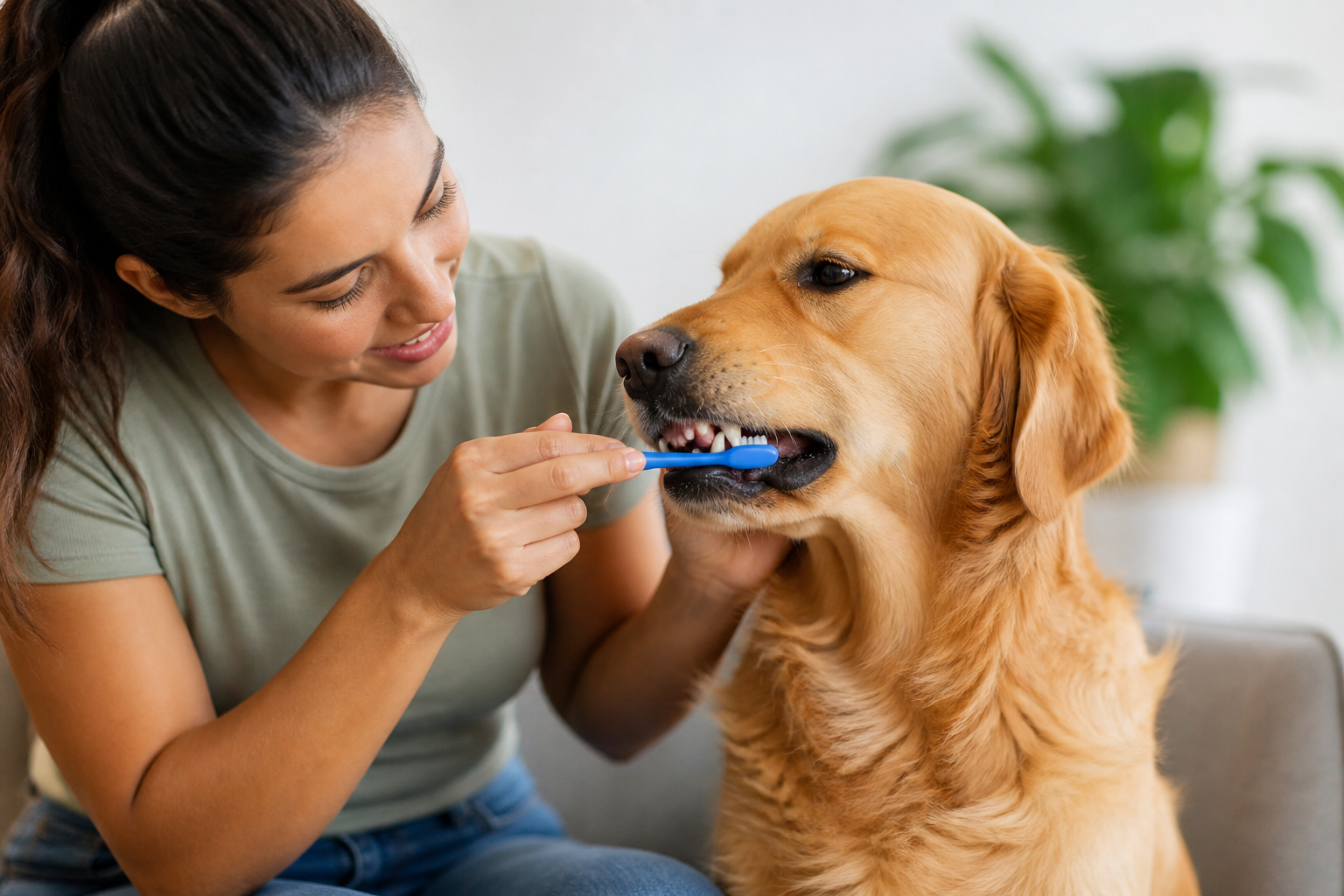
Starting a brushing routine can feel daunting, but most dogs can learn to enjoy it. The key is to move slowly and use positive reinforcement. Never use human toothpaste. Human versions contain foaming agents and fluoride that are toxic to dogs when swallowed. Many also contain Xylitol, which is a deadly sweetener for canines.
Pet-specific toothpaste comes in flavors dogs love, such as poultry, beef, or peanut butter. This makes the experience feel like a treat rather than a chore. You can use a child-sized soft toothbrush or a finger brush that slips over your fingertip. Our dog dental care supplies include toothpaste, toothbrushes, wipes, and other oral-care options.
Step-by-Step Brushing Guide
Step 1: Introduce the paste. / Let your dog lick a small amount of pet toothpaste off your finger for several days.
Step 2: Touch the teeth. / Gently lift your dog's lips and rub your finger along their gums and teeth to get them used to the sensation.
Step 3: Introduce the brush. / Put a bit of paste on the brush and let them lick it. Gradually move the brush in small circles against the outside of the teeth.
Step 4: Focus on the back. / Pay extra attention to the large premolars and molars in the back, as these are where tartar builds up fastest.
Step 5: Reward the effort. / Always end the session with a favorite toy or extra praise so they associate brushing with good things.
Vet Tip: If your dog has red, bleeding, or receding gums, do not start a brushing routine until you consult your veterinarian. Brushing inflamed gums can be very painful and may cause bacteria to enter the bloodstream through open sores.
For additional brushing guidance, see our pet dental care tips.
The Role of Dental Chews and Toys
Dental treats are a popular way to supplement a cleaning routine. These products are designed to encourage mechanical scrubbing as the dog chews. Some also contain ingredients that help break down plaque chemically. When shopping at BaxterBoo, look for treats that carry the Veterinary Oral Health Council (VOHC) seal of approval. This seal means the product has been tested and proven to reduce plaque or tartar. You can explore our dental treats for dogs for chewable options.
Rubber toys with ridges or nubs can also help. As your dog gnaws on the toy, the nubs rub against the teeth to scrape away surface debris. However, toys are not a substitute for brushing. They mostly clean the tips of the teeth and do not reach the gum line where disease starts.
Be careful with very hard items. Traditional bones, antlers, and nylon chews are often harder than the tooth enamel itself. These can lead to painful slab fractures. A fractured tooth exposes the sensitive pulp and almost always requires extraction or a root canal. If you cannot indent the chew with your fingernail, it is likely too hard for your dog's teeth.
For more ideas between brushing sessions, browse our dental chew recommendations.
Diet and Dental Health
There is a long-standing debate about whether dry food is better for teeth than wet food. Many people believe the crunch of kibble scrapes teeth clean. While some specialized dental diets are engineered to do this, standard kibble usually crumbles too easily to provide much benefit. Most dogs swallow their kibble whole or in large chunks.
Wet food can sometimes lead to more plaque buildup because it sticks to the teeth and gums. However, the most important factor is the quality of the ingredients and the presence of dental-supportive additives. Some prescription diets are specifically formulated with larger kibble sizes and a fiber matrix that does not crumble. This forces the dog to chew, providing a scrubbing action all the way to the gum line.
Our pharmacy carries these prescription dental diets through our partnership with Pet's Choice. If your veterinarian recommends a specific food like Royal Canin Dental or Farmina Vet Life for your dog's oral health, we can help you manage those orders easily. These diets are often part of a long-term plan for dogs prone to rapid tartar buildup. Visit our pet pharmacy to explore available veterinary products.
Bottom line: While diet plays a role in oral health, no food can replace the effectiveness of manual brushing and professional veterinary care.
Why Professional Cleanings Are Necessary
Even with perfect home care, most dogs will eventually need a professional dental cleaning. This is the same reason humans visit the dentist every six months despite brushing twice a day. A professional cleaning allows a veterinarian to reach areas that you cannot see.
A real veterinary dental cleaning must be performed under general anesthesia. You may see advertisements for "anesthesia-free" cleanings, but these are purely cosmetic. Without anesthesia, a technician cannot clean under the gum line, which is where the real disease happens. They also cannot take dental x-rays.
X-rays are essential because up to 60 percent of a dog's tooth is hidden beneath the gums. A tooth can look perfectly healthy on the outside while the root is rotting away or an abscess is forming. Under anesthesia, the vet can scale away tartar, polish the enamel to prevent future buildup, and perform any necessary extractions safely and painlessly.
Managing Dental Health in Small Breeds
Small and toy breeds are much more likely to suffer from dental disease than large dogs. Breeds like Yorkies, Chihuahuas, and Pugs have the same number of teeth as a Great Dane but in a much smaller mouth. This leads to extreme overcrowding. When teeth are crowded together, food and bacteria get trapped in tiny crevices where a brush cannot reach.
Small dogs also have thinner jawbones. Advanced periodontal disease can actually cause the jawbone to weaken and fracture. If you own a small breed, you should be doubly diligent about daily brushing. These dogs often require professional cleanings much earlier and more frequently than larger breeds.
Senior dogs also need extra attention. As dogs age, their immune systems may not fight off oral bacteria as effectively. However, being a senior is not a reason to skip dental care. Many owners fear anesthesia for older pets. Your vet can perform pre-anesthetic blood work to ensure your dog's organs are healthy enough for the procedure. Keeping an older dog's mouth clean can actually extend their life by reducing the strain on their heart and kidneys.
The Cost of Prevention Versus Treatment
Some owners hesitate to start dental care because of the cost of pet toothpaste, treats, or professional cleanings. However, preventive care is significantly cheaper than treating advanced disease. A routine cleaning is a standard procedure. A dental surgery involving multiple extractions, antibiotics, and pain medication can cost significantly more.
Beyond the financial cost, there is the cost of your dog's comfort. Tooth pain is a dull, throbbing ache that never goes away. Dogs are masters at hiding this pain, but it affects their energy levels, mood, and overall quality of life. By investing in a toothbrush and regular checkups, you are protecting them from years of silent suffering.
We offer several programs to help make this care more affordable. Our MVP Rewards program allows you to earn points on eligible purchases of dental supplies or treats. If you use certain dental supplements or foods regularly, our Autoship service helps you maintain a regular delivery schedule.
Key Takeaway: Dental care is an investment in your dog's long-term health that prevents expensive surgeries and chronic pain.
Common Myths About Dog Teeth
One major myth is that a dog's mouth is cleaner than a human's mouth. This is simply not true. Dogs carry a wide variety of bacteria, some of which are unique to their species. While most of these bacteria are harmless to humans, they are very active in creating plaque on your dog's teeth.
Another myth is that bones are the best way to clean teeth. While a raw, meaty bone might help some dogs, the risks often outweigh the rewards. Bones can cause tooth fractures, get stuck in the roof of the mouth, or cause dangerous intestinal blockages. If you choose to give bones, always supervise your dog and talk to your vet about the safest options for your specific breed.
Finally, some think that if a dog is still eating, their teeth must be fine. Dogs have a very strong drive to survive. They will often swallow kibble whole without chewing to avoid the pain of a sensitive tooth hitting the food. Do not wait for your dog to stop eating to address their dental health.
Summary of Daily Dental Habits
Creating a routine does not have to take a lot of time. Consistency is more important than perfection. If you can only brush for thirty seconds, that is still better than not brushing at all. Aim for at least three times a week, though daily is best.
- Check your dog's mouth once a week for redness or bad odors.
- Brush using pet-safe toothpaste and a soft brush.
- Provide VOHC-approved dental treats to help between brushings.
- Schedule an annual wellness exam where the vet checks the teeth.
- Follow through with professional cleanings when recommended.
Conclusion
Cleaning your dog's teeth is one of the most impactful things you can do for their health. It prevents the pain of tooth loss and protects their vital organs from dangerous bacteria. While it takes some effort to start a brushing routine, the reward is a happier dog and fewer expensive visits to the vet. At BaxterBoo, we are committed to providing you with the tools you need for this journey. From finger brushes to VOHC-approved treats and prescription diets through our pharmacy, we have the resources to support your dog's smile. Start today by simply letting your dog taste some pet toothpaste. That small step is the beginning of a healthier life for your best friend.
Bottom line: A proactive dental routine including home brushing and professional vet care is essential for preventing pain and systemic disease in dogs.
FAQ
How often do I really have to brush my dog's teeth?
Ideally, you should brush your dog's teeth every day to remove plaque before it hardens into tartar. If daily brushing is not possible, aiming for at least three times a week can still make a significant difference in their oral health. Consistency is key because plaque begins to mineralize into tartar within 48 to 72 hours.
Can I use a human toothbrush on my dog?
Yes, you can use a human toothbrush as long as it has soft bristles. A child-sized toothbrush often works best for small to medium dogs because the head is smaller and easier to maneuver in their mouth. However, you must never use human toothpaste, as it contains ingredients like fluoride and xylitol that are toxic to dogs.
Do dental chews actually work to clean teeth?
Quality dental chews can help reduce plaque and tartar by mechanically scraping the teeth as your dog chews. To ensure they are effective, look for products with the Veterinary Oral Health Council (VOHC) seal of approval. While helpful, these chews are a supplement to brushing and professional cleanings, not a total replacement for them.
My dog's breath is terrible, but he is eating fine. Does he still need a cleaning?
Yes, bad breath is often the first sign of an underlying infection or periodontal disease. Dogs have a strong survival instinct and will usually continue to eat even when they are in significant dental pain. Foul breath indicates a high bacterial load that needs a professional evaluation by a veterinarian to prevent further health complications.






