
 Save 15% on your 1st Autoship learn more

 Email us
 Live Chat
 FAQs
FAQs





Introduction
You are sitting on the couch relaxing when your dog leans in for a big, affectionate face lick. Instead of a sweet moment, you are met with a scent so strong it makes you pull away. While we often joke about "dog breath" as a standard part of owning a pet, that odor is usually the first sign of a significant health issue. Many owners wonder if they really need to brush a dog's teeth or if chewing on a bone is enough to do the job.
At BaxterBoo, we have helped thousands of pet parents navigate the essentials of daily care since 2006. We know that dental hygiene can feel like a chore, but it is one of the most important things you can do for your dog's longevity. This guide will explain why dental care is a medical necessity, how to spot trouble, and the best ways to maintain a healthy mouth at home. Proper oral care prevents pain and protects your dog's vital organs from systemic infection.
Why Dental Care Is Not Optional
Many people assume that because wild dogs and wolves do not have toothbrushes, our domestic companions do not need them either. This is a common misconception. Modern dogs live much longer than their wild ancestors and eat diets that can contribute to plaque buildup. By the time they reach three years of age, roughly 80 percent of dogs show some sign of periodontal disease.
Dental hygiene is about much more than just fresh breath. When plaque is not removed, it hardens into tartar within about 48 hours. This tartar provides a home for bacteria to grow under the gumline. From there, the bacteria can enter the bloodstream. Once in the blood, these bacteria can travel to the heart, liver, and kidneys, leading to serious organ damage or failure over time.
Key Takeaway: Oral health is directly linked to organ health. Keeping teeth clean prevents bacteria from migrating from the mouth to the heart and kidneys.
Identifying the Signs of Dental Disease
Dogs are experts at hiding pain. This is an evolutionary trait designed to keep them from appearing vulnerable. Because of this, a dog might have a significant toothache or a rotted root and still eat their dinner every night. You cannot rely on your dog "acting" like they are in pain to determine if they need dental care.
Keep a close eye on these specific indicators:
- Extremely foul breath that does not improve
- Red, swollen, or bleeding gums
- Yellow or brown crust (tartar) near the gumline
- Excessive drooling or dropping food while eating
- Pawing at the mouth or face
- Loss of interest in hard chew toys
Vet Tip: If you notice bleeding gums or loose teeth, schedule a veterinary exam immediately. These are signs of advanced periodontal disease that require professional intervention rather than just at-home brushing.
For additional guidance, read our article on warning signs of bad teeth in dogs.
The Role of Professional Veterinary Cleanings
Even with the best at-home routine, most dogs will eventually need a professional cleaning. This is similar to a human visiting a dental hygienist, but with one major difference: dogs must be under general anesthesia. It is impossible to safely perform a deep cleaning under the gumline or take accurate dental X-rays while a dog is awake.
During a professional cleaning, your vet will use ultrasonic scalers to remove tartar that a toothbrush cannot reach. They also perform a "probe and chart" routine to check for deep pockets in the gums. At our BaxterBoo warehouse in Vernon Hills, we often talk to customers whose dogs have had a "second puppyhood" after a professional cleaning. This is because removing chronic dental pain often results in a massive boost in a dog's energy and mood.
What to Expect at the Vet
A standard dental appointment usually involves a few key steps:
- Pre-anesthetic blood work to ensure the liver and kidneys are healthy enough for sedation.
- Full oral examination to look for growths, lesions, or fractured teeth.
- Dental X-rays to see what is happening beneath the gumline where 60 percent of dental disease occurs.
- Scaling and polishing to remove plaque and smooth the tooth surface.
If your vet identifies a tooth that is rotted or broken, they may recommend an extraction. While this sounds scary, dogs actually feel much better with a painful tooth gone. Our pharmacy carries FDA-approved pain medications and antibiotics to help with recovery. We can help you manage these prescription needs easily once your vet provides the necessary paperwork.
How to Brush Your Dog’s Teeth at Home
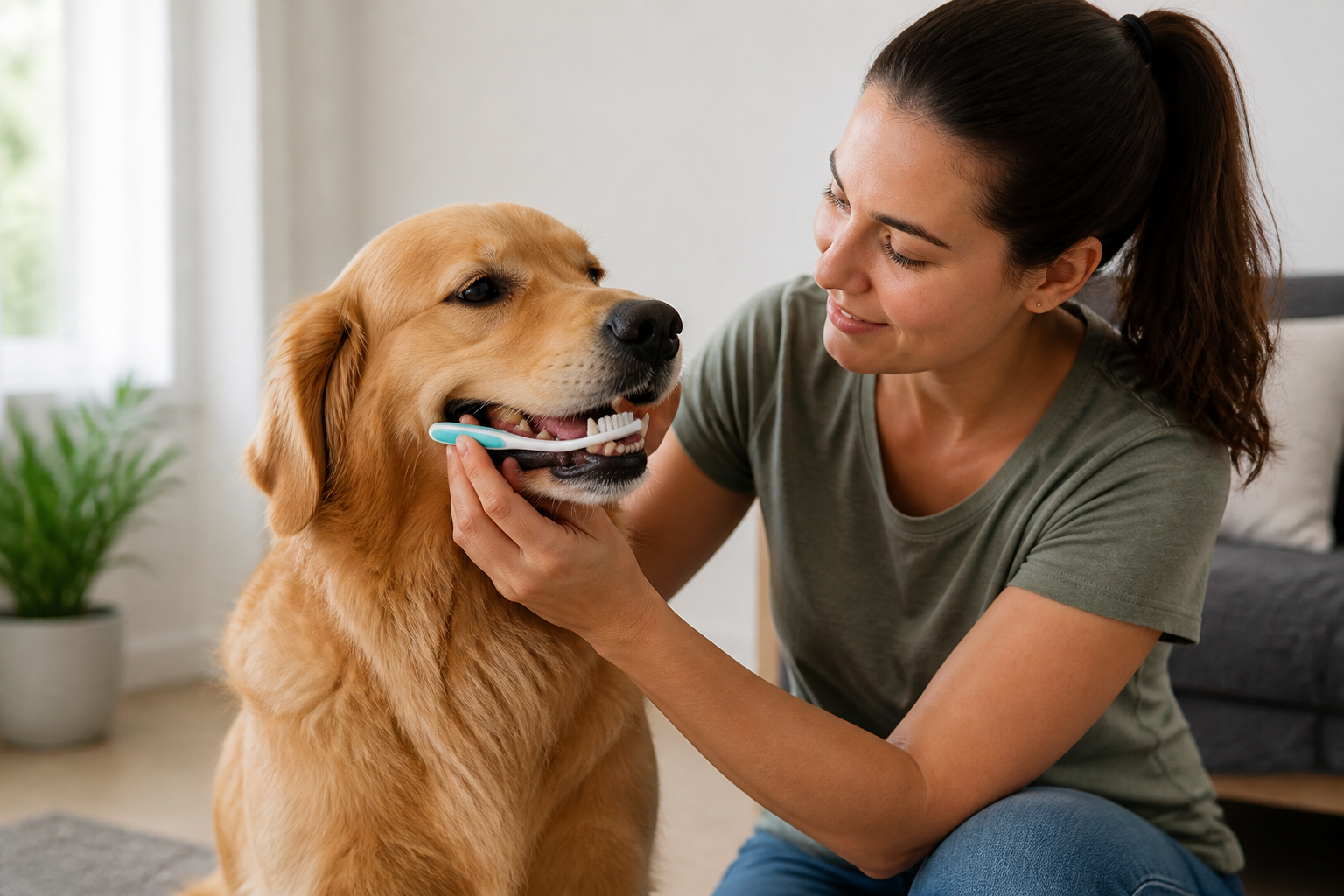
Brushing is the gold standard for at-home care. While it might feel awkward at first, most dogs can learn to tolerate or even enjoy the process. The goal is to disrupt the biofilm of plaque before it can calcify into tartar.
Choosing the Right Supplies
Never use human toothpaste for a dog. It often contains xylitol, which is highly toxic to pets. It also contains foaming agents meant to be spit out, which dogs will inevitably swallow. Instead, use a pet-specific paste. These come in flavors like poultry, beef, or peanut butter to make the experience a treat for your dog.
You can use a soft-bristled child's toothbrush or a finger brush. Finger brushes are often easier for beginners because they allow you to feel exactly where you are in the dog's mouth.
For brushing supplies, explore our dog dental care collection.
The Step-by-Step Process
Step 1: Introduce the paste. / Put a small amount of pet toothpaste on your finger and let your dog lick it off. Do this for a few days until they see the paste as a reward.
Step 2: Touch the mouth. / Gently lift your dog's lips and rub your finger along their gums. Keep sessions short and follow up with plenty of praise.
Step 3: Introduce the brush. / Put some paste on the brush and let the dog lick it. Slowly start brushing the large canine teeth in a circular motion.
Step 4: Focus on the outside. / You do not need to worry about the inside surfaces of the teeth near the tongue. Most plaque accumulates on the outside surfaces against the cheeks.
Bottom line: Daily brushing is ideal, but even brushing three times a week can significantly reduce the risk of dental disease.
Learn more about building a consistent routine with these pet dental care tips.
Alternatives and Supplements for Dental Health
We understand that not every dog is a candidate for brushing. Some dogs have anxiety about their mouths being touched, or they may have been adopted with existing dental pain that makes brushing difficult. In these cases, you can use other tools to slow down the accumulation of plaque.
Dental Chews and Treats
High-quality dental treats like Greenies or specialized chews from brands like RedBarn can help. These items work through mechanical abrasion. As the dog chews, the texture of the treat scrapes against the tooth. Look for products that have the Veterinary Oral Health Council (VOHC) seal of approval. This seal ensures the product has been tested and proven to reduce plaque or tartar by a specific percentage.
Browse our dental food and treat selection for options suited to your dog's chewing preferences.
Water Additives and Sprays
Dental water additives are a low-effort way to fight bacteria. You simply add a capful to your dog's water bowl. These products often contain enzymes that break down plaque-forming bacteria. While they are not as effective as brushing, they are a great "better than nothing" option for difficult pets.
Specialized Dental Diets
Some dogs benefit from a prescription dental diet. The kibble in these foods is specifically designed not to shatter when the dog bites it. Instead, the tooth sinks into the kibble, which scrubs the surface as the dog chews. If your vet recommends a prescription diet for dental health, our pharmacy can fulfill those orders.
Breed-Specific Dental Risks
Not all dogs are created equal when it comes to oral health. Small breeds and brachycephalic (flat-faced) dogs are at a much higher risk for dental issues. Breeds like Pugs, Chihuahuas, Yorkies, and Bulldogs often have the same number of teeth as a Golden Retriever but in a much smaller space.
This crowding creates many nooks and crannies where food and bacteria can hide. Small dogs also tend to have shallower tooth roots, meaning periodontal disease can lead to tooth loss much faster than in large breeds. If you own a small dog, you should be especially diligent about daily brushing and annual vet checkups.
Key Takeaway: Toy and small breeds often require their first professional cleaning as early as age two due to tooth crowding.
Building a Sustainable Routine
The best way to ensure your dog's teeth stay clean is to make it a habit. Just like you brush your own teeth before bed, try to link your dog's dental care to a specific time of day.
- Keep the toothbrush and paste near your dog's leash or food bowl.
- Use a "high-value" reward that they only get after a successful brushing session.
- Start slow. Even ten seconds of brushing is better than none.
- Check their mouth once a month for any new discoloration or red spots.
By staying proactive, you can avoid the high costs and health risks associated with advanced dental disease. It is a small time investment that pays off in years of extra health for your best friend.
Bottom line: Consistency is more important than perfection when it comes to at-home dental care.
Essential Shopping List for Dental Health
If you are ready to start a routine, we recommend having a few basics on hand. You can find these items and more in our health and wellness section at BaxterBoo.
- Pet Toothpaste: Look for enzymatic formulas in flavors your dog loves.
- A Soft Brush: Choose a size appropriate for your dog's mouth.
- Dental Chews: Use these on days when you are too busy to brush.
- Water Additive: A great backup for continuous bacterial control.
- Healthy Treats: Choose crunchy treats that do not leave a sticky residue on the teeth.
Our MVP Rewards program allows you to earn points on all these essentials, making it easier to maintain a long-term routine. If you find a brand your dog loves, like Kong or Zesty Paws, you can use our Autoship service to ensure you never run out of dental supplies.
Conclusion
Cleaning your dog's teeth is an essential part of responsible pet ownership. It prevents chronic pain, freshens breath, and protects against systemic diseases that can shorten your dog's life. While professional cleanings are necessary, your daily efforts at home are what truly make the difference. Start slow, stay consistent, and always work closely with your veterinarian to monitor your dog's oral health.
Key Takeaway: A combination of at-home brushing, dental chews, and regular veterinary exams is the best defense against periodontal disease.
If your dog needs specialized care, prescription dental diets, or medications for oral infections, visit our pet pharmacy. We are here to help you provide the best possible care for your pet.
FAQ
How often do I really need to brush my dog's teeth?
Ideally, you should brush your dog's teeth every day to prevent plaque from hardening into tartar. However, if daily brushing is not possible, aim for at least three times a week. Consistency is key because plaque can begin to calcify into tartar within 48 hours.
Can I just use a dental chew instead of brushing?
Dental chews are a helpful supplement, but they are not a complete replacement for brushing. Chews mostly clean the chewing surfaces of the teeth and may miss the gumline where periodontal disease starts. Think of chews like mouthwash for humans; they help, but you still need to brush.
Is anesthesia safe for my dog during a dental cleaning?
Modern veterinary anesthesia is very safe, and vets perform blood tests beforehand to minimize risks. The risks of untreated dental disease, such as heart and kidney infection, are usually much higher than the risk of a supervised anesthetic procedure. Your vet will monitor your dog's vitals closely throughout the entire process.
Why does my dog's breath still smell after brushing?
If your dog's breath is still foul after you brush, there may be an underlying issue. Smelly breath can be caused by an infected tooth, a growth in the mouth, or even internal issues like kidney disease. If brushing does not help the odor, it is time to schedule a visit with your veterinarian for a professional exam.






